
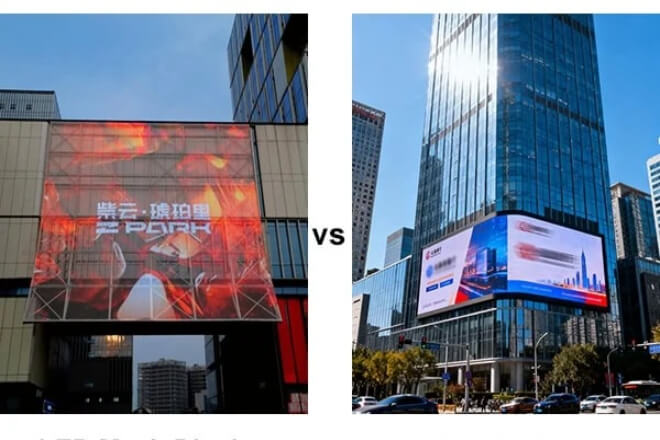
If you frequently pay attention to outdoor LED displays, you might have noticed a rather unique product:
It doesn’t have the completely flat structure of a traditional display screen, but rather is composed of LED strips with gaps in between.
This is an LED grid screen. So, what are the differences between it and a conventional outdoor LED display? Why do some building facades prefer grid screens?
The most obvious difference between the two products lies in their structural design.
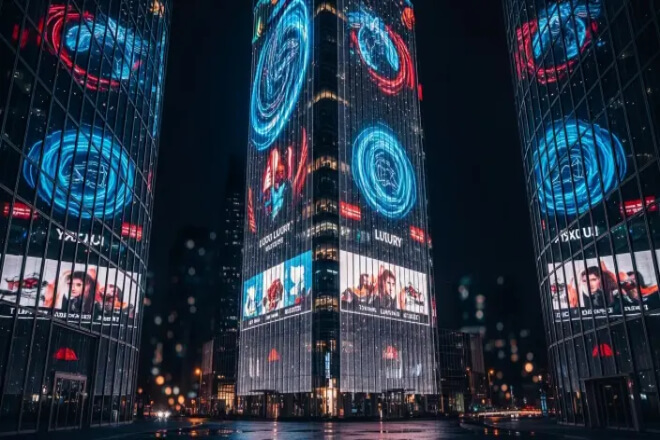
1) Grid LED screen:
Grid LED screens typically use a strip-like structure design, integrating LED chips, circuitry, and related components onto individual strips, which are then arranged at certain intervals to form a complete display image.
Because gaps are left between the strips, air and some natural light can pass through the screen, giving grid LED screens a certain degree of light transmittance and ventilation.
You can think of it as a digital venetian blind that can play video. It’s not a completely enclosed display panel, but rather a combination of many strip-like display units.
This structure gives grid LED screens unique advantages in building facades, glass curtain walls, and large-scale outdoor decorative projects.
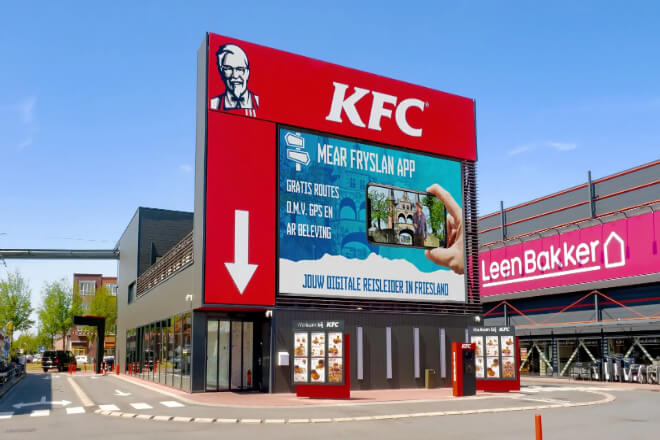
2). Conventional outdoor LED displays:
Conventional outdoor LED displays typically consist of LED modules, cabinets, power supplies, and control systems.
Multiple display modules are spliced together to form a relatively complete display surface.
Due to the denser pixel arrangement, conventional outdoor LED displays can present continuous and complete images, suitable for displaying advertising videos, text, images, and dynamic visual content.
For example, large advertising screens in commercial plazas often use this structure.
The difference between the two is not simply a matter of appearance. Different structural designs directly affect the product’s weight, light transmittance, heat dissipation methods, and installation conditions.
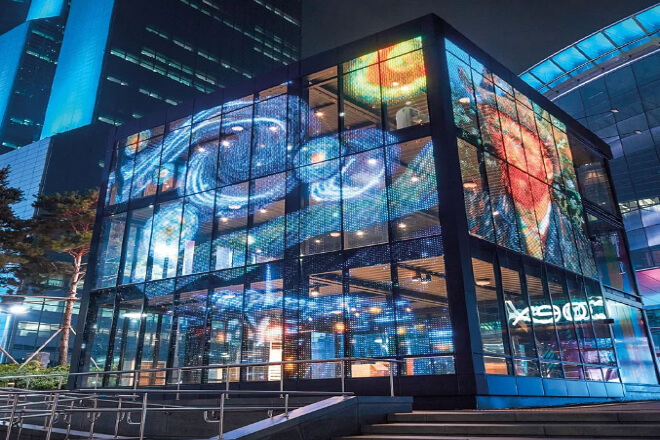
This is a very important difference between grid LED screens and conventional outdoor LED displays, and it is also the main reason why they have attracted attention in architectural projects.
While both products belong to outdoor LED display equipment, they are suitable for different projects.
When selecting a model, the installation environment should be considered first, followed by the content to be displayed.
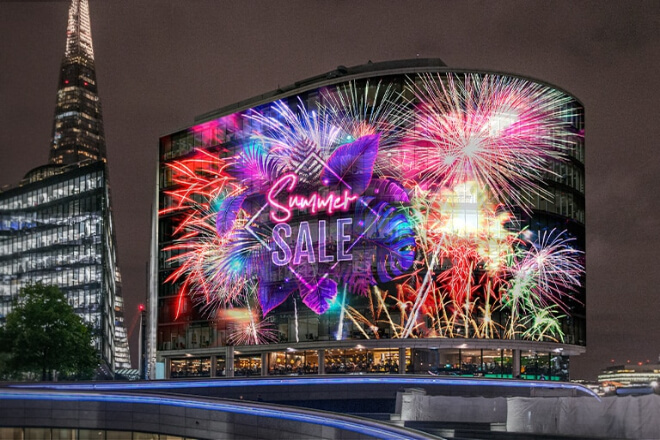
1) Building exterior walls and glass curtain walls:
This is a very typical application scenario for grid LED screens.
For example, large shopping malls, commercial complexes, and hotel buildings want to increase advertising display area using LED displays but do not want to completely obscure the building facade.
Grid LED screens can display dynamic content while maintaining a certain degree of transparency.
Especially for large building facade projects, grid structures can help reduce some structural load, but the specific effect still needs to be determined in conjunction with the engineering design.
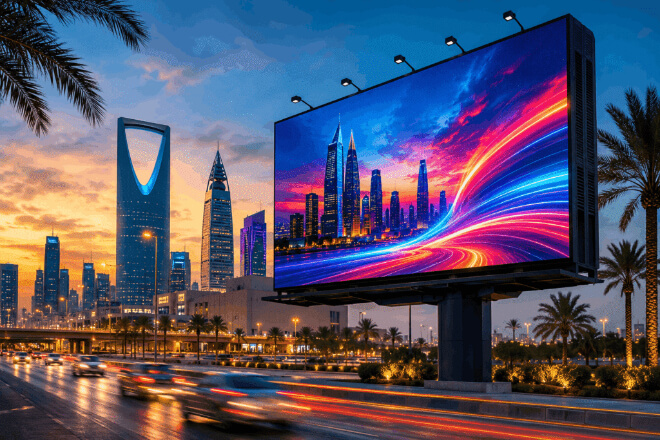
2) Large outdoor billboards:
If the main goal of the project is to display a complete advertising image, then conventional outdoor LED displays are usually more advantageous.
For example, urban commercial plazas, roadside billboards, and external advertising walls of shopping malls need to ensure that viewers can clearly see product images, brand text, and promotional videos.
Because the pixel arrangement of conventional outdoor LED displays is relatively dense, it is easier to present continuous images.
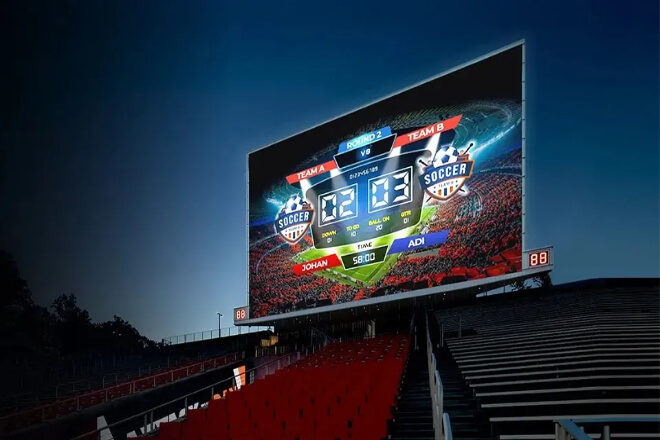
3) Sports venues and large events:
The exterior walls of sports venues and large event areas may require both large-area advertising displays and consideration of building ventilation and structural conditions.
If the project is located on an open building facade, grid LED screens can be considered.
If it is necessary to display game information, advertising videos, and visually rich content, conventional outdoor LED displays may be more suitable.
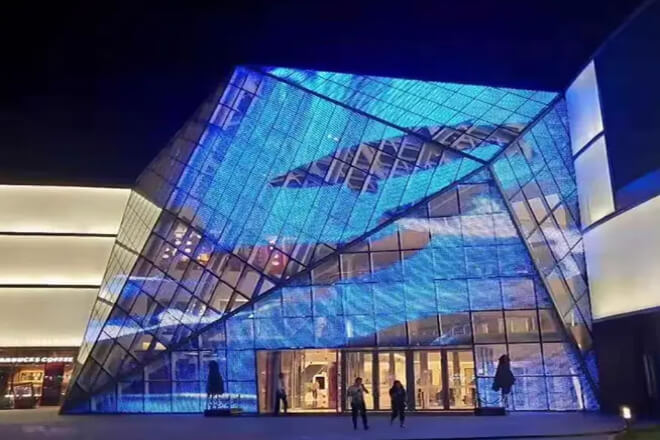
4) Commercial building decoration:
Some commercial projects do not want the display to look like a stand-alone billboard, but rather want it to be an integral part of the building’s appearance.
Grid LED screens can be partitioned and arranged according to the building facade to form a dynamic display structure with a sense of design.
For example, installing strip-shaped grille LED screens on a hotel facade can display brand visual content at night while maintaining partial visibility of the building structure during the day.

5) Road traffic and information display:
If a project requires displaying large amounts of text, traffic information, and real-time updates, conventional outdoor LED displays are generally easier to meet the full-screen requirements.
Grille LED screens can also be used for partial outdoor information display, but pixel pitch, viewing distance, and text recognition performance need to be carefully evaluated.

Light transmittance and structure are only part of the equation; companies also need to consider display effect and overall project cost when purchasing.

For architectural design companies, advertising engineering companies, and commercial project managers.
The choice of grid LED screens is not only related to display effects but also to building safety and subsequent operation.
Before formal procurement, it is recommended to focus on the following aspects:
First, clarify whether the project truly requires a light-transmitting structure.
If the installation location is a regular advertising wall with no need for natural light and ventilation, conventional outdoor LED displays may be more economical and direct.
If the project is located on a glass curtain wall, an open building facade, or has high requirements for architectural transparency, then an grid LED screen is worth considering.
Secondly, pay attention to pixel pitch and actual viewing distance.
A sparser pixel pitch is not necessarily better for grid LED screens. If the screen is installed at a low position, viewers may view it from close range, so the image detail needs to be considered.
If the screen is installed on the exterior wall of a high-rise building, viewers are usually at a greater distance, so the appropriate specifications can be selected based on actual viewing needs.
Third, check the product’s outdoor protection capabilities.
Although grid LED screens have an open structure, this does not mean they do not need to be waterproof and dustproof.
When purchasing, pay attention to the protective design of the light strips, connectors, power supply, and wiring areas to confirm that the product is suitable for local rainfall, dust, and temperature environments.
Fourth, pay attention to the installation structure and wind load calculations.
Especially for large grid LED screens installed on high-rise buildings, the building’s load-bearing capacity, wind load, fixing methods, and maintenance conditions must be considered.
The relatively light weight of the product should not negate engineering safety.
Fifth, consider the ease of future maintenance.
Maintaining large building exterior displays is generally more complex than that of ordinary commercial screens.
Therefore, when purchasing, it’s essential to understand the LED strip replacement methods, power supply maintenance, spare parts supply, and after-sales response capabilities.
If the project is installed at a high location, maintenance access and safe operating procedures should also be planned in advance.
For business decision-makers, a truly good grid LED screen solution not only needs to be aesthetically pleasing but also capable of long-term stable operation and compatible with the building structure and commercial display requirements.


 English
 Español
 简体中文
 Français
 日本語
 한국어
 العربية