
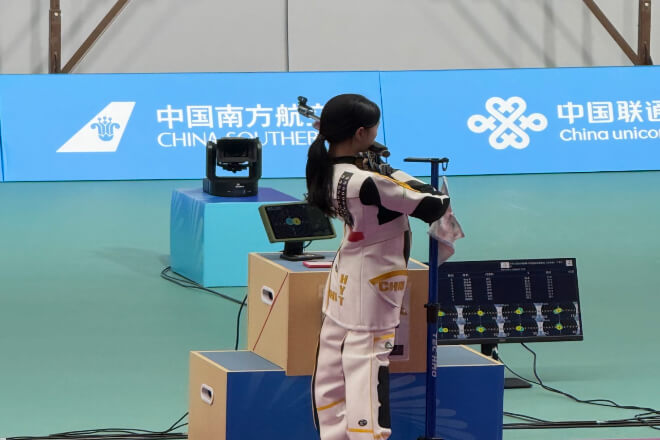
Indoor shooting simulation experience halls sell more than just entertainment; they offer an immersive experience.
Compared to monotonous, fixed images, LED displays can constantly change the scenes, providing customers with a new experience every time they visit.
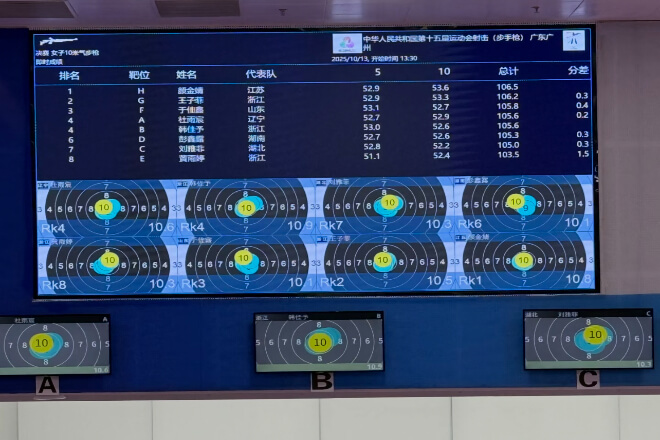
Imagine two shooting simulation experience halls opening simultaneously.
One uses ordinary display equipment, with the image always stuck on a fixed background; the other uses a large LED display to present different virtual environments.
Allowing customers to experience different themes, with the scenes changing as the simulation system operates.
Even using similar simulation equipment, the experience can be completely different.
This is precisely the value that LED displays can bring.
Traditional simulation experiences typically rely on fixed visual backgrounds, while LED displays can present richer, more dynamic images.
Venues can design different themes based on their business positioning, such as outdoor adventure, urban environments, futuristic technology spaces, and fun competitive scenarios.
For operators, this means that the same experience area doesn’t necessarily have to offer only one type of activity.
For example, basic simulation experiences can be offered on weekdays, special themed events on weekends, and holiday-themed visual content can be changed.
The venue and main equipment remain largely unchanged, but the content seen by customers is different.
Furthermore, LED displays can help venues establish their own visual identity.
Some experience centers aim to emphasize a professional competitive feel, while others lean towards family entertainment and leisure experiences.
Through different display content and spatial design, customers can experience different brand styles from the moment they enter the venue.
Therefore, LED displays should not just be a large screen next to the simulation equipment, but should be an integral part of the overall experience design.
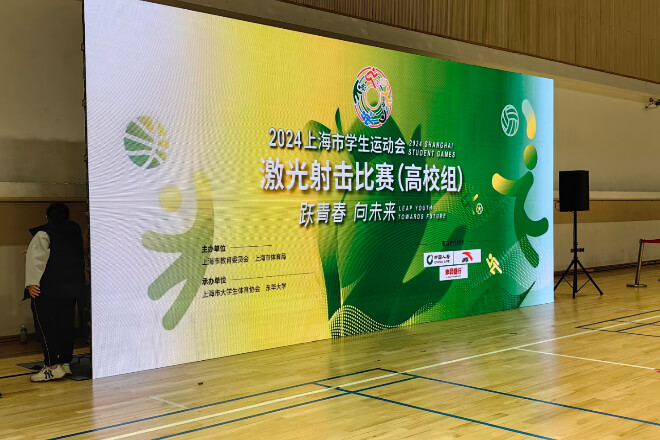
Not all shooting simulation experiences require the same display content.
If a venue only offers one type of display and one way to play, even with good equipment, customers may find it lacking in novelty after a few tries.
Properly utilizing LED displays can give different experiences more distinct characteristics.
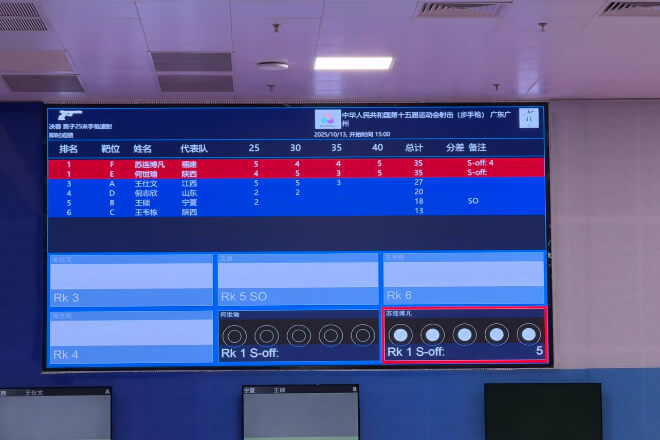
Indoor shooting simulation experience centers shouldn’t just focus on where customers stand or where the screens are installed; they should also consider what customers will see upon entering the venue.
A well-designed space can generate customer interest even before they begin the experience.
1) Entrance area:
An LED backdrop screen can be installed at the entrance to display the venue’s theme, experience projects, and promotional images.
For example, if the venue emphasizes a technological feel, dynamic digital visuals and a futuristic city theme can be used;
If it primarily targets family consumers, a more relaxed visual style can be adopted.
The entrance screen’s task is not to display all product parameters, but to quickly let customers understand what’s fun here.
2) Experience area:
The core experience area can use flat or curved LED displays depending on the available space.
If the venue is large, multiple screen combinations can be considered for a more cohesive visual experience.
It’s important to note that a larger screen isn’t necessarily better.
If customers are too close to the screen and the screen size and display quality are mismatched, it may actually negatively impact viewing comfort.
3) Rest area:
After completing their experience, customers usually have time to rest and wait.
During this time, LED displays can be used to show experience reviews, activity schedules, member information, and introductions to the next challenge.
For example, if customers have just completed a round of experiences, the rest area screen can display an upcoming group challenge activity, which may be a reason for them to continue their visit.
4) Photo area:
A unique LED backdrop area can also be designed within the venue, creating a photo space with themed visuals.
When customers take photos or short videos and share them on social media platforms, the venue’s visual content has the opportunity to gain more exposure.
For business operations, this dissemination value is sometimes more meaningful than simply playing advertisements.
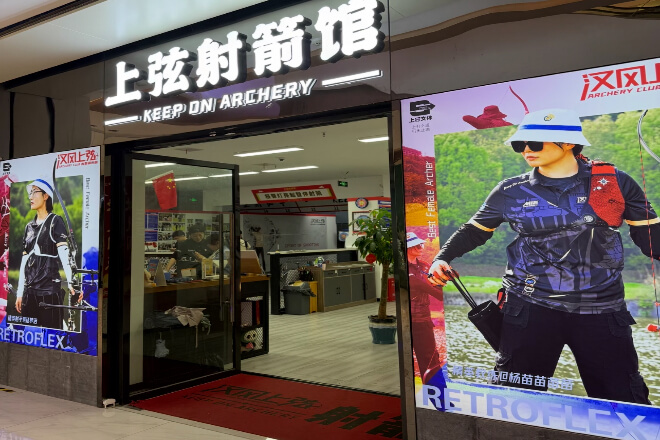
The biggest difference between indoor shooting simulation experience halls and ordinary digital display spaces is that customers don’t simply stand in front of a screen to watch;
They need to participate in the experience through simulation devices.
Therefore, the LED display screen must work in harmony with the entire simulation system.
First, the timeliness of image updates is crucial.
For example, after a customer completes an action, the simulation system needs to transmit the corresponding visual changes to the display device.
If the screen feedback is noticeably delayed, like pressing a button in a game and then receiving a slow response, it easily ruins the experience.
Therefore, the compatibility between the simulation software, image processing equipment, and LED display control system needs to be confirmed in advance during project planning.
Second, auxiliary information can be displayed on the screen.
For example, in addition to the main experience screen, a separate information screen can display activity time, task progress, and competition results.
This allows customers to understand the experience without overwhelming the main visual area with excessive text.
Furthermore, LED displays can enhance interactivity for multi-person activities.
For example, when a venue hosts a friend challenge, rankings and winners can be displayed in public areas.
Participants will not only focus on their own performance but also become interested in the achievements of others.
Of course, the interactive content needs to be tested with the simulation system beforehand. The LED display screen is responsible for image presentation;
The specific interactive logic and safety controls still need to be handled by the professional simulation system.
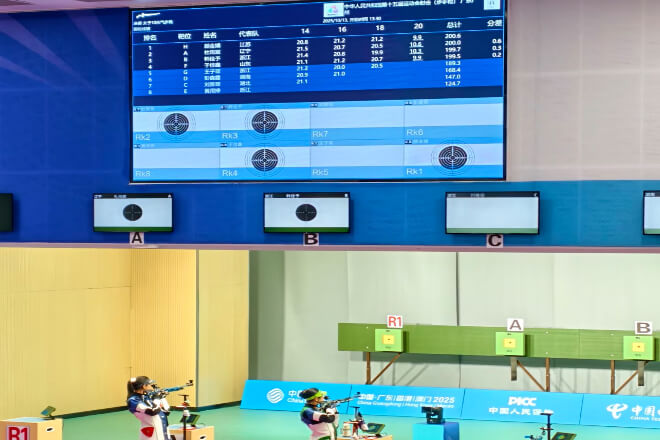
For venue investors, the biggest mistake to avoid is spending a lot of money on a flashy LED display system only to find it’s rarely used in practice.
Therefore, the business positioning should be considered before purchasing, rather than deciding on the size of the screen.
Allocate the budget based on the main customer group.
If the venue primarily targets general consumers, prioritize image quality in core experience areas; large LED displays are unnecessary in all areas.
If the venue is positioned as a high-end immersive entertainment project, investment in multi-screen combinations and creative display structures can be appropriately increased.
Select pixel pitch based on viewing distance.
If customers are close to the screen, focus on image detail; for large experience areas, choose an appropriate pixel pitch based on the actual viewing distance.
There’s no need to increase unnecessary costs to pursue smaller pixel pitches.
Focus on dynamic images and long-term performance.
Simulation experiences may involve rapidly changing images, so screen refresh rate, color consistency, and system stability are crucial.
Meanwhile, the venue may operate for extended periods each day, requiring the equipment to have a reasonable heat dissipation design and convenient maintenance.
Consider content update costs in advance.
Even after the LED display screen is installed, the visual content will still need continuous updates.
For example, if the venue plans to launch new themed events each month, the costs of content production, system debugging, and subsequent management need to be considered.
If a content update mechanism can be planned in advance, the same display equipment can support more events, instead of requiring new hardware investment each time.
Don’t overlook the overall project cost.
In addition to the screen purchase cost, the installation structure, control equipment, electrical accessories, transportation, debugging, and after-sales service should also be considered.
For operators, the truly worthwhile investment in an LED display screen is not necessarily the most expensive product.
But rather one that can support the venue’s long-term operation, improve the experience quality, and help the project develop a unique display solution.


 English
 Español
 简体中文
 Français
 日本語
 한국어
 العربية