
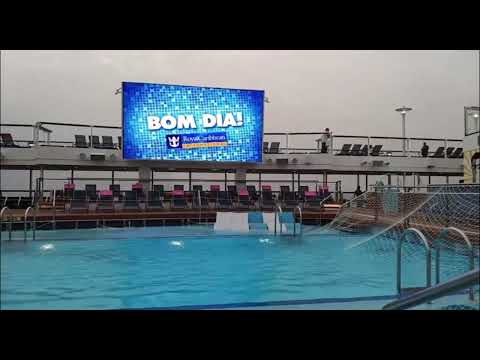
Imagine passengers boarding the cruise ship and entering the central lobby, greeted by a large screen displaying ocean scenery;
In the evening, in the bar, dynamic images on the walls change with the music; in the theater, a wonderful performance is presented in a completely different visual world through a large LED backdrop.
This is the value of LED displays on a cruise ship: it’s not just about displaying information but also about participating in the design of the entire space.
Different public areas have different needs for LED displays.
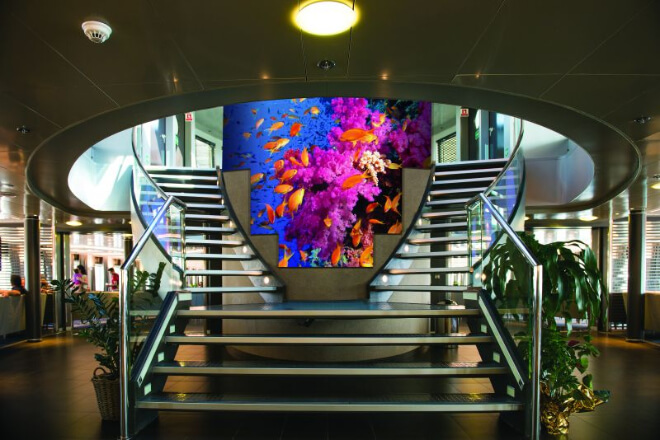
1) Cruise ship central lobby:
The central lobby is usually a high-concentration area for passenger activity and an important location for showcasing the cruise ship’s brand image.
Large background LED displays, suspended LED displays, or even circular display structures can be considered here.
For example, during voyages, LED displays can show ocean scenery, destination introductions, and daily activity information;
During holidays, themed visuals can be switched to create different atmospheres within the same space.
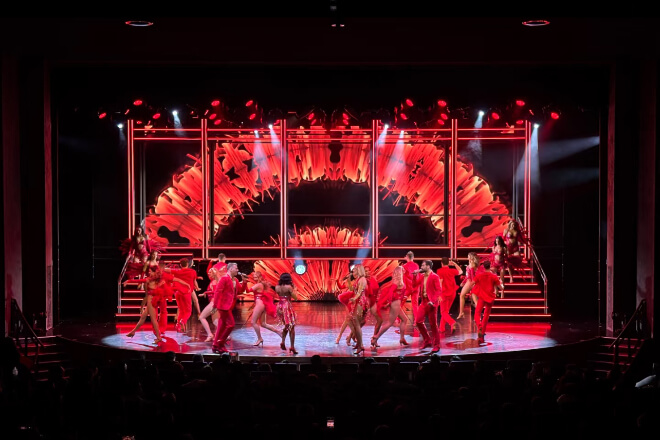
2) Theaters and entertainment halls:
During performances, LED displays can serve as stage backdrops, creating different scenes in conjunction with music, lighting, and performance content.
Whether it’s an underwater world, a city night view, or a starry sky theme, these can be quickly switched through dynamic visuals.
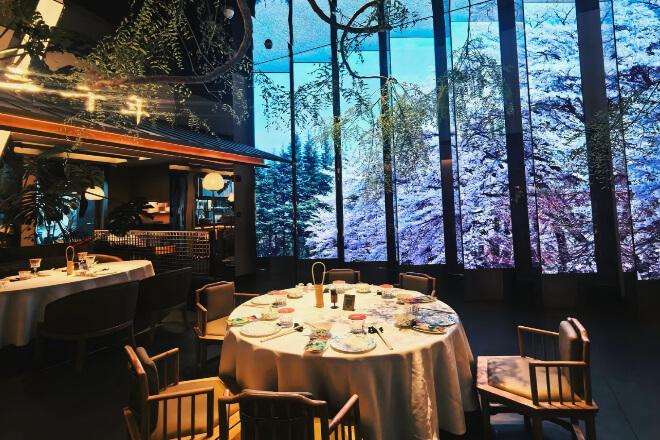
3) Restaurants and bars:
Restaurants don’t necessarily need exceptionally large screens. Soft ocean visuals, seasonal themes, or special menu displays can make the dining environment more appealing.
Bars can be bolder, using curved LED displays or creative backdrops to create a more vibrant visual atmosphere.
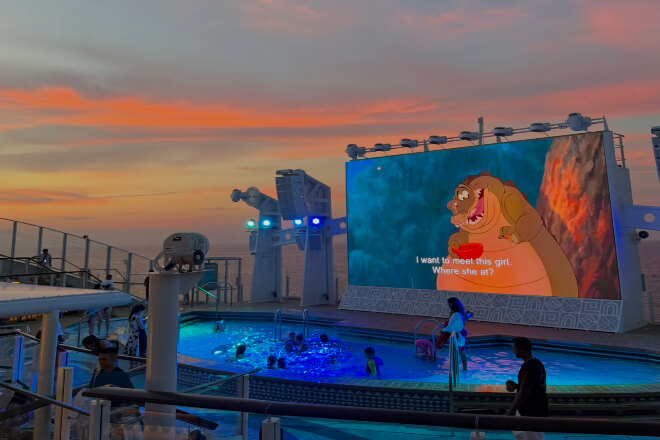
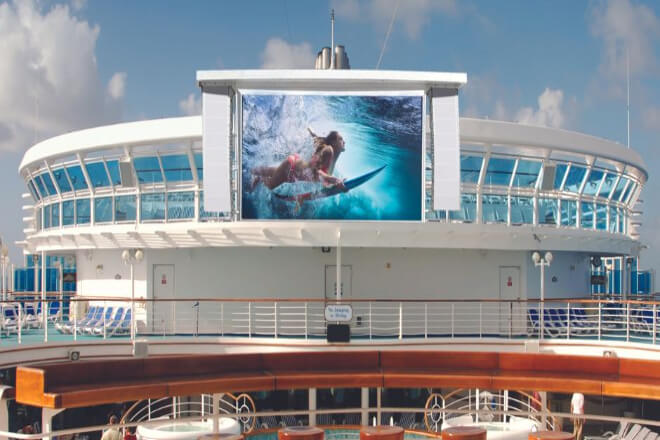
4) Recreation areas and poolside areas:
These areas may have high humidity, and some locations may be affected by water splashes.
Therefore, the screens not only need to be aesthetically pleasing but also require appropriate protective designs based on the actual installation environment.
It’s important to note that not every space on a cruise ship needs a large screen.
Truly smart design places LED displays where they are most needed, rather than surrounding passengers with screens wherever they go.
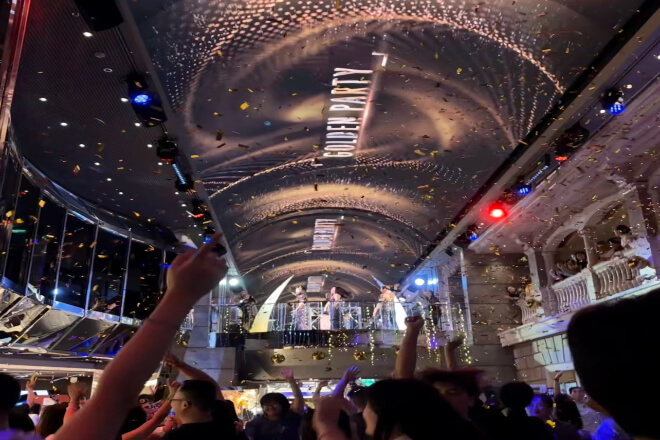
Cruise ship interiors are characterized by sophisticated designs.
Extensive use of curved decorations, cylindrical structures, high-ceilinged halls, and distinctive walls means that traditional rectangular screens may not meet all needs.
Therefore, the choice of LED display form should ideally be synchronized with the interior design.
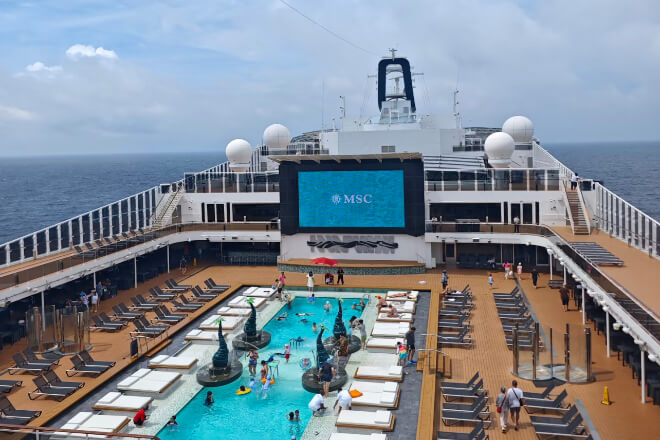
In a typical shopping mall, installing an LED display primarily considers indoor temperature and humidity, heat dissipation, and daily use. However, a cruise ship is different; it’s not a stationary building.
During long-term voyages, internal equipment may be affected by vibrations, humidity changes, and electrical environmental factors.
Therefore, the selection of LED displays for cruise ships cannot be entirely copied from ordinary commercial projects.
Is protective design important in humid environments?
Absolutely.
Especially near swimming pools, open-air lounge areas, and some dining areas, where air humidity may be high.
If the connecting parts and internal electrical components lack adequate protection, long-term use may be affected.
During procurement, the protective capabilities of the enclosure, module seams, power interfaces, and connectors should be checked according to the specific location.
However, it’s not necessary to configure all indoor LED displays according to the standards of outdoor screens.
The environmental conditions of theaters, conference rooms, and ordinary indoor halls are different; selection should be based on actual needs.
Will ship vibrations affect the screen?
This is a particularly important issue for cruise ship projects.
LED displays typically consist of multiple cabinets, modules, and connecting components.
If the installation structure is not reliable enough, prolonged vibration can increase the risk of loose connections and component damage.
This is especially true for suspended screens in central lobbies, large stage screens, and irregularly shaped screens installed at high locations, where the securing structure requires particular attention.
Project teams should assess the equipment weight, mounting methods, and vibration environment in conjunction with the ship’s design specifications, rather than simply relying on installation experience from ordinary buildings.
Can heat dissipation keep up during long-term operation?
Public spaces on cruise ships are usually not only open during the day.
Theaters, bars, and central lobbies may have activities from morning to night, and some screens may even need to operate for extended periods.
If the LED display is installed inside the decorative structure without sufficient surrounding ventilation, heat may gradually accumulate.
Therefore, heat dissipation space, power supply location, and equipment maintenance conditions should be considered during the design phase.
Furthermore, cruise ship power supply systems have their own design requirements.
The voltage, power consumption, electrical protection, and grounding methods of the LED display need to be confirmed in advance and adapted by professionals.
For procurement managers, the real focus shouldn’t be on the number of special features listed in the specifications.
But rather on whether the equipment can adapt to the actual operating environment of the ship.
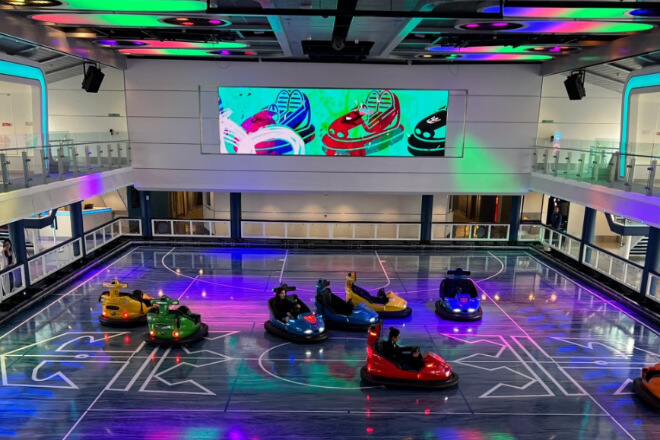
The public spaces inside a cruise ship typically don’t have the same viewing distance as large outdoor advertisements.
Passengers might be sitting in a restaurant watching the screen, or standing in the central lobby to enjoy the image up close.
Therefore, the image sharpness and visual comfort of the LED display screen are crucial.
Pixel pitch should be determined based on viewing distance.
For example, the main stage screen in a theater faces the audience, so the viewing distance is relatively far; the background screens in restaurants and lounge areas may be only a few meters away.
A smaller pixel pitch generally provides better image sharpness for close-up viewing, but the procurement cost may also be higher.
Therefore, the use of a small pixel pitch in one project does not mean that all areas of a cruise ship should use the same configuration.
Brightness should be adjusted according to ambient lighting.
The central lobby may have a lot of decorative lighting, and some areas may also be affected by natural light;
The theater, on the other hand, can control ambient brightness through stage lighting.
If the screen brightness is too low, it may be difficult to see during the day; if the brightness is too high, it may be glaring at night.
It is recommended to choose an LED display screen that supports brightness adjustment, adjusting the display effect according to different areas and usage times.
Color consistency affects the overall sense of sophistication of the space.
Imagine multiple LED displays installed in the central hall of a cruise ship, displaying the same ocean scene, but the blue of each screen is noticeably different.
What should have been a continuous visual effect can easily become several spliced screens of different colors.
Therefore, multi-screen projects should focus on color correction, grayscale performance, and brightness consistency.
This is especially true when displaying ocean, sky, starry skies, and gradient lighting, as these details directly affect the visual experience.
The content should also match the atmosphere of the space.
Theaters can use dynamic, visually impactful images; restaurants are better suited to softer visual content; and the central hall can display cruise routes, destinations, and themed events.
No matter how good the screen parameters are, if the content displayed is completely out of sync with the atmosphere of the space, the final effect may be greatly diminished.
One of the most easily overlooked aspects of installing LED displays inside a cruise ship is subsequent maintenance.
In commercial buildings on land, maintenance personnel can usually handle equipment problems directly on-site.
However, cruise ships may be at sea, and some equipment locations are in unique situations. Without prior planning, maintenance work can become complicated.
How much space should be reserved before installation?
The screen’s display area cannot be considered only in terms of the front; the cabinet depth, support structure, cabling, power supply, and heat dissipation space must also be taken into account.
For example, a suspended screen in the central hall requires prior confirmation of the top structure and fixing location;
A wall-mounted screen needs to consider whether it will affect existing decorations, passageways, and other ship equipment.
If there is insufficient maintenance space behind the screen, a front maintenance option can be evaluated.
Which locations are more suitable for front maintenance?
For LED displays installed on decorative walls, in narrow spaces, or with unique shapes, front maintenance is usually easier to plan.
Maintenance personnel can remove the corresponding modules or components from the front of the screen, reducing the workload of dismantling surrounding structures.
Of course, the specifics depend on the product design, and the maintenance methods should be confirmed before procurement to ensure they are truly suitable for on-site installation conditions.
How should spare parts be prepared?
Cruise ships operate at sea for extended periods, and in the event of a malfunction, immediate access to repair resources may not be possible.
Therefore, the project owner should understand the availability of spare parts for modules, power supplies.
And control components in advance, and prepare an appropriate quantity of spare parts based on the screen size and importance of use.
Simultaneously, the supplier’s warranty coverage, technical support methods, and troubleshooting procedures should be clearly defined.
How should the budget be arranged?
In addition to the LED display screen procurement cost, costs for structural installation, electrical support, control systems, transportation, commissioning, maintenance, and content production should also be considered.
If LED displays are used in multiple public spaces, a unified content management system can be considered to facilitate the operations team switching between different areas’ content.
For example, the central lobby could display daily activity schedules, the restaurant could showcase themed content, and the bar could switch visual effects according to operating hours.
Unified management reduces repetitive operations and helps improve equipment utilization efficiency.
Finally, the equipment materials, installation and fixing, electrical safety, and relevant approval requirements must be evaluated in conjunction with the ship’s design and applicable maritime regulations.
For cruise line operators, the most worthwhile investment in LED displays is not just their aesthetic appeal during installation.
But also their reliability throughout long voyages, daily operations, and subsequent maintenance.


 English
 Español
 简体中文
 Français
 日本語
 한국어
 العربية