
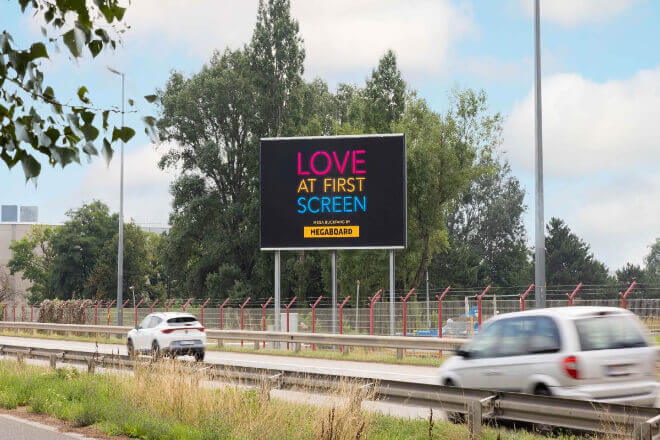
Roadside ads aren’t like indoor ads, which are “greenhouse nurtured.”
They are exposed to wind, sun, rain, and sandstorms every day. Therefore, choosing the right LED display screen is a complex matter.
First, the brightness must be high enough. Imagine your carefully crafted advertisement displayed under the blazing sun.
If the screen brightness is insufficient, the image might be “eaten up” by the sun, leaving passersby with only a blurry shadow.
A high-brightness LED screen is like wearing “sunscreen sunglasses”—no matter how glaring the sunlight, the text and images remain clearly visible, ensuring the advertising effect is not compromised.
Second, long-distance visibility is crucial. Drivers speeding by may only give an advertisement a few seconds of “gaze time.”
If the advertising content is blurry, the information will be missed.
A screen with strong long-distance visibility acts like a “telescope,” ensuring advertisements are clearly displayed even from tens or even hundreds of meters away, allowing every piece of information to grab attention within seconds.
Third, stable operation over a long period is also essential. Roadside advertisements are almost always on duty, some even 24 hours a day.
If the screen is prone to flickering, blacking out, or malfunctioning, the advertisement becomes a “sleeping screen,” a waste of investment.
A stable and durable LED screen is like a dedicated employee, always online on time, ensuring continuous advertising exposure.
Finally, environmental adaptability is crucial. Outdoor weather is unpredictable; rain, dust, sandstorms, high temperatures, and low temperatures can all occur.
If the screen has poor resistance, it is easily damaged.
A highly protective LED screen is like wearing “armor,” ensuring the advertisement remains brilliantly displayed regardless of wind or rain.
Outdoor LED displays are not a “one-size-fits-all” solution. Different types have different characteristics, just like different personalities, each with its own strengths.
Choosing the right screen is crucial for your advertisement to be both eye-catching and durable, capturing the attention of passersby on highways and streets.
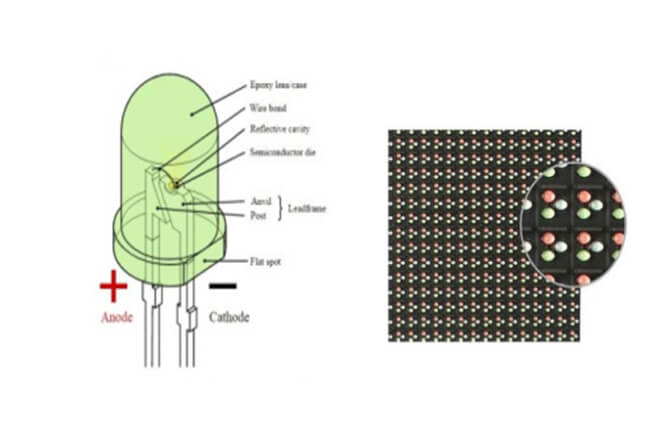
1) DIP (Direct In-line Package) LED Display:
DIP LED displays are a traditional, reliable option, using direct-in-line LED chip packaging technology.
Their advantages include high brightness, strong stability, and excellent weather resistance.
Many early outdoor advertisements used this technology, so the large screens you see in older urban areas or classic road sections are likely DIP screens.
While their resolution isn’t as high, and the image isn’t as detailed as newer LED screens, they remain incredibly stable even in harsh outdoor environments, making them a representative of durability.
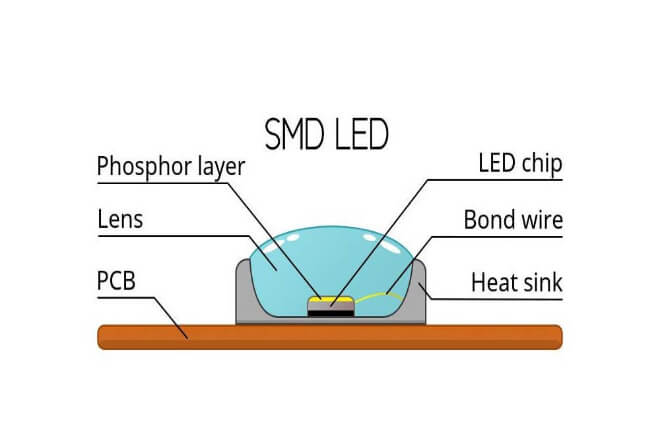
2) SMD (Surface Mount LED Display):
SMD LED displays represent the next generation of “high-quality images.” Through surface mounting technology, red, green, and blue LED chips are encapsulated within a single pixel.
This results in higher screen resolution, more detailed images, and richer colors, making the outdoor advertisement look like it’s been directly transferred from a mobile phone screen.
These screens are commonly used in high-end urban commercial areas, shopping malls, or highway exit advertisements.
Making the advertisement not only bright but also visually appealing, compelling viewers to look for more than a few seconds.
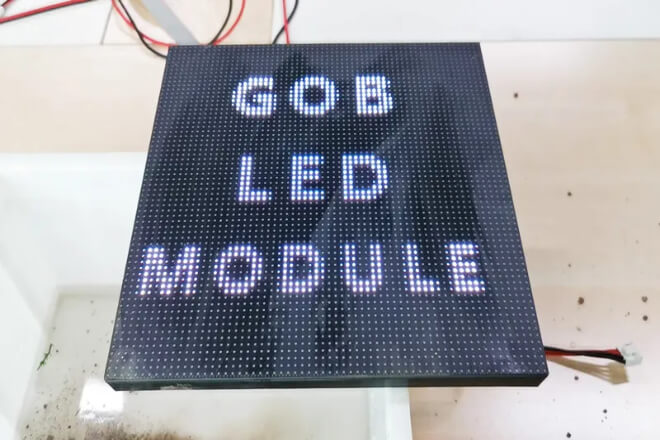
3) GOB-encapsulated LED displays:
LED displays utilize GOB technology, which coats the LED screen with a layer of transparent colloid, essentially giving the screen a “protective coat.”
This not only makes it waterproof and dustproof but also resistant to wind, rain, and direct sunlight, resulting in exceptional durability.
It’s like a “hardcore warrior” among outdoor advertising screens, steadily displaying information regardless of wind or rain, making it the top choice for long-term outdoor advertising.
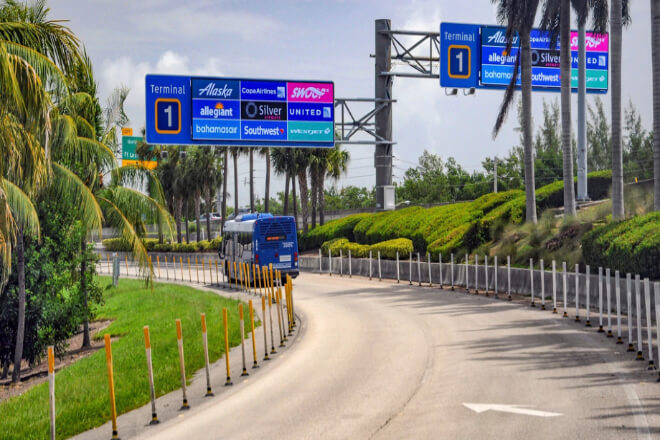
Choosing an outdoor LED display isn’t just about “looking good.” You need to consider the environment, viewing distance, brightness, and budget to select a truly suitable screen.
First, consider the roadside environment. If it’s on a highway or in areas with heavy rain, wind, or dust, the screen needs to be robust; GOB-encapsulated or high-protection DIP screens are more reliable.
In contrast, in milder environments like urban commercial districts and pedestrian streets, SMD screens with higher resolution and more refined images can be used to make advertisements more eye-catching.
Simply put, “use the armored warrior in harsh environments, and the delicate helper in mild environments.”
Next, consider the viewing distance. For distance from the screen, ultra-high resolution isn’t necessary; a larger pixel pitch is sufficient for clear viewing.
For closer proximity, a small-pitch, high-resolution screen is essential; otherwise, text and images will become blurry.
For example, P8, P10, and even P16 screens are commonly used along highways for their clarity and cost-effectiveness.
Small-pitch SMD screens are suitable for commercial streets and plazas, offering refined images, vibrant colors, and better advertising results.
Then there’s brightness and lighting conditions. During the day, under harsh sunlight, high-brightness LED screens (6000–10000 nits) with automatic adjustment are indispensable.
At night or on cloudy days, excessive brightness can be glaring, so adjustable brightness acts like “invisible lenses,” allowing for constant adjustment to the most comfortable setting.
Finally, there are budget and operational goals. For long-term, high-exposure campaigns in harsh environments, GOB or DIP screens are more durable.
For short-term campaigns aiming for high-quality visuals and strong brand impact, SMD screens are more appealing.
In short, by carefully considering the four factors of environment, distance, brightness, and budget, your LED screen can be both safe and stable.
As well as eye-catching and informative, allowing your advertisements to truly “run” on the roadside.
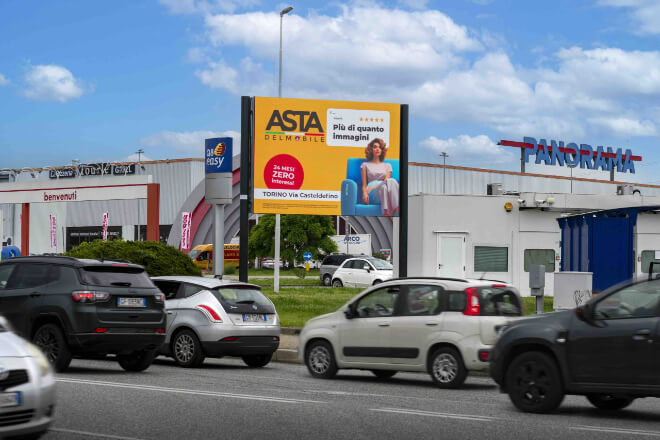
Besides screen type, brightness, and viewing distance, there are several “hidden skills” to consider for LED displays on highways or roadsides.
First is installation safety. An LED screen isn’t just something you can haphazardly hang up; it needs a sturdy steel structure support, wind and shock resistance, to prevent it from swaying in strong winds.
Think of it as putting “safety armor” on the screen, ensuring both stability and driver peace of mind.
Second is heat dissipation and power management. LED screens generate heat during prolonged high-brightness operation. Insufficient heat dissipation can damage the LEDs, potentially dimming the image.
Modern LED screens are usually equipped with fans or heat sinks and can automatically adjust brightness, ensuring the advertisements are always bright while saving on electricity bills—truly a “smart and worry-free helper.”
Third is content adaptation. No matter how good the screen is, if the advertising content is unsuitable, it may waste exposure.
Text should be concise and to the point, images clear and vivid, and animations should not be too complex.
Otherwise, drivers will only glance at them in a few seconds and won’t finish reading the advertisement.
Think of it as a “fast food menu” for highway advertising—you can get the gist of it in a few seconds.
Finally, there’s maintenance and durability. The outdoor environment is demanding; wind, rain, and sun all test LED screens.
Choosing waterproof, dustproof, and UV-resistant materials and regularly cleaning and inspecting them will ensure the screen operates stably for a long time.
In other words, LED screens not only need to be “eye-catching,” but also “resistant to wear and tear” to provide long-term illumination on the roadside.
In summary, besides choosing the right type, brightness, and distance, safety, heat dissipation, power supply, appropriate content, and durability are all crucial for the successful operation of highway LED displays.
By handling these small details well, your advertisements can truly “shine” on the road, safely and efficiently, ensuring every driver remembers your message in seconds.
 English
  Español
  简体中文
简体中文  Français
  日本語
日本語  한국어
한국어  العربية