
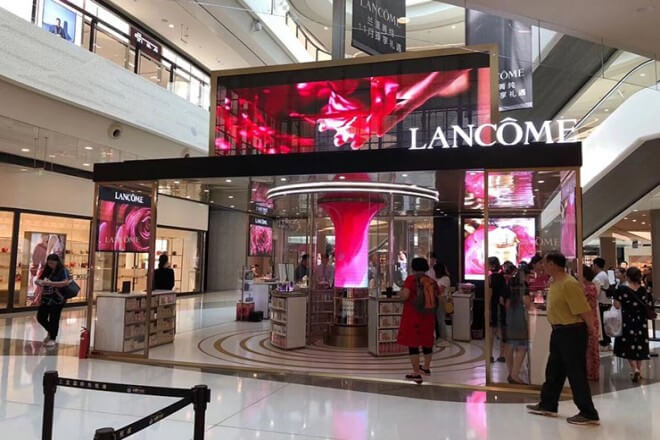
Why can pop-up stores attract a large number of customers in a short period of time? Is simply setting up a few display stands and posters enough? Actually, no.
The emergence of LED displays has opened up more possibilities for pop-up stores—they can grab the attention of passersby with eye-catching dynamic visuals, attract customer participation with interactive activities, and present brand stories more vividly.
Do you want customers to stay in the store longer? LED displays might be the answer.
1) Dynamic Brand Display Walls
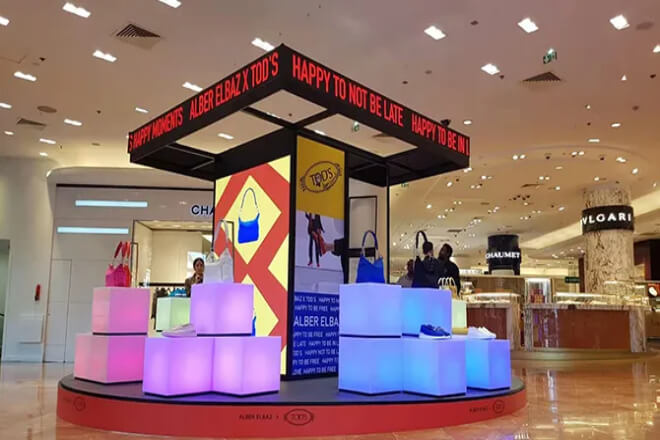
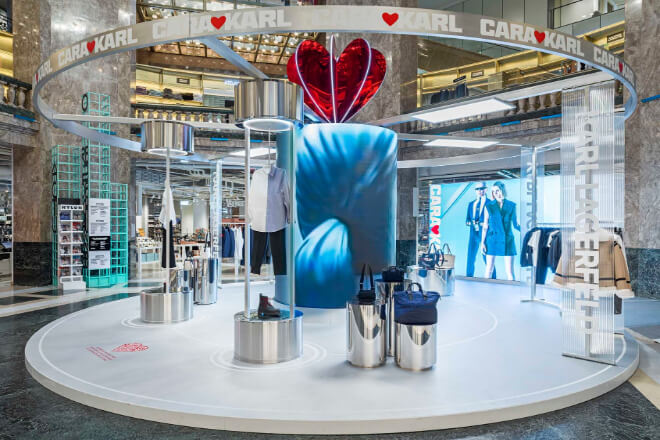
LED screens can become “moving walls,” directly presenting brand stories, product highlights, and company philosophy to customers.
Compared to static posters, dynamic visuals are more eye-catching and more likely to make people stop and look.
For example, Dior installed a floor-to-ceiling LED display in its pop-up store in Soho, New York, looping abstract light and shadow animations to simulate the Northern Lights, echoing the inspiration of its ski collection.
Customers were immediately drawn in upon entering the store, immersed in the changing light and shadow.
This visual impact not only made the brand story more vivid but also greatly increased its social media reach, with many customers actively taking photos and sharing them.
2) Interactive Product Displays
Touchscreen LED displays allow customers to swipe and click to learn about product information and usage methods.
This interactive experience increases engagement and extends customer dwell time in the store.
For example, a Volvo pop-up store combined LED screens and touch technology in its window display, allowing customers to play games in front of the transparent window while simultaneously viewing the car’s interior.
Customers not only “look at the car” but also participate in the interaction, enhancing the experience and attracting more potential customers to enter the store and learn more about the products.
3). Digital Display Windows
Transparent LED screens upgrade traditional window displays to dynamic digital displays, allowing customers to intuitively understand product content even from outside.
For example, a jewelry brand pop-up store installed transparent LED screens on its window glass, playing animations of gemstone cutting and wearing effects.
Passing customers were not only attracted by the dynamic displays but also actively entered the store to learn more about the products.
Compared to static windows, this method significantly improves the window display’s appeal and conversion rate.
4). 360° Panoramic Display
Curved or circular LED screens can present a 360° panoramic display, allowing customers to see product details from all angles and simulate usage scenarios, creating a more immersive experience.
Louis Vuitton has used flexible LED screens in pop-up stores in multiple cities. These screens can be pieced together into circular or curved structures to display rotating animations and detailed analyses of new handbags.
Customers standing in the center of the screen feel as if they are surrounded by products, providing a highly immersive experience. The screen modules are also reusable, balancing creativity and cost.
1) Site Size and Space Planning:
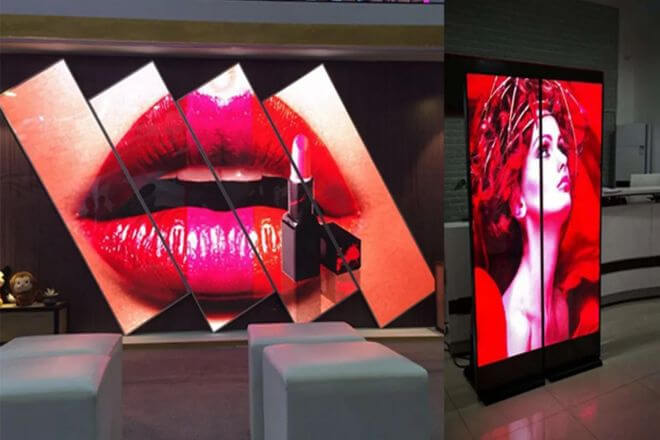
Pop-up stores typically have limited space, so when choosing an LED display, the first consideration should be the site size and overall layout.
The screen size should not be too large to avoid overwhelming the space, nor too small to affect the visual effect.
For example, a pop-up clothing store with an area of only 30 square meters might feel cramped and have a negative experience if an overly large LED wall is used.
A moderately sized screen can display complete content while retaining space for movement, allowing customers to move freely and improving the overall experience.
2) Viewing Distance and Angle
When selecting an LED display screen, the appropriate pixel pitch and brightness need to be determined based on the customer’s interaction distance with the screen.
A pixel pitch that is too large will result in noticeable graininess when viewed at close range; insufficient brightness may prevent clear display of content in bright environments.
For example, in a pop-up store in a shopping mall, the screen is typically only 2-5 meters away from customers.
A high-definition small-pitch screen with a pixel pitch of P2-P4 is recommended, ensuring sufficient brightness for clear visibility under sunlight or indoor lighting to attract customers’ attention.
3) Ease of Installation and Disassembly
Pop-up stores are characterized by short setup cycles and frequent relocations; therefore, LED displays should be chosen for their ease of quick installation and disassembly.
Modular designs or lightweight cabinets allow staff to complete setup quickly while facilitating transportation and reuse.
For example, some brands use modular, lightweight LED modules when opening pop-up stores in different cities, ensuring effective display while saving on transportation and installation costs.
4) Content Management System
Pop-up store content changes rapidly; therefore, the LED display screen must support remote control and real-time updates.
Through the backend system, brands can change advertising videos, product information.
Or interactive content at any time, maintaining the freshness and creative effect of the content.
For example, a trendy pop-up store can switch display animations daily according to different themes with a single click in the system backend.
Eliminating the need to recreate physical posters, greatly improving efficiency and flexibility.
5) Equipment Durability and Stability
Pop-up stores are used frequently, and LED displays need to remain stable under continuous operation.
Choosing high-quality equipment adapted to high-frequency use can avoid screen flickering, disconnections, or malfunctions, ensuring smooth displays during the event.
For example, the LED screen used in a beauty brand’s pop-up event underwent all-day testing, maintaining stable colors.
And smooth images even when playing dynamic content continuously for 8 hours, ensuring an uninterrupted customer experience.
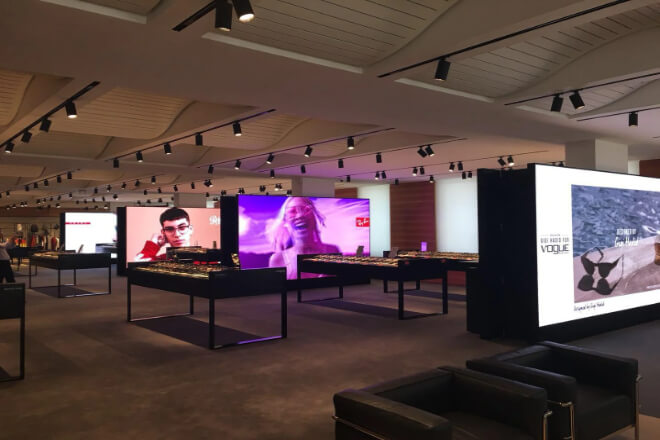
1) Increasing Customer Dwell Time and Purchase Intention.
Highly interactive LED displays can attract customers to stay longer, thereby increasing purchase opportunities.
Customers are not only attracted by dynamic displays but may also participate in touch interactions, virtual try-ons, or experience games.
For example, a clothing pop-up store used LED virtual fitting mirrors, allowing customers to quickly switch between different styles, take photos, and share them online.
Data shows that customers spent an average of 30% more time in areas using interactive LEDs than in regular display areas, while also increasing on-site conversion rates.
2) Increased Brand Exposure and Market Awareness
Unique LED display effects can strengthen brand impressions, making the brand more memorable for customers.
Dynamic lighting, transparent screens, and curved or irregularly shaped screens not only attract attention but also convey brand identity.
For example, the LED grid wall in the Dior Soho pop-up store created an immersive lighting effect, allowing customers to experience the creativity.
And technological sophistication of the luxury brand from the outset, thereby increasing brand exposure and discussion on social media platforms.
3) Creating Trending Topics for Brand Activities
Creative LED displays easily spark discussion and sharing on social media, thus generating trending topics.
Customers enjoy taking photos and checking in at fun, immersive scenes, uploading them to platforms like Instagram and TikTok, bringing secondary dissemination to the brand.
For example, a beauty brand pop-up store displayed real-time selfies or makeup trial photos uploaded by customers on LED walls.
Enhancing customer engagement and driving widespread social media promotion, creating a buzz around the event.
4) Multi-functional Revenue Streams
LED displays not only showcase brands and products but can also play third-party advertisements or partner content, generating additional revenue for the brand.
Especially in high-traffic scenarios like pop-up stores, screen advertising offers high exposure value and can quickly recoup costs.
For instance, some trendy brand pop-up stores use LED screens to display their own new products as well as advertisements from partner brands, achieving dual revenue from “display + advertising.”
5) Rapid Returns and Efficient Dissemination
Pop-up store events are short-lived and frequent, allowing LED displays to achieve massive exposure and rapidly disseminate brand information in a short time.
Through high brightness, dynamic visuals, and interactive experiences, brand information can quickly reach the target audience, creating a significant market impact.
For example, Louis Vuitton’s flexible LED screens, used in cross-city pop-up events, employed the same display solution across multiple locations.
Quickly garnering widespread attention for the new product and achieving efficient dissemination and rapid market feedback.
 English
  Español
  简体中文
简体中文  Français
  日本語
日本語  한국어
한국어  العربية