
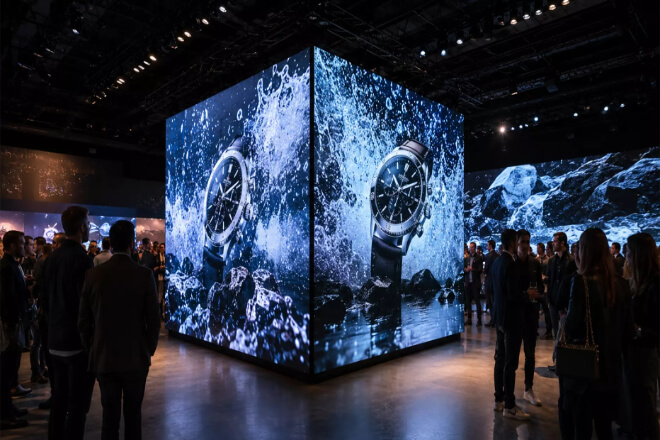
In the LED display field, image clarity is no longer simply about being “visible.”
For control rooms, broadcast studios, digital exhibition halls, and high-end conference spaces, the sharpness of text edges.
The richness of shadow details and the naturalness of color transitions can all affect the final viewing experience.
In recent years, MIP LED technology has gradually gained attention. So, can MIP LED screens present more delicate image details? What technologies does it rely on to achieve a more refined display effect?
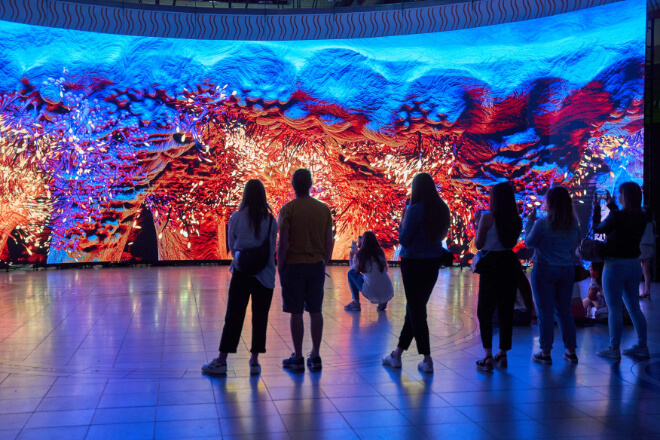
Imagine displaying a city night scene photo on a large LED screen.
From a distance, the building outlines and lighting effects look good, but upon closer inspection, you’ll find that the shadow details are not rich enough.
The building edges are slightly rough, and the color transitions are not natural enough.
This is the difference between image clarity and image detail.
Factors affecting the image detail of LED displays include not only resolution but also several other aspects:
Pixel pitch: Determines the pixel density per unit area, directly affecting the image detail when viewed up close.
Grayscale representation: Affects the transition from light to dark in an image, especially impacting details in shadows, dark areas, and gradient regions.
Color reproduction: Determines whether skin tones, natural landscapes, and complex images can display natural color gradations.
Brightness and contrast: Affect the visual distinction between light and dark areas.
Display correction: Affects the brightness and color consistency between different pixels, preventing localized color differences in the image.
For example, when displaying product design diagrams in a corporate conference room, viewers need not only to see the overall outline but also to discern small text, product textures, and local structures.
If the screen can only display a general image but cannot reproduce details, it will be difficult to meet professional display requirements.
Therefore, whether a MIP LED screen can display more delicate image details requires analysis from the perspectives of packaging technology and the entire display system.
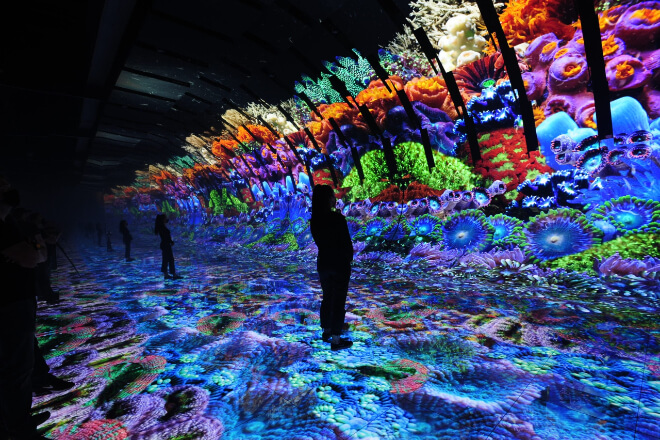
MIP, or Micro-LED Packaging Technology, is a technology that pre-packages micro-LED chips into independent devices.
And then mounts them onto the display module circuit board using surface-mount technology.
Compared to traditional single-chip SMD LED devices, MIP employs a different packaging approach, providing a new technological option for micro-pitch LED display products.
So, how does this packaging method relate to image detail?
First, it provides the technological foundation for micro-pitch displays.
MIP can be used to develop LED display products with even smaller pixel pitches.
With a smaller pixel pitch, more pixels can be arranged per unit area, allowing the display to present richer image information.
For example, in a digital museum displaying a historical map, higher pixel density helps to render fine text, lines, and patterns, allowing viewers to observe the content more clearly.
Second, independently packaged devices facilitate quality inspection and sorting.
MIP devices can undergo corresponding inspection and sorting during packaging and production, helping manufacturers control the brightness, wavelength.
And other optical characteristics of the devices, providing a foundation for overall screen color consistency management.
Finally, it offers more possibilities for display module design.
As packaging processes and product designs continue to evolve, MIP technology can support micro-pitch display solutions of different specifications.
Helping companies select suitable display products based on viewing distance and space requirements.
However, it’s important to clarify that MIP packaging itself doesn’t automatically equate to higher resolution.
Ultimately, image detail still depends on pixel pitch, chip performance, driving scheme, control system, and calibration process.
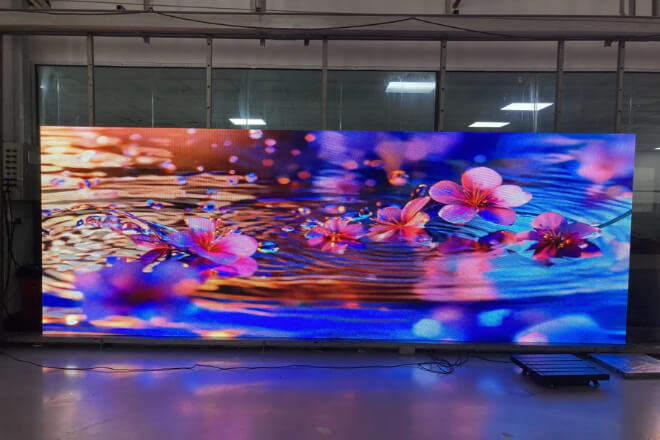
Even if two LED displays have the same pixel pitch, the actual viewing experience may differ.
This is because a detailed image is not the result of a single parameter, but rather the result of multiple display performance characteristics working together.
1). Grayscale performance:
Grayscale capability affects the screen’s ability to display different levels of brightness.
For example, when displaying a nighttime cityscape, building shadows, distant lights, and a dark sky need to be presented with different levels of brightness and darkness.
If grayscale performance is insufficient, details in dark areas may be lost, or the gradations may appear unnatural.
2). Color consistency:
On large LED displays, if there are differences in brightness or color between LEDs in different areas, local color casts may occur, affecting the overall visual effect.
The detection and sorting of individual MIP components can help with consistency control, but it also requires module calibration, full-screen calibration, and a stable driving system.
3). Contrast ratio:
For scenarios displaying photographs, film stills, and artistic content, the interplay between light and dark areas is crucial.
Good contrast helps highlight the subject and retain more visual depth.
4). Refresh rate and display stability:
If the screen is used to display fast-moving content, such as sports events, car commercials, or stage videos, refresh rate and dynamic display performance also need attention.
It’s important to note that refresh rate is not the same as video frame rate, nor does it solely determine the clarity of dynamic images.
Control systems, scanning methods, and driver design also affect the final result.
For corporate buyers, evaluating MIP LED screens shouldn’t focus solely on whether a single parameter is high enough, but rather on the overall performance of the entire screen under real-world content.
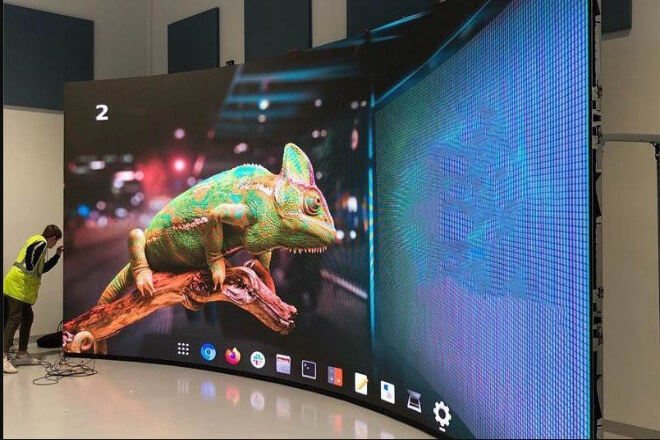
The delicacy of an image depends not only on displaying more pixels, but also on the natural transitions between different image elements.
Complex content such as people, architecture, natural landscapes, and gradient backgrounds are particularly well-suited to showcasing the overall image quality of an LED display.
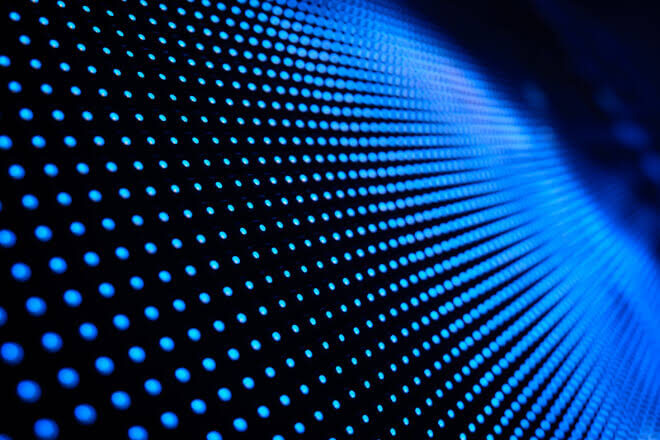
If a company is considering purchasing micro-pitch LED displays, it will typically encounter different technologies such as SMD, COB, and MIP.
So, what are the differences between them in terms of image detail presentation?
1). SMD packaging:
SMD uses packaged LED devices individually, mounted onto circuit boards using surface-mount technology, and has a mature production and maintenance system.
Its display effect is closely related to device size, pixel pitch, sorting, and calibration processes, and can meet a large number of common indoor and outdoor display needs.
2). COB packaging:
COB directly mounts LED chips onto a circuit board and then encapsulates the entire device.
Its integrated structure facilitates micro-pitch displays and provides some surface protection.
Actual image performance still depends on chip quality, packaging process, driving, and calibration levels.
3). MIP packaging:
MIP pre-packages miniature LED chips into individual devices and then mounts them onto a circuit board using surface mounting.
The detection and sorting of these individual devices provides more control over brightness, wavelength, and color consistency management, and also offers new options for micro-pitch product development.
So, which technology presents the best image detail? In reality, there is no absolute answer that is independent of specific product configurations.
If a project prioritizes a mature production and maintenance system, SMD still has application value; if the focus is on integrated structure and surface protection, COB can be evaluated;
If the goal is to develop micro-pitch display solutions using miniature independent packaged devices, then MIP should be the primary focus.
For enterprise buyers, the most reasonable comparison method is to conduct actual image comparisons based on similar pixel pitch, brightness, grayscale.
And viewing distance, rather than judging superiority or inferiority solely based on the name of the packaging technology.
Ultimately, the truly worthwhile choice is not the most advanced-sounding technology, but rather a product that meets the project’s image quality, operational stability, and long-term maintenance requirements.


 English
 Español
 简体中文
 Français
 日本語
 한국어
 العربية