

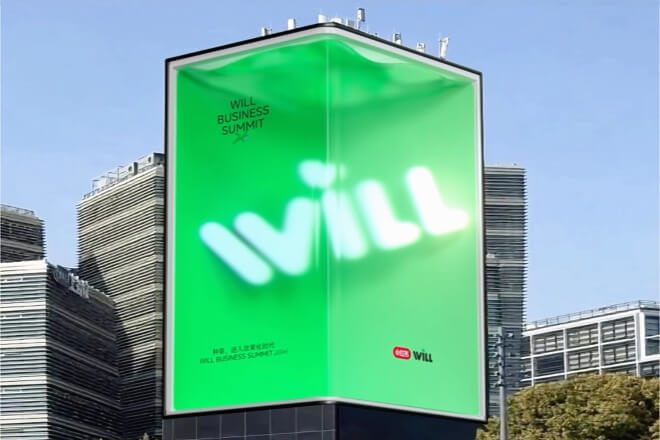
More and more cities are now installing naked-eye 3D screens on their facades. Compared to ordinary light screens, its visual effects are novel and stunning.
It can create distinctive city landmarks, boost the popularity of commercial districts, and stimulate nighttime consumption, making its advantages very prominent.
First, it creates unforgettable city landmarks. Many overseas cities have similar nightscapes, with monotonous neon lights that are hard to remember.
But naked-eye 3D screens have an inherent “out-of-the-box” quality, with vivid and stunning 3D dynamic images.
The most classic example is the “giant wave screen” in Seoul’s COEX shopping district.
The realistic seawater seems to burst through the screen and crash onto you, creating a visually stunning effect that consistently tops the trending searches on overseas social media platforms.
Another example is the 3D art screen in New York’s Times Square, which frequently displays floating planets and 3D animation effects.
Making it a must-visit landmark for tourists worldwide and effortlessly giving the city a unique trendsetting identity.
Secondly, it elevates the commercial prestige and popularity of shopping districts and buildings.
High-end shopping districts are ubiquitous overseas, leading to fierce competition and the inconsistency of ordinary glass curtain walls and billboards that fail to attract attention.
However, naked-eye 3D screens act like a “traffic filter” for shopping districts, instantly enhancing the sophistication and recognizability of buildings.
Top shopping districts like Shinjuku in Tokyo and Pavilion Kuala Lumpur frequently use this large screen to display short films showcasing new products from international brands like LV and Dior, as well as content related to popular anime IPs.
Its inherent ability to attract fans draws a steady stream of tourists from around the world, instantly doubling the commercial value and international exposure of these shopping districts.
Finally, it illuminates the city nightscape and revitalizes the nighttime economy.
Previously, nights in overseas cities were mostly characterized by streetlights and static lighting, creating a monotonous and deserted atmosphere, with many tourists quickly leaving after viewing the night scene.
The naked-eye 3D screen completely breaks this monotony. Its cool 3D effects instantly bring the city night to life, like a never-ending outdoor light and shadow show.
The captivating visuals keep locals and tourists engaged, extending their nighttime shopping and leisure time.
This directly boosts consumption in surrounding restaurants, trendy stores, and entertainment venues.
Simultaneously, short videos quickly go viral online, continuously driving traffic to the shopping district and fueling the nighttime economy.
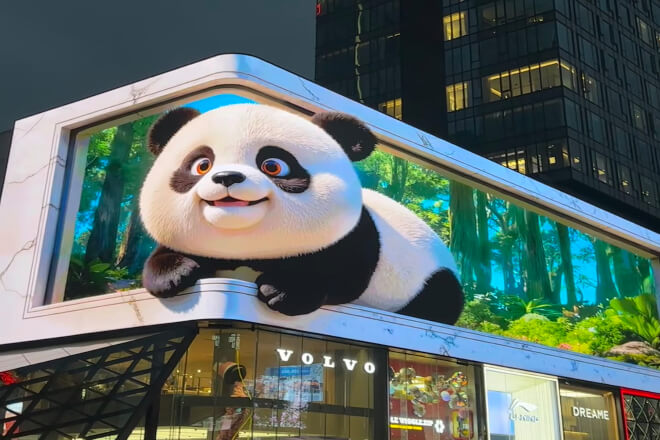
While naked-eye 3D screens offer stunning effects and numerous advantages, not just any overseas building can successfully install them and maintain stability.
To achieve both safety and excellent visual effects, three essential conditions must be met, none of which can be omitted.
First, the building structure must be sufficiently robust and sturdy. Naked-eye 3D screens differ from ordinary light boxes;
They are large and heavy, essentially placing a giant “heavy canvas” on the exterior wall, requiring extremely high wall load-bearing capacity.
Many old European-style retro buildings and simply renovated buildings overseas have aging walls with weak load-bearing capacity.
Which simply cannot support the weight of the screen. Forcing installation would pose significant safety hazards.
Second, the wall size and viewing distance must be precisely matched.
3D stereoscopic effects are very “scene-dependent,” requiring a perfect fit; a larger screen does not necessarily mean a better effect.
Just like the narrow pedestrian shopping districts in Seoul, where the streets are very close together, even with a super-large screen.
Passersby standing too close can only see fragmented images and completely fail to experience the immersive, three-dimensional effect.
In contrast, places like Times Square in New York and the downtown shopping districts of Kuala Lumpur offer open spaces and suitable viewing distances.
The perfect match between the screen size and the space allows for an immersive, full-screen 3D visual effect.
Thirdly, the surrounding environment must be suitable for visual dissemination, avoiding obstructions and strong light interference.
The viewing experience of outdoor large screens is easily hampered by the environment.
If the building’s exterior faces direct midday sunlight, the screen image will appear washed out and blurry, making the content almost unreadable during the day.
If the surrounding area is densely packed with tall buildings and trees, obstructing the view, the 3D effect will be significantly reduced.
This is why high-quality glasses-free 3D screens are mostly located in prime locations with open.
Unobstructed views and high foot traffic, allowing them to fully unleash their visual appeal and attract customers.
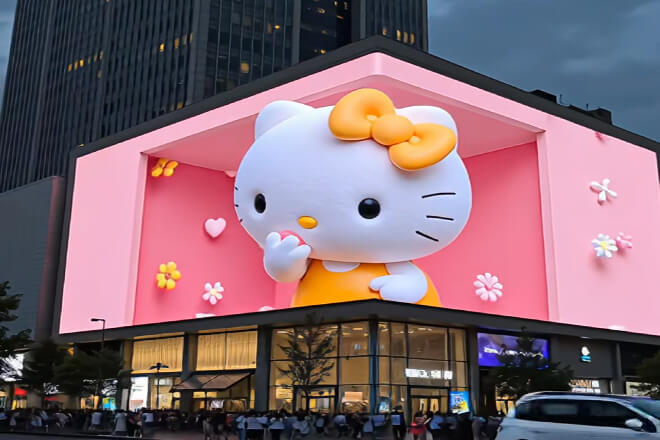
Many overseas purchasing clients easily fall into the trap of mistakenly believing that buying a regular large screen will provide a 3D effect.
True naked-eye 3D viewing is the result of a combination of “customized content + core hardware + software/hardware compatibility,” and this is the core practical point for client procurement and acceptance.
First, custom-designed 3D content creates visual illusions. The core of naked-eye 3D is “visual magic,” relying on customized image design to deceive the human eye.
When purchasing, it is essential to request the vendor to customize perspective-shifting images based on the screen size and viewing angle.
For example, the giant waves in Seoul and the floating effects in New York are custom-designed out-of-screen effects.
Ordinary flat videos cannot produce a 3D texture; this is the key to distinguishing true from false 3D.
Second, matching hardware parameters and adapting to outdoor scenarios. Hardware determines the upper limit of 3D effects, with clear procurement reference standards:
In overseas outdoor environments with strong light, the brightness must be ≥5500 cd/㎡ to avoid a washed-out image during the day;
The pixel pitch is preferably P2.5-P4, balancing clarity and viewing experience at a distance. Narrow streets are best suited for small to medium-sized screens.
While open commercial districts are best suited for ultra-large screens; parameter matching is crucial for maximizing results.
Thirdly, a combination of hardware and software is essential for a reliable solution.
Buying only hardware without customized content renders a large screen merely an ordinary billboard;
Substandard hardware will result in blurry and distorted content, no matter how cool it is.
Overseas best-selling large screens all use complete solutions: high-quality hardware as a foundation, paired with continuously updated exclusive 3D creative content.
Procurement from preferred integrated service providers ensures a hassle-free, influencer-level 3D display experience.
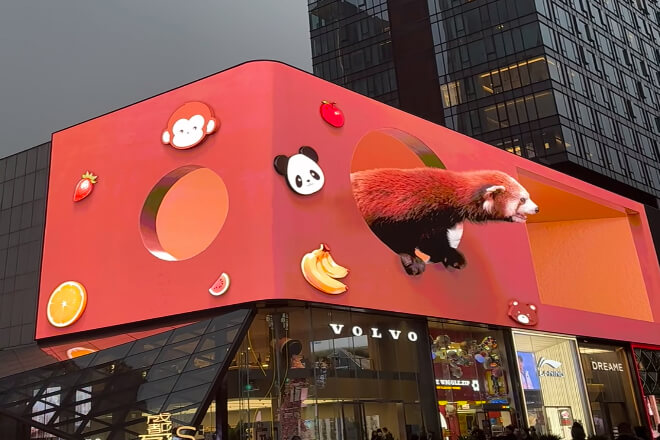
Glasses-free 3D large screens are not a one-size-fits-all solution; choosing the right deployment scenario is key to achieving high traffic and high returns!
Based on numerous overseas deployment examples, these three types of venues are the golden choices, maximizing commercial effectiveness.
Cities’ core commercial centers and main thoroughfares are the golden locations for deploying glasses-free 3D large screens.
These areas attract massive foot traffic from across the city, maximizing exposure and making them excellent platforms for monetizing large screens.
Top-tier commercial districts like Manhattan in New York and Gangnam in Seoul boast constant foot traffic.
Stunning 3D screens can instantly capture the attention of passersby, maximizing commercial value for brand promotion.
Creating a vibrant atmosphere, and attracting offline customers, resulting in a highly profitable return on investment.
City landmarks and large commercial complexes are also highly suitable application scenarios.
These buildings inherently possess top-tier visibility and city recognition; pairing them with naked-eye 3D screens creates a powerful synergy, doubling their visual appeal.
The exterior screens of the Petronas Twin Towers in Kuala Lumpur and the Shibuya complex in Tokyo leverage the building’s inherent influence.
Adding cool 3D effects to refresh the city’s visual impression, significantly enhance the building’s prestige and commercial value, and create a unique urban landmark.
Popular tourist attractions and nighttime consumption hubs are perfectly suited to the nighttime tourism benefits of naked-eye 3D screens.
These scenarios emphasize nighttime experiences, but often suffer from monotonous nighttime scenery and insufficient atmosphere, making it difficult to retain tourists for overnight spending.
Adding a naked-eye 3D screen instantly unlocks new immersive nighttime tourism scenarios, enriches the nighttime visual experience, retains visitors’ time.
And boosts consumption in surrounding restaurants, cultural and creative industries, and leisure and entertainment, easily revitalizing the nighttime economy of the entire area.
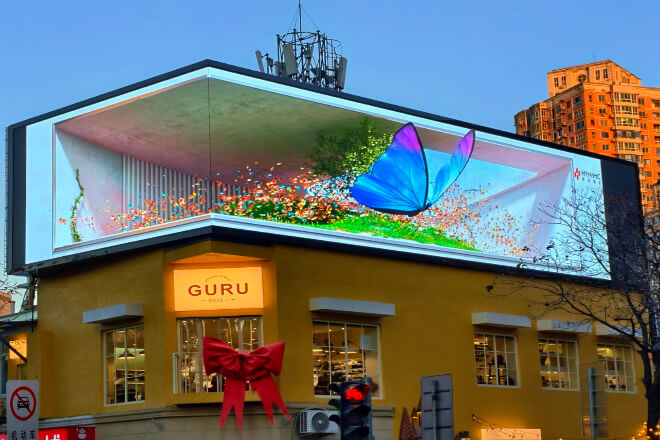
The installation of the screen is just the beginning. Neglecting operation will cause even the most dazzling equipment to gradually become idle. Long-term operation requires focusing on three core areas.
Even the best visual effects cannot withstand repeated viewing; viewers easily become aesthetically fatigued.
3D screens in popular commercial districts like Seoul and New York regularly update creative content, creating new 3D short films in conjunction with festivals, IP collaborations, and brand events.
In the early stages of cooperation, it is essential to confirm the supplier’s ability to continuously produce content to maintain the screen’s long-term appeal.
Outdoor screens are exposed to sun and rain year-round, and energy consumption and maintenance are continuous fixed expenses.
Large-area LED screens consume considerable electricity, and the costs of module aging, circuit repair, and replacement of waterproof components also apply.
Intelligent dimming and timed on/off systems can be integrated to reduce electricity costs.
Annual maintenance packages can be signed to lock in operating expenses in advance, preventing uncontrollable costs later.
The long-term viability of a project ultimately depends on commercial monetization and return on investment.
Naked-eye 3D screens primarily rely on brand advertising and commercial event placements for profitability.
Therefore, it’s crucial to plan the tenant mix and pricing rules in advance, integrate with nighttime tourism and cultural activities to increase revenue, and accurately calculate the payback period.
Stable revenue generation is essential for the project’s healthy and sustainable operation.


 English
  Español
  简体中文
简体中文  Français
  日本語
日本語  한국어
한국어  العربية