

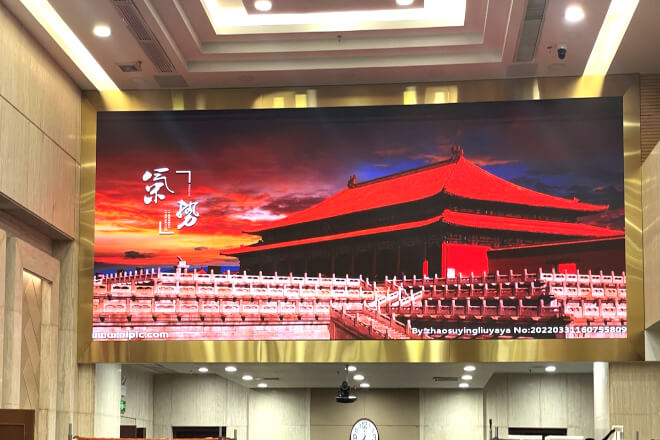
The biggest concern at government events isn’t “crowds,” but “information not being delivered effectively”—agenda changes go unnoticed, notices are sent but missed, and staff end up running around verbally providing updates.
In this situation, LED displays act like a “timely secretary who never misses a notification,” making information delivery faster and more accurate.
First, policy content and meeting agendas are clearly displayed. Whether it’s a policy release conference, a working meeting, or a large forum, LED screens can directly display the meeting theme, agenda, and key points.
Attendees can simply look up and know “where the discussion is,” without having to look down to flip through materials or worry about “turning to the wrong page.”
For example, at a government investment promotion meeting, as soon as guests enter, the large screen clearly displays the day’s agenda and key sessions.
There’s no need for attendees to ask each other “What time is it, which session?”, instantly making the event appear more professional.
Secondly, it allows for real-time, synchronized information updates.
For instance, adjustments to the meeting agenda, changes in leaders and guests, and the release of ad-hoc notices can all be immediately displayed on the screen.
Previously, staff had to notify everyone individually; now, it’s all done on one screen.
For example, if a panel discussion originally scheduled for 3 PM is moved up, everyone receives the information immediately upon the large screen update.
Far more efficient than simply calling out names and avoiding the awkwardness of not knowing.
Furthermore, it reduces the use of traditional paper materials. Meeting materials, agendas, and notifications can all be displayed digitally.
Eliminating the need to print thick stacks of documents for every event. This is not only more environmentally friendly but also makes the event appear more modern.
Finally, its greatest value lies in improving the accuracy and efficiency of information transmission.
Unified information release and updates reduce human error, making event organization smoother and improving the attendee experience.
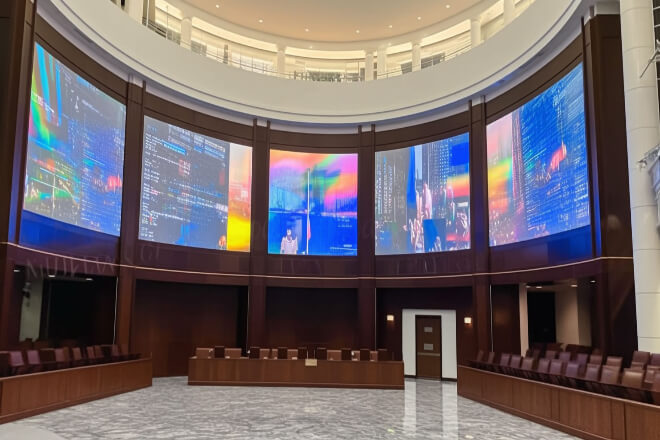
Government events often emphasize a sense of solemnity. However, solemnity does not equate to monotony.
If only a backdrop and banners are used, the event can appear “orderly but lifeless.”
The addition of LED displays acts like a “visual filter,” making the entire event both formal and impactful.
Firstly, the main visual reinforces the event’s theme. Whether it’s a policy announcement, city promotion, or the launch of a major project, LED screens can use a unified main visual design to “visualize” the theme.
For example, a city development theme can use flowing city silhouettes, while an industry launch can use dynamic, technologically advanced graphics, allowing viewers to immediately grasp the key points.
For instance, at a new district development launch event, the city skyline unfolds gradually on the screen, with the theme text appearing in the center.
Even before the speech begins, the audience has already “understood the theme.”
Secondly, LED displays provide visual support for the opening ceremony and speeches.
During leaders’ speeches or important presentations, LED screens can simultaneously display keywords, key data.
Or supplementary visuals, making the content clearer and easier to understand and remember.
For example, when discussing “regional economic growth,” the screen simultaneously displays growth curves and key industry charts.
Which is more intuitive than verbal explanations and easier for the audience to understand, preventing situations where people “hear but don’t remember.”
Furthermore, LED screens significantly enhance the overall sense of ceremony at events. The combination of visual elements.
Opening countdown, themed animation, logo display, and synchronized lighting—transforms an event from a “regular meeting” into a “formal launch event.”
For example, ten seconds before the opening, the large screen begins a countdown, the background slowly flows, and the music progresses in sync.
Everyone in the audience naturally quiets down, focusing their attention on the main stage. This atmosphere is difficult to achieve with traditional setups.
Finally, it enhances the on-site participation experience.
It’s not just about “watching a meeting,” but more like “entering a complete exhibition space.” With visual unity, audience participation and focus are significantly increased.
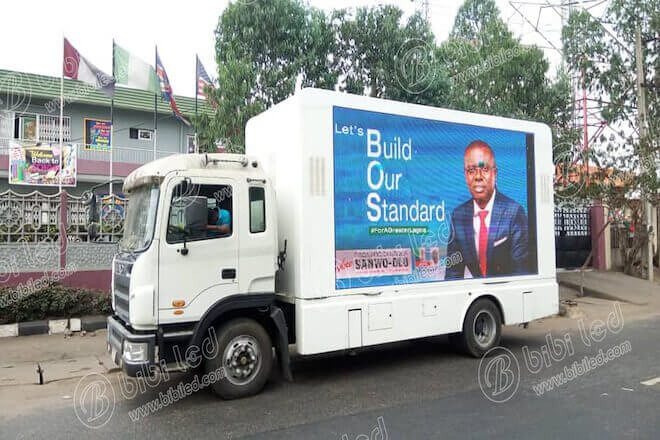
In public information dissemination, the biggest concern isn’t that the information is unimportant, but rather that some people can’t see it, some can’t understand it, and some miss key content.
The value of LED displays lies in transforming “information dissemination” from a one-way notification into a more efficient form of public communication.
First, it enables real-time dissemination of notices and announcements. Whether it’s government notices, community announcements, or event reminders, LED screens can update them instantly.
Compared to paper posters or single-channel distribution, it’s more eye-catching and easier for passersby to notice.
For example, a water outage notice might be posted at the community entrance, but many people would miss it.
However, with the LED screen displaying the information, residents can see the “water outage time tonight” from afar, reducing the embarrassment of only discovering it upon arrival home.
Second, it facilitates rapid coverage and dissemination of emergency information. In cases of sudden weather changes, traffic control, or emergency alerts.
LED screens can quickly switch content, providing prominent notifications to the public. Compared to hierarchical notifications, this method is more direct and efficient.
For instance, when a heavy rain warning is issued, the screen can immediately switch to a high-contrast display: “Heavy Rain Warning, Please Be Careful.”
Allowing the information to reach a wider audience in a short time, making it more intuitive and less likely to be overlooked than a simple broadcast.
Furthermore, it significantly improves the efficiency of public information delivery. In high-traffic areas such as train stations, squares, and government service halls.
LED screens can continuously display information, ensuring that people arriving at different times see the same content and avoiding the “missing a turn means missing information” phenomenon.
More importantly, this method enhances information transparency. More timely, consistent, and standardized information disclosure helps improve public access to government information and builds trust.
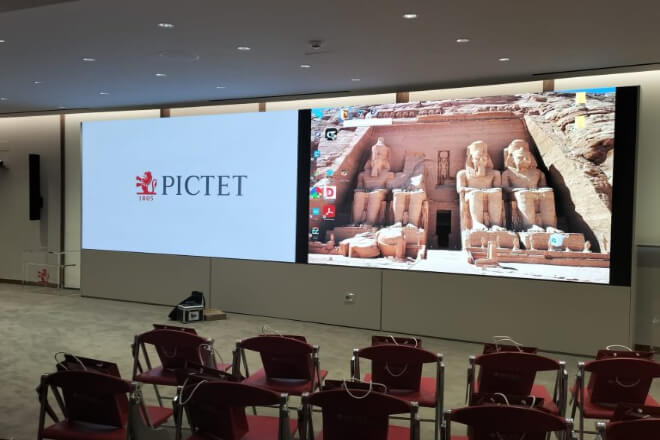
Activities. Modern government activities are no longer just about “on-site participation.”
Often, the on-site location is just the starting point; the real dissemination extends beyond the screen.
Therefore, the role of LED displays has evolved from a “on-site display tool” to a “communication amplifier + interactive connector.”
Firstly, it supports simultaneous online and offline display. On-site footage, meeting content, and event themes can all be clearly presented on LED screens.
Simultaneously outputting live broadcast signals so that online viewers see almost identical content to that on-site.
For example, in a city promotion event, on-site audiences see the live feed on the main stage LED screen.
While online viewers see the same visual content—essentially “copying” the event onto the internet, removing spatial limitations.
Secondly, real-time interactive content enhances engagement. Displaying voting results, message boards, interactive bulletin board comments.
Or Q&A feedback on LED screens can transform the public from “viewers” into “participants.”
For example, during policy interpretation events, attendees can submit questions via their mobile phones, and the large screen will display a real-time list of frequently asked questions.
The host can directly answer questions based on the screen content, creating a sense of participation—”everyone is discussing”—rather than a one-way lecture.
Furthermore, it significantly expands the event’s reach. The LED screen itself is a visual focal point.
Many photos and videos will use it as a background, then spread through social media, creating “secondary dissemination.”
For instance, a prominent city-themed image or iconic slogan on the main background screen easily becomes the “main visual background” in short videos, naturally reaching a wider audience.
Finally, it can significantly increase public attention. Because the information is more vivid, the visuals more intuitive, and the interaction more intense.
Public interest in participating in the event will be higher, transforming “knowing there’s an event” into “being willing to follow the event.”
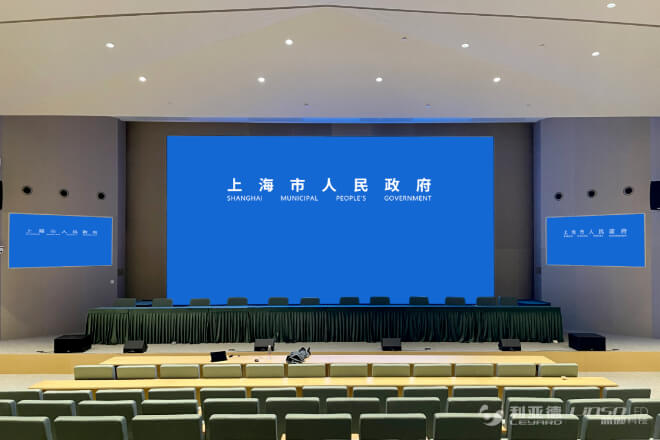
Government activities are gradually shifting from “offline organized” to “digitally collaborative,” and the role of LED displays is no longer just a “display tool,” but more like a “live digital terminal.”
It transforms activities from experience-driven to a more controllable and efficient digital operation.
Firstly, it supports remote unified content control.
Through the backend system, content can be uniformly distributed across different locations and screens, achieving centralized management.
Whether in the main venue or branch venues, information can be updated synchronously, reducing the complexity of on-site individual operations.
For example: In a cross-regional video conference, if the agenda content is adjusted in the main venue, the system updates with one click.
And all branch venue LED screens switch displays synchronously—eliminating the need for manual notifications and avoiding the problem of “information asynchrony.”
Secondly, it improves the efficiency of event execution. From agenda display and content switching to information dissemination.
Everything can be completed through system presets or automatic scheduling, reducing manual intervention and making on-site execution smoother.
For example, as an event progresses through different stages, the system automatically switches background images, agenda prompts.
And topic content, eliminating the need for staff to manually change PowerPoint presentations. The entire process resembles an “automated meeting system.”
Furthermore, it better adapts to the needs of smart government development. With the advancement of digital government construction, information dissemination.
Meeting organization, and public displays are all evolving towards intelligence, making LED displays a key node connecting “information systems” and “real-world scenarios.”
For instance, government service halls can access data platforms in real time, directly presenting the latest policy interpretations, service guides, or data visualizations on large screens, achieving “data updates, screen synchronization.”
Finally, it makes LED displays an important tool for digital events. It’s not just about “displaying,” but about participating in the entire event process management.
Extending from content presentation to information scheduling and on-site control.


 English
  Español
  简体中文
简体中文  Français
  日本語
日本語  한국어
한국어  العربية