
Ten years ago, LED displays were more like “giant, illuminated billboards.”
But now, they’re appearing in more and more unexpected places: stadiums, shopping malls, train stations, even ski resorts and racetracks.
They’re no longer just for “display purposes,” but are gradually becoming tools that “go wherever information is needed.”
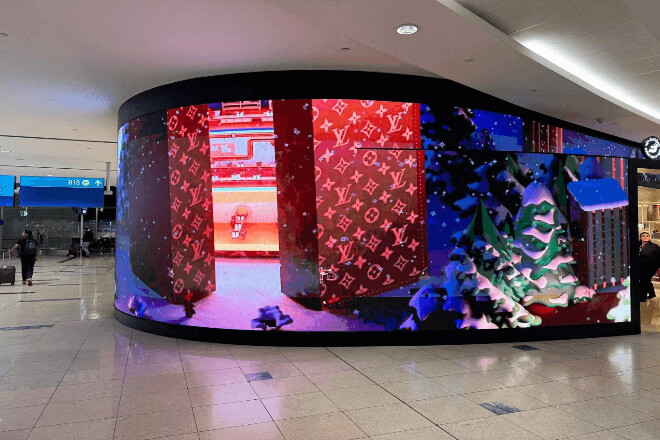
Previously, LED displays were like “universal media players”—they could be used anywhere, but their functionality was limited: playing advertisements, showing videos, looping content—relatively simple functions.
Now, things have changed. They’re increasingly moving in one direction: not the screen adapting to the content, but the screen adapting to the scenario.
Different industries have very specific needs for information display. For example, sports stadiums need scores, replays, and a specific atmosphere; shopping malls need promotions, customer flow, and conversions.
Corporate lobbies need brand image and a good reception experience; transportation hubs focus more on real-time information and efficient delivery.
The focus is no longer on “being able to play content,” but on “how to use it better.”
To give a very intuitive example: the same LED screen might be used for “limited-time discounts + crowd guidance” in a shopping mall, “scores + match pacing” in a badminton hall, and “brand story + honor display” in a corporate lobby.
The screen is still the same, but the logic is completely different.
This also means that LED displays are gradually transforming from “content players” into “problem-solving tools.”
For example, helping shopping malls increase conversion rates, helping venues improve the viewing experience.
And helping companies strengthen brand awareness—it’s no longer just about “displaying something,” but about “solving a problem.”
Especially since applications beyond advertising are rapidly increasing, interactive displays, data visualization, operations management, information dispatch.
And more are all starting to rely on LED screens. Often, it’s no longer just an advertising space, but a “multi-functional information terminal.”
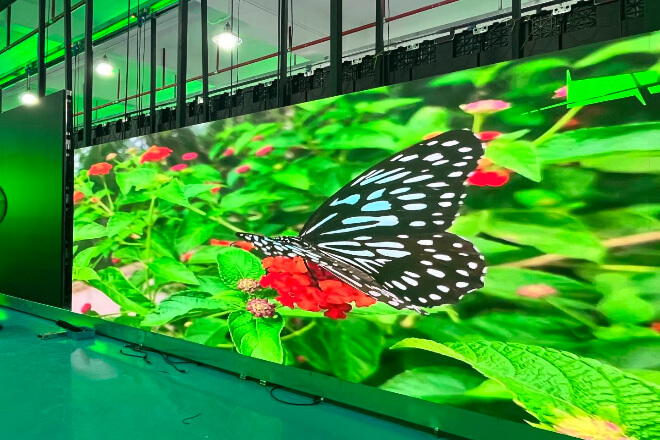
The biggest fear when choosing an LED display isn’t “choosing an ordinary one,” but “using it in the wrong place.”
If the scenario isn’t right, the effect will be like “wearing the wrong size shoes”—it looks okay, but it’s awkward to use.
First, a mismatch between pixel pitch and viewing distance can easily lead to problems.
For example, in close-range scenarios like conference rooms, using screens with a large pixel pitch results in viewers in the front rows seeing tiny pixelated blocks, making the image appear like a mosaic.
Conversely, using small-pitch screens in the viewing area of a stadium can be overly detailed, costing more money but not delivering the desired advantage.
Secondly, mixing indoor and outdoor screens directly impacts the viewing experience.
For instance, a high-brightness outdoor screen moved into an indoor conference room becomes as bright as a flashlight when the lights are on.
Conversely, an indoor screen placed in an outdoor plaza becomes practically invisible under sunlight, forcing viewers to guess the image.
Matching brightness with the environment is also common. For example, in a shopping mall atrium with soft lighting, using high-brightness mode makes the screen look like a glowing billboard, causing eye strain after prolonged viewing.
In dimly lit exhibition halls, insufficient screen brightness makes the content appear uninspired and less appealing.
Finally, a mismatch between equipment performance and usage intensity can also create problems. For example, a venue requiring 24-hour continuous playback using lightweight equipment is prone to “fatigue” over time.
Conversely, using excessively high-end equipment for occasional events feels like “using an aircraft carrier to deliver takeout.”
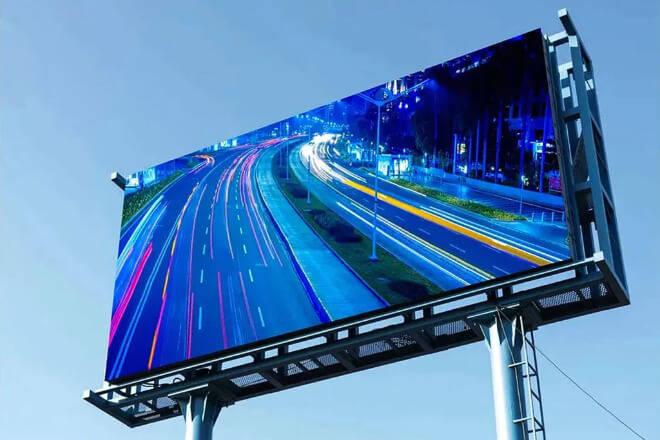
Today’s LED displays are no longer about simply displaying a poster; they’re more like a constantly online “content player,” or even a dynamic stage backdrop. This flexibility expands the application scenarios.
First, information can be updated in real time. For example, at a sporting event, scores change instantly; in a shopping mall, a “limited-time discount” in the afternoon can switch to “evening event recommendations” in the evening.
Without changing screens or remaking the visuals, the content comes alive on its own.
Second, video, data, and dynamic switching enrich the expression. For example, the same screen in an exhibition hall can play a brand promotional video one second and switch to product parameters the next.
A little while later, it transforms into interactive data visualization—like a single screen simultaneously “telling a story, making an introduction, and delivering a demonstration.”
Meanwhile, remote management makes the operation much easier. Previously, it might have required plugging in USB drives and adjusting equipment on-site.
Now, a few clicks in the backend are all it takes for the large screens in stores nationwide to update content synchronously.
For example, when a chain brand holds an event, headquarters can release the information with one click, and all stores can simultaneously “change their screens,” maximizing efficiency.
Finally, the more flexible the content, the more application scenarios it has. When a screen can display advertisements, publish information.
And provide interactive displays, it’s no longer just a “display device,” but becomes a “multi-functional information window.”
Today, it can be a salesperson in a shopping mall, tomorrow a guide in a showroom, and the day after tomorrow a member of the atmosphere team at an event.
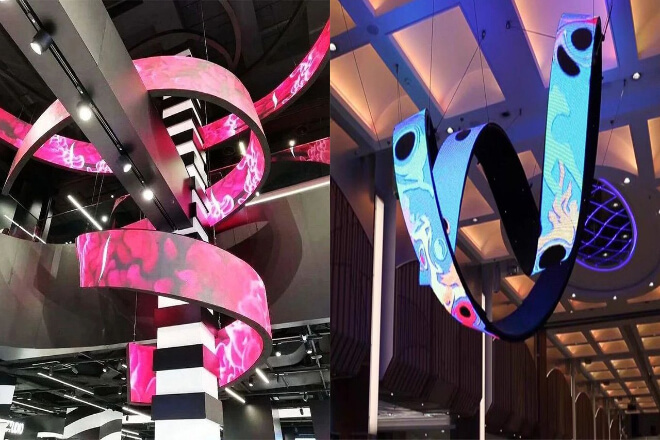
Many people initially think that LED displays only “make a venue look more upscale,” but as they use them, they discover a hidden attribute: incidentally helping to make money.
First, advertising displays can directly become additional revenue. For example, large screens in shopping mall atriums can broadcast brand activities during the day and switch to rent out advertising space for different businesses at night.
Sports stadium sidewalk screens are even more valuable, serving as “prime advertising spots.”
Brands appear on camera as soon as the game starts, meaning they’re seen repeatedly for a single payment.
Secondly, they increase the exposure efficiency of stores or venues. For example, a brand store relying solely on posters might be easily forgotten by passersby.
However, if there’s a dynamic LED screen at the entrance displaying new products and promotional information.
Many people will be tempted to take a second look—and that glance often leads to entering the store.
Simultaneously, they increase user dwell time. For instance, if an interactive raffle or dynamic visual content is playing in the mall atrium.
Someone who was initially just passing by might stop to see if there’s anything they can participate in.
A moment’s pause creates a sales opportunity; this small time difference is often crucial.
Finally, LED displays themselves are gradually becoming “profit-generating tools.”
They’re no longer just expensive equipment but “multi-functional money-making screens” that can rent out advertising space, host event displays, and collaborate with brands.
In some scenarios, a single screen can even recoup its cost while in use.
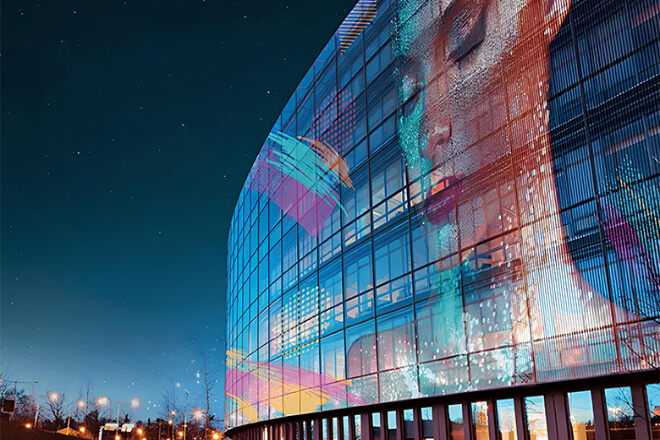
The increasing prominence of LED displays is not accidental; it perfectly aligns with the pace of digital transformation—everyone is seeking ways to make information faster and more intuitive, and LEDs are the most prominent outlet for this.
First, cities and industries are becoming increasingly digital. For example, in smart business districts, customer flow, events, and promotional information are updated in real time.
In sports stadiums, scores, data, and replays are all displayed systematically. What used to take a whole day to display as a poster is now refreshed on large screens every second.
Second, information presentation increasingly needs to be instantly understandable. For example, an event announcement: a paper notice might take a long time to read.
But on an LED screen, a simple phrase like “Match starts tonight at 8 PM + real-time countdown” is enough for a passerby to grasp the key points at a glance. The more complex the information, the more this intuitive approach is needed.
Simultaneously, the integration of LED screens and intelligent systems is becoming increasingly close.
For example, in sports events, the scoring system updates instantly, and the large screen synchronizes immediately; in shopping malls, changes in customer flow data automatically adjust the screen content.
Even large screens at city intersections can switch information based on time periods—it feels like “the screen reacts instantly to any background movement.”
Ultimately, it’s gradually becoming a fundamental information carrier. In many scenarios, LED screens are no longer just an added bonus but a standard feature.
For instance, when you enter a modern stadium, you naturally expect to see a live score display.
When you walk into a shopping mall, you’re accustomed to looking up at the large screen for information.


 English
  Español
  简体中文
简体中文  Français
  日本語
日本語  한국어
한국어  العربية