
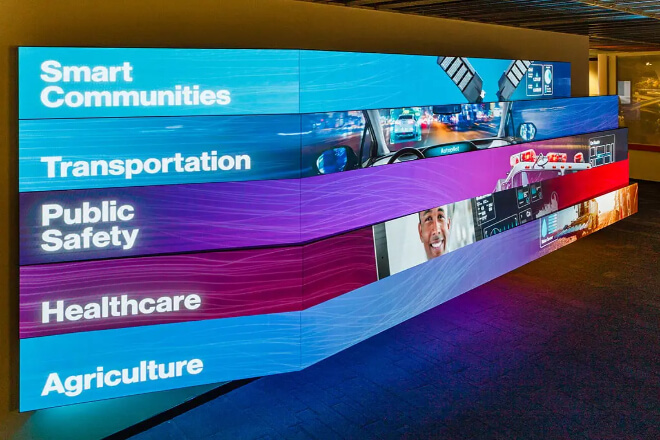
Before purchasing an LED display screen, have you considered that many problems aren’t discovered “after the purchase,” but rather “could have been clarified beforehand”?
If these issues aren’t addressed beforehand, it’s easy to end up choosing the right product but experiencing problems using it.
Instead of focusing solely on price and specifications from the start, it’s better to clarify the key questions first.
This not only makes it easier to choose a suitable solution but also avoids repeated adjustments later.
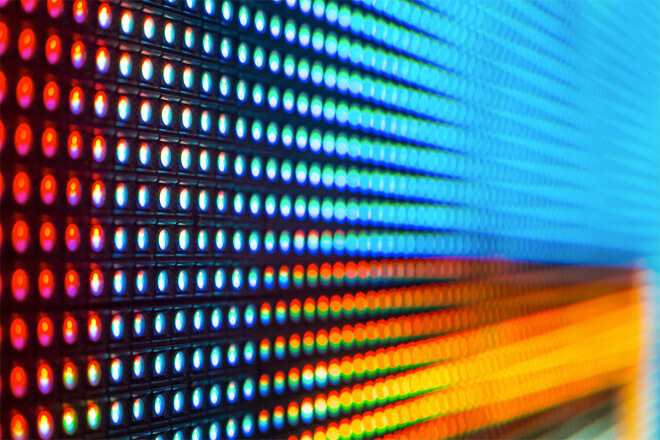
Before purchasing an LED display screen, many people immediately look at specifications and compare prices.
But the more crucial question is—how exactly will this screen be installed, where will it be installed, and who will be viewing it?
If this step isn’t clear, you might end up “buying the right screen but installing it in the wrong place.”
Let’s start with installation methods. There are actually quite a few options, such as bracket installation, wall mounting, ceiling mounting (suspended), or creating a splicing design.
Different spaces call for completely different approaches: A shopping mall atrium might be better suited to being suspended from above for a more visually impactful effect.
Wall-mounted displays are cleaner and more streamlined for conference rooms or exhibition halls.
For events or temporary settings, using brackets or modular panels offers greater flexibility. Clarifying these options beforehand is like figuring out “how it will be displayed.”
Then comes a crucial but easily overlooked point—how the audience will see it. The screen isn’t for you to see, but for the audience.
Will it be viewed up close or from a distance?
Will it be seen directly or from the side?
Are there pillars, lighting, or other obstructions?
These factors directly impact the effect. Ideally, the audience should naturally see the screen as they walk by, rather than having to specifically find an angle.
Another question to consider a little further ahead is future expansion.
For example, if you want to make the screen larger or combine multiple panels later, choosing a modular design from the start will make upgrades much easier.
Otherwise, you might have to build a new system, which is both troublesome and expensive.
In short, before buying an LED screen, don’t rush to ask “how much?” Instead, ask “how to install it most effectively, how to make it most comfortable to watch, and whether it can be modified later.”
Once you understand these questions, the rest of the selection process will be much smoother.
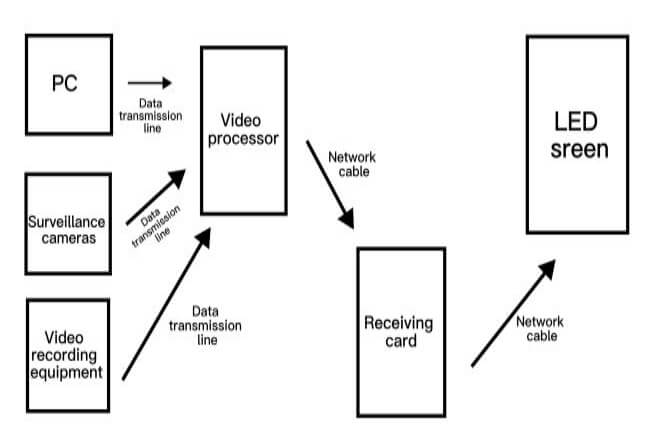
Many people focus on the screen itself when choosing an LED display, but “how to play the content” is equally important.
If the playback and control system isn’t chosen correctly, various problems may arise later, such as an inability to connect devices, complex operation, or even the inability to create desired effects.
First, clarify the signal input and device compatibility.
For example:
Are you using a computer, a media player, or a central control system?
Which interfaces are supported (HDMI, DP, network signals, etc.)?
If these aren’t confirmed beforehand, you might encounter the awkward situation of “bringing the equipment but not being able to connect it.”
This is especially crucial in events or scenarios involving multiple device switching.
Next is the functionality of the control software. For example:
Can it perform synchronized playback and multi-screen interaction?
Can it display different content on multiple screens?
Is the operation simple and intuitive?
Does it also have remote control capabilities, such as allowing content updates and playback adjustments even when not physically present?
These features directly impact daily usability; the difference in ease of use is significant.
For more advanced needs, consider interactive and special effects support. For example, does it support real-time data access, simple interactive gameplay, or visual effects?
In scenarios like shopping mall events and exhibitions, a screen with interactive or dynamic effects will significantly enhance the overall experience.
Simply put, an LED screen isn’t just about “lighting up”; it also needs to be “easy to use, easy to control, and expandable.”
Clarifying compatibility and functionality beforehand will prevent future glitches and allow the screen to reach its full potential.
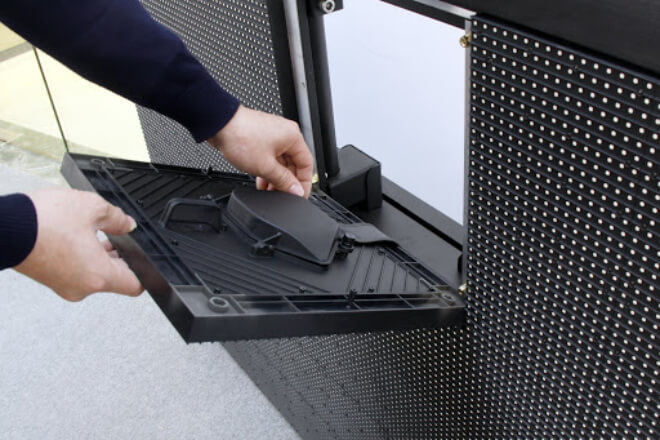
Many people focus on “how well it works now” when buying LED displays, but they should also ask, “Will it work well in the long run? Is it easy to maintain?”
Because once installed, this type of equipment is typically used long-term. If durability and maintenance aren’t considered, it can easily become a source of constant trouble later on.
First, it’s essential to understand the lifespan and warranty period.
Generally, LED screens can last for many years, provided the core components are of high quality and the operating environment is suitable.
At the same time, clarify with the manufacturer the warranty period—one year, two years, or longer—and what the warranty covers. These directly impact later operating costs and peace of mind.
Next is environmental adaptability, which is particularly crucial.
Will the screen be installed indoors or outdoors?
Will it encounter high temperatures, humidity, or dust?
Does it have waterproof, dustproof, and high-temperature resistant designs?
For example, in outdoor projects, insufficient protection levels can easily lead to weather-related issues, and in high-temperature environments, poor heat dissipation can accelerate equipment aging.
Finally, consider routine maintenance and troubleshooting. For example:
Is it easy to troubleshoot problems?
Can the modules be quickly replaced?
Does maintenance require extensive disassembly and reassembly?
These factors all affect the actual user experience. If maintenance is complex and costly, even if you buy it cheaply initially, you may have to “make up for it slowly” later.
In short, an LED screen is not a disposable product, but a device that needs to be used long-term.
Clarifying lifespan, environmental adaptability, and maintenance beforehand ensures greater peace of mind and convenience.

When purchasing an LED display screen, “insufficient budget” and “fear of overpaying” are common concerns.
However, the key isn’t simply chasing the lowest price, but understanding where the money is going and whether it’s worthwhile.
First, let’s discuss brand and model differences. LED screen prices vary significantly, ranging from a few hundred to tens of thousands per square meter.
This mainly depends on factors like pixel pitch, brightness, materials, and manufacturing processes.
Some high-end brands use better LED chips, power supplies, and driver chips, resulting in higher prices but also better stability and lifespan.
While lower-priced products may save money initially, they may gradually compensate for this in terms of brightness uniformity and failure rate.
Next, consider an easily overlooked point: long-term costs vs. one-time investment.
An LED screen isn’t a one-time purchase; it’s equipment meant to be used for many years (typically with a lifespan of 80,000–100,000 hours).
Looking only at the initial price might lead to a cheaper option, but the subsequent electricity bills, maintenance, repairs, and even replacement costs will be higher.
Conversely, choosing a more stable and energy-efficient option will be more cost-effective in the long run.
Another practical approach is to “match the solution” to your actual usage goals.
For example:
If it’s for long-distance viewing, there’s no need to choose a high-end screen with an extremely small pitch (which would significantly increase costs).
For everyday displays, a mid-range configuration offers better value.
For high-end displays or brand showcases, you need to invest more in image quality and stability.
Simply put, it’s not about “the more expensive, the better,” nor is it about “the cheaper, the more profitable.” The key is to find a solution that perfectly meets your needs.
Think of your budget as an “allocation game”: don’t skimp on essentials (core components, stability), and optimize where you can save (resolution, size matching).
This approach yields a truly cost-effective solution, rather than just focusing on the numbers on the quote.
 English
  Español
  简体中文
简体中文  Français
  日本語
日本語  한국어
한국어  العربية