
Introduction

Do LED screens have to be square?
Not necessarily. Now they can be spheres, cylinders, rings, or even shaped like aluminum cans, cars, or other brand designs.
Ultimately, LED screens are starting to “choose their shape.”
Table of Contents
Shape 1: Spherical LED screen – enabling 360° content display
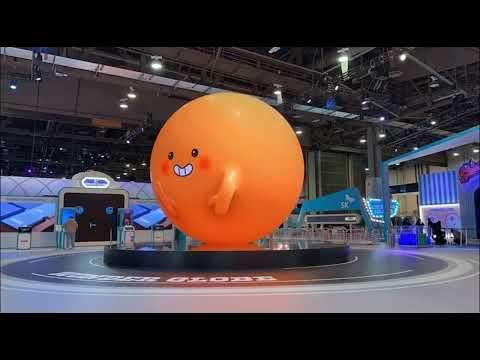
If ordinary LED screens solve the problem of “making things visible,” then spherical LED screens solve the problem of “being visible from anywhere.”
They lack the distinct front and back of traditional screens; their 360° structure allows the image to unfold around the entire sphere.
For large spaces, the screen itself is already an eye-catching “digital device.”
For example, a science museum can have a giant “Earth” suspended in the center of the hall, displaying continental changes, climate data, or satellite images;
Museums can use it to present content about the universe and planetary motion, giving flat information a greater sense of space.
Shopping mall atriums can also be used for a more commercial purpose.
For example, when brands launch new products, a spherical LED screen can become a giant brand logo, product visual, or dynamic art installation.
Customers passing by from different floors and directions may see it.
More interestingly, the focus of the spherical LED screen isn’t just the “sphere” shape, but rather the content that can be designed around it.
Earth, moon, basketball, brand logos… content with an inherent three-dimensional feel looks more natural on a spherical screen than on a regular rectangular screen.
Therefore, a spherical LED screen is not simply “bending a regular LED screen into a sphere.”
It’s more suitable for scenarios where the screen wants to be the focal point of the space, while providing a 360° visual experience for the content.
In other words, a regular LED screen tells a story on a wall, while a spherical LED screen can potentially move the “story” directly to the center of the space.
Shape 2: Cylindrical LED screen – turning pillars into "digital advertising spaces"

Shopping malls, hotels, and airports often feature a structure with a “low presence”—pillars.
They are indispensable, take up space, and are often treated as part of the ordinary decoration.
But if you “dress” them up with a cylindrical LED screen, the situation changes.
Cylindrical LED screens can be installed around building columns, transforming static pillars into 360° digital display spaces.
Customers passing by from different directions have the opportunity to see the images.
For example, columns in shopping mall atriums can display new product advertisements, holiday-themed visuals, or brand events;
Hotel lobbies can showcase brand image and welcome messages; airports and exhibition halls can use them to display flight, event, or exhibition information.
It also has a very practical advantage: it doesn’t require additional space.
The column is already there; instead of letting it “stand silently,” it can fulfill some visual and commercial functions.
Moreover, the cylindrical structure itself is well-suited for dynamic content.
For example, a car advertisement could have the vehicle rotate around the column;
A clothing brand could have the model’s image change with the viewing angle; and a technology brand could design wraparound data animations.
In this way, the image “moves” as customers walk past the column, making it more attention-grabbing than a fixed poster.
Of course, cylindrical LED screens are not simply about attaching LED modules to a column.
The dimensions, curvature, viewing distance, installation structure, and content proportions of the column all need to be considered in advance; otherwise, the image may look unnatural.
Therefore, the interesting thing about cylindrical LED screens is that they don’t change the original function of the building, but they change the value of the building structure.
An ordinary column, which originally only “supports the building,” can also “support an advertising space” after being fitted with LED screens.
Shape 3: Circular LED screen – adding layers to the stage and events

Ordinary LED stage screens mostly place the image behind the performers. But circular LED screens are different – they even cover the area above the stage.
Through a suspended or circular structure, the LED screen can form a visual “halo” around the stage, adding a layer of space to the stage that was originally only a front-to-back relationship.
For example, during a DJ performance, the circular LED screen can switch images in rhythm with the music, changing in sync with the lighting.
When the music starts, the image begins to rotate and flash, creating the atmosphere of the stage.
Concerts can also be done this way.
When a singer reaches a climax in their performance, the circular LED screen can display rapidly changing visual content.
From the audience’s perspective, the stage is no longer just “a large screen + a person,” but a complete visual scene.
It can also be used at product launches.
For example, at the unveiling of a new car model, the circular LED screen can display dynamic images of the vehicle driving and lights sweeping across its body, creating a sense of “entrance” in conjunction with stage lighting.
The visuals have already built up the atmosphere before the product even begins to speak.
Moreover, this design has a very practical advantage: it easily catches the eye of the audience’s phone cameras.
Nowadays, many people “look at something once with their eyes, then look at it again on their phone.”
A uniquely designed circular LED stage easily becomes a visual focal point in photos and short videos.
Of course, a circular LED screen is not simply a regular screen bent into a circle.
Screen size, suspension structure, viewing angle, weight, and content design all need to be planned in advance.
Especially the content; if it’s made using the same approach as a regular rectangular screen, it would be a waste of the design.
Therefore, the truly interesting aspect of a circular LED screen is that it makes the area above the stage itself part of the content.
Previously, when people looked at a stage, their attention was mainly focused on the front. Now look up, and you might witness a “visual performance.”
Shape 4: Cube and product-shaped LED screens – turning brands into screens
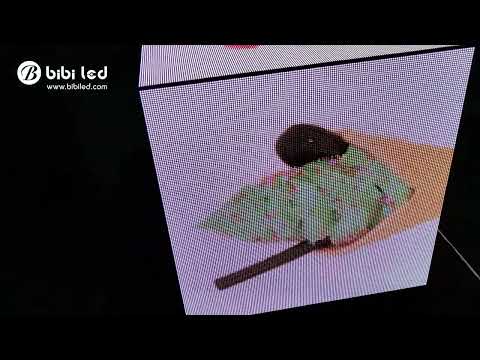
Ordinary LED screens typically operate on the principle of “the screen displays, the product is displayed.”
But cube and product-shaped LED screens can reverse this: directly turning the brand into the screen.
Cube LED screens are well-suited for exhibitions, pop-up stores, and retail spaces. Multiple sides can display content, ensuring visitors see brand information from different directions.
For example, a giant LED cube at an exhibition can display the brand logo on one side, product animations on another, and event content on yet another.
As visitors walk around it, they might see a different set of content at each angle.
Product-shaped LED screens are even more eye-catching.
Beverage brands can create LED screens shaped like giant aluminum cans or beverage bottles;
Car brands can create car silhouettes; and even some retail brands can design unique shapes based on their products.
For instance, a beverage brand could create a pop-up store for a new product by placing a two- to three-meter-tall “LED aluminum can” with a dynamic image of the beverage being poured into a cup on the screen.
A passerby’s first reaction might not be, “What kind of display technology is this?” but rather, “What’s that huge can for?” This achieves the goal of attracting attention.
More importantly, these screens themselves easily become photo hotspots.
Now, when consumers visit exhibitions, shopping malls, or pop-up stores and see interesting installations, their first action might not be to investigate, but to pull out their phones.
A photo or a short video can easily propel brand content to social media. Of course, the more unique the design, the higher the demands on design and technology.
Screen splicing, structural safety, weight, viewing angle, and the content displayed all need to be planned in advance.
Especially with irregularly shaped screens like aluminum cans or cars, you can’t just cram ordinary videos in; otherwise, while the design might be cool, the visuals might not be up to par.
Therefore, the interesting thing about these LED screens is that advertising is no longer just hanging there, but becomes an integral part of the brand.
When a giant aluminum can, car, or product shape suddenly appears in a space, customers are already attracted even before they start looking at the advertisement.
Shape 5: Wave-shaped, curved, and freeform LED screens – integrating the screen into the space

If a regular LED screen is “a screen hung on the wall,” then wave-shaped, curved, and freeform LED screens are more like they’ve grown directly into the space.
They don’t necessarily have fixed templates; they can be customized to fit walls, stages, or even the overall outline of a building.
These screens are well-suited for commercial buildings, exhibition halls, hotels, and art installations.
S-shapes, arcs, and waves can all become part of the design, adding variation to otherwise ordinary walls, stages, or building facades.
For example, a hotel lobby could feature a wave-shaped LED wall, allowing the lights and images to flow gently like water;
An exhibition hall could have a freeform surface designed based on the brand logo, seamlessly connecting product displays with the screen’s shape.
In this way, the screen is no longer seen as “an added-on device,” but rather as something that belongs to the space from the beginning.
Ultimately, this type of freeform LED isn’t about “how strangely the screen looks,” but about truly integrating display, architecture, and design.
The screen is no longer just responsible for displaying content; the space itself becomes part of it.
6. Conclusion
Previously, it was “install the screen wherever it’s needed.” Now it’s more like “the screen adapts to the shape of the space.”
With LED screens no longer confined to a single frame, the possibilities for their application have greatly increased.
Finally, for more information about LED displays, please get in touch with us.


 English
  Español
  简体中文
简体中文  Français
  日本語
日本語  한국어
한국어  العربية