

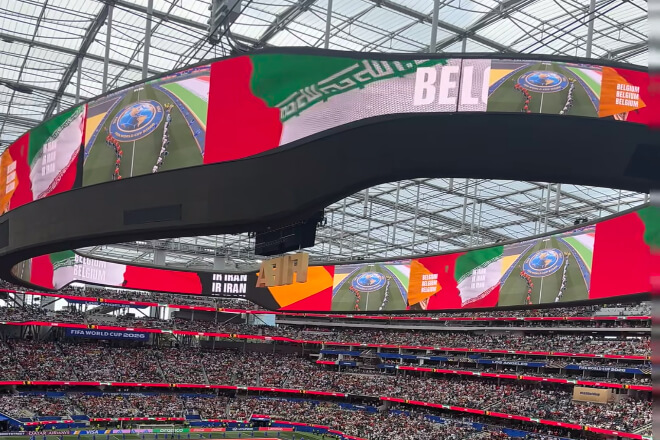
The requirements for LED screens at high-frequency sporting events are very practical: it’s not about whether it can light up, but whether it can stay on continuously without malfunctioning.
A match may seem like it only lasts two or three hours, but in reality, from player entrances, warm-up videos, the match itself, replays, and awards ceremonies, the LED displays are basically on the entire time.
And often it’s not a “one-time use, one-time rest” situation; it’s often one match today, one match tomorrow.
Or even the same venue switching between esports in the morning, a press conference in the afternoon, and a live match in the evening—the transitions are extremely rapid.
For example, some venues operate on a daily rhythm like this: a team promotional video finishes playing in the morning, immediately switches to the score system in the afternoon, and then becomes the main visual for a brand launch event in the evening.
If the screen is unstable, an awkward situation arises—the content hasn’t finished switching before the image “freezes.”
Even more troublesome is the issue of continuity under high-frequency use. Stable LED screens are generally the type that “become more stable the busier they are,” capable of continuous high-intensity operation without significant shifts in brightness and color.
However, less stable equipment may develop minor issues like uneven brightness or flickering signals over time. These might not be noticeable normally, but become particularly glaring during live broadcasts or the climax of a match.
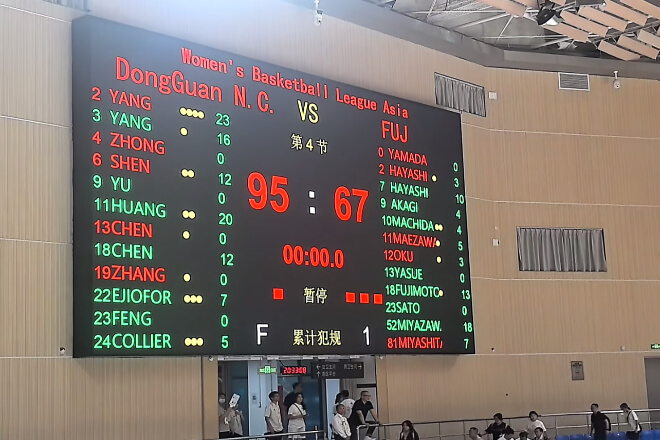
Another dreaded situation at any event is a black screen. Because LED screens in competitions are not just a “background,” they are often part of the game itself, displaying scores, replays, and countdowns.
If the screen suddenly goes black, the atmosphere instantly drops. It’s like when the scoreboard suddenly stops moving in the last 10 seconds of a basketball game—the feeling of “the air suddenly becoming quiet” is very obvious.
Therefore, mature event systems typically incorporate “safety nets,” such as signal backup, power switching, and ensuring that a small module failure won’t affect the entire screen.
The overall idea is quite simple: it’s not about guaranteeing no problems, but rather, even if a minor issue arises, it shouldn’t be noticeable to the audience or disrupt the flow of the competition.
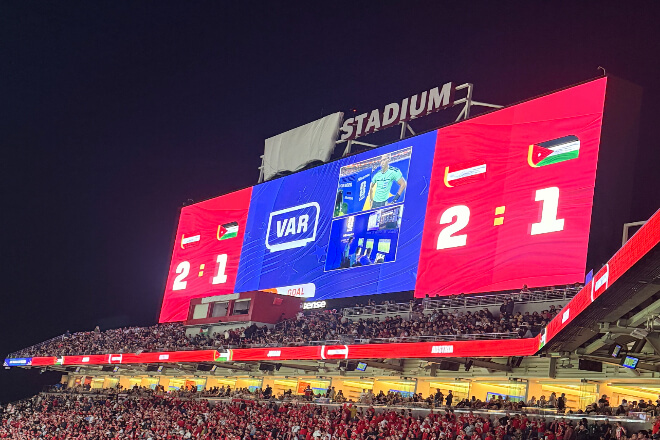
In today’s event venues, LED screens are no longer “fixed display devices”; they’re more like a stage backdrop that can change roles at any time, making flexibility crucial.
The most direct impact is on content switching speed. The pace of an event is fast; player entrances, match proceedings, replays, awards ceremonies, and commercial breaks are often seamlessly integrated.
If the switching is even slightly delayed, it creates the awkward situation where “the event has moved on to the next segment, but the screen is still showing the previous one.”
For example, after a thrilling team fight, the audience’s enthusiasm is still high, but if the replay doesn’t switch out in time, the excitement has already faded.
Then there’s the issue of adapting to different sports. Basketball, football, and esports have completely different needs: basketball emphasizes rhythm and score, football emphasizes progress display, and esports requires a high-information-density UI.
However, LED screens can typically switch quickly between content templates. The same screen can be a scoreboard one day, a virtual stadium the next, and a brand’s main visual the day after.
Furthermore, consider multi-signal input, a very real concern. On-site events often simultaneously receive broadcast signals, data systems, replay footage, and even live streams.
Poor compatibility can lead to situations where “what you want to broadcast can’t be displayed.”
Mature systems generally support multiple inputs, allowing for rapid switching or a combination of displays as needed.
Finally, there’s the ability to adapt to ad-hoc events. Events often involve sudden interactive elements, such as raffles, sponsor presentations, or impromptu information releases.
LED screens need to be able to switch from game mode to event mode at any time. For example, as soon as the host says “Start the raffle,” the screen immediately switches to the interface, rather than waiting for the system to adjust on-site.
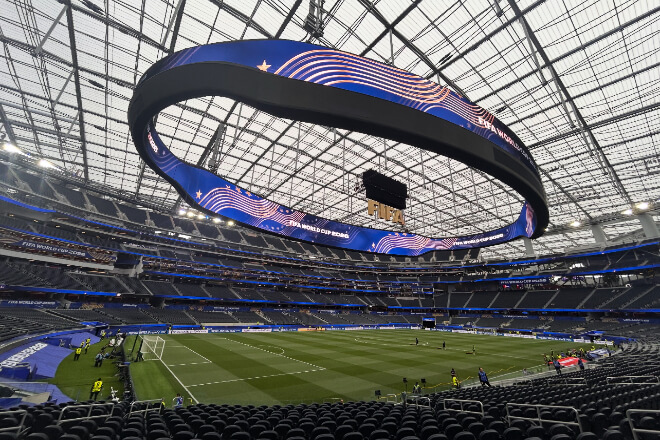
In events and venues, the core of LED screen maintenance isn’t “Will it break?” but rather, whether it can be quickly repaired without disrupting on-site operations.
Routine maintenance is actually not complicated; it mainly involves inspections, status monitoring, and basic cleaning.
Many systems now have operational status monitoring, which often provides early warnings of problems, rather than waiting until a sudden issue arises during a competition.
The truly crucial factor is the ease of module replacement. Most systems now employ modular designs, allowing for individual replacement of faulty modules without disassembling the entire screen.
For example, if a small section malfunctions during a competition, it can be replaced and restored on-site within minutes, with minimal impact on the overall image.
Next, consider rapid repair capabilities. Some systems support remote diagnostics, allowing for initial identification of whether the problem lies in the signal, power supply, or a specific module.
On-site maintenance personnel can then address the specific issue, minimizing troubleshooting time.
Finally, consider the impact on operational time. Good LED systems strive for “maintenance while operating,” handling minor issues without downtime and allowing for zoned repairs of major problems, avoiding a complete venue shutdown.
Especially during sporting events, the goal is to ensure that spectators are virtually unaware of the maintenance process.
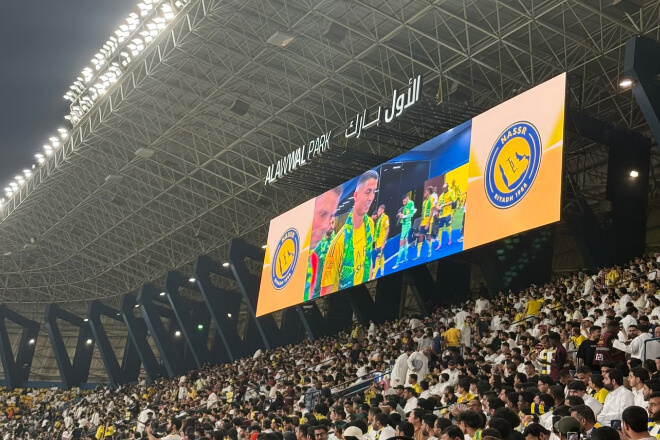
In short, the viewing experience boils down to one thing: even those sitting in the last row should have a clear, enjoyable, and comfortable view.
Whether an LED screen meets standards can be largely determined by a few very “intuitive” on-site impressions.
First is long-distance clarity. In large venues, audiences may be tens or even hundreds of meters away from the screen. If the clarity is insufficient, it will result in “brightness that can be seen, but the content that cannot be clearly seen.”
A good LED screen will ensure that text, scores, and images of people remain clear at a distance. For example, score numbers will not be blurred, and player images will not be out of focus.
For example, if spectators in the last row of a basketball court can still clearly see score changes and replay details, then it is basically considered acceptable.
Second is the ability to display fast-moving scenes. Esports skill effects, fast-paced football, and fast-break basketball sequences involve rapid scene transitions. If the refresh rate and response time are insufficient, it is prone to ghosting or stuttering.
The audience will feel that “the action is not keeping up,” significantly diminishing the experience.
Simply put: it’s not about “being able to display images,” but “whether the action can be kept up with.”
Finally, there’s the performance during crucial moments. For example, moments like game-winning goals, last-minute goals, and comebacks in team battles are inherently emotional high points.
If an LED screen can be used in conjunction with slow-motion replays, close-up shots, and synchronized lighting, it will directly elevate the atmosphere.
Conversely, if the visual transitions are slow or the expression is weak, the atmosphere is easily “broken.”
A typical scenario is: when the final goal of a match is scored, the large screen immediately switches to slow-motion replay + sound effects + lighting changes.
Creating an instant surge of excitement in the audience; if it’s delayed by a few seconds before switching back, that emotional peak is lost.
Finally, there’s the overall smoothness of the audience experience. This is a comprehensive feeling, including clarity, whether it causes dizziness, whether the image is natural, and whether there’s too much information overload.
A good LED system strikes a balance between information display and visual comfort, allowing viewers to acquire information without being “information-bombarded.”
The key to the commercial value of LED screens isn’t “whether they can be used for advertising,” but rather whether they can sustainably generate revenue for the space in the long term, increasing in value with use.
First and foremost, advertising revenue is the most direct source. LED screens can be sold by time period, location, and schedule.
For example, prime time can be used to promote the main brand, while off-peak hours can be used for combined advertising.
Many shopping malls operate this way: during the day, restaurant ads cycle, while at night, clothing or event promotions are displayed, essentially “one screen, multiple revenue streams.”
Secondly, the attractiveness of sponsorship partnerships is significantly enhanced. Brands prefer visually impactful and interactive LED screens to static posters because of their stronger exposure and greater “presence.”
For example, event sponsors often prefer large screens in the atrium, as these are “places where viewers are guaranteed to see them.”
Next, the ability to operate multiple advertising spaces is crucial. LED screens are not limited to displaying only one type of content; they can be operated by zone, time period, and scenario.
For example, a single screen can simultaneously display the main image, side information, and rotating ads, or switch between different merchants’ content at different times, essentially “using one screen as multiple advertising spaces.”
Finally, the overall profitability of the venue is improved. When LED screens become more than just display tools, they become a continuous source of advertising revenue, event profits, and brand partnerships; they become an integral part of the venue’s operational system.
Some venues are even experiencing a shift: no longer “making money by renting out space,” but “driving more business opportunities through the screen.”


 English
  Español
  简体中文
简体中文  Français
  日本語
日本語  한국어
한국어  العربية