
What are the applications of transparent LED displays in architecture?

Introduction

In the past, architecture primarily relied on form, materials, and lighting for its expression. Now, more and more buildings are beginning to “speak.”

The emergence of transparent LED displays transforms glass from merely glass into a “digital facade” capable of conveying content.

Table of Contents

1. How are transparent LED displays applied to architectural glass curtain walls?

Youtube video

The most interesting aspect of transparent LED displays is that they don’t simply “cover the glass,” but rather “make the glass speak.”

In architectural curtain wall scenarios, they resolve a crucial contradiction—displaying content without sacrificing lighting and transparency.

Firstly, the entire glass facade is transformed into a digital display interface, turning the building from a “static shell” into a “dynamic media facade.”

For example, an office building might function as a normal office building during the day, but at night, the entire curtain wall could transform into brand images or city promotional displays.

For instance, passersby no longer see just lights, but an entire “glass wall that plays content.”

Secondly, it doesn’t affect building lighting or indoor views, allowing for both “seeing the outside” and “external display” to coexist.

The structural characteristics of transparent LED displays mean they won’t completely obstruct the view like traditional screens.

Simply put, people indoors can still see the city view, and people outdoors can see dynamic content, achieving “two-way non-disruption.”

At the same time, it enhances the technological feel of the building facade, upgrading the building from a “functional entity” to a “visual symbol.”

For example, commercial complexes, office buildings, or hotels can use transparent LED displas to display dynamic graphics or brand visuals, making the entire building a “glowing business card” in the city at night.

Finally, it’s suitable for commercial buildings and urban landmarks, strengthening the building’s communicative attributes.

For instance, some high-rise facades in core business districts will uniformly switch themed visual content during holidays or events.

Allowing the building itself to participate in urban marketing, rather than just being a “background building.”

2. How can transparent LED displays be applied to building atrium spaces?

Building atriums inherently have a natural advantage: high ceilings, concentrated line of sight, and pedestrian traffic naturally looking up.

The effect of placing transparent LED displays here is immediate—transforming the atrium into a dynamic visual stage.

First, it creates a suspended visual focal point in the atrium, prompting people to “look up” upon entering.

For example, a circular or cylindrical transparent LED screen could be suspended in the mall atrium, playing brand content or artistic animations.

For instance, customers entering the mall, before even deciding which store to visit, are drawn in by the gently flowing light and shadow overhead, stopping them in their tracks.

Second, it enhances spatial layering and visual impact, making the atrium more than just an “empty space in the air.”

Unlike traditional large screens that can overwhelm the space, transparent LED dispiays appear as “images floating in the air.”

Simply put, the building remains the same, but a new “layer of content in the air” visually adds depth to the space.

Simultaneously, it increases the attractiveness of the public space, making the atrium a “natural stopping point.”

For example, playing interactive content, holiday-themed visuals, or brand-linked animations will encourage people to stop, take photos, rest, or even wait for friends in the atrium.

For instance, what was once just a passing area becomes a place where “everyone will unconsciously stop for a few seconds.”

Finally, adapting to shopping malls and large-scale complexes gives the atrium operational value. Transparent LED displays are not just decorations.

They can also carry advertising, event information, and even interactive content, upgrading the atrium from a “passage space” into an “operable content node.”

3. How can transparent LED displays be applied to building entrances and facades?

Building entrances and facades are essentially the “first impression”: the impression is formed before people even enter.

The core of using transparent LED displays here is not “making it brighter,” but rather, making the entrance both present and not oppressive.

First, enhance the building entrance’s recognizability, making people immediately aware that “this is the entrance.”

For example, embedding transparent LED displays in the glass doors of office buildings or shopping malls to display subtle dynamic signage or directional information.

For example, from a distance, even before seeing the sign clearly, people already know “this is the main entrance” through dynamic light and shadow.

Second, showcase the brand and welcome information, turning the entrance into a “greeting facade.” For example, looping brand logo animations, “Welcome,” “Today’s Activities,” etc.

Simply put, it’s not just about displaying “Who is this?”, but about dynamically telling you “We welcome you.”

Simultaneously, it enhances the overall image of the building, upgrading the entrance from a “functional identifier” to a “visual expression.”

Traditional entrances might just be lightboxes or signs, while transparent LED displays can create a light and dynamic visual effect throughout the entrance area.

For example, at night, the entrance might feature flowing light strips, making the building look more modern and design-oriented.

Finally, it strengthens the visitor’s first impression, making the entry experience more ceremonial.

For instance, as visitors approach the entrance, the screen gradually lights up or switches to a welcoming display, creating a sense of “being recognized and greeted,” which is more memorable than a static entrance.
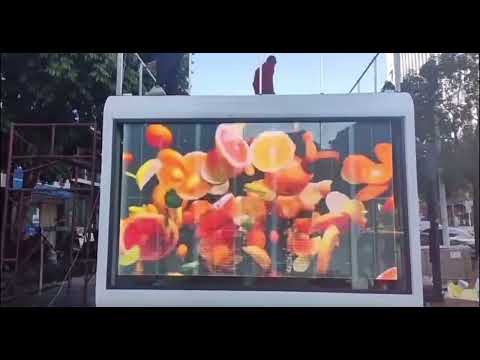
4. How can transparent LED displays be applied to building facade lighting?

Youtube video

The biggest fears in building facade lighting are twofold: being too jarring during the day and not bright enough at night.

The advantage of transparent LED displays lies in their ability to “naturally switch” between these two states, making the building both a building and a media element.

First, it integrates with the building’s exterior design, making the screen “part of the design” rather than an “external device.”

For example, embedding transparent LED displays within the curtain wall grid, columns, or glass partitions makes the visuals appear as part of the building’s texture.

For instance, during the day it appears as a clean glass facade, but at night, with the lights on, it reveals its dynamic nature.

Secondly, achieving daytime transparency and nighttime illumination allows for a seamless transition between the building’s “day and night states.”

The daytime transparency ensures ample natural light and visual openness without compromising the building’s inherent quality.

At night, the LED display content gradually emerges, transforming the facade into a dynamic visual spectacle.

Simply put, the same building is a “quiet building” by day and a “glowing canvas” at night.

Simultaneously, creating urban nighttime landmarks transforms the building into a “visual node” in the city’s nightscape.

For example, in commercial centers or core business districts, displaying dynamic images across an entire transparent LED display curtain wall creates a prominent visual identifier at night.

For example, even before reaching the commercial area, people can see a “changing building” from afar, naturally remembering it.

Finally, enhancing the building’s communicative value transforms the facade from a “decorative function” into a “media for communication.”

Architecture is no longer just something to be seen; it can now host brand promotions, city events, festival themes, and even become the “background protagonist” in short city videos.

5. How can transparent LED displays be applied to public areas inside buildings?

Youtube video

Public spaces inside buildings, such as lobbies, corridors, and skybridges, are essentially places where people stop, walk, and look up.

The key to using transparent LED displays here is not “occupying space,” but rather allowing the space to express its own content.

First, in areas like lobbies, corridors, and skybridges, they transform what were originally “transitional spaces” into “content spaces.”

For example, embedding transparent LED displays in the background wall of a hotel lobby or the sides of a corridor creates a lightweight.

Transparent interface under normal circumstances, but can display brand images or artistic content during operation.

For instance, walking through a corridor, you might simply be passing through, but the gently flowing images on either side create a more “guided” feeling.

Second, they enhance spatial interaction and digital experiences, allowing people to “walk within the space, but also within the content.”

For example, transparent LED screens on either side of a skybridge can display city views, weather changes, or interactive information, and can even adjust the content’s pace according to pedestrian flow.

Simply put, it’s not just about looking at a screen; the space itself is “moving with you.”

Simultaneously, it elevates the modernization of architecture, transforming public areas from functional to experiential spaces.

Traditional public spaces emphasize efficiency, while transparent LED displays add a layer of visual expression, making lobbies and corridors more than just “transition zones”—they become technologically advanced and aesthetically pleasing display interfaces.

Finally, it optimizes the overall spatial atmosphere, making waiting and movement less “boring.”

For example, while waiting in front of an elevator, screens displaying soft, dynamic content or brand information make the time feel shorter and enhance spatial comfort.

6. Conclusion

For architecture, the significance of transparent LED displays goes beyond just adding a screen.

It maintains the openness of the space and gives the building dynamic, expressive capabilities.

Future buildings may not only be seen but also actively “communicate” with people.

Finally, for more information about LED displays, please get in touch with us.

Leave a Reply

Your email address will not be published. Required fields are marked *

Let's Start Our Story NOW!

Get 2025 New Price for LED Screen NOW