Introduction
Have you ever noticed that at concerts, exhibitions, or large-scale events, there’s always a screen that catches your eye?
It instantly grabs attention and conveys rich information, making the entire event more vibrant and atmospheric.
In fact, this is the charm of LED displays. So, what key points should we focus on when choosing and using LED displays to truly enhance an event?
Table of Contents
1. Core Advantages of LED Displays in Live Events

1) High Brightness and Strong Contrast, Clear Visibility in Any Environment
In live events, the lighting environment often changes and is subject to significant interference, especially at outdoor events, which are affected by direct sunlight.
LED displays have high brightness and strong contrast, ensuring that the image remains clear and visible even in strong light, without becoming faded or distorted.
When used indoors, they can also present a layered image effect, ensuring that the audience can clearly see the screen content from different positions.
2) Flexible Size and Free Splicing, Adaptable to Various Event Venues
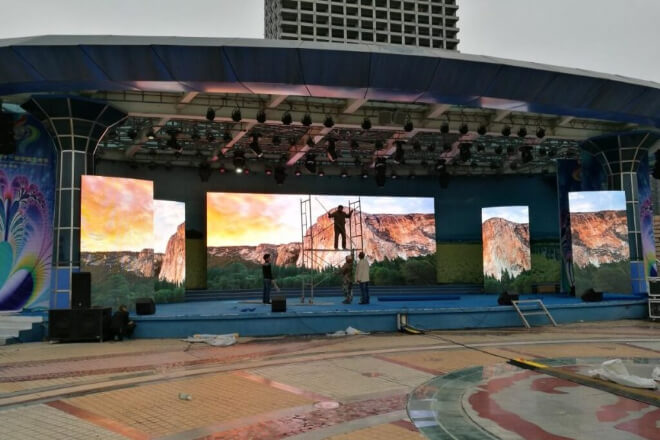
LED displays can be freely spliced according to event needs, whether it’s a large main background screen or auxiliary screens on either side of the stage, allowing for flexible combinations.
Regardless of the venue size or stage structure, the display screen can quickly adjust its form, even creating curved.
Or irregularly shaped designs, making the image more consistent with the overall stage style and bringing richer visual layers to the event.
3) Clear Image and Vivid Colors, Easier to Attract Audience Attention
With continuous technological advancements, LED displays have made significant progress in clarity and color performance.
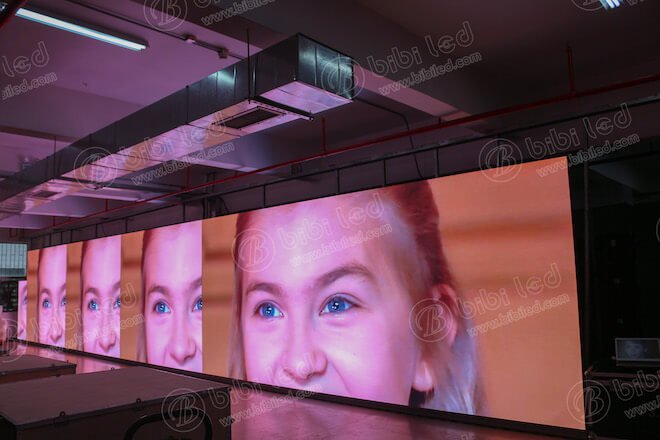
High resolution makes image details more realistic, and people, videos, and animations look more natural.
At the same time, the colors are rich, and the transitions are smooth, making the overall image more impactful and engaging, helping to quickly capture the audience’s attention and enhance the atmosphere and communication effect of the event.
2. Specific Advantages of LED Displays in Live Events

1) Real-time Interaction and Multimedia Integration
LED displays can not only play videos, animations, and live broadcasts, but also support real-time interaction with social media content, greatly enriching the forms of expression for the event.
Through QR code scanning, touch operation, or sensor technology, the audience can directly participate in interactions, achieving instant feedback and content sharing.
This multimedia integration and interactive experience not only enhances the fun of the event but also makes it more lively and attractive.
2) Strong Environmental Adaptability
Whether it’s an indoor stage or an outdoor plaza, LED display screens can easily handle the job.
Their high-brightness design ensures the screen remains clearly visible even in direct sunlight, and they also feature windproof, rainproof, and dustproof characteristics, making them suitable for various complex environments.
Even in event venues with complex lighting, LED display screens maintain excellent visual effects, ensuring that viewers get a consistent viewing experience from different positions.
3) Easy Management and Content Updates
LED display screens offer very flexible content management. Multiple screens can be updated simultaneously via remote control, reducing on-site operational pressure.
Content can also be quickly switched at the event site, from brand promotion and event information to interactive content, all presented in a timely manner.
This convenient management method not only improves work efficiency but also ensures the diversity and timeliness of event content.

3. Examples of LED Display Screen Application Scenarios
Due to their high brightness, vivid colors, flexible splicing, and strong interactivity, LED display screens have become an indispensable visual core device in various events.
Based on different types of events, their application scenarios can be broadly divided into the following categories:
1) Commercial Exhibitions and Brand Launch Events
In exhibitions, trade fairs, or new product launches, LED display screens can be used to display brand promotional videos, product animations.
Or live demonstrations, allowing audiences to intuitively understand the characteristics of the brand and products at first sight.
Large-sized, high-definition screens not only attract crowds but can also be combined with lighting.
And stage design to enhance the visual impact of the entire exhibition area, making the brand image more modern and technologically advanced.
2) Concerts, Stage Events, and Celebrations
Concerts, evening parties, celebrations, and other stage events are one of the most common applications of LED display screens.
Large, spliceable screens can display stage background animations, real-time videos, and special effects, closely integrated with stage lighting, stage design, and performances, enhancing the immersive and entertaining experience.
Audiences can not only see the performance details up close but also feel the overall visual impact of the stage.
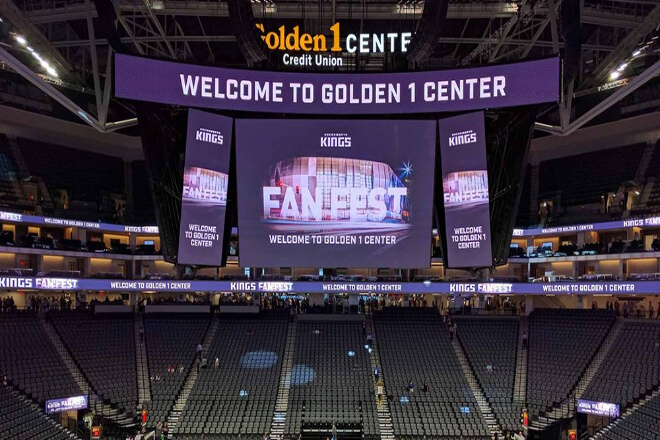
3) Sports Events and Large Outdoor Activities
In sports events, marathon races, or various outdoor performances, LED display screens play a dual role of information dissemination and visual focus.
The screens can display real-time scores, live broadcasts of the competition, athlete close-ups, or advertising information, while their high brightness, waterproof.
And windproof design ensures clear visibility even in direct sunlight or adverse weather conditions.
For large-scale events, LED screens allow even distant audiences to catch every exciting moment, enhancing the overall viewing experience.
4) Internal Corporate Meetings and Training Activities
In corporate meetings, training sessions, or internal presentations, LED displays can be used to show PowerPoint presentations, video demonstrations, remote connections, or data visualizations.
The high-definition, clear display makes information more intuitive, allowing the audience to quickly understand complex content.
The flexible screen size also adapts to different meeting room layouts, making meetings or training more efficient and engaging.
4. Key Selection Points for Decision-Makers

When choosing an LED display, the screen size should first be determined based on the type of event, venue size, and audience distance.
The resolution directly affects the detail of the image; high resolution is suitable for close-up viewing and detailed image display.
Brightness relates to visibility under different lighting conditions, especially in outdoor events or strong light environments, where a high-brightness screen ensures clear information transmission.
For live events, the efficiency of screen installation and disassembly directly affects the preparation and dismantling time of the event.
Modular design, lightweight materials, and standardized interfaces can greatly simplify the setup process, reduce labor costs, and reduce transportation and storage difficulties.
Choosing a display screen that is easy to operate and flexible to assemble helps improve overall event execution efficiency.
The value of an LED display lies not only in its hardware but also in its content presentation capabilities.
Decision-makers need to consider whether the screen supports a convenient content management system (CMS) to achieve remote updates, multi-screen unified control, and rapid content switching.
At the same time, if the event requires interactive elements, it should also be considered whether the screen supports touch control, QR code scanning, or sensor interaction functions to make audience participation smoother.
When choosing an LED display, budget is always a factor that cannot be ignored. High-end screens certainly offer outstanding effects.
But whether they match the scale of the event and the target audience’s needs requires careful evaluation.
Decision-makers should consider the frequency of screen use, event type, audience experience.
And brand communication effects to comprehensively judge the return on investment, ensuring the best visual effects and on-site experience within a controllable budget.
5. Conclusion
Whether it’s a concert, exhibition, corporate meeting, or sporting event, LED displays can make the event more vibrant and engaging.
Understanding its advantages, application scenarios, and key selection criteria will ensure optimal visual effects and audience experience for every event.
Next time you attend an event, pay attention to the screens – they might be the unsung heroes creating the atmosphere.
Finally, if you would like to learn more about LED displays, please get in touch with us.
6. Maintenance method

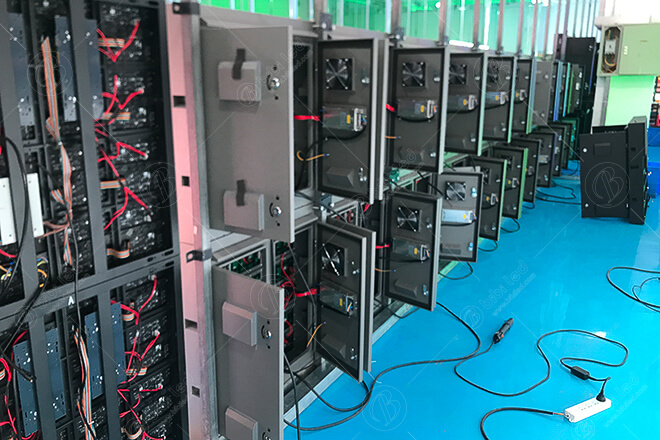
The maintenance methods of outdoor LED displays are divided into front-access maintenance and rear-back maintenance, mainly used for after-sales repair and maintenance of LED displays.
Generally speaking, the price of rear-back maintenance products is relatively low, and the efficiency of inspection and maintenance is high. However, if the place where you install is in short supply and the land is expensive, then front-access maintenance can help you save space and reduce the cost of land space.
So how to judge which maintenance method is suitable for your LED display screen?
Rear-back maintenance of large screens for outdoor buildings, screens installed on the roof, pillars that stand alone, etc.
Front-access maintenance: A space-saving and small-area screen is required.
(If you want to know the difference between the front maintenance and the rear maintenance of the LED display in detail, click quick learning)
In addition to common maintenance costs, if you cooperate with a reliable company that extends the warranty period, the maintenance cost can be reduced.
7. Purchasing channel

Is it locally sourced or imported?
It is obvious; price: local procurement > imported procurement, local procurement costs more.
However, it would be best if you made a decision based on your actual situation, such as:
1) If you don’t care about the budget and value fast and local sales service more, you can directly purchase locally.
2) If your budget is limited or you want to save a lot of costs and have enough time, you can import from LED display screen manufacturers.
8. Electricity bill

Regarding the electricity bill, this is a long-term accumulated cost. The electricity bill greatly correlates with the LED display’s actual power consumption. Low power consumption means low electricity bills. Therefore, when purchasing LED displays a screen, you need to ask the supplier about the actual power consumption.
(For how to calculate the electricity cost of an LED display screen, you can click to learn quickly)
How to reduce the power consumption of outdoor LED displays screen?
1) Plan your time reasonably
The LED display screen does not need to display for 24 hours, and the time can be set through application management.
2) Use a light sensor
High brightness means high energy consumption. The use of light sensors can not only ensure that the picture is not affected by the environment but also prevent the LED display from being in a state of high energy consumption for a long time.
3) Buy an energy-saving LED display
From a long-term perspective, energy-saving LED displays can save electricity bills.
9. Transportation expenses

Transportation costs are considered from import costs, transportation costs, and taxes.
Import costs and taxes need to be considered according to your country’s import policy and religious beliefs, and each country is different.
Regarding transportation costs, there are two transportation methods: sea and air. The specific transportation method to choose depends on your needs, for example:
1) If you have a lot of goods and enough time to import LED display screens, then the cost of sea freight will be lower, which is about 5 times less than that of air freight. The delivery date from Shenzhen to the United States is 25-30 working days.
2) If your project is more urgent or the goods are fewer, consider air freight, the delivery date of air freight is about 3 to 7 working days.
10. FAQs(根据实际情况来,不是所有的内容都需要这个章节)
Lorem ipsum dolor sit amet, consectetur adipiscing elit. Ut elit tellus, luctus nec ullamcorper mattis, pulvinar dapibus leo.
Toggle Content
Toggle Content
Toggle Content
11. Conclusion
Spare parts are generally used for daily maintenance and maintenance. Spare parts can be purchased directly from suppliers, including power cords, power supplies, lamp beads, ICs, masks, LED modules, etc. Generally, a professional and reliable LED display screen supplier provides 2% spare parts and 2 years warranty for each order.Spare parts are generally used for daily maintenance and maintenance.
Generally, a professional and reliable LED display screen supplier provides 2% spare parts and 2 years warranty for each order.Spare parts are generally used for daily maintenance and maintenance. Spare parts can be purchased directly from suppliers, including power cords, power supplies, lamp beads, ICs, masks, LED modules, etc. Generally, a professional and reliable LED display screen supplier provides 2% spare parts and 2 years warranty for each order.