
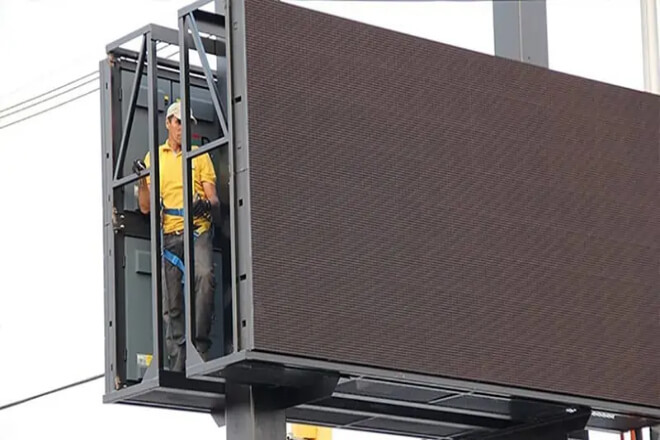
As the number of LED displays in commercial complexes increases, have you noticed the costs quietly rising? Is it due to incorrect selection, or problems with installation methods and usage habits?
Many costs are not a problem in a single, but rather the result of gradual accumulation from selection and installation to daily use.
If you only focus on “how expensive it is” while ignoring “whether it’s used correctly,” maintenance costs can easily double quietly later on.
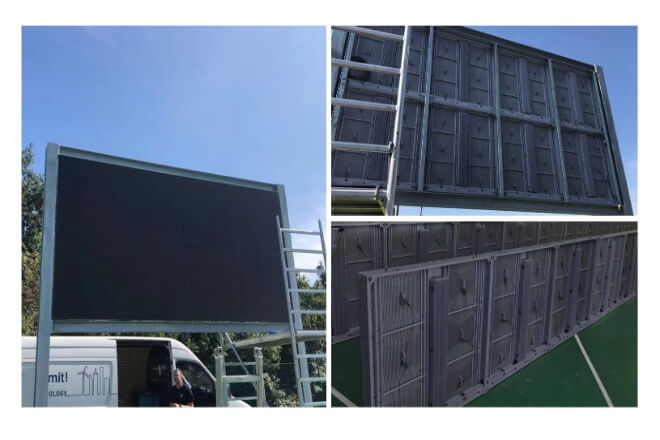
1) Different Usage Scenarios Determine Selection Direction
Choosing an LED display is somewhat like “buying shoes.” If you don’t consider the scenario and directly choose the “most expensive pair,” it may not be the most suitable.
Indoor, outdoor, commercial, and rental scenarios correspond to different types of LED displays: indoor displays prioritise clarity.
Outdoor displays emphasise brightness and protection, commercial displays prioritise stability, and rentals emphasise flexibility.
If the initial selection is mismatched, it often results not in “saving money,” but in “spending more money and still not using it well.”
2) Smaller Pixel Pitch Isn’t Always Better
Many people instinctively think that “the clearer the better” when they see LED displays, but a smaller pixel pitch isn’t always more cost-effective.
Smaller pixel pitch significantly increases costs and places higher demands on the content being displayed and the viewing distance.
If the viewing distance is already far, choosing an ultra-small pixel pitch LED display is essentially “using high specifications to solve low needs.”
A more reasonable approach is to match the pixel pitch to the actual usage scenario, rather than blindly pursuing “better-looking” parameters.
3) Long-Term Waste from Over-Configuration
In projects, sometimes a situation arises where the configuration “looks powerful” but isn’t actually used.
For example, LED displays with excessively high brightness, refresh rates, or resolutions won’t be fully utilised in daily use, but they significantly increase procurement, energy consumption, and maintenance costs.
Simply put, it’s like buying a high-performance car but only driving it around the neighbourhood a couple of times a day.
In the long run, it’s a waste of resources. The truly cost-effective way is to find a balance between “good enough” and “excessive.”
4) Core Component Quality Impacts Maintenance Costs
The stability of an LED display largely depends on the quality of its core components, such as LED chips, power supplies, and driver chips.
If these components are unstable, uneven brightness, colour differences, and even frequent malfunctions can easily occur later, increasing the frequency of maintenance.
Conversely, choosing stable, long-proven core components, while requiring slightly higher initial investment, significantly reduces the need for repeated repairs later. In the long run, this choice is more worry-free and cost-effective.
5) Stable Supply Chain Reduces Replacement Risks
An LED display is a system designed for long-term use. If the supply chain is unstable, a very real problem may arise during later maintenance—”parts may not be available.”
If a critical component is discontinued, the entire screen may need to be replaced, significantly increasing costs.
Therefore, choosing products and manufacturers with stable supply capabilities is essentially providing a safety net for the future.
A stable supply chain allows the entire system to remain maintainable and upgradable for several years or even longer, making costs more controllable.
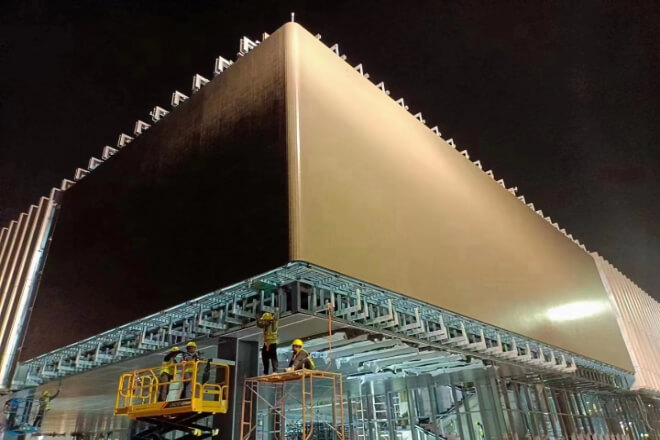
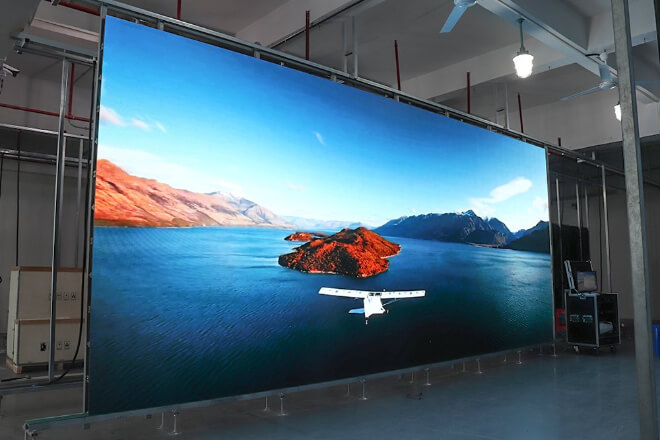
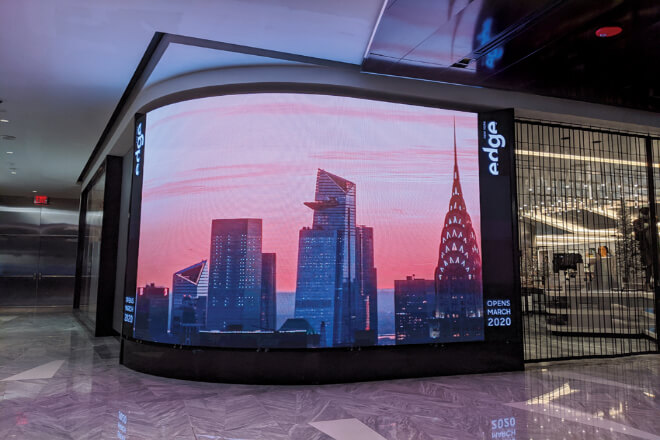
1) Shopping mall screens don’t need to operate at high brightness continuously.
In shopping mall environments, LED displays often don’t need to maintain maximum brightness all the time.
Especially at night or during periods of low foot traffic, excessive brightness is not only unnecessary but also leads to additional energy consumption.
By adjusting brightness according to foot traffic and ambient light, LED displays can operate at a “just right” level, ensuring visual appeal while reducing unnecessary power consumption.
2) Outdoor advertising screens can automatically adjust brightness according to the time.
Outdoor LED displays are greatly affected by ambient light. For example, higher brightness is needed during the day to ensure visibility, while brightness can be appropriately reduced at night.
By setting a timed or automatic brightness adjustment mechanism, LED displays can automatically change according to time and ambient light, effectively reducing overall energy consumption while ensuring advertising effectiveness.
This “on-demand operation” method is a very common and effective energy-saving technique in outdoor settings.
3) Significant “Idle Time” in Exhibition Halls and Conference Rooms
In exhibition halls or conference rooms, LED displays are often not in continuous use, but the equipment often remains running.
Without a reasonable sleep or standby mechanism during idle periods, continuous energy waste occurs.
By setting up automatic screen shutdown, timed on/off, or low-power modes when not in use, this “hidden consumption” can be effectively reduced, allowing LED displays to truly “run at full power only when needed.”
4) The Hidden Impact of High-Brightness Displays on Electricity Costs
Many people easily overlook the fact that the higher the brightness of an LED display, the higher its power consumption.
Maintaining high brightness for extended periods will unknowingly increase electricity costs, especially in large-scale deployments where this difference becomes more pronounced.
Therefore, reasonably controlling brightness while meeting viewing requirements actually helps businesses “quietly save money.” While this saving may not be immediately noticeable, it is considerable in the long run.
5) The Value of Energy-Saving Configurations in Long-Term Use
In the short term, energy-saving configurations may not seem like the most noticeable investment, but in the long run, their impact on the overall cost of LED displays is significant.
Automatic brightness adjustment, timed on/off switching, and low-power modes all help the system “operate smarter.”
When an LED display transitions from “continuous high-load operation” to “on-demand operation,” it not only reduces electricity costs.
But also minimises equipment wear and tear, thereby extending its lifespan and achieving true long-term cost optimisation.
 English
  Español
  简体中文
简体中文  Français
  日本語
日本語  한국어
한국어  العربية