

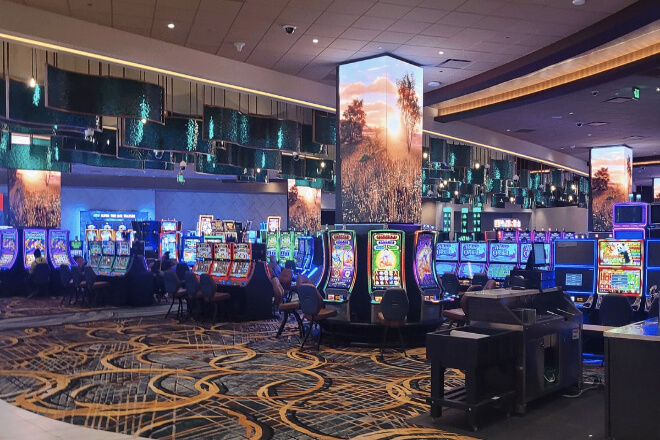
In a casino environment, the flow of people is continuous, and many initially just “walk around and look.”
At this point, a large, high-brightness LED display acts as a “visual attraction point,” responsible for turning a quick passerby into a brief stop.
Compared to static decorations or signage, dynamic images are more likely to attract attention.
The content is constantly changing, and even a fleeting glance is enough to draw someone in for a few more seconds—and those few seconds often mark the beginning of a stay.
If the screen is placed at the entrance or in a central passageway, it is even easier to create a natural “dwelling point.”
As people pass through, they slow down, focusing on the screen content, thus lingering in the space rather than quickly passing through.
To illustrate, when someone enters the space, the dynamic visuals on the screen, combined with changing lighting, easily attract their attention.
Causing them to unconsciously slow down, glance at the current content, and the overall flow of movement becomes smoother.
Simply put, the LED display acts as a “rhythm regulator” here, using dynamic visuals to shift people from “quickly passing through” to “lingering,” creating more possibilities for the subsequent experience.
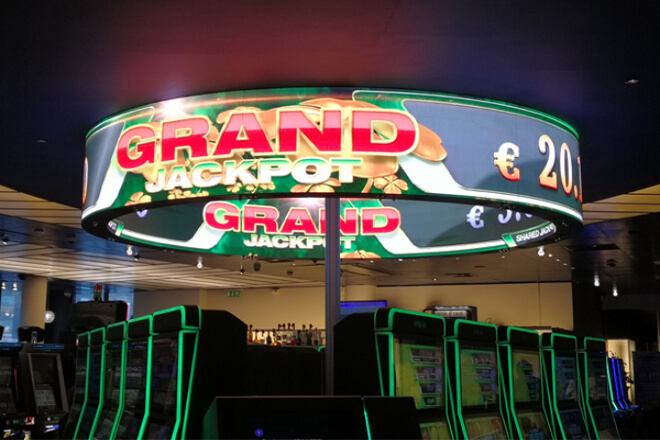
In spaces like casinos, atmosphere is not just a background, but more like an “invisible guide.”
LED displays, especially wraparound or large screens, act like a “visual filter” for the space, making people reluctant to rush in.
When the image changes from a single screen to a wraparound presentation, the gaze is no longer directed in one direction, but rather “enclosed” from all sides.
You’re not just looking at a screen, but rather in a space surrounded by images, naturally lingering a little longer.
Even more interestingly, these images “perform” in conjunction with lighting and music. When the pace is fast, the visuals and lighting are more dynamic.
When the pace slows down, the environment becomes softer. The entire space seems to gently guide the rhythm, drawing you in unconsciously.
Gradually, you’ll notice a small change: time seems less noticeable.
What was initially just a passing through becomes more engaging because the constantly changing environment doesn’t interrupt the experience, making it easier to “stay a little longer.”
Imagine a scene: you’re walking through the space, the surrounding visuals are fluid, the lighting subtly shifts.
And the music continues in the background—there are no strong interruptions, but you just feel, “It’s worth taking another look.”
Simply put, the LED display acts as an “ambience amplifier,” subtly making the space more attractive and quietly extending the time spent there.
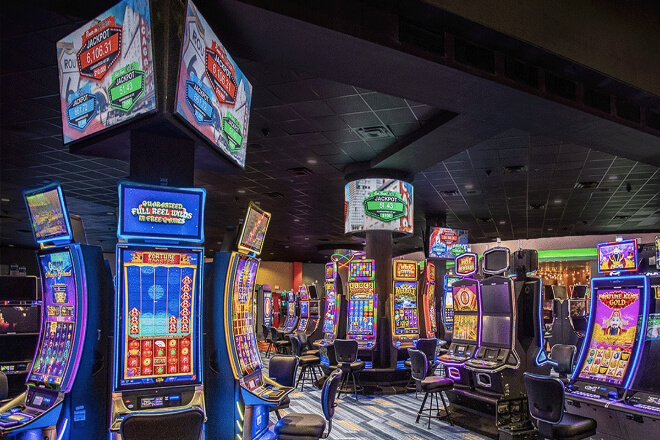
In a casino environment, simply “seeing” isn’t enough; the key is to keep people engaged and even feel involved.
The LED display acts as a “real-time interactive window,” constantly providing new information, making it difficult to completely look away.
By displaying real-time prize pools, leaderboards, or dynamic data, the constantly changing information creates a sense of urgency, making viewers want to keep watching and paying attention.
Interactive content further enhances engagement. Dynamic ranking changes, real-time data updates.
And even simple interactive displays can transform viewers from passive observers into active participants, rather than simply passing by.
For example, as the leaderboards and prize pool numbers on the screen constantly change, people will unconsciously look up to observe the pace of change.
Even starting to discuss or compare. This sense of continuous updates easily holds their attention.
Simply put, LED displays here act as a “window that constantly refreshes its presence,” keeping viewers engaged through real-time information and dynamic content.
Transforming the space from a static environment into a constantly evolving experience.
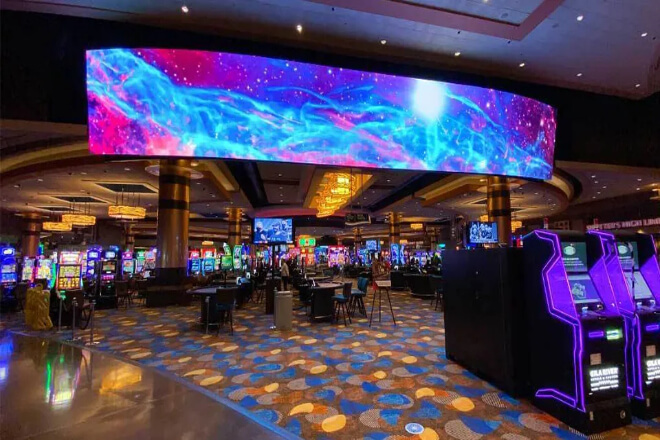
In an environment like a casino, what truly keeps people engaged is not just the content itself, but “when the content changes.”
LED displays act as a rhythmic “content arranger,” constantly retaining attention through change.
First, the playback is looped, but not simply repetitive. Content can be varied within the same theme, such as scene transitions, information updates.
And visual style adjustments, ensuring that even after multiple viewings, it doesn’t feel exactly the same, thus reducing the likelihood of a quick glance and move on.
Even more interestingly, “imminent” content can be incorporated, such as countdowns or upcoming updates, creating a sense of anticipation.
“Let’s see if there are any new changes.” This subtle psychological pull often keeps viewers lingering longer.
Simultaneously, maintaining freshness through rhythmic variation is crucial. The visuals aren’t consistently fast or slow.
But rather vary in speed and intensity at different stages, like “setting a rhythm,” preventing visual fatigue.
Imagine a scene where the screen content loops, with upcoming updates, the rhythm sometimes accelerating and sometimes slowing down.
What might have been a casual glance becomes an unconscious pause—the dwell time is thus extended.
In short, the LED display acts as a “content rhythm controller,” using variation and anticipation to make viewing less monotonous and to make lingering more natural and longer-lasting.
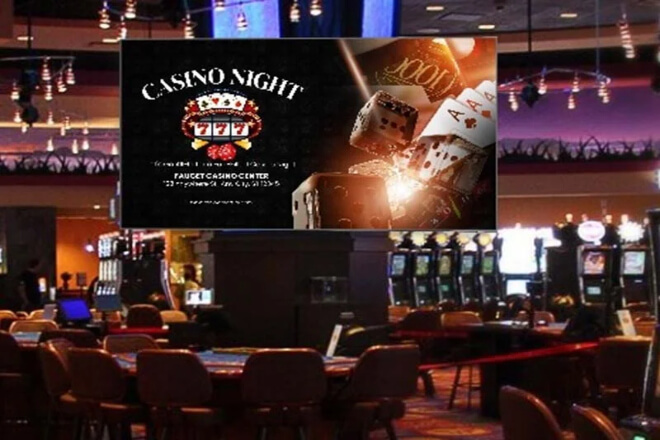
In spaces like casinos, different areas have different “rhythms” and functions. LED displays act as content distribution tools that “speak according to location,” displaying the right information in the right place.
By segmenting content delivery by area, different content can be presented at entrances, passageways, and core areas.
For example, entrances can focus on guidance and overall information, while core areas can emphasize current activities or key information, making the content more targeted rather than “one screen saying everything.”
Simultaneously, promotional, event, or guidance information can be integrated more naturally. When a person walks to a certain location.
And the screen displays relevant content, they are more likely to feel “following the information” rather than being forcibly interrupted.
More importantly, the combination of “location + content” is crucial. At key nodes, such as corners, flow points, or dwelling areas.
Appropriate information displays can subtly influence people’s path choices, making the flow more natural and directional.
Imagine this scenario: When someone walks to a fork in the road, and a screen displays information or dynamic content for one direction, their attention is naturally drawn to it.
Subtly influencing their path choice—not through forceful guidance, but by “following their instincts.”
Simply put, the LED display acts as an “invisible guide,” using precise content in different locations to influence both dwell time and behavioral paths, making the overall space more rhythmic and guiding.


 English
  Español
  简体中文
简体中文  Français
  日本語
日本語  한국어
한국어  العربية