

Purchasing LED displays seems simple—just choose a screen with suitable brightness and a reasonable price?
In reality, many projects only reveal numerous problems on-site: uneven color, brightness decay, frequent repairs… These troubles often cannot be solved by product specifications alone.
For a smooth and worry-free screen experience, the key is choosing the right supplier. So, how can you select a reliable and suitable supplier to ensure a smooth, worry-free, and durable project?
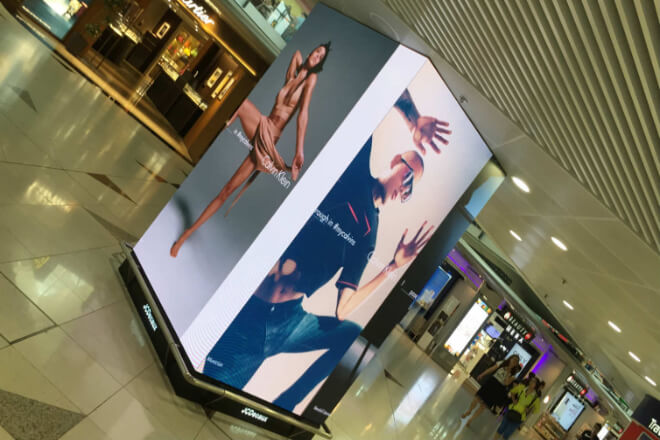
Before choosing an LED display supplier, the first step is actually quite simple—figure out what you want to achieve.
Many people start by focusing on prices and specifications, which can easily lead to missteps.
For example, are you doing indoor stage performances or outdoor advertising screens? Is it a long-term fixed installation, a rental or a creative irregular-shaped screen?
Different scenarios have different requirements for brightness, pixel pitch, refresh rate, waterproofing, and heat dissipation.
If you don’t even know what you need, even the best supplier can only offer a “seemingly good” solution, not necessarily a suitable one.
Once you’ve clarified your needs, the next step is to determine which parameters are most important. Pixel pitch, brightness, refresh rate, and stability are not all equally important.
For example, for outdoor advertising screens, brightness and waterproofing are more critical; for stage or rental screens, pixel density and refresh rate might be paramount.
Prioritizing these factors prevents you from being misled by flashy but unimportant parameters when communicating with suppliers, and makes comparisons more intuitive.
Of course, budget, delivery time, and project scale cannot be ignored. The budget determines the level of screen you can choose, and the delivery time affects whether the project can be launched on schedule.
Large projects also require consideration of the supplier’s production and installation capabilities, as well as the availability of after-sales service.
A supplier with poor overall capabilities, even with excellent products, can cause you considerable headaches.
Therefore, the most effective way to compare suppliers is actually quite simple: first, understand what you need, what is essential, and what you can compromise on, then see who can truly meet these needs.
Clarifying your needs, core parameters, and practical limitations provides a basis for your selection and reduces the risk of making mistakes.
After all, you’re not buying a single screen, but a complete, reliable display system that will last a long time.

After figuring out your needs, the next step is to assess the supplier’s product capabilities. Many people only focus on specifications or short-lived samples, but the real difference lies in long-term use.
For example, two outdoor advertising screens may have sufficient brightness, but one developed color differences after six months of continuous high temperatures.
And rain, while the other maintained consistent color. This indicates a significant difference in materials and manufacturing processes.
Color consistency, grayscale performance, and black level are key to the screen’s performance.
A sample screen that looks impressive doesn’t guarantee it will perform well on-site and run for hundreds of hours continuously.
Besides display quality, core components are also crucial—LED chips, driver ICs, and power supplies directly determine the screen’s lifespan and stability.
For instance, some screens use low-end power supplies, frequently experiencing lighting malfunctions or blackouts after a few months.
While reputable suppliers in the same price range use reliable brand power supplies that operate smoothly even under high loads for extended periods.
Reliable suppliers will have clear material selection standards and aging tests, rather than just relying on samples to attract customers.
Pay attention to the stability and failure rate of the screen. LED screens are continuously operating devices; durability is more important than the numbers on the specification sheet.
Finally, don’t just look at samples; examine the supplier’s successful case studies. Case studies also provide insight into their installation, commissioning, and after-sales capabilities—all crucial indicators of product quality.

Besides product quality, the third step is to assess the supplier’s technology and R&D capabilities.
Many suppliers simply assemble screens from existing modules, lacking independent R&D capabilities.
Such suppliers may be helpless when faced with special requirements or new technology applications.
In contrast, suppliers with R&D teams can quickly keep up with new technologies.
For example, higher refresh rates, low-latency control, or creative irregular screen designs can provide more flexible solutions for projects.
Customization capabilities are also key. Each project has different sites, environments, and usage scenarios.
If a supplier only provides standard solutions, the resulting screen may not be entirely suitable for your needs.
A reliable technical team will adjust solution parameters, structural design, and even control systems based on the actual project situation, achieving true “tailor-made” solutions.
For example, a stage performance company encountered a supplier who simply used a standard screen solution, resulting in the screen not matching the stage size after installation, causing troublesome on-site adjustments and affecting the performance.
Suppliers with R&D capabilities, on the other hand, can measure dimensions in advance and design suitable modular splicing solutions, successfully completing the project.
Additionally, it’s important to see if the technical team can directly handle the project. Some suppliers have layers of internal communication.
With sales, engineering, and R&D communicating separately, leading to information loss and slow problem-solving.
Ideally, the technical team should be directly involved in the project, addressing on-site needs and unexpected situations, and quickly providing solutions. This is not only efficient but also ensures the final effect matches the design.
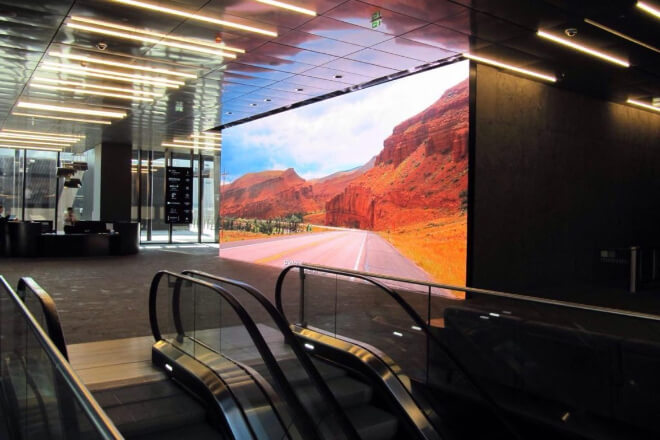
Even with a good product, if delivery is not timely, the project will be significantly compromised. First, consider the factory size and production management level.
Large-scale, well-managed factories have more stable production planning, material supply, and process control, reducing the probability of delays and errors.
For example, in a large-volume stage rental screen project, production may be split into multiple batches.
If factory management is disorganized, delivery delays or inconsistencies in screen specifications are highly likely.
Quality control processes are equally important. Reliable suppliers have complete and traceable quality management systems, with records kept for every step, from raw material intake to production, aging tests, and final inspection.
This allows for quick identification and resolution of problems later on. In contrast, suppliers without standardized quality control processes operate like a “black box,” making it difficult to guarantee product stability.
The ability to handle large-volume deliveries and emergency projects is also a key indicator when selecting a supplier.
For instance, if a shopping mall needs to install a screen just before its opening, a supplier who can quickly arrange production.
And installation can help the client meet the deadline; a slow-responding supplier may delay the project and affect the overall effect.
Finally, packaging, logistics, and overseas project experience should also be considered. If the project involves cross-regional transportation or overseas installation.
The supplier’s experience in packaging protection, transportation safety, customs clearance, and overseas construction directly impacts the successful delivery and on-site installation of the screen.
These seemingly minor details directly impact the successful implementation of a project.

Buying an LED display screen isn’t the end of the process; the subsequent installation, debugging, and maintenance are where the supplier truly shines. First, consider pre-sales support.
Professional suppliers will provide solutions from the customer’s perspective, rather than simply recommending the most expensive or best-selling products.
For example, when a commercial plaza was selecting a screen, the supplier proactively analyzed the ambient brightness, viewing distance, and budget.
Ultimately designing a cost-effective and high-performing solution. This is far more valuable than simply providing a “parameter list.”
Installation guidance and debugging support are also crucial. Some suppliers only sell products, neglecting on-site installation, resulting in numerous problems during debugging.
Reliable suppliers will send professional engineers to provide on-site guidance, ensuring proper screen installation, uniform color, and stable control systems.
After-sales response speed and problem-solving capabilities directly affect the user experience.
The supplier’s ability to respond quickly and provide remote or on-site solutions when the screen experiences dead pixels, control malfunctions, or uneven brightness determines the smooth operation of your project.
Verbal guarantees alone are insufficient; warranty policies must be clear and enforceable. For example, the contract should explicitly state the warranty period, response time, and parts replacement procedures.
This ensures that even if problems arise, they can be handled according to established procedures, rather than relying on ad-hoc coordination.
In short, a good supplier not only sells you the screen but also guarantees long-term stable operation and smooth implementation.
A supplier with a comprehensive service system can minimize detours throughout the entire project, from design and installation to operation.

Many people think they’ve gotten a bargain when they see a low price, but LED display screen projects aren’t simply about finding the cheapest option.
First, check if the pricing structure is transparent. Reliable suppliers will clearly list material costs, labor costs, transportation costs, installation.
And commissioning costs, etc., rather than ambiguously including them in a single total price. This allows you to determine if the price is reasonable.
Judging a reasonable price, not just the lowest, is also crucial. Low prices often indicate compromised materials, reduced after-sales service, or tight delivery schedules.
A good supplier, while perhaps quoting a slightly higher price, offers superior product quality, service, and after-sales support, truly reducing long-term costs.
For example, some customers choose low-priced screens, saving tens of thousands initially, but the accumulated costs of repairs, downtime, and upgrades within a year far exceed the initial high-priced purchase cost.
Furthermore, consider the difference between long-term cooperation and one-time purchases.
A one-time screen purchase may be hassle-free, but long-term suppliers understand your usage scenarios better.
And can provide regular maintenance, upgrades, and rapid response services, resulting in greater peace of mind and cost savings in the long run.
Finally, don’t overlook the supplier’s willingness and capacity for stable cooperation. For instance, some suppliers may have limited production capacity or take on too many projects, potentially unable to meet your long-term needs.
The ideal partner is one that can meet your current project requirements and is willing to establish a long-term cooperative relationship.
 English
  Español
  简体中文
简体中文  Français
  日本語
日本語  한국어
한국어  العربية