

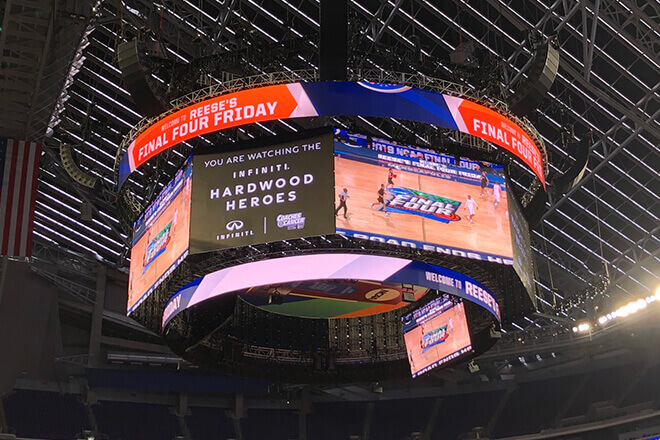
When you buy a ticket to the venue, the biggest fear for audiences isn’t a lack of excitement, but missing the exciting moments.
LED displays exist to ensure that every audience member doesn’t miss a crucial moment on the field.
First, they can present match details and exciting moments in high definition. Whether it’s a brilliant shot in a football match, a game-winning shot in a basketball game.
Or a masterful maneuver in an e-sports event, the large screen can clearly magnify the image, allowing audiences to capture the highlights of the match immediately.
Second, the real-time replay function makes the highlights worth “watching again.”
Many exciting moments happen too quickly; the audience has barely finished cheering when the large screen has already replayed the key details in slow motion.
Seeing a game-winning shot is a surprise; understanding how it happens is another kind of enjoyment.
Meanwhile, LED displays can solve the viewing angle problem in large stadiums. For spectators sitting in the back rows or far stands, subtle movements on the court might be difficult to discern.
But watching simultaneously on a super-large screen still provides a clear and complete viewing experience.
Even more interestingly, many spectators remember not only the result but also those classic moments magnified on the big screen.
A brilliant goal, a crucial dunk, a miraculous comeback—all become more impactful when displayed on the big screen.
Simply put, the value of LED displays is: making watching a game not just about being “on-site,” but truly “seeing the excitement.”
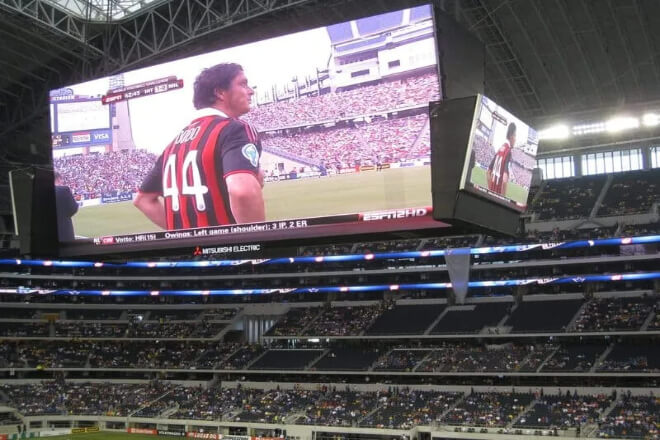
Today’s viewers come to games expecting much more than just the score; there’s a hidden wish: “What if I get on the big screen?”
Firstly, LED displays can host various interactive games and prize draws. During pre-match warm-ups, halftime, or timeouts.
The large screens launch activities such as QR code quizzes, lucky draws, and audience challenges, turning waiting time into participation time.
Secondly, real-time displays of fan shots and cheering footage are often one of the most fun parts of the event.
When the camera pans to the stands, some instantly transform into dance kings, others wave their support flags wildly, and still others immediately start “working” after discovering they’re on the big screen, energizing the entire stadium.
Simultaneously, the large screens enhance the atmosphere of participation. For example, when the home team scores, the entire stadium lights up with synchronized cheering animations.
At crucial moments, decibel challenges are launched to see which side shouts the loudest. Before the game is even over, the stands are already “battling.”
Even more interestingly, many memorable moments don’t actually happen on the field, but in the stands.
A funny expression, a perfectly synchronized celebration, or a creative support slogan can all become trending content on social media that day because of the large screen exposure.
In short, the greatest charm of LED displays is that they transform spectators from “ticket-buying people” into “part of the game.”
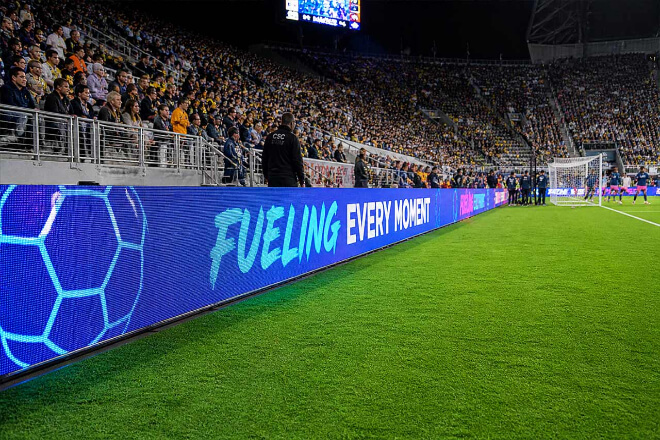
For venues, LED displays are not just viewing equipment, but also a “digital asset that continuously generates value.”
First, they support a dynamic rotating display of advertising content.
A single screen can display different brand content at different times: partner promotions before the game, brand exposure during the game, and event promotions afterward.
The same location can serve multiple advertisers, rather than being fixed to a single brand for a long period.
Second, they can significantly enhance the exposure value of sponsors. Brands don’t just display a logo.
They can appear in the audience’s view through dynamic videos, creative animations, and real-time interactions.
Especially when appearing near exciting goals, key replays, or highlight moments, brand attention is often closer than with traditional advertising spaces.
Simultaneously, LED displays can directly increase advertising revenue during events.
The larger the event, the more concentrated the crowd, and the higher the live stream viewership, the higher the value of screen advertising resources.
A large screen at a popular event can sometimes be even more sought after than advertising spaces outside the venue.
Even more interestingly, LED screens can develop more “hidden revenue streams.” For example, brand-sponsored interactive segments, audience lucky draws.
And real-time data collaborations transform advertising from mere display into content that viewers actively engage with.
Simply put, the business logic of LED displays is: the same screen not only plays content but also continuously creates advertising value.
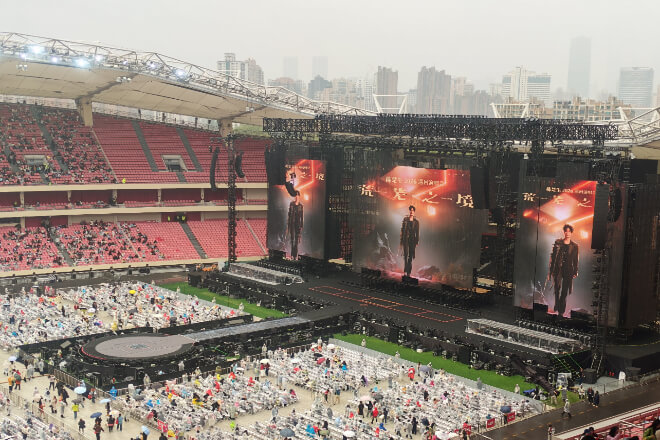
For modern venues, the most powerful aspect of LED displays is that they continue operating even after the competition ends.
First, they can support various commercial operation scenarios such as concerts, press conferences, and brand events.
Yesterday it might have been broadcasting a championship match, tomorrow it could transform into the main visual backdrop for a concert.
And the day after that it could become the large-screen stage for a new product launch—one screen easily switching between multiple roles.
Second, it serves as a crucial window for disseminating venue event information.
Upcoming performances, exhibitions, competitions, and member activities can all be updated and displayed in real-time on LED screens, ensuring the venue always remains “content-rich and vibrant.”
Simultaneously, LED displays effectively improve venue utilization. In the past, some large venues might only be bustling during sporting events.
Now, with the help of high-quality display systems, they can attract more commercial activities, allowing venues to maintain a high operating frequency throughout the year.
Even more interestingly, a single LED screen can generate numerous new businesses.
Brand pop-ups, live streaming events, corporate annual meetings, e-sports experience days, etc., all have the potential to become new sources of revenue.
For venues, the screen is not just equipment, but more like a year-round “business development manager.”
Simply put, the value of LED displays lies in serving the audience during competitions and continuing to generate revenue afterward.
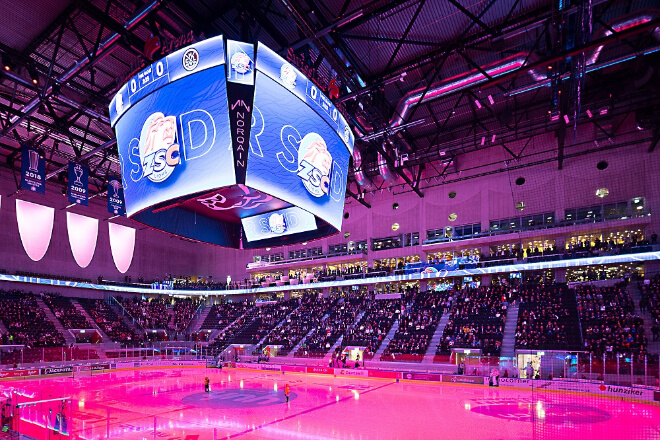
When LED screens in a venue upgrade from “working individually” to “unified command,” the operational method changes significantly—from people monitoring the screens to the system automatically managing content.
Firstly, intelligent systems can centrally manage the content of multiple displays. Whether it’s the main stage screen, the surrounding screens, the floor tile screens.
Or the entrance information screens, content can be uniformly arranged and published on the same control platform, achieving true “one-click linkage.”
For example, at the start of a competition, all screens simultaneously switch opening animations with a highly consistent rhythm.
Secondly, it can publish event and venue information in real time. Score updates, schedule changes, emergency notices, spectator guidance.
And other content can be quickly pushed to designated screen areas, making information dissemination more timely and accurate, and reducing on-site communication delays.
Simultaneously, the intelligent system can significantly reduce manual operation costs. Previously, multiple staff members were needed to control different screens.
Now, only a small number of operators are needed to complete the overall scheduling, reducing manpower pressure and the probability of errors.
More interestingly, this system makes venue operation more like a “live streaming platform.”
Screens in different areas can automatically switch content based on spectator location, event stage, or event type, making the entire venue like a “self-updating” digital space.
Simply put, the change brought about by the intelligent LED system is: from “human control of screens” to “system management of the entire visual venue.”


 English
  Español
  简体中文
简体中文  Français
  日本語
日本語  한국어
한국어  العربية