
Introduction
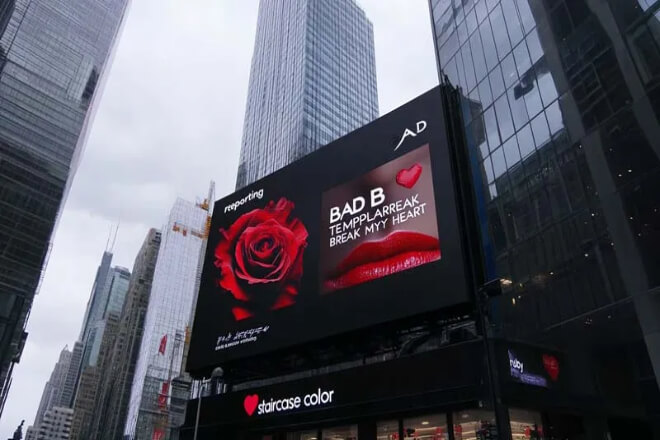
Today’s tourists are no longer satisfied with simply “seeing the scenery.”
More and more people want to step into a scene, participate in a story, rather than simply taking a photo and leaving.
For this reason, an increasing number of cultural tourism projects are incorporating LED displays, using images, light and shadow, and content to transform a space into a worthwhile journey.
Table of Contents
1. How can LED displays at scenic area entrances create a "first impression"?

Many tourists’ first impression of a scenic area isn’t actually the attractions themselves, but rather the first few minutes after entering.
At this time, an LED display can transform “Welcome here” into a more memorable experience.
Firstly, it can create a themed welcoming atmosphere. Different scenic areas have different styles.
Ancient towns can play ink-wash animations, ocean parks can showcase waves and swimming fish.
And snow and ice scenic areas can use dynamic images such as snowflakes and aurora borealis, allowing visitors to enter the atmosphere from the moment they enter.
For example, upon entering, a scene of cherry blossoms gently falling on an LED screen, accompanied by the message “Welcome to Cherry Blossom Season,” will prompt many visitors to immediately take out their phones to take pictures.
Secondly, it can showcase the unique features of the scenic area.
Must-see attractions, today’s exciting performances, and special projects can all be quickly introduced using short videos or dynamic visuals, which are more appealing than lengthy text descriptions.
Furthermore, even before visitors begin their tour, if they see exciting images of glass walkways, light shows.
Or animal interactions on the LED screen, they will naturally be more eager to continue their visit. Simultaneously, LED screens can also publish guides and event information.
For example, performance times, routes, weather reminders, and festival activities can all be updated in real time, ensuring that the information on the promotional boards doesn’t become outdated.
Finally, it can stimulate visitors’ interest in exploration. An attractive visual is often more effective than a promotional slogan, transforming visitors from “just want to take a look” to “this is a must-visit.”
2. How Immersive Exhibition Halls Can Tell Stories Using LED Displays?

Many exhibition halls are no longer satisfied with simply “displaying exhibits” but aim to immerse visitors in the story. LED displays are a crucial tool for bringing stories to life.
First, dynamic scenes can recreate history and culture.
Compared to static images, LED displays can use animation, video, and special effects to re-present historical scenes and cultural stories to the audience, making the content easier to understand.
For example, in an ancient city cultural exhibition hall, where there was originally only an old photograph, an LED screen can gradually “revive” the streets, people, and lights, giving visitors a feeling of traveling back to that era.
Second, multiple LED screens working together can transform the entire exhibition hall into a complete story space.
The main screen tells the main storyline, the side screens supplement the environment, and the ground or ceiling screens create the atmosphere; wherever visitors go, the story unfolds.
Even more interestingly, visitors don’t just stand and “watch the story,” but rather “enter the story” as they walk.
For example, entering an ocean-themed exhibition hall, the surrounding LED screens display swimming fish, and there are changing lights overhead.
Making it feel like stepping into an underwater world. Many people can’t help but stop and take photos.
At the same time, LED displays can enhance the visitor’s sense of immersion. With visuals, lighting, and sound effects changing in tandem, viewers are more easily immersed in the content, rather than simply glancing at a few panels and leaving.
Finally, this display method is also easier to share.
The more impactful the visuals, the more willing visitors are to take photos and videos to share on social media, thus enhancing the exhibition hall’s influence.
3. How LED Displays Can Create an Immersive Atmosphere for Nighttime Tourism Projects?

Many people now visit scenic spots at night not just to see the lights, but to experience an atmosphere that’s only available at night.
LED displays are perfect for creating this atmosphere.
First, they can work in conjunction with lighting to add depth to the nighttime experience.
A wall that looks ordinary during the day becomes completely different at night when the LED screen illuminates, combined with changing lighting.
For example, upon entering a scenic area, an LED screen displays a slowly flowing starry sky and landscape.
With the surrounding lighting changing accordingly; even a casual snapshot creates a great atmosphere.
Second, LEDs can also “perform” thematic stories. Previously, visitors might only see information boards.
Now they can directly see dynamic images, walking and watching, feeling as if they are following a storyline.
For example, upon reaching the ancient town square, the LED screen begins displaying images of the ancient town awakening.
Accompanied by music, instantly enlivening the atmosphere and attracting many tourists to stop and watch for several minutes.
Simultaneously, it enriches the nighttime experience. As you walk through, each area features different LED content—some digital art.
Some festival-themed, some interactive animations—preventing the experience from feeling like “they’re all pretty much the same.”
Finally, and this is what the scenic area loves most—tourists are willing to stay longer. Seeing new light shows and new LED displays ahead, many people will say, “Let’s go a little further.”
4. How to Enhance Visitor Engagement in Interactive Experience Areas Using LED Displays?
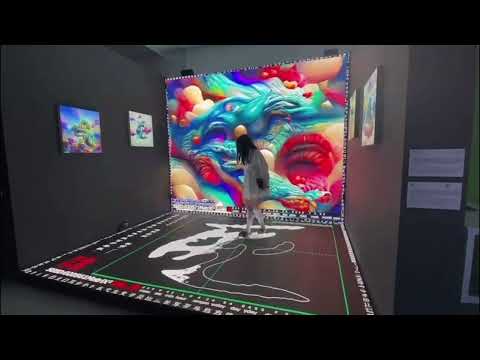
Now, the busiest areas in many scenic spots are not necessarily the attractions themselves.
But rather the interactive areas where people queue up to experience and take photos. LED displays are one of the “protagonists” of these interactive experiences.
First, they can create interactive games and digital installations. Visitors can wave, step on the ground, or scan a QR code, and the LED screen will change accordingly, allowing them to not just watch on a screen, but actually “play.”
For example, if a child steps on an LED floor tile, a string of running fish will immediately appear under their feet. Parents can take photos, and the child won’t want to leave.
Second, LEDs can also display photos and interactive content taken by visitors.
Photos can be directly displayed on the screen, or names and scores can be displayed after successfully completing interactive challenges, encouraging many to play again.
Sometimes, a simple “Let’s see if it gets on the big screen” can significantly liven up the atmosphere.
This kind of interaction is particularly popular with families with children and young visitors.
Children find it fun, adults find it photogenic, and young people can record short videos to share on social media—a single LED screen caters to different age groups.
For example, a common scene: several friends complete an interactive game together, and the screen immediately plays a celebratory animation; everyone’s first reaction is to take out their phones to record.
Finally, it can enhance the effectiveness of photo-taking and sharing.
With interactivity, animation, and a large screen background, tourists are naturally more willing to take photos and share them, thus increasing the scenic area’s exposure.
5. How can cultural and tourism performance projects enhance their on-site appeal through LED displays?

Now, many cultural and tourism performances are competing not only on actors and storylines, but also on whether the stage can draw the audience into the story. LED displays are a crucial element in creating this atmosphere.
Firstly, they can quickly switch scenes to complement the performance.
A single LED screen can transform the stage from an ancient town street to a vast desert, then to a landscape painting, without frequent set changes or interruptions to the storyline.
For example, one second the actors are on an ancient town street, the next the LED screen changes, and the stage instantly becomes a starry sky, allowing the audience to easily “travel” with the story.
Secondly, they can create more impactful visual backgrounds. Mountains, rivers, fireworks, and the changing seasons can all be dynamically presented through LEDs, instantly enriching the otherwise flat stage.
Even more interestingly, the same performance can evoke completely different feelings depending on the LED background.
For instance, when the actors reach a climax, the LED screen behind them slowly unfolds a waterfall and mountains, transforming the entire stage… It becomes more impressive.
Simultaneously, LEDs can work in conjunction with lighting, sound, and special effects. When music starts, the lights illuminate, and the LED screens change in sync.
Combined with effects like smoke and fountains, the atmosphere becomes more cohesive, rather than fragmented.
Finally, it significantly enhances the immersive experience of the performance.
Audiences are not just watching the actors, but the entire stage “telling a story” together, creating a more engaging and memorable experience from both visual and auditory perspectives.
6. Conclusion
A good cultural tourism experience often leaves a lasting impression not just on a single screen, but on the feeling of being there.
LED displays are only one part of the experience, but they can make stories more vivid and add depth to the space.
When visitors are willing to linger and share their experiences, the experience gains lasting value.
Finally, for more information about LED displays, please get in touch with us.


 English
  Español
  简体中文
简体中文  Français
  日本語
日本語  한국어
한국어  العربية