

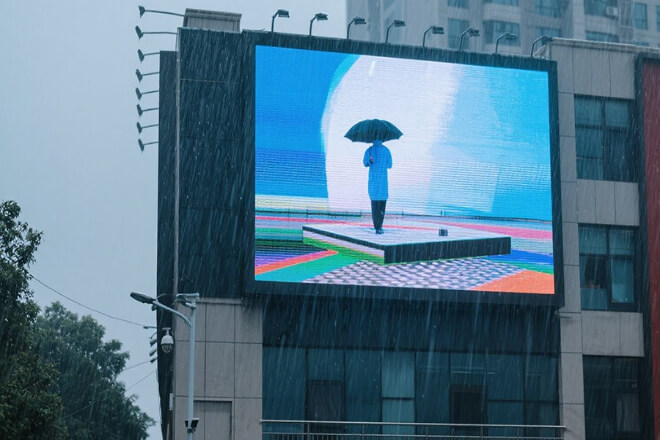
In the past, information dissemination in many public spaces was quite “slow”: notices were fixed once posted, and any changes required reprinting and reposting.
By the time the information was updated, things might have already changed . The first change brought about by LED displays is that information is transformed from “statically displayed” to “real-time dynamic.”
Firstly, traditional bulletin boards are slow to update and have weak coverage. Many people passing by won’t necessarily stop to read them, and once the information expires, it’s easy to find a situation where “the notice is still there, but the content is outdated.”
Here’s a very real scenario: the event time changes, but the posters on the wall haven’t been updated yet, which can easily lead to misunderstandings.
Secondly, LED displays can scroll and update instantly in real time. Content only needs to be adjusted in the backend and immediately synchronized to the screen, allowing for rapid dissemination of notifications, reminders, and event information.
Even more interestingly, this ability to “change at any time” makes information dissemination closer to the rhythm of reality—the information arrives almost as soon as the event happens.
Another common example: as soon as a breaking news notification is updated, the screen immediately scrolls to show it, and passersby receive it almost instantly.
Finally, it improves the overall efficiency of public information dissemination. Information no longer relies on “posting it up—waiting for people to see it.”
But rather on “continuous playback—proactive outreach,” covering a wider audience and ensuring more timely understanding.
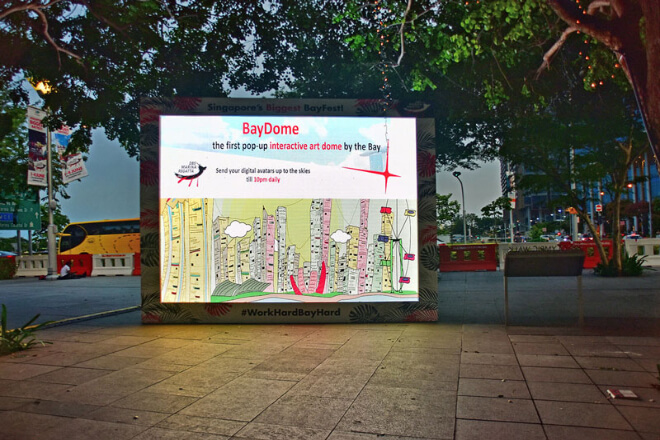
In places like airports, subway stations, and train stations, the biggest problem with information isn’t “lack,” but rather—it’s too scattered.
With electronic screens on one side, signs on another, and announcements on yet another, travelers have to piece together the information themselves.
The role of LED displays is to integrate these fragmented pieces of information into a clear visual system.
First, information from subways, airports, and train stations is no longer fragmented;
instead, it’s centrally displayed, showing schedules, routes, and passenger flow guidance.
For example, flight status, train arrival times, and transfer routes can all be presented in sections on the same screen, making it easy to understand at a glance.
To illustrate, previously you had to “look up at the timetable, look down at the signs, and ask staff.” Now, a single screen tells you “where to go, how to get there, and how long it will take.”
Second, passenger flow guidance is more intuitive. For example, during peak hours, it can dynamically indicate which lane is faster, which turnstile is less crowded, and even temporarily adjust the flow direction to facilitate smoother traffic.
More interestingly, this is essentially “using screens for crowd control,” rather than waiting for congestion to occur and then manually managing it.
Another common example is in subway transfer passages: screens display real-time messages like “The left lane is crowded, please use the right lane,” naturally diverting the flow of people.
Finally, it improves overall traffic efficiency and order management. With more centralized information, clearer pathways, and shorter decision-making times, the entire space operates more smoothly.
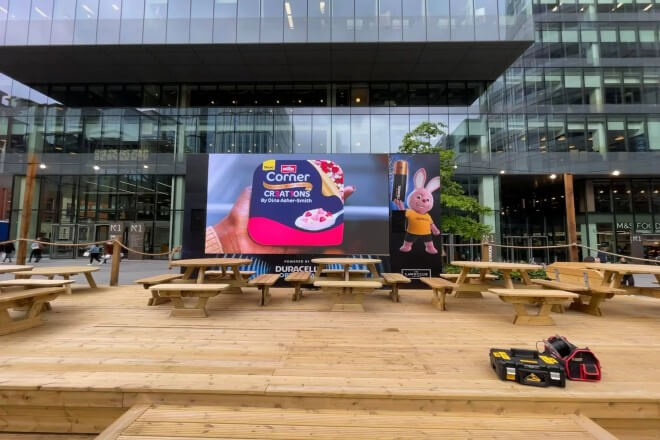
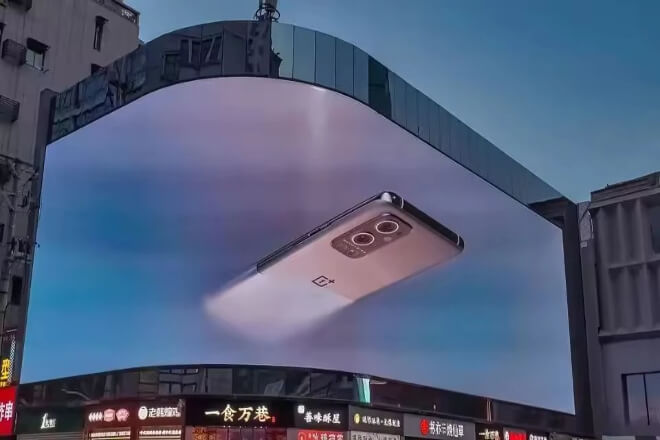
Cities used to be about “ease of use,” but now they increasingly focus on “aesthetics and memorability.”
LED displays play a crucial role in this shift.
First, urban spaces are not just about “use,” but also “aesthetics.” Previously, public spaces primarily served a directional function, telling you where to go and how to get there;
Now, they are expected to create a visual experience that encourages people to stop and look.
For a clear example: a street that’s just a passageway during the day can become an atmospheric urban nighttime landmark at night through LED lighting and large-screen content.
Second, LED displays significantly enhance the visual impact of nighttime scenes and public spaces.
Especially in commercial districts, squares, and around landmarks, dynamic visuals can bring spaces to life, rather than just providing lighting and architectural outlines.
More interestingly, this change is actually altering how people perceive the city—from “passing by” to “this place is worth a look.”
For example, a common scene: at night, a large screen in a square displays city cultural content or festival-themed animations, naturally attracting people to stop and take photos.
Ultimately, it enhances the city’s modernity and recognizability. A city’s “memorable points” often stem from these visual landmarks, and LED systems can quickly create such iconic expressions.
The biggest fear in emergencies isn’t “insufficient information,” but rather—information arriving too slowly.
In many public spaces, previous emergency notification methods were fragmented: an announcement was broadcast, a revised version was posted, and staff had to remind people again, easily leading to time lags.
The value of LED displays lies in transforming “slow notification” into “synchronous triggering.”
First, the traditional emergency information dissemination speed is limited. For example, temporary service disruptions, weather warnings.
And adjustments to crowd control measures, relying on manual updates or a single channel, easily lead to information asynchrony, with some people only learning of the changes after arriving at the scene.
A very real scenario: a station temporarily changes ticket gates; if information updates are not fast enough, crowds easily gather in the original passageways.
Secondly, LED displays can simultaneously broadcast early warning information from multiple points.
The same system can update content on multiple screens simultaneously, such as entrance screens, passageway screens, and waiting area screens, switching between displays, ensuring information reaches everyone “at the same time.”
More interestingly, this synchronization capability is essentially “racing against time differences”—information isn’t transmitted point-to-point, but rather spread out and covered directly.
For example, a typical scenario: when a sudden weather warning is issued, the airport lobby, entrance screens, and waiting area screens simultaneously display the warning, so passengers see it almost “at the same time.”
Simultaneously, it improves public safety response efficiency. Because information is seen faster, crowd reactions are more unified, reducing confusion and redundant communication, making it easier to quickly guide and adjust the situation on-site.
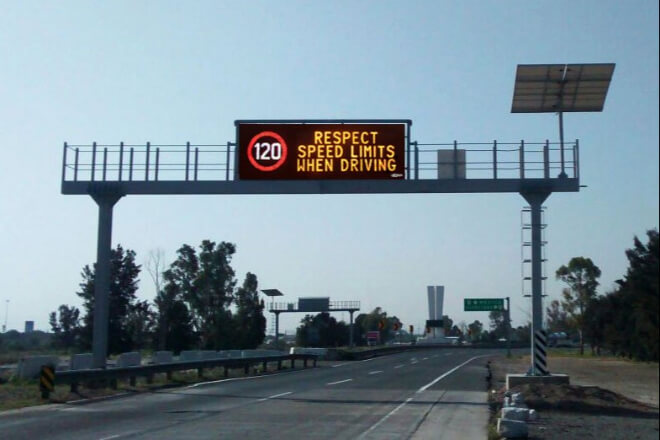
In the past, many LED screens were essentially “independent devices”: each managed its own function and broadcast its own content, requiring on-site handling when problems arose.
The change is that they are beginning to become part of the city’s or venue’s digital system.
Firstly, by connecting to a smart city management platform, LED screens are no longer isolated terminals, but rather a link in the overall information scheduling process.
For example, information such as traffic updates, emergency notifications, and event announcements can be distributed uniformly on a single platform and then synchronized to screens in different areas.
To give a very intuitive example: the same warning message can appear simultaneously on subway stations, commercial district screens, and transportation hubs, eliminating the need for “one version per location.”
Secondly, it supports remote control and unified scheduling, significantly changing management methods.
Previously, on-site operation of equipment might have been required; now, content can be switched, playback strategies adjusted, and even managed by area groups through a unified backend.
More interestingly, this approach expands the “management radius” while simplifying operation—the more screens, the easier it is to achieve unified control.
For example, a common scenario: the management center switches to “festival mode” with a single click, and multiple LED screens in different areas simultaneously update with city-wide atmosphere content.
Finally, it enables the digital upgrade of infrastructure. LEDs are no longer just display tools but part of the city’s information system.
Participating in scheduling, linkage, and response, making the entire operating system more digital and collaborative.


 English
  Español
  简体中文
简体中文  Français
  日本語
日本語  한국어
한국어  العربية