
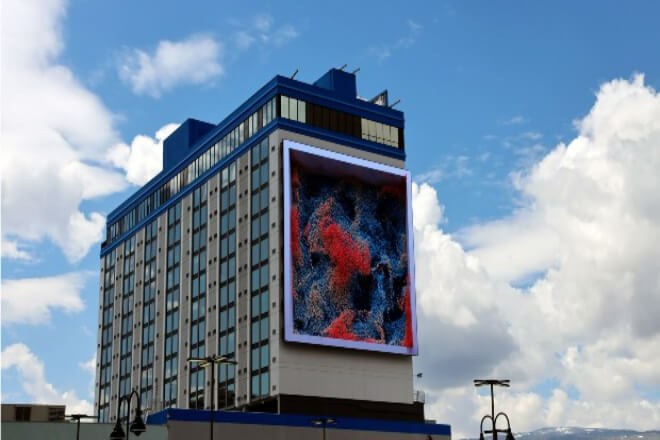
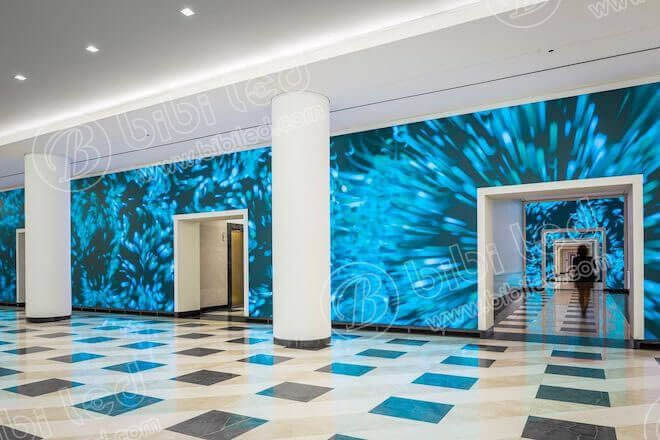
1). Real-time Information and Interaction
Through LED displays, hotels can provide real-time flight information, weather forecasts, and the latest updates on internal hotel activities, ensuring guests don’t miss any important information.
This not only saves guests time but also helps them manage their time and plan their schedules more effectively.
Furthermore, hotels can set up interactive functions, allowing guests to quickly find the information they need by simply touching the screen or scanning a QR code, saving time and effort.
2). Brand and Visual Atmosphere
LED displays not only provide information but also create a unique brand atmosphere for the hotel.
Hotels can use dynamic videos, images, or creative designs to showcase their culture and characteristics, allowing guests to experience the unique charm of the hotel.
For example, displaying local artwork or scenery on the LED screen in the lobby not only adds to the aesthetics but also leaves a deeper impression on guests, strengthening their identification with the hotel brand.
3). Entertainment and Interaction
To make guests’ stays more enjoyable, hotels can utilize LED displays to set up interactive walls, mini-games, and AR/VR experiences.
These interactive features entertain guests and break away from the traditional, monotonous hotel model.
For example, guests can play mini-games in the lounge area or experience new forms of entertainment through virtual reality, enhancing their stay and making every moment feel fresh and exciting.
4). Personalized Service
LED displays can also display customized content based on the needs of different guests.
Hotels can use data analysis to understand guests’ preferences and needs, providing more attentive service.
For example, business travelers may be more interested in meeting rooms and quick meal services, while families may be more interested in family activities and attractions.
In this way, guests can feel the hotel’s thoughtfulness and care, resulting in a more pleasant stay.
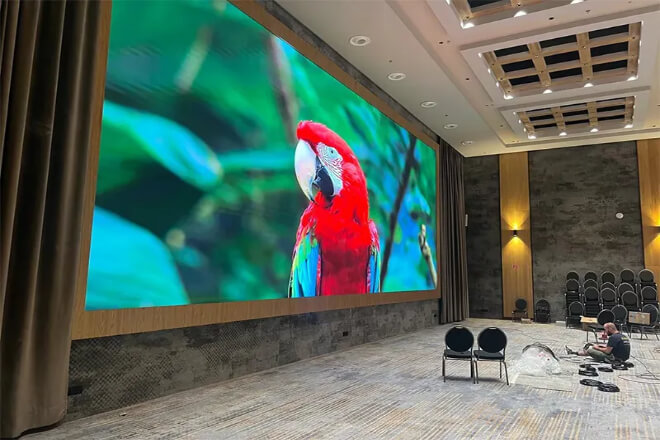
1). Matching Screen Size, Pixel Pitch, and Viewing Distance
In hotel lobbies, conference rooms, restaurants, and other areas, the size and pixel pitch of LED displays significantly impact the guest experience.
Large screens ensure that even guests at a distance can clearly see the information displayed, such as event promotions and restaurant menus.
At the same time, the screen’s pixel pitch needs to be adjusted according to the viewing distance.
For example, in the lobby where viewers are closer to the screen, a smaller pixel pitch ensures a detailed and undistorted image, while in conference rooms where viewers are further away, the pixel pitch can be appropriately increased.
By precisely matching screen size and viewing distance, hotels can provide every guest with the best visual experience, ensuring that the content is both clear and easy to read.
2). The Importance of High Brightness, Contrast, and Color Reproduction for Visual Impact
LED displays in hotels often need to cope with varying lighting conditions, such as natural light in the lobby, lighting in the restaurant, or projection equipment in conference rooms.
High-brightness LED screens ensure that the image remains clear even in strong light, preventing light interference from affecting the display of content.
Meanwhile, higher contrast and accurate color reproduction make the displayed content more vivid, enhancing visual impact.
For example, when displaying hotel event advertisements or menus, clear contrast and true colors make it easier for guests to obtain information and are more visually appealing.
Hotel brand colors, images, or videos can also be conveyed more accurately through high-fidelity screens, enhancing the brand image.
3). Multi-Screen Splicing and Irregular Screen Design to Create Immersive Spaces
Multi-screen splicing and irregular screen designs of LED displays can greatly enhance the attractiveness and interactivity of hotel spaces.
In lobbies, banquet halls, exhibition areas, and other locations, multiple LED screens can be spliced together to form a large screen, displaying large images or continuous visual content, creating a stunning visual effect.
Especially in some large events or exhibitions, the application of spliced screens can seamlessly display hotel promotional information, brand advertisements, etc., enhancing the guest’s visual experience.
In addition, irregular screen designs can also create a unique sense of space within the hotel.
For example, hotels can utilize circular or curved screen installations to create an immersive visual experience, allowing guests to experience the hotel’s displayed content in 360 degrees, increasing fun and interactivity.
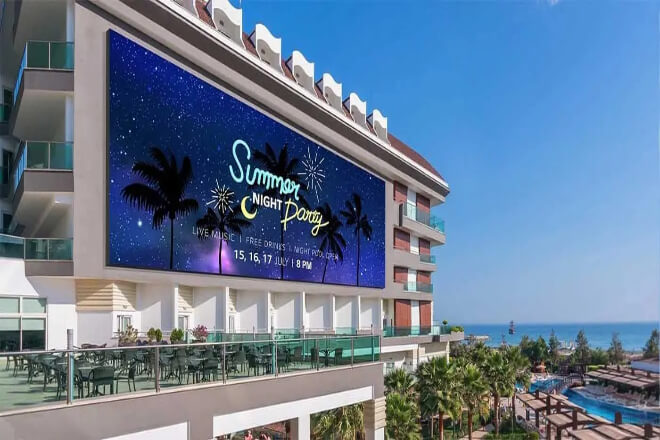
1). Enhancing Guest Satisfaction, Improving Reputation and Repeat Business
By upgrading LED display screens, hotels can make guests’ stays more convenient and enjoyable.
For example, guests can easily view hotel activities, menus, and meeting schedules, saving time and enjoying more personalized services.
LED screens can also provide real-time updated information, such as the weather, promotional activities, or special recommendations from the restaurant, giving guests a feeling of being cared for.
Satisfied guests are not only more likely to leave positive reviews but will also share their pleasant experiences with friends and family.
This word-of-mouth marketing will bring more repeat customers and new clients, increasing the hotel’s repeat business rate.
2). Additional Revenue from Advertising and Brand Partnerships
LED display screens are not just tools for displaying hotel information; they can also generate additional revenue for the hotel.
Hotels can display advertisements from surrounding businesses or tourist attractions on the screens, or collaborate with other brands for joint promotions.
For example, the screens in the hotel lobby can display special offers from nearby restaurants or advertisements for tourist attractions.
Hotels can also partner with various brands and earn cooperation fees through advertising displays.
In this way, LED display screens not only provide convenience for hotel services but also bring considerable advertising revenue.
3). Enhancing the Hotel’s Digital Image and Market Competitiveness
As more and more consumers pay attention to the technological level of hotels, LED display screens provide an important way for hotels to upgrade digitally.
Installing modern LED screens and displaying digital information and services can not only enhance the guest experience but also make the hotel more attractive in the market.
For example, when guests see a cool interactive screen or instantly updated activity information in the lobby, they will feel the hotel’s modernity and intelligence.
This advanced technological image can help the hotel stand out in the highly competitive market and attract more young guests who appreciate technology and smart services.
4). Return on Investment Analysis: Short-Term Display Value vs. Long-Term Operational Value
From a return on investment perspective, the benefits brought by LED display screens are not just the immediate display value.
In the short term, hotels can use LED screens to display various activities, promotional information, or dining specials to attract more guests and increase revenue.
In the long term, the digital and brand display functions of LED screens can continuously improve the hotel’s reputation and repeat business rate.
For example, LED display screens can not only showcase the hotel’s brand story but also generate a stable revenue stream through advertising partnerships and event promotions.
Therefore, despite the higher initial investment, the long-term benefits and continuous revenue generated by LED display screens can help hotels achieve a better return on investment in their operations.
 English
  Español
  简体中文
简体中文  Français
  日本語
日本語  한국어
한국어  العربية