

Have you ever wondered why some large-scale events or commercial displays always capture attention?
Why do some building facade screens look both stunning and unified, while others appear bland and unremarkable?
In fact, the secret behind this largely lies in modular LED displays.

In modern LED display technology, modular LED displays are becoming increasingly popular.
Simply put, it’s not a large, monolithic screen, but rather composed of standardized small modules.
Like building blocks, each module is part of the screen, and together they present a complete image.
This design makes the screen more flexible and facilitates daily maintenance and expansion.
1). Characteristics of Modular Design
The charm of modular LED displays lies in their flexibility and convenience:
- Removable:
Even if one module of the screen breaks, there’s no need to worry about the entire screen failing.
Simply remove the broken module and replace it, which is very convenient.
- Scalability:
The screen size can be easily adjusted by adding or subtracting modules.
Add modules to make it larger, or fewer modules to make it smaller, and it can even be assembled into curved or arc-shaped surfaces to adapt to various usage scenarios.
- High flexibility:
The modules are small and lightweight, making them much easier to move, install, and adjust than traditional large screens.
They are a lifesaver for stage performances, exhibitions, or temporary rental events.
In summary, modular LED displays cleverly combine flexibility and efficiency, making large-screen displays less rigid and difficult to maintain.
Whether it’s advertising screens in shopping malls or interactive displays at exhibitions and stages, it provides a worry-free and easy-to-use solution.

In large-scale projects, displays are not just tools for “playing images.”
Their quality directly affects the overall project experience, information dissemination efficiency, and visual impact.
Modular LED displays perfectly meet these needs, making them the first choice for many large venues, events, and even architectural projects.
Let’s start with efficiency and flexibility. Modular LED screens are composed of numerous small modules, allowing for flexible combinations to create screens of any size.
In other words, the screen size and shape can be easily planned during the design phase based on project requirements, and adjustments or expansions later are also straightforward.
This flexibility is extremely useful for large projects with limited budgets or those requiring phased completion.
Furthermore, it can handle complex environments. Large projects often involve highly complex spaces: stadium stands, curved walls in exhibition centers, or irregular areas such as building facades.
Modular LED screens can be freely assembled into flat, curved, arc-shaped, and even other odd shapes, perfectly fitting the environment while maintaining high-definition and uniform display quality.
Maintenance is also much easier. With traditional full-screen displays, replacing the entire panel is often necessary if it breaks, which is both troublesome and expensive.
With modular screens, only the damaged module needs to be replaced, saving time, reducing costs, and ensuring smoother project operation.
In short, for large projects, modular LED displays are more than just a display screen.
They are a flexible and efficient “display solution” that adapts to changing needs.
Its flexibility, scalability, and ease of maintenance make it indispensable in large venues and exhibitions.
And architectural projects, providing a reliable guarantee for smooth project operation and visual experience.

One of the biggest highlights of modular LED displays is their scalability.
That is, the screen can be adjusted in size, shape, and even upgraded and expanded as needed for the project, unlike the rigidity of traditional single-piece screens.
It can flexibly adapt to various applications, whether on stages, exhibitions, or building facades.
Firstly, there is a flexible configuration. Each project has different screen requirements; some require large-area flat displays, while others prefer curved, sculpted, or other irregular shapes.
Modular LED screens are like building blocks; they can be freely combined according to the actual situation, allowing the screen to perfectly fit the site environment and create unique visual effects.
Secondly, there is a modular combination. Each module is a standardized design and is compatible with others, making the screen layout in different environments very convenient.
Whether in large exhibitions, stage performances, or advertising displays on building facades, they can be flexibly combined.
It can even be disassembled into several smaller screens for separate use, maximizing screen utilization and easily meeting the needs of different scenarios.
Furthermore, consider the ease of upgrading and expansion. As projects evolve, it may be necessary to increase the display area or update the display technology.
Modular LED screens can be upgraded simply by adding or replacing a few modules, without replacing the entire screen.
This not only saves costs but also makes later maintenance and expansion much easier.
In summary, the scalability of modular LED displays makes them versatile in various application scenarios.
Whether for temporary events, long-term displays, or constantly changing project needs, it provides a flexible, efficient, and sustainable display solution, making large-screen use more worry-free and practical.

Besides its flexibility and scalability, modular LED displays are also particularly easy to install and maintain.
Compared to traditional monolithic screens, its design makes setup and later maintenance easy and efficient.
First, consider rapid installation and disassembly. Modular screens are composed of standardized modules.
Installation simply involves splicing and fixing them in sequence, allowing even large screens to be assembled quickly.
Disassembly is equally simple, saving significant time and manpower for both temporary events and relocation projects, making the entire process more efficient.
Furthermore, the unified modular design ensures that each module has the same size and interface, reducing installation errors.
The resulting screen is both neat and aesthetically pleasing, and avoids the misalignment issues common with traditional single-panel displays, resulting in a more perfect visual effect.
Finally, it simplifies maintenance and replacement processes. Even if a module malfunctions, the entire screen doesn’t need to be removed; only the individual module needs to be replaced.
This not only speeds up maintenance but also significantly reduces long-term operating costs, making screen management for large projects easy and efficient.
In summary, the modular LED display’s installation and maintenance design makes screen setup faster, more accurate, and more worry-free.
Whether for large exhibitions, stage performances, or long-term use on building facades, it provides an efficient, economical, and labor-saving display solution, giving users peace of mind.

In today’s context of increasing emphasis on energy conservation and sustainable development, the high efficiency and low energy consumption advantages of modular LED displays are particularly important.
It not only provides excellent visual effects but also helps projects save on energy costs, making its use more environmentally friendly and economical.
Firstly, it features energy-saving technology. Modular LED screens are designed with low-energy consumption solutions.
The drive and control systems of each module are optimized to minimize power consumption while ensuring brightness and image quality.
Compared to traditional displays, it significantly saves electricity during long-term operation, which is especially important for advertising screens or large exhibition hall displays that need to play 24 hours a day.
Secondly, it is durable. Modular LED screens are designed with durability in mind.
Each module has a long lifespan and requires less maintenance, meaning the screen consumes less energy throughout its entire lifespan.
High durability not only reduces replacement and maintenance costs but also reduces the problem of disposing of old screens, thereby reducing the overall carbon footprint.
Finally, it improves the sustainability of projects. Whether in shopping malls, exhibition halls, or large-scale urban advertising projects.
Using modular LED displays allows projects to be more environmentally friendly and energy-efficient without compromising visual impact and information dissemination.
This not only aligns with the green operation philosophy of enterprises but also enhances public recognition and goodwill towards the project.
In summary, modular LED displays, with their advantages of high efficiency and low energy consumption, not only make large-screen displays more outstanding and stable.
But also reduce energy consumption, achieving green energy saving and bringing higher sustainable value to projects.

In modern large-scale display projects, display effects and visual impact are important standards for measuring the value of a screen.
Modular LED displays have significant advantages in this regard, making the screen not only “visible” but also “eye-catching.”
Firstly, high brightness and high resolution. Each module of a modular LED screen is equipped with high-brightness LED beads.
Maintaining a clear and visible image in both strong outdoor light environments and low indoor light environments.
At the same time, high resolution enriches image details, presenting a clear image even when viewed from a distance, without blurring or distortion.
Secondly, consistent display effects. Due to the standardized modular design, the brightness, color, and refresh rate of each module can be kept consistent, ensuring a unified and harmonious overall image on the large screen.
Even large screens composed of dozens or hundreds of modules will not exhibit color differences or uneven brightness, ensuring that every part seen by the audience maintains the same perfect effect.
Most importantly, it enhances the visual appeal of a project. A screen with bright, clear details and balanced colors naturally attracts more attention.
Whether in stadiums, exhibition halls, shopping malls, or building facades, modular LED screens make information dissemination more vivid and maximize the effectiveness of advertising, displays, or events.
In summary, modular LED displays, with their high brightness, high resolution, and consistent display effects, make large screens not only more beautiful but also more impactful.
It not only enhances the visual experience but also effectively attracts more viewers, bringing stronger dissemination and influence to the project.
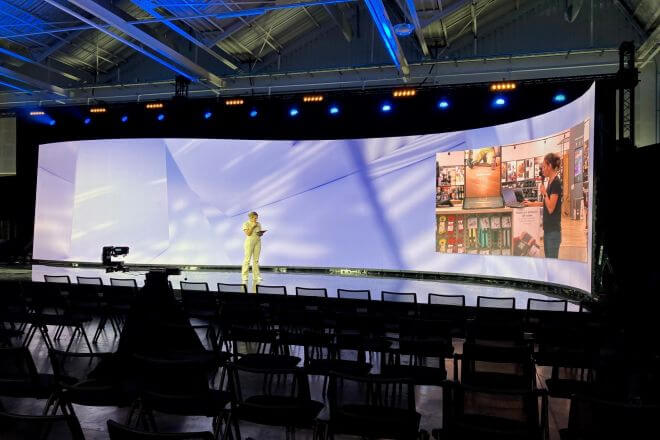
In large-scale events, displays are not just tools for displaying images; they directly affect the atmosphere and audience experience.
Modular LED displays act like a “magic stage” for events, flexible and practical, becoming the preferred choice for an increasing number of events.
First, it is suitable for various large-scale events. Whether it’s sporting events, exhibitions, concerts, or festivals, modular LED screens can handle it all with ease.
Large screens not only clearly display game or performance footage but also simultaneously play advertisements or event information, ensuring the audience receives a comprehensive visual and informational experience.
Secondly, their size and shape can be freely adjusted to suit the event’s needs. The modular design, like building blocks, allows for the creation of various sizes and shapes: flat, curved, and even irregular shapes are all possible.
This means that regardless of venue size or angle complexity, organizers can easily customize a suitable large screen, seamlessly integrating it with the venue environment.
Finally, it supports multi-functional applications. Besides playing live video, modular LED screens can display advertisements, event information, and interactive content.
For example, at concerts, the screen can switch between close-ups of singers, lyrics subtitles, or stage effects, providing a more immersive experience for the audience.
In sporting events, scores, player information, and advertisements can be displayed simultaneously, facilitating viewing and enhancing the event’s commercial value.
In summary, modular LED displays for large-scale events not only deliver more stunning visuals and clearer information but also offer flexible combinations and multi-functional displays tailored to specific needs.
They make events more vibrant and engaging, and information dissemination more efficient, making them an indispensable part of large-scale events.
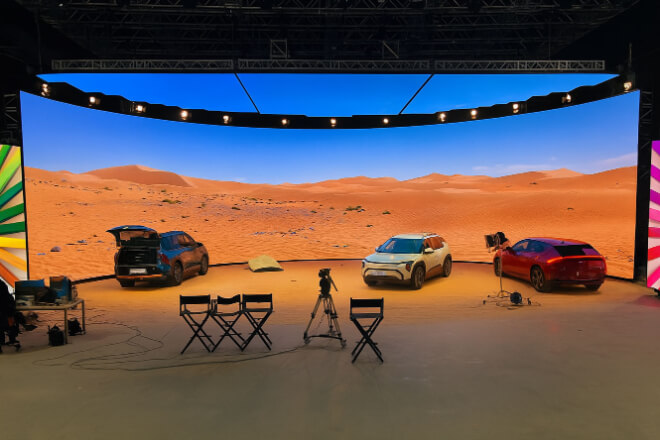
When purchasing a display screen, cost is often the primary concern. Modular LED displays excel in this regard, making the investment more cost-effective and less stressful.
First, let’s consider the initial investment and long-term maintenance costs.
While the purchase cost of a modular LED screen may be slightly higher than that of some small, ordinary displays, its modular design greatly simplifies later maintenance.
Even if a module of the LED screen malfunctions, the entire screen doesn’t need to be replaced; only the faulty module needs to be replaced. This saves time, manpower, and repair costs.
Compared to traditional full-screen displays, modular screens are actually more cost-effective in the long run.
Next, let’s look at the return on investment. Modular LED screens are durable, flexibly spliced, and can be applied to advertising, event displays, large venues, and even building facades.
A single screen can meet multiple needs. High brightness, high resolution, and multi-functional display enhance the screen’s communication effect and commercial value, naturally leading to a faster return on investment.
Finally, its flexible combination and scalability are also cost-effective advantages.
Modular LED displays can be added, removed, or upgraded as needed, requiring less upfront investment and allowing for gradual expansion as projects grow.
For projects requiring large-area coverage, this means achieving maximum display effect with minimal resources, resulting in lower overall costs.
 English
  Español
  简体中文
简体中文  Français
  日本語
日本語  한국어
한국어  العربية