
Introduction
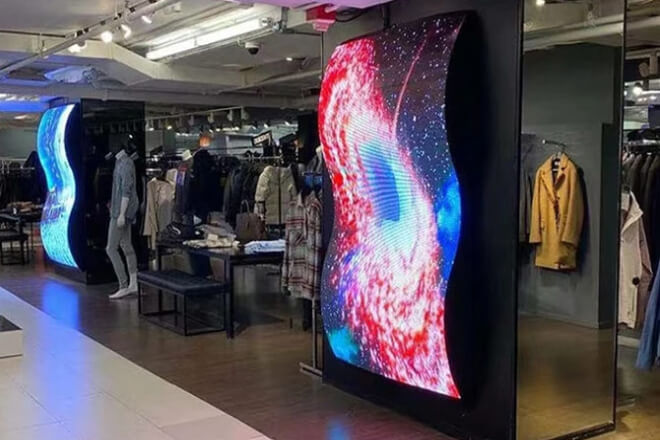
Walk into a shopping mall or street-side store, and you’ll notice a change: screens are everywhere.
From storefronts to window displays and even in-store arrangements, LED displays are virtually ubiquitous.
This isn’t just a simple “renovation upgrade,” but rather a shift in retail logic—stores need to do more than just sell products.
They need to continuously attract attention, convey information, and influence decision-making.
Table of Contents
Reason 1: LED displays are more likely to attract customers into stores.

In retail settings, whether a customer enters a store often depends on just a few seconds of initial glance.
LED displays, especially when placed at storefronts or in window displays, act like a constantly beckoning attraction, easily standing out in a crowd.
Compared to static posters or traditional displays, dynamic visuals are more likely to grab attention. Videos and animations constantly change, making them hard to ignore.
Even those simply passing by might subconsciously stop and look for a few more seconds because the content on the screen “moved.”
Especially in high-traffic environments like shopping malls or streetscapes.
Where there’s a lot of information and distractions, only brighter, more dynamic, and more rhythmic content can be quickly noticed.
LED screens possess this advantage, transforming brand information from “background” to “focus.”
Consider this scenario: You’re walking through a mall, not intending to enter a particular store.
But an LED screen in the window is displaying new product showcases or limited-time offers.
The visuals attract your attention, and you might just walk in—many purchases begin this way.
Simply put, LED displays are the store’s “first greeting,” using a more attractive method to convert passersby into customers, directly impacting store entry rates and foot traffic.
Reason 2: LED displays increase in-store dwell time.

Entering the store is only the first step; whether customers “stay longer” is even more crucial.
LED displays act as a constantly changing “content attraction point” within the store, easily keeping people engaged.
Compared to static displays, the content on the screen is dynamic and ever-changing.
Videos, animations, and product displays constantly switch, ensuring customers always see something new as they move through the store, unconsciously lingering for a few more minutes.
More importantly, it enhances the overall experience of the space. For example, displaying product usage scenarios, styling suggestions.
Or brand stories allows customers to experience a more complete shopping atmosphere rather than simply “looking at products.”
To illustrate, imagine walking into a store, initially just browsing, but seeing product combinations or limited-time offers displayed on a screen.
You unconsciously stop to look longer, even searching for the corresponding items—the time is subtly “extended.”
Simply put, LED displays act like a “pacing controller” in the store, using constantly changing content to keep customers engaged and create more opportunities for subsequent browsing, interaction, and purchase.
Reason 3: LED displays enhance product and promotional presentation.

Customers in stores often struggle with choices—looking at products, comparing prices, and considering discounts.
If the information isn’t intuitive, they easily get stuck in a cycle of “looking again.”
LED displays act like a “top-notch salesperson” who highlights key information directly to customers.
Through dynamic displays, products are no longer just static displays but “come alive.” For example, a piece of clothing can be shown on the screen with different styling options.
An electronic product can be directly demonstrated with its usage scenarios and key features. Customers don’t need to imagine; they can instantly understand whether it suits them.
Promotional information is also amplified, making it more prominent. Limited-time discounts, best-selling recommendations.
And bundled offers are repeatedly displayed through dynamic visuals, making them hard to ignore.
Compared to small price tags or posters, LED screens are more like a reminder: “This is a great deal right now, don’t miss it.”
For example, imagine you’re hesitating in a store, and suddenly the screen switches to “Today’s Limited-Time Offer + Product Usage Demonstration.”
The information becomes clear immediately, and you might end up grabbing it and paying.
Simply put, LED displays act like a “decision accelerator,” clearly explaining the product and highlighting the discounts, reducing customer hesitation and increasing certainty, transforming “I’ll think about it later” into “This is it!”
Reason 4: LED Displays Enhance Brand Expression and Visual Consistency

Whether a store has a “brand feel” often depends on visual consistency and memorability. LED displays act like a constantly updated “brand facade,” helping you firmly establish your style.
Through a unified visual design, the screen can continuously display the brand’s colors, main visual elements, and core content.
Ensuring customers see a consistent style across different locations within the store, avoiding a disjointed or fragmented feel.
Over time, the brand image becomes clearer and easier to remember.
Simultaneously, it supports high-quality content display. Whether it’s sophisticated video visuals, dynamic posters, or brand story presentations.
Everything can be expressed in a more refined and textured way, upgrading the brand from simply “visible” to “aesthetically pleasing and enduringly appealing.”
Even more conveniently, the content can be updated at any time.
Seasonal events, new product launches, and holiday marketing campaigns can all be quickly updated with corresponding visuals.
Eliminating the need to recreate materials or make large-scale changes to displays, saving time and maintaining a sense of freshness.
For example, when customers enter the store and see the brand’s main visual elements and event content on the screen consistent with online promotions.
They naturally experience a sense of professionalism and consistency, leading to increased trust in the brand.
In short, LED displays not only showcase content but also “continuously reinforce brand image,” transforming stores from simple product-selling spaces into stylish and memorable brand environments.
Reason 5: LED Displays Make Store Operations More Flexible and Efficient

If traditional store operations are like a “manual transmission,” then LED displays are essentially an “automatic transmission + intelligent driving.” Changes are instantaneous and require no waiting.
First, remote updates are incredibly convenient. Previously, changing posters required printing, pasting, and visiting stores.
Now, a few clicks in the backend update all screens simultaneously—a speed akin to “instant scene switching.”
Even more interesting is its ability to automatically “switch states” based on time. For example, it can showcase new products in the morning, promote best-selling items at noon.
And switch to promotional mode in the evening—like a store having different “personas” at different times, always displaying the most appropriate content.
It’s even more fun with unexpected events. For instance, if a limited-time discount is suddenly added, don’t panic.
All screens update within minutes, allowing customers to see the latest offers with a quick glance, giving them a “just in time” feeling.
Imagine this: you’ve just entered a store, and suddenly the screen switches to a “limited-time offer countdown”—the atmosphere is instantly engaged.
What started as a casual glance gradually transforms into a serious consideration of whether to buy—the rhythm is subtly shifted.
Simply put, LED displays act like a “response accelerator” for stores, ensuring operations are always on track and can adjust accordingly, making every change more timely and impactful.
6. Conclusion
The reason LED displays are being increasingly adopted by retail stores isn’t simply because they “look more sophisticated.”
It’s because they deliver tangible results in attracting customers, enhancing visual appeal, expressing brand identity, and improving operational efficiency.
In an increasingly competitive market, stores that can capture attention are more likely to attract business.
Finally, for more information about LED displays, please get in touch with us.


 English
  Español
  简体中文
简体中文  Français
  日本語
日本語  한국어
한국어  العربية