
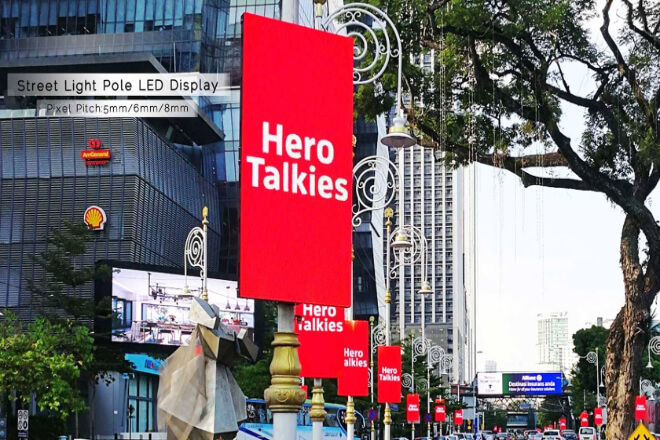
When driving in the city, you sometimes encounter situations like sudden traffic jams or road construction without prior warning, resulting in a long detour to find an alternative route.
In such cases, if there were an LED display on the roadside that could show real-time traffic conditions, travelling would be much easier. This is precisely the value of LED displays in smart transportation systems.
They are bright, visible from a distance, and the information can be updated at any time. They display clearly regardless of whether it’s day or night, rainy or foggy, making them very intuitive.
For example, on highways, LED screens can display traffic congestion, construction information, or accident alerts.
When a traffic accident occurs, the screen will display “Accident two kilometres ahead, please slow down and take detour A.”
Drivers can then choose an alternative route in advance, saving time and avoiding getting stuck in the accident area.
The same applies to city roads. During rush hour, LED screens can display “Road ahead is congested, suggested detour via Route B, estimated time saved: 15 minutes.”
By following these instructions, traffic flow throughout the area becomes much smoother.
In addition to traffic information, LED screens can also be linked with smart navigation systems to guide drivers to the best route.
At highway exits, they can indicate the fastest lane; on city main roads, they will tell you where construction is taking place and where detours are needed.
Information about dedicated bus lanes can also be displayed, allowing buses to travel more smoothly.
These seemingly simple tips can significantly improve travel efficiency, reducing detours and traffic congestion.
Safety warnings are also an important function of LED screens. Speeding warnings, drunk driving reminders, speed limits in construction zones, and even emergency information during heavy fog or snow can be displayed in real-time, allowing drivers to take timely action and reduce the risk of accidents.
For example, in case of heavy fog, the screen will display “Foggy area 500 meters ahead, please turn on fog lights and drive slowly,” ensuring everyone’s safety.
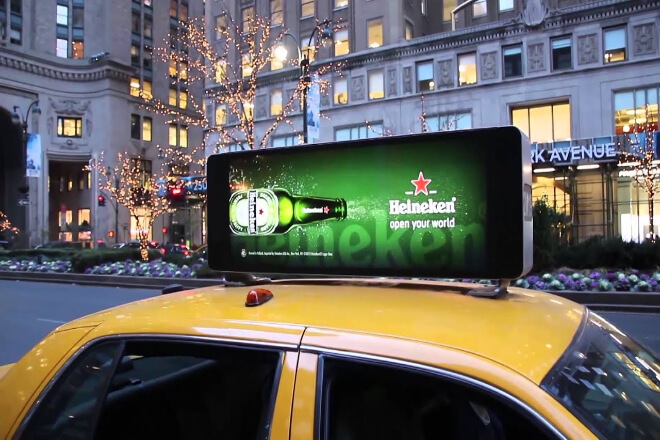
Imagine walking out of your community in the morning to go to work, passing by squares, bus stops, or subway entrances, and seeing bright LED screens displaying various information.
It might be government announcements, community service information, or even weather alerts or emergency notices.
LED displays act like “information assistants” in the city, constantly delivering the information you need, making life more convenient and the city safer.
For example, if the city government temporarily releases road construction information this morning.
The LED screens at transportation hubs and subway entrances will display “Road construction ahead on XX road, please take a detour,” allowing you to adjust your travel route in time and avoid wasting time in traffic jams.
Or, if heavy rain or a typhoon is approaching, the LED screen will remind you to “Beware of wind and rain, it is recommended to reduce outdoor activities,” even faster than checking your phone in the morning, helping you prepare in advance.
Even in the community, the screens will display parking information, medical service schedules.
Or public event announcements, allowing residents to see the latest news at a glance without having to search everywhere or worry about missing important information.
Compared with traditional billboards, the biggest advantage of LED screens is real-time updates and wide coverage.
Information can be instantly transmitted to every corner of the city. Whether you are on your way to work, waiting for a bus, or taking a walk, you can easily obtain important information.
This makes everyone’s travel smoother, life more convenient, and provides a greater sense of security – after all, the city’s “eyes” are constantly reminding you, helping you avoid detours and be better prepared.
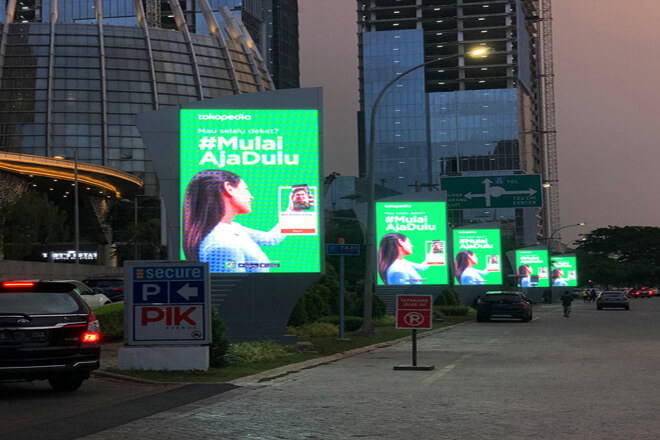
In modern cities, LED displays are not only carriers of traffic information or public announcements; they also play an increasingly important role in the commercial and advertising fields.
Whether in bustling business districts, subway stations, shopping malls, or on large street screens, LED displays have become a bridge for interaction between businesses and consumers, making advertising not only “visible” but also “dynamic.”
Compared with traditional static billboards, LED displays can dynamically update and personalise content.
For example, in shopping malls, businesses can adjust advertising content in real time based on time periods, holiday events, or target audiences:
Offering coffee promotions in the morning, displaying fast food discounts at noon, and promoting movie theatres or late-night dining in the evening.
LED screens can also be combined with weather, holidays, or city event scenarios to make advertisements more relevant to the lives of citizens and tourists, making the information more attractive.
More interestingly, with the development of smart cities and big data, LED advertising has become data-driven.
Screens can accurately deliver advertisements based on pedestrian traffic, area popularity, and even viewing behaviour, allowing businesses to reach potential customers in the shortest time and in the most intuitive way.
For example, on large screens in subway stations, if the system detects that the morning rush hour crowd consists mostly of office workers, it can prioritise displaying advertisements for coffee, fast food, or office supplies.
During peak shopping hours on weekends, the advertisements switch to promotions for clothing, home furnishings, or entertainment activities.
This precise targeting not only improves advertising effectiveness but also makes citizens and tourists feel that the advertising content is more thoughtful and useful.
LED displays also increase the possibilities for commercial interaction. Screens can display QR codes, participate in mini-games.
Or interactive polls, encouraging citizens and tourists to participate directly and enhance brand experience.
For example, in scenic spots or commercial districts, LED screens can display “Scan the code to win a prize” or “Participate in city fun challenges.”
Which not only attracts people to stop and watch but also increases brand exposure and customer loyalty for businesses.
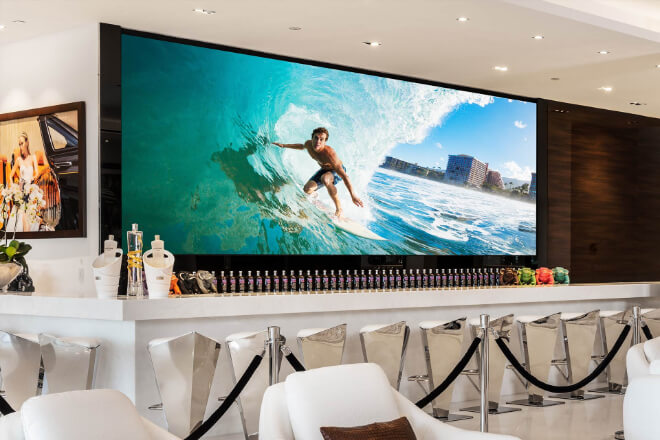
1). Indoor Navigation and Information Guidance
In large office buildings, shopping malls, hospitals, or airports, LED displays can serve as a core tool for indoor navigation and information guidance.
They can display floor plans, meeting room locations, elevator directions, and event or service information, allowing people to quickly find their destinations.
For example, when tourists enter a large shopping mall, the LED screen will display “Second floor women’s clothing area → Elevator entrance → Food court.”
Helping people quickly find their destination, reducing getting lost and waiting time, making the flow of the entire space smoother, and providing a more comfortable user experience.
2). Building Management and Energy Efficiency Optimisation
LED displays can also be connected to smart building management systems to display and monitor the building’s operating status in real time.
For example, they can display temperature, humidity, air conditioning or lighting usage, and even provide energy consumption statistics and energy-saving suggestions.
The LED screens in the office can display the current energy consumption of the area, reminding managers or employees to adjust air conditioning, lighting, and other equipment to reduce energy waste.
This not only makes building management more efficient but also allows occupants to understand and participate in energy-saving initiatives, achieving green and intelligent building management.
3). Safety Alerts and Emergency Response
In smart buildings, LED displays are also an important tool for ensuring safety.
In the event of a fire or other emergency, the screen will immediately display evacuation routes, emergency exit directions, or safety warning information.
For example, if a fire is detected on a floor, the LED screen will display “Please evacuate in an orderly manner via the right-hand staircase,” and provide voice prompts to guide people to safety.
This immediate, visual notification can significantly improve emergency response speed and safety, protecting the lives and property of every user in the building.
4). Enhancing User Experience
LED displays not only help manage buildings but also make the user experience more convenient and interactive.
For example, they can display weather, traffic, news, or public information, allowing users to stay informed about daily information.
They can also display merchant promotions, meeting schedules, or cultural event information, making the building space more vibrant and engaging.
They can even provide interactive functions such as QR code reservations, voting, or messaging, allowing users to participate directly.
For example, an LED screen in an office building displaying “Coffee shop special offer this afternoon, scan the QR code to claim.”
Enhances the experience for employees or visitors and helps businesses increase exposure and sales.
 English
  Español
  简体中文
简体中文  Français
  日本語
日本語  한국어
한국어  العربية