
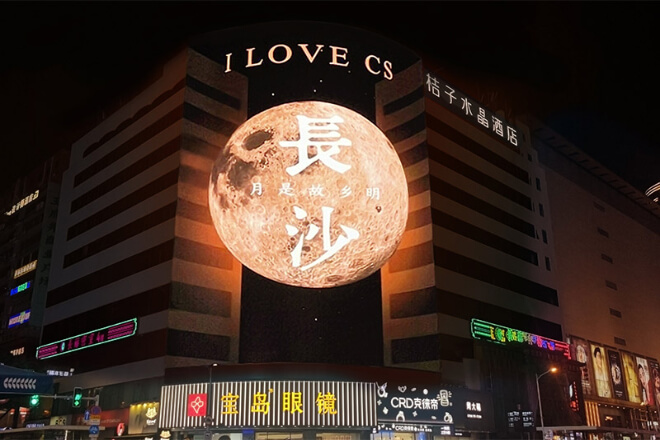
1) Making Brands “Eye-Catching” and Fun
The most direct purpose of naked-eye 3D LED screens is to instantly attract brand attention.
Compared to ordinary flat advertisements, this type of screen is more impactful, and passersby almost involuntarily stop to look for a few seconds.
The three-dimensional images and dynamic effects make brand information easier to remember and increase customer engagement—for example, 360-degree rotating product displays or interactive animations, making the brand feel creative and dynamic.
2) Creating a Unique Visual Experience
In bustling commercial streets, where pedestrian traffic is high, you need to stand out to grab attention.
A naked-eye 3D screen can make images appear to leap out of the screen, instantly capturing eye attention.
Whether it’s a holiday event, a new product launch, or a street promotion, 3D visuals encourage people to take photos and share them.
This experience is not only fun but also helps brands spread rapidly on social media, naturally increasing their influence.
3) Stimulating Purchase Desire and Improving Sales Conversion
A visually appealing screen isn’t just pleasing to the eye; it can directly drive sales.
The screen can display product details, promotional information, and even allow customers to interact by choosing colors, combinations, or scanning codes to receive coupons.
This immersive experience is more effective at stimulating purchase desire than traditional print advertising, making people want to buy while they’re looking, easily boosting overall sales in the commercial street.
4) Diverse Scenarios for a More Lively Commercial Street
The applications of naked-eye 3D screens extend far beyond advertising and brand promotion.
They can be used for holiday check-in activities, merchant collaborations, and even street games, allowing customers to interact with brands while having fun.
This not only enhances the overall appeal of the commercial street but also helps passersby remember the unique charm of the brands and the scene—instantly making the commercial street more interesting, vibrant, and photogenic.
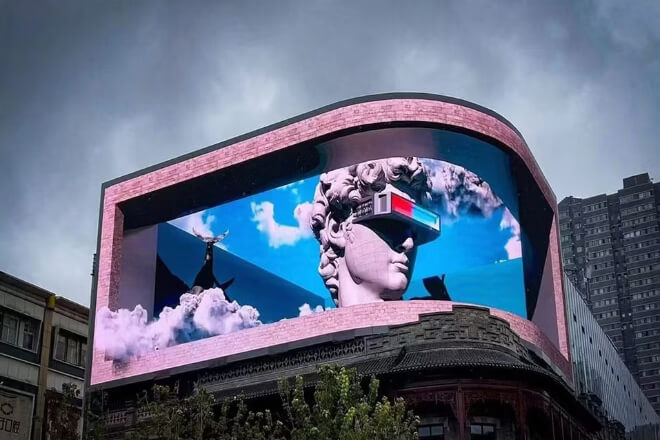
1) Physical Parameters of the Display Screen
When designing a naked-eye 3D LED screen, the first considerations are the screen’s size, resolution, brightness, and color performance.
If the screen is too small or the resolution is insufficient, the 3D effect will not be realistic; insufficient brightness or inaccurate colors will significantly reduce the sense of depth.
In other words, to make passersby think, “Wow, it’s like the image is jumping out of the screen,” these basic parameters must be met first.
2) Viewing Angle and Distance
Naked-eye 3D isn’t something you can see clearly from anywhere. The design must consider the viewing angle and distance to ensure that passersby from different positions and heights can obtain the ideal 3D effect.
If the viewer is too close or too far, or the viewing angle is too off-center, the sense of depth will disappear.
Excellent designs will combine street width, pedestrian flow, and station height to ensure that every passing customer experiences a 3D visual impact.
3) Environmental Adaptability
Finally, environmental adaptability is also crucial. Outdoor commercial street lighting, weather, wind, and rain can all affect the display effect, while indoor spaces may have glare or spatial limitations.
Therefore, when choosing an LED screen, indoor/outdoor adaptability, brightness adjustment, waterproofing, dustproofing, and UV resistance must be considered.
Only when the screen and environment are compatible can the 3D effect be stably presented, allowing every customer to obtain the best visual experience.
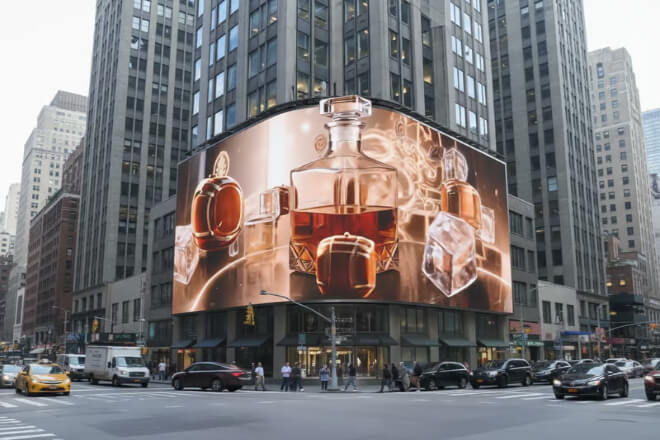
1) Creativity Breaks Traditional Advertising
The greatest charm of naked-eye 3D LED screens lies in making advertisements “jump out.”
Compared to traditional flat advertising, it’s not just about moving images; it can incorporate interactive elements and 3D effects, completely captivating customers visually.
For example, products may appear to float out of the screen, scenes may surround passersby, or the screen may trigger small interactions, allowing passersby to participate.
This creative approach breaks the boundaries of traditional advertising, ensuring that advertisements are not only seen but also remembered.
2) Suitable Content Formats
Naked-eye 3D LED screens can display a wide variety of content types, with dynamic and three-dimensional formats being particularly suitable.
Videos, animations, interactive advertisements, and virtual product displays are all good choices.
For example, a 360-degree rotating display of new shoes, animated liquid flow on a beverage bottle.
Or a virtual try-on effect can create an immersive experience for customers, making it more attractive than ordinary flat posters.
3) Content Integration with Brand Image
Good content not only needs to be visually appealing but also needs to reinforce the brand image.
Creative content design can help customers remember brand characteristics and experience brand personality within seconds.
Interactive content, 3D visuals, and dynamic effects combined with brand visual elements not only enhance advertising memorability.
But also create an emotional connection for customers—making them feel that the brand is not only cool but also understands their needs.
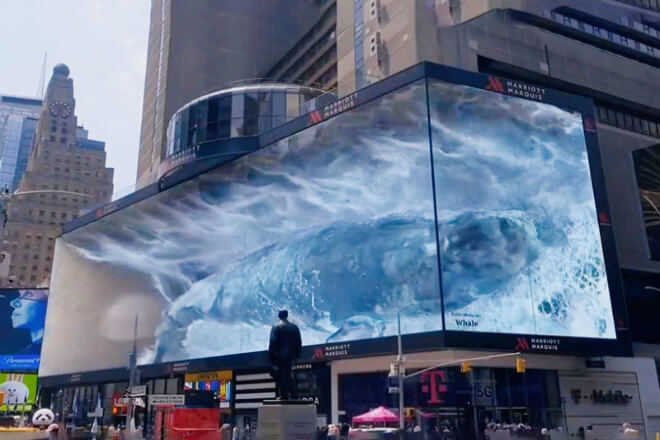
1) Integration with the Surrounding Environment and Street Atmosphere
No matter how dazzling a naked-eye 3D LED screen is, if it clashes with its surroundings, it will appear jarring.
Therefore, architectural style, street layout, and overall commercial atmosphere must be considered during the design process.
For example, in historically significant neighborhoods, the screen’s style and brightness should be soft to avoid disrupting the overall aesthetic.
While in modern commercial streets or shopping malls, the screen can be bolder and more dazzling, creating a visual focal point.
The goal is for the LED screen to become part of the streetscape while simultaneously attracting customers’ attention.
2) Installation Location and Angle Design
The effectiveness of a glasses-free 3D screen largely depends on its installation location and angle.
The screen height, distance from pedestrian flow, and viewing angle all require careful calculation.
Ideally, pedestrians should be able to see the 3D effect regardless of which direction they walk from.
Incorrect angles can distort the 3D effect, making the 3D feel disappear and affecting the experience.
Therefore, the design needs to consider pedestrian flow and street width to find the optimal installation solution.
3) Design Differences for Different Types of Commercial Streets
Different types of commercial streets have different design requirements for glasses-free 3D screens.
Pedestrian streets with high pedestrian traffic require screens that cover a wide field of view and attract quickly passing pedestrians.
Shopping malls can design more interactive screens to encourage customers to linger and participate in interactive activities.
Adjusting content and screen size based on the behavioral habits and interests of the target customer group allows 3D screens to achieve maximum effectiveness in various commercial environments.
 English
  Español
  简体中文
简体中文  Français
  日本語
日本語  한국어
한국어  العربية