
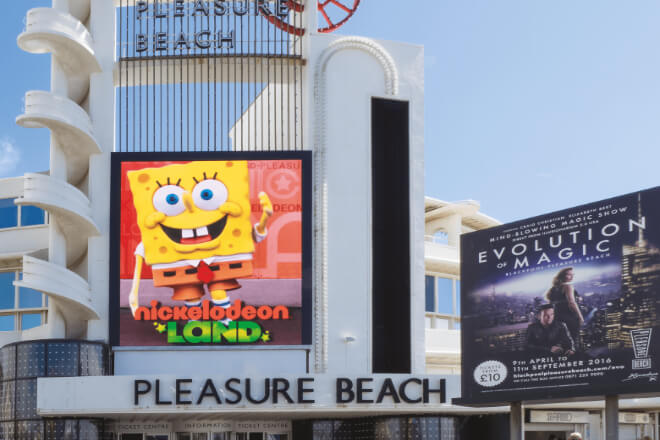
In amusement parks, first impressions are crucial, and what often catches a visitor’s eye is the LED display. The screen’s resolution, brightness, and contrast directly impact the visitor’s immersion.
High-resolution screens produce clearer and more detailed animations, short films, or themed attractions.
High brightness and contrast ensure the image remains vibrant and sharp even under bright sunlight or in poorly lit environments at night.
Screen parameters must be adjusted flexibly for different scenarios. During the day, when sunlight is strong, increase the brightness and contrast to ensure that visitors at a distance can clearly see the content.
In the evening or indoor amusement areas, the brightness can be lowered slightly for a softer image, better atmosphere, and more vibrant colors.
This makes information clearer, and animations and stories more engaging, allowing visitors to become more immersed.
In short, by adjusting screen parameters according to the amusement park environment, LED displays can maximize their effectiveness.
Ensuring visitors have a comfortable viewing experience and a more enjoyable ride, making the entire experience more interesting and attractive.
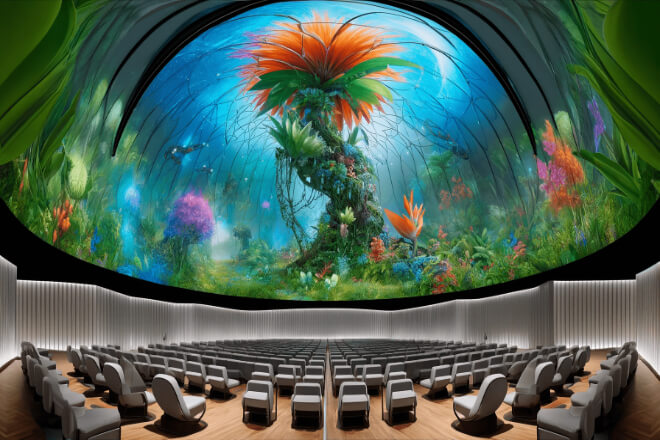
In theme parks or amusement parks, visitors aren’t just there to “check off” photos; they’re there to experience stories, see the world, and find their place. LED displays are the secret weapon for creating this “immersive” experience.
Through dynamic images, visual rhythm, and color changes, they can bring stories to life and make them more impactful, transforming visitors from “spectators” into true participants in the narrative.
For example, in Universal Studios’ movie-themed areas, LED screens are frequently used to recreate classic movie scenes.
Walking into a movie-themed area, you might see large LED walls displaying special effects, character interactions.
And even dynamic visuals from the film, giving you the illusion that you’re actually inside the movie.
The rhythm of the visuals changes with the story’s progression, and the lighting and sound work in tandem, easily immersing you completely in the plot.
For example, in Disneyland’s Star Wars-themed area, large LED screens display spaceships, space battles, and planetary backgrounds.
Combined with the ambient environment and sound effects, visitors feel as if they’ve truly stepped into the Star Wars universe.
This dynamic storytelling method, compared to traditional static displays or stickers, is more interactive, offers a better experience, and is more likely to evoke emotional resonance in visitors.
You could say that treating LED screens as “breathing story screens,” using visual storytelling, scene changes.
And lighting rhythms to vividly tell the theme story of the amusement park, makes it easier to engage visitors’ emotions—a key to a successful immersive experience.
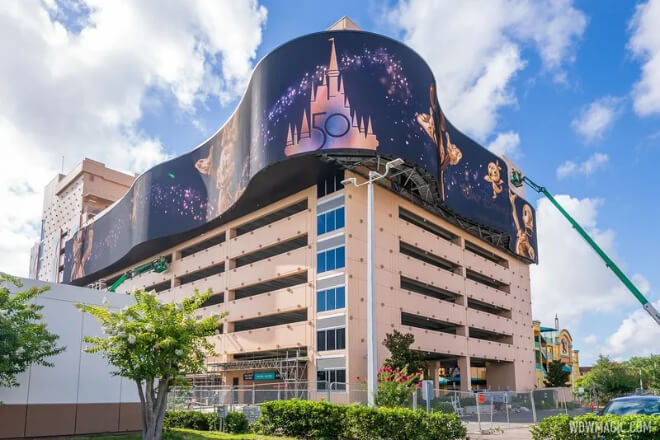
In amusement parks, simply watching visuals isn’t enough; getting visitors involved is what makes it truly fun.
LED displays can be combined with touch technology, motion sensing, and even voice interaction, allowing visitors to not just “see,” but to “participate” in stories and games.
For example, in interactive exhibits at Disneyland, visitors can use touchscreens to select characters, adjust scenes, or unlock hidden storylines, making the animated world change according to their actions.
Another example is in some science fiction-themed areas, where LED walls, combined with motion-sensing technology, change the planets, monsters.
Or lighting effects on the screen when visitors wave their arms or move, making them feel like they are truly influencing the story’s direction.
Some amusement parks also utilize voice interaction: LED screens can recognize visitors’ shouts or commands through microphones, triggering specific animations or story effects.
For instance, in adventure-themed areas, visitors can shout commands to reveal hidden treasure maps on the screen, increasing the fun of exploration and discovery.
In short, combining LED displays with interactive technologies not only enhances the fun but also allows visitors to truly “immerse” themselves in the amusement park’s story world.
Compared to simply watching animation, the experience of actively triggering content and participating in plot changes makes it easier for visitors to remember scenes.
And be more willing to take photos and share them, making the entire experience more engaging and immersive.
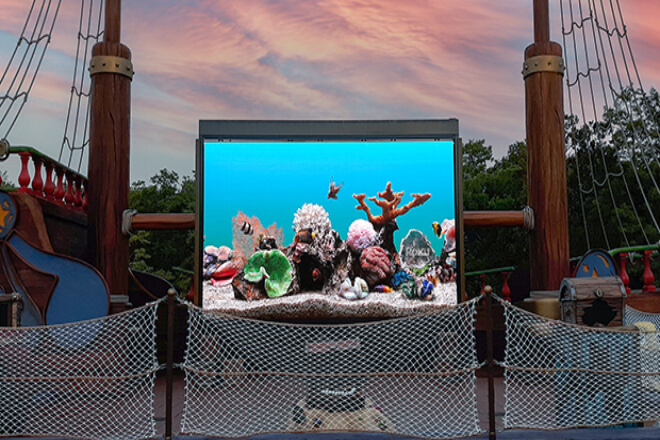
In amusement parks, static images alone are insufficient to make visitors feel like they’ve “truly stepped into another world.”
LED displays can be combined with VR and AR technologies, using holographic images, 3D visuals, and dynamic scene changes to create a more immersive and impactful experience.
For example, in Universal Studios’ virtual adventure projects, LED screens, combined with motion seats and holographic effects, bring the space battlefields and monster scenes from movies directly to visitors.
The images on the screen change as the seats move, with light, color, and scene elements precisely synchronized, giving visitors a realistic sense of “being there.”
In some science fiction or fantasy-themed areas, LED screens and AR technology are also used to overlay real-world scenes with virtual elements.
For example, as you walk through a themed area, the dynamic scenery displayed on the LED screens interacts with the environment: airships in the sky, falling magical elements, dynamic water ripples.
Or wind effects—the perspective changes as visitors move and interact, creating a three-dimensional effect, as if you’re inside a movie scene.
By combining LED screen scene changes with virtual reality, not only is the visual impact enhanced, but the amusement experience is also made more fun and interactive.
Visitors are no longer just bystanders, but truly “enter” the themed world, making it more memorable and easier to take photos and share, thus making the amusement park’s immersive experience more complete and outstanding.
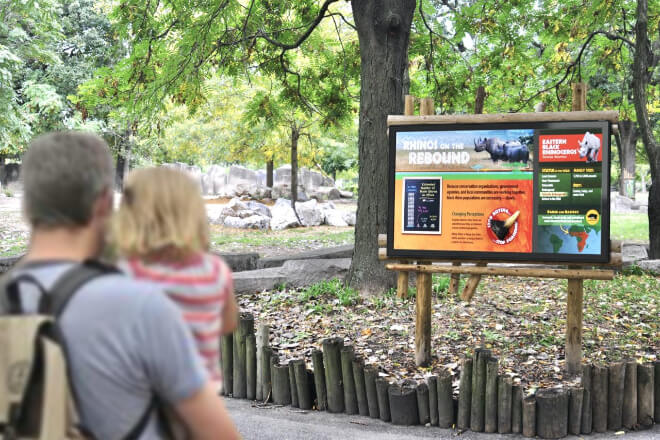
In an amusement park, LED displays aren’t just randomly placed; their location, size, and shape must be well-coordinated with the environment, theme, and visitor flow to truly attract visitors and enhance the experience.
For example, in roller coaster or large amusement park ride areas, screens can be placed at the entrance or nearby at a high position.
Displaying real-time speed, track animations, or safety warnings, creating a sense of tension and excitement for visitors.
Interactive experience areas are best suited for wraparound screens or touchscreens, allowing visitors to actively participate in storylines and mini-games.
Rest areas and areas near attractions can utilize large screens to display themed short films, dynamic maps, or engaging stories, providing visitors with information about their surroundings.
The size and shape of the screens are also important: large screens are suitable for open areas, ensuring visibility from a distance.
Circular or columnar screens are ideal for interactive areas, allowing visitors to interact around them.
Small, embedded screens are best placed near attractions, providing instant prompts or fun interactive elements without taking up much space or disrupting the aesthetics of the scene.
Another crucial point is considering visitor flow.
Screens should be placed along the flow of people, ensuring information is naturally visible while queuing, walking, or resting.
Important information screens are best placed near entrances, transfer points, or popular attractions to ensure timely delivery of information to everyone.
In short, by integrating LED screens with the environment, theme, and visitor routes, the screens are no longer “cold, impersonal displays on the wall,” but rather an integral part of the amusement park experience.
A well-planned layout not only ensures visitors have a comfortable and enjoyable experience but also facilitates smoother information dissemination and management within the scenic area.
 English
  Español
  简体中文
简体中文  Français
  日本語
日本語  한국어
한국어  العربية