
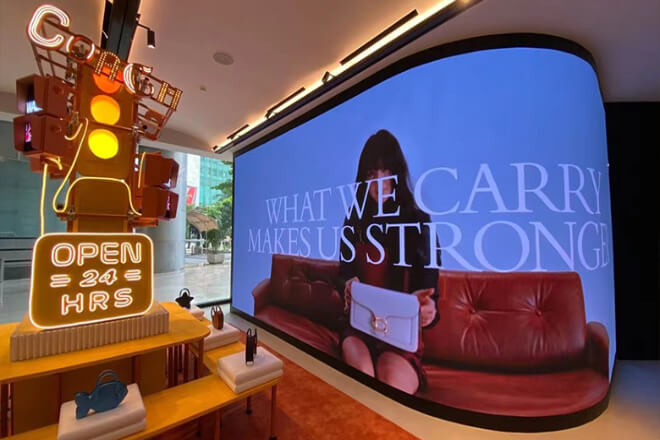
In this era where we’re bombarded with screens more frequently than brushing our teeth, being seen isn’t enough—you need to make people remember you.
LED displays are like a “magic canvas” in marketing; they can grab attention in seconds, pulling a brand out of the background noise.
But the question is: how do you ensure that viewers not only see you, but also remember you?
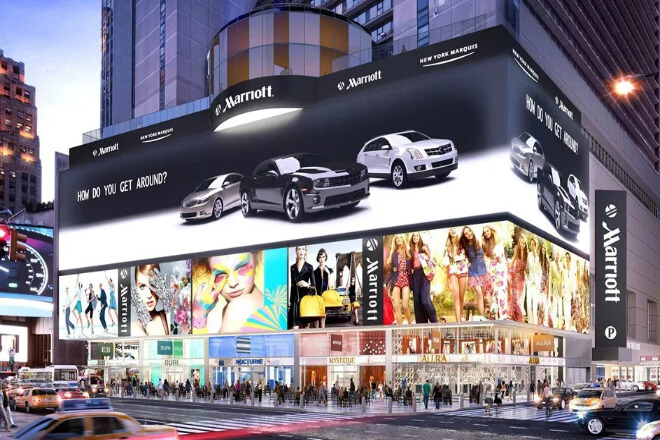
In many commercial spaces, the most common situation is: people see the advertisement, but they don’t stop—the advertisement has “appeared,” but hasn’t “attracted” them. This is precisely what LED displays aim to address.
First, dynamic visuals are more likely to grab attention than static advertisements.
For example, among a row of brand posters at the entrance of a shopping mall, if one store uses an LED screen to play slow-motion footage of latte art and rising steam.
Passersby who were initially just walking by will unconsciously take a second look, and might even turn in to check out any new products.
Second, there’s the advantage of high brightness and large size in terms of presence. In information-dense areas like exhibition entrances.
While paper display boards abound, a large LED screen playing 3D product disassembly animations is significantly more eye-catching.
For example, a dynamic demonstration of the internal structure of a new mobile phone is more likely to attract attention than a static parameter poster.
Furthermore, in crowded areas, it excels at capturing attention for a mere half-second.
For instance, at a subway exit, with promotional posters on one side and an LED screen displaying a countdown to limited-time offers on the other.
Many people who would normally be rushing past will subconsciously look for a couple more seconds upon seeing the countdown. These two seconds often mark the beginning of a conversion.
To give a more concrete example: a sports brand held an event in a shopping mall atrium, using an LED screen to continuously display dynamic testing footage of sneakers—jumping, landing, and cushioning effects were clearly shown.
Many passersby who were initially just walking by will stop to watch longer because the images are moving and the information is being “demonstrated,” and some may even enter the store to try on the shoes.
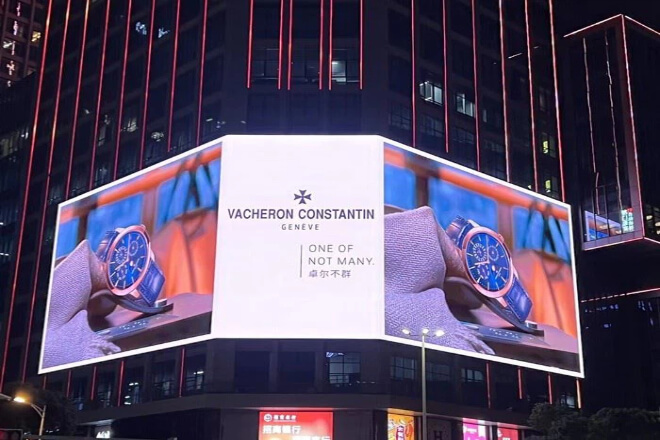
In information-dense environments, users don’t actually “read” advertisements carefully; the more common approach is to glance at them, make a judgment, and move on.
Therefore, the goal of LED displays isn’t to finish the message, but to make people “remember you for a moment.”
First, use fast-paced visuals to increase retention time. For example, use rapidly changing shots and rhythmic transitions to prevent visuals from being “skipped.”
When sports brands showcase products, using slow-motion transitions with jumps, landings, and bounces is more memorable than a straightforward introduction.
People may not remember all the content, but they will remember the “powerful visuals.”
Second, simplify information and highlight core selling points. LED screens are not brochures; the more information, the easier it is to be overlooked.
For example, emphasising “limited-time 50% off,” “new product launch,” or “instant discount today” on a screen is more effective than simultaneously telling the brand story and product specifications.
For example, if a coffee shop repeatedly emphasises “buy one get one half price” on its screen, passersby are much more likely to remember it than with a lengthy introduction.
Next, repetition of visual elements reinforces brand recognition. This includes consistent brand colours, logo placement, and even a core slogan, appearing repeatedly in different visuals.
Even if the content changes, if the visual structure remains constant, viewers will gradually develop a conditioned reflex: “Seeing this colour/rhythm = this brand.”
For a very intuitive example: a chain tea brand uses LED screens to loop three segments—the same brand colour background, the same logo animation, and the same phrase, “I want to drink this one today.”
Even if a passerby only walks by for three seconds, a vague but stable impression may remain in their mind.
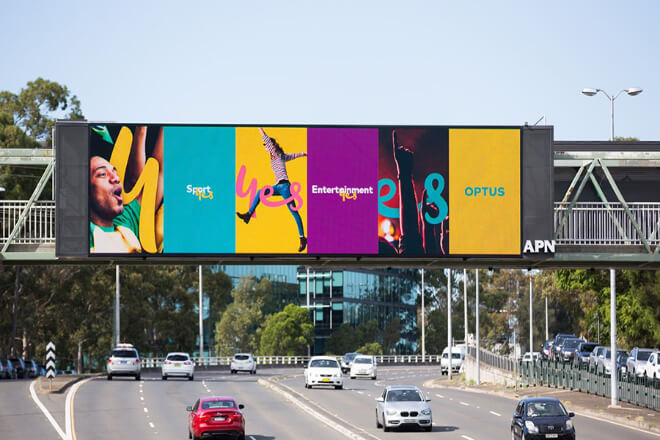
In the application of LED displays, the key to a successful contextualization lies not in how visually appealing the images are, but in whether the viewer feels, “This is relevant to my current situation.”
Firstly, different content strategies should be used for shopping malls, streetscapes, and transportation hubs. Shopping malls are more of a “consumer decision-making arena.”
So the content can be more direct, such as new product launches, limited-time discounts, and membership benefits.
Street-level advertising is better suited to creating an atmosphere, showcasing lifestyles through cafes, restaurants, and trendy brands.
Transportation hubs, on the other hand, need to be concise, fast, and clear, with information like “Directions,” “Today’s Activities,” and “Limited-Time Offers”—information that’s immediately understandable.
For example, if a subway entrance LED screen is still slowly telling its brand story, it’s essentially missing out on foot traffic.
Secondly, content logic should be designed in conjunction with the environment and the target audience. The same brand needs to change its message depending on the time and demographic.
During morning rush hour, targeting commuters, coffee, breakfast, and convenience services can be promoted.
On weekends, with mall crowds, content related to families, entertainment, and experiential activities is more suitable.
For example, a dessert brand could promote a “quick afternoon tea” during weekday lunch breaks and switch to a “photo-op package” on weekends—a logic that resonates more with real-world needs.
Furthermore, integrating advertising into real-life usage scenarios is the easiest way to differentiate yourself.
LED screens shouldn’t just “display products,” but rather enact the “usage process.”
For example, a milk tea brand shouldn’t just display cups, but show the process of “queueing—making—serving—the first sip.”
Sports brands don’t just offer close-ups of shoes; they present dynamic demonstrations of running, landing, and cushioning.
Viewers aren’t seeing advertisements, but rather, “What would it be like if I used it?”
For a relatable example: In a shopping mall corridor, an LED screen might be playing a scene of “having a coffee after work,” showing the process of finishing work, packing up the computer, and entering the store to order.
If you happen to be passing by after work, this content won’t feel out of place; instead, it feels like it’s helping you “make a decision.”
Simply put, the core of contextual marketing isn’t “making the advertisement more eye-catching.”
But rather making it “feel like part of the scene”—when the content and environment align, viewers are more likely to empathise and accept it.
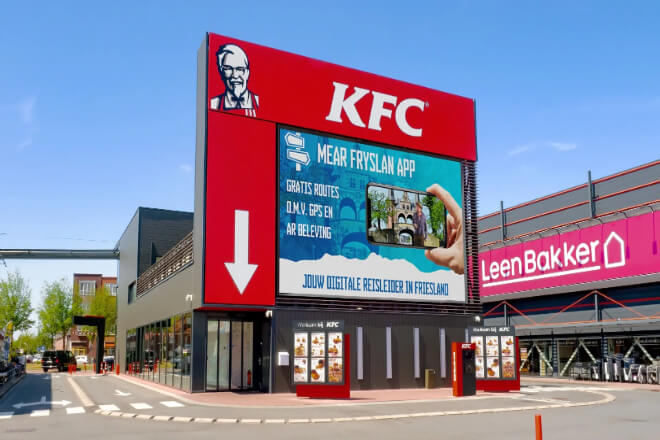
In advertising, there’s a very real principle: people rarely remember something after just one sighting, but they easily remember it through repeated exposure.
The advantage of LED displays is that they turn “accidental exposure” into “continuous brand recognition.”
Firstly, they repeatedly expose the same brand information at multiple locations.
For example, one screen at the mall entrance, one screen in the main passageway, and another screen at the store entrance—although the locations differ, the content is consistent.
From the moment a customer enters the store until they reach it, they will “encounter” the same brand again in different locations.
It’s like repeatedly bumping into the same familiar face in a shopping mall; even without conscious effort, familiarity builds over time.
Secondly, there’s the looping of content at different times of day. In the morning, it might feature new product recommendations; at noon, it switches to promotional information.
And in the evening, it changes to member benefits or holiday themes. Although the content changes, the core brand remains consistently present.
For example, a beverage shop might emphasise “energising coffee” in the morning, “refreshing fruit tea” in the afternoon.
And “buy one get one free” in the evening, but the brand never leaves the customer’s sight.
This continuous exposure leads to a cumulative effect of brand awareness.
The first time, there might be no particular feeling; the second time, it feels like “I’ve seen it before”; the third time, a sense of familiarity develops.
And the fourth time, customers might even actively seek it out. LED screens essentially accelerate this process of “gradually remembering.”
A very real scenario: someone passes by the same shopping mall elevator every week, and that LED screen continuously loops the same coffee brand’s new products and promotions.
At first, I was just passing by, then I started noticing the displays, and then one day, while passing by, I suddenly thought, “Why don’t I try it today?”
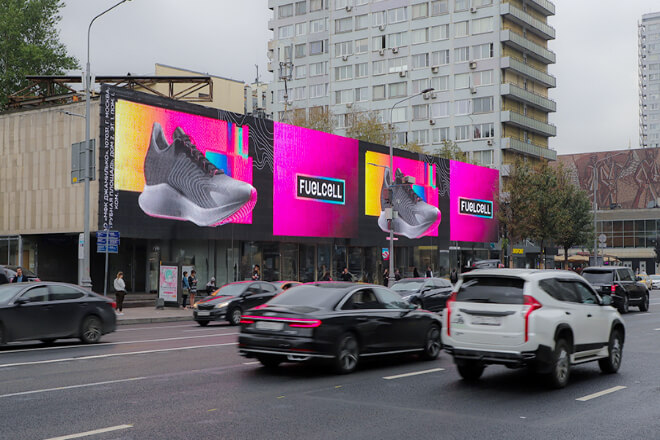
In LED display marketing, simply “seeing it in person” has a short-lived effect; what truly differentiates you is whether it makes people “want to share it after seeing it.”
First, create content suitable for taking photos and sharing. For example, the large screen shouldn’t just display advertisements, but be designed with visually impactful images:
Giant dynamic posters, holiday-themed light and shadow effects, interactive blessing walls, and even a touch of “check-in” appeal.
Like the LED screens in shopping malls that scroll through names and blessings, it’s easy for people to stop and take a picture.
Second, guide social media dissemination. The screen itself can directly “prompt action,” such as “scan the code to participate in the screen display,” “take a photo and check in to win prizes,” or “post with the hashtag to enter a prize draw.”
When users are not just watching, but encouraged to participate and share, the content naturally extends from offline to channels like WeChat Moments, Xiaohongshu, and short video platforms.
Furthermore, this kind of dissemination creates a closed loop of online and offline memory. Users see LED content on-site, and later see the same images on social media or through friends’ sharing.
This “second encounter” significantly strengthens memory. The first time is “I saw it,” the second time becomes “I remember it.”
A typical example: an LED screen in a shopping mall atrium is used for holiday interactions, displaying a “City Blessing Wall” in real time.
People take photos and upload them with hashtags, and their names might appear on the screen the next second.
People on-site are taking pictures, people online are watching, and the spread is like a chain reaction.


 English
  Español
  简体中文
简体中文  Français
  日本語
日本語  한국어
한국어  العربية