
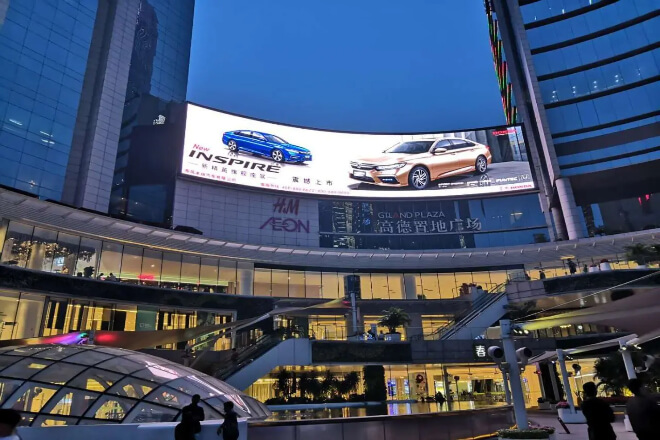
When using LED displays in high-traffic areas, many people’s first thought is “the screen needs to be big enough, and the content needs to be dazzling enough,” but actually, location is the key to exposure.
The same screen, if placed well, can double its exposure; if placed poorly, even a large screen can easily be ignored.
The first step is to observe pedestrian flow—where are the most people, where do they stop? Places like mall entrances, escalator entrances, intersections, subway entrances.
And queuing areas not only have high foot traffic but also longer dwell times, making it easier for people to notice the screen content.
If it’s a place where people pass by quickly, even if there are many people, not many will actually see the content. Therefore, “pedestrian traffic + dwell time” must be considered together.
Next, consider the line of sight. People usually look straight ahead or slightly upwards when walking, so the screen should ideally be within this natural line of sight, not too high or too far to the side.
Height and angle are crucial—too high and it’s easily overlooked; too low and it might be blocked by crowds; an incorrect angle can cause glare or poor visibility.
Ideally, passersby shouldn’t have to actively search for it before the screen content comes into view.
Additionally, pay attention to the surrounding environment. Pillars, billboards, trees, and signs can all block the screen at key angles, affecting exposure.
Sometimes a seemingly good location can be significantly less effective if it’s obstructed. Lighting is also important.
If the ambient light is too strong or the screen is directly facing a strong light source, the image will become blurry, affecting the viewing experience.
Simply put, a good location has three key characteristics: visible, clearly visible, and visible for a long time.
Placing LED screens in these prime locations requires minimal effort; the foot traffic itself amplifies brand exposure, making every second of playback more valuable.
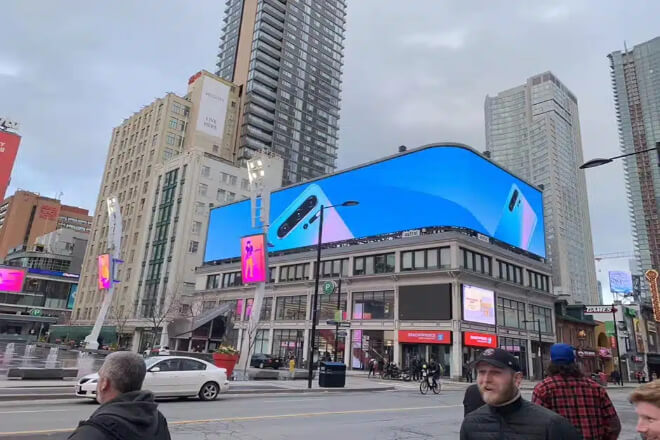
In densely populated environments, people’s attention is easily scattered—with numerous advertisements and information, a screen that isn’t bright or eye-catching enough is easily overlooked.
This is where the brightness and colour advantages of LED displays become crucial.
High brightness ensures clear visibility in various environments, maintaining good visibility even under strong daylight or complex lighting conditions at night.
Vivid colour contrasts, such as the combination of light and dark colours, are more likely to grab the attention of passersby immediately.
Besides being “bright and vibrant,” the image also needs to be “varied.” A single static image is easily ignored as background.
While adding dynamic elements, such as subtle animations, scene transitions, or localised motion effects, can make the screen more attractive.
However, constant “frenetic movement” isn’t necessary. A combination of dynamic and static elements is often more comfortable—move where appropriate, and clearly highlight key information, attracting attention without overwhelming the eyes.
Another crucial point is information layout. Many screens are overly complex, with too much information, making it difficult to see the key points.
In densely populated areas, viewers’ attention spans are very short, perhaps only a few seconds.
Therefore, the display should be as concise as possible: highlight key points, ensure clear text, and maintain a clear hierarchy, allowing viewers to grasp the essential information at a glance.
Simply put, the screen should be “visible at first glance and understandable at second glance.”
Brightness, colour, a combination of dynamic and static elements, and clear information layout—when these elements are well-coordinated, an LED screen will naturally stand out in a crowd, truly maximising brand exposure.
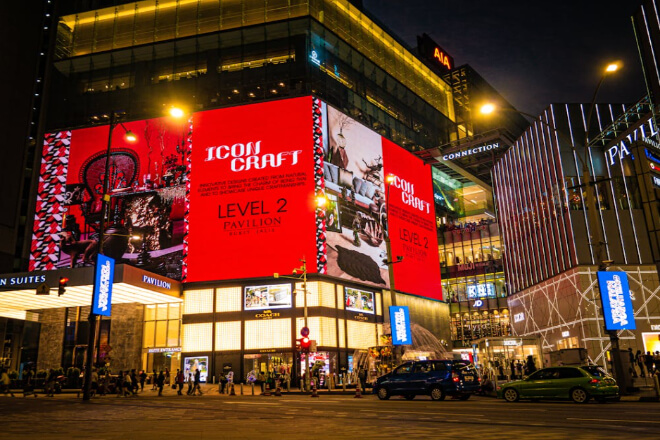
Even with a good location and eye-catching visuals, if the content itself isn’t memorable, the effect is limited. Therefore, the real difference in LED displays often lies in content design.
Especially in densely populated areas, most people may only glance at something for a few seconds.
Whether they leave an impression in those few seconds depends on whether the information effectively captures the key points.
First, the core information must be simple and direct. Don’t try to display all the information at once; this makes it difficult for people to see the important information.
A brand name, a key selling point, or an easy-to-remember slogan is enough. Let people understand “who you are and what you do” at a glance. The simpler, the easier it is to remember.
Second, make good use of animation, short videos, or lightweight dynamic charts to make the visuals more attractive.
Dynamic content is more likely to make people stop and look for a few more seconds.
For example, simple scene transitions, partial animations, and product demonstrations can make the screen more “present.”
However, there’s no need for constant high-speed changes. A combination of static and dynamic elements is more comfortable—key content can linger for a few seconds to allow people to clearly see it before moving on to the next section.
Furthermore, to further enhance the effect, you can add interactive elements, such as QR codes to guide scanning, participation in activities.
Or simple AR experiences, to encourage passersby to “take a look and leave” and “be willing to participate.”
Even simple interactions are more likely to deepen memory and translate attention into action.
Ultimately, good content is content that people “remember a little bit at a glance.” Clear information, varied visuals, and a touch of interactivity transform LED displays from simply playing content.
They establish a brief but effective connection with passersby, and this connection is key to truly enhancing brand influence.
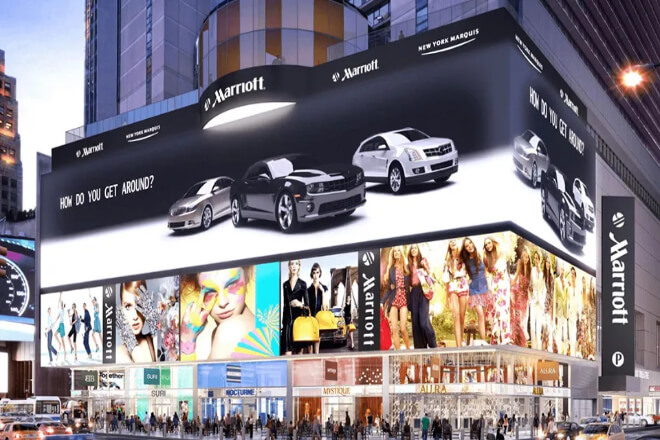
Many people focus on “how big the screen is, how dazzling the content is” when creating LED ads, but there’s another crucial point often overlooked—when and how to play it.
If the timing isn’t right, even the best content might be “perfectly missed.”
Time is crucial. Peak hours are vital. For example, rush hour, prime shopping hours in malls in the evening.
And weekend shopping peaks—these times are when there are more people and their attention is more easily drawn.
Showing core content during these times is like “speaking loudly when there are the most people”—the effect is naturally better.
Conversely, playing ads frantically during off-peak hours feels like “trying to work against thin air.”
Let’s look at the playback rhythm. Many screens either switch too quickly, leaving viewers breathless, or display content for too long, causing them to ignore it.
A more comfortable approach is to let key information linger for a few seconds, giving viewers time to understand, before naturally transitioning to another piece of content.
Important content can appear multiple times, but avoid creating the feeling of an “infinite loop.” Slightly changing the order or content will make it more engaging.
Another interesting point is the ability to “optimise as you play.” For example, you can observe which segments of content are more likely to make viewers stop, which time periods are most effective, and then gradually adjust the playback schedule.
Many systems now also perform simple data analysis, allowing screens to become smarter with each playback, rather than just playing continuously.
In short, LED screen playback also requires a sense of “rhythm.” Choosing the right time, appearing when there are many people.
And arranging the rotation perfectly are like saying the right thing at the right time; people are more likely to listen, and the advertising effect naturally improves.
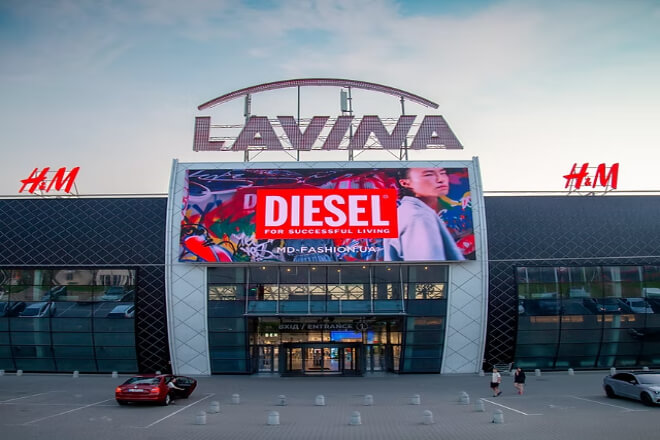
Often, LED screens aren’t about “one-time exposure, and it’s effective”; they need to be memorable. Consistency is crucial.
If you use a different style today, a different colour tomorrow, and a different font the day after, even with frequent exposure, viewers will struggle to associate the content with the same brand.
Therefore, first, unify the brand’s core elements, such as the main colour scheme, font style, and overall visual feel.
This allows viewers to subconsciously associate the colour scheme or visual style with your brand upon first glance. Even a casual glance while passing by will gradually build familiarity.
Second, repeat key information. For example, the brand name, core slogan, or main selling point can appear repeatedly in different content, but the presentation can be slightly varied to avoid monotony.
The benefit of this is that repeated exposure leads to natural memorisation, rather than seeing entirely new information each time, which makes it difficult to remember the key points.
If possible, extend this consistency across multiple screens.
For example, simultaneously playing consistent content at multiple locations within the same business district, street, or shopping mall creates a sense of ubiquitous visibility.
This continuous exposure strengthens brand awareness more effectively than single-point placement.
Simply put, it’s about making the brand “look the same” at different times and locations.
Consistent style, repetitive information, and multi-point coverage gradually build familiarity and even trust in the brand among viewers—this is the true value of long-term exposure.
 English
  Español
  简体中文
简体中文  Français
  日本語
日本語  한국어
한국어  العربية