
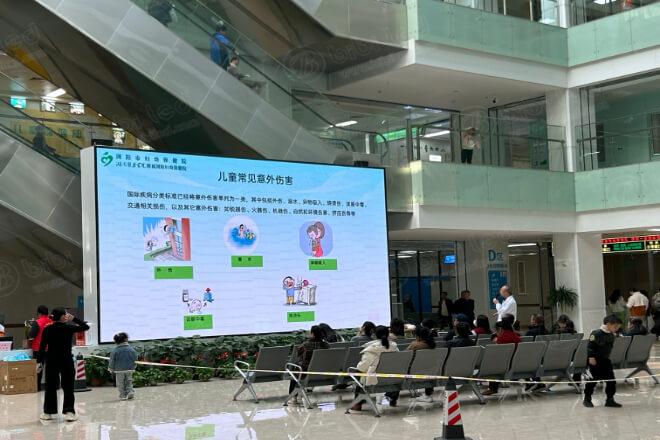
In hospitals, LED displays have quietly become “little helpers” in waiting areas and corridors.
While waiting, the screens display real-time registration and queuing information, as well as information about various departments, allowing patients to know their queue number and appointment schedule without repeatedly asking nurses.
For first-time visitors, this clear information reduces confusion and anxiety.
In terms of navigation, the screens can also help with directions. For example, a screen might display arrows and floor information, showing you which floor the registration desk or a particular department is on, and which corridor is the most convenient.
Even first-time visitors can easily find their destination without going to the wrong department.
LED screens also have another useful function: promotion and health education. During waiting times, the screens scroll through health tips, hospital announcements, or recent news.
For example, during flu season, they can remind people to take precautions and get vaccinated, and also display the hospital’s latest activities or service upgrades, making waiting time less monotonous and making the hospital seem more caring and professional.
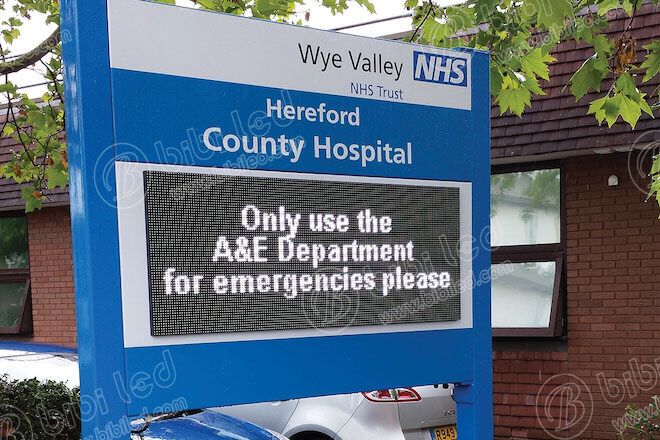
In hospital internal management, LED displays are also indispensable “little helpers.”
In doctors’ offices, outside operating rooms, or at nurses’ stations, the screens can display staff schedules, operating room status, or meeting notices, allowing team members to stay informed about the day’s work schedule.
This eliminates the need for repeated phone calls or WeChat group messages, improving efficiency and reducing communication errors.
For important information such as emergency room status, laboratory results, and quarantine information, the screens can be updated instantly.
For example, the status of emergency patients, laboratory reports, or special alerts can be displayed instantly on the screen, allowing medical staff in relevant departments to access the information immediately and ensure a smooth treatment process.
In addition, LED screens can display various data in real time, such as surgical schedules, bed occupancy, or the workload of the department for the day, allowing managers to understand the hospital’s operational status at a glance.
Compared with traditional manual notifications, this method is not only more intuitive but also greatly reduces the possibility of information delays or transmission errors, making internal hospital operations more efficient and safe.
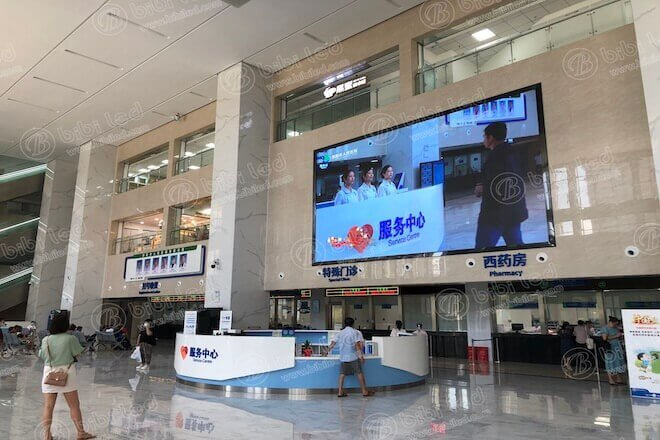
In hospitals, waiting is often the most anxiety-inducing part. But LED displays can subtly improve this experience.
In the waiting area, the screen displays health education information, soothing videos, or environmental information, giving patients something to watch while waiting, and allowing them to learn some practical health knowledge.
For example, it can display correct handwashing methods, seasonal protection reminders, or some relaxing nature videos, which both relieve anxiety and enrich the waiting time.
The screen also combines announcements, reminders, and necessary advertising information, allowing patients to see registration, queuing, or consultation reminders immediately, without feeling anxious due to unclear procedures.
This visual information dissemination makes waiting smoother and makes the hospital environment more welcoming and friendly.
More interestingly, LED screens can be combined with interactive systems to enhance patient engagement.
For example, some hospitals set up quizzes or health check-in activities, which patients can participate in through touch screens or QR codes.
Waiting is no longer monotonous, and patients can also receive health tips or points rewards, making the experience more relaxed and enjoyable.
In short, LED displays not only transmit information but also subtly improve patients’ medical experience, making the hospital environment more humane.
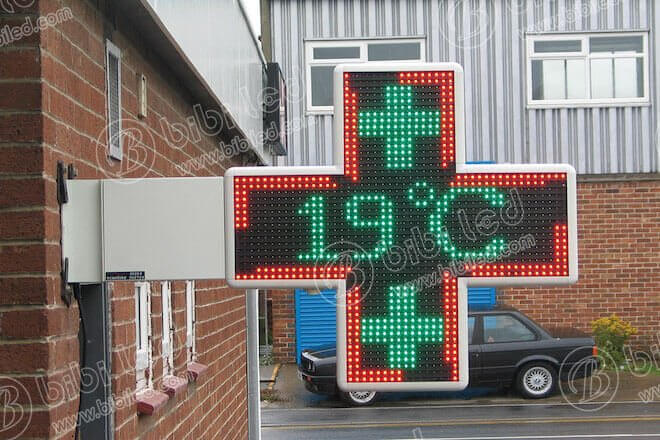
LED displays in hospitals can not only serve daily management but also undertake the functions of publicity and brand promotion.
For example, the screen can display the hospital’s new technologies, featured departments, or public welfare activities.
Allowing patients and visitors to understand the hospital’s highlights and service advantages at the first opportunity.
It can also be combined with community health education activities, displaying health lectures, vaccination information.
Or seasonal protection knowledge, allowing the hospital to establish a professional and caring image among the public.
For example, during community health outreach events, LED screens can display event schedules and participation procedures, attracting more residents and enhancing the hospital’s influence in the community.
More importantly, the content is highly customizable, allowing different hospitals to flexibly adjust the displayed content according to their own positioning and characteristics.
Whether it’s a large general hospital or a specialized institution, LED screens can be used to highlight their strengths, making promotion more intuitive and vivid, and more easily attracting attention than traditional announcements or paper flyers.
In short, LED displays are not only information tools but also a “window” for communication between hospitals, patients, and the community, making promotion more efficient and enhancing the hospital’s brand influence.
 English
  Español
  简体中文
简体中文  Français
  日本語
日本語  한국어
한국어  العربية