
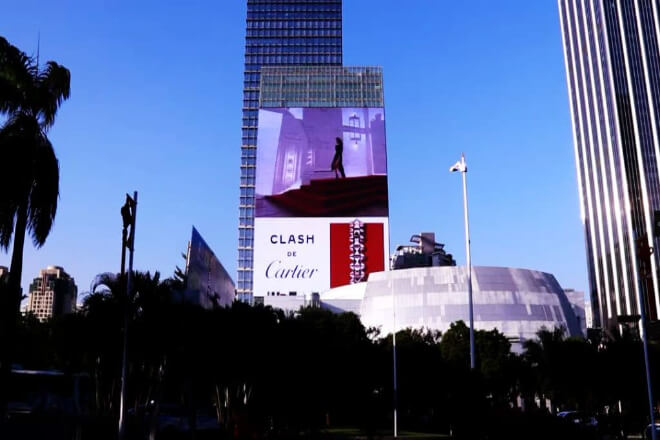
Walking around the city streets, you’ll find all sorts of advertisements vying for attention.
But the ones that most easily stop you and make you want to take a second look are often those large outdoor LED displays.
Why are they so eye-catching? The most important reason is their incredibly strong visual impact.
Imagine you’re walking down a bustling commercial street, surrounded by shop signs, light boxes, and posters.
And a huge LED screen flashes bright colors and plays dynamic animations—almost instantly grabbing your attention and drawing you in.
It’s not just about brightness; it possesses a dynamic, living presence, like a wink, as if saying, “Look here, look here!”
This visual impact not only makes people stop in their tracks but also allows brand information to be quickly remembered.
Even if you only pass by for a few seconds, the vibrant colors and flowing images leave an impression, far surpassing ordinary static signs.
Moreover, LED screens are bright enough to remain clearly visible even in strong daylight, and at night they blend seamlessly with city neon lights, practically uninterrupted by time.
Using color and motion, it establishes a “dominant visual presence” in the noisy urban environment, making advertisements stand out instantly and brands more easily remembered.
Simply put, LED screens are the “eye-catching masters” of urban advertising.
It’s no exaggeration to say that walking down the street, even those who didn’t intend to stop might find themselves unable to resist taking a second look.
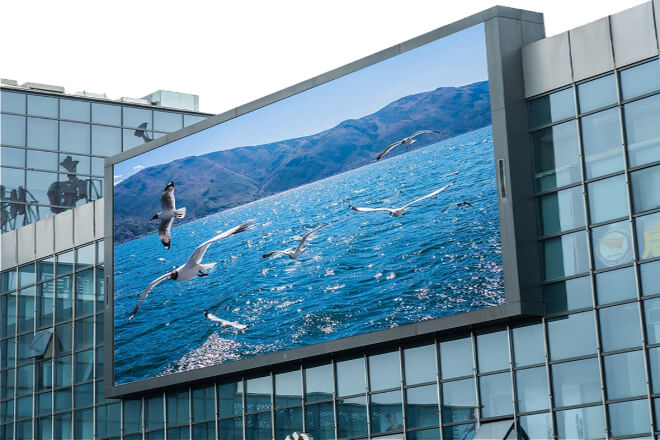
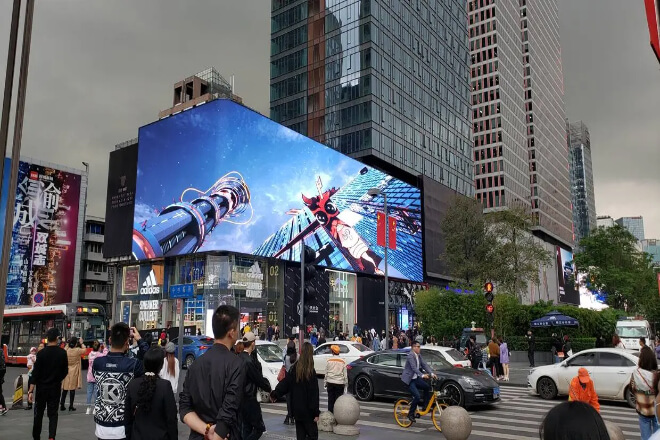
Another major advantage of large outdoor LED displays is their ability to cover massive foot traffic and reach a highly precise audience.
Imagine subway entrances, bus stops, airport waiting areas, or highway sections—places teeming with people every day, crowds so dense they resemble “moving rivers” within the city.
If LED screens are placed in these prime locations, and their playback times are chosen during rush hour, almost everyone passing by will see them.
Whether walking, driving, or waiting for transportation, subconsciously receiving the advertising message.
This significantly increases advertising exposure and audience precision—primarily targeting active travelers.
For transportation, fast-moving consumer goods, food and beverage, or brand promotion, this is the ideal target group.
Furthermore, the dynamic visuals and vibrant colors of LED screens grab attention within seconds.
Even those who only pass by quickly will retain an impression, making the effect significantly faster and more direct than traditional static billboards or scattered posters.
It’s like creating an “advertising highway” in the city, delivering information precisely and efficiently to the target audience.
In short, LED screens in these high-traffic areas are the “highly efficient snipers” of the advertising world.
They can cover a large audience while ensuring no advertisement is missed, offering significant results with minimal hassle.
A major advantage of large outdoor LED displays is that their content can be updated at any time, with virtually no limitations.
Compared to traditional posters or lightbox advertisements, which are fixed once printed, LED screens are like a “moving advertising magic box,” able to adjust the content displayed according to different times and scenarios.
This flexibility is particularly evident in locations like traffic information screens, city squares, or commercial centers.
For example, during the morning rush hour, traffic information can be displayed; during the day, advertisements can be pushed based on news headlines or weather conditions.
And at night, the display can switch to holiday or event themes.
The advertisements always connect with the audience’s real lives, making them feel relevant and not just rigid propaganda.
This real-time updating not only makes the advertisements more targeted but also increases the audience’s interest in staying on screen.
Imagine someone who usually walks by without paying much attention suddenly seeing animated, constantly changing content on a screen—content that’s both interesting and relevant.
They’re likely to look for a few more seconds, perhaps even stopping to examine it closely, potentially triggering a memory or generating a purchase interest.
LED screens act like a “living” advertising platform, constantly interacting with the environment, events.
And people, ensuring that advertisements aren’t just glanced at, but leave an impression and are remembered.
Because of this, advertisers can adjust their strategies at any time, ensuring their brands, products.
Or events always appear in the most appropriate way in front of the most appropriate people. This flexibility and efficiency are unmatched by traditional advertising.
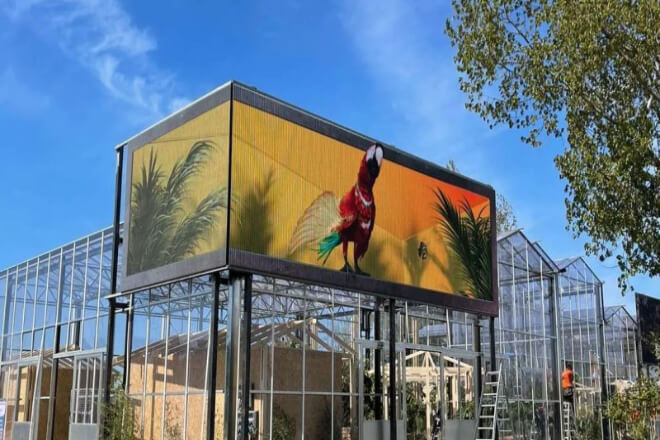
A cool feature of large outdoor LED displays is their ability to become incredibly intelligent, making advertising placement more efficient and precise.
Think of traditional billboards—once they’re up and fixed in place, regardless of day or night, or whether passersby notice them, it’s basically a matter of luck.
Smart LED screens, however, are different. They are backed by a management system and AI technology, capable of analyzing real-time pedestrian traffic, audience interests.
And even adjusting playback content based on time of day, weather, or holidays.
Simply put, they “watch the flow,” directing ads to those who are truly likely to be interested.
This intelligent management is particularly evident in popular urban areas or densely populated locations.
During the morning rush hour, the screen can play ads for trendy brands or breakfast items.
In the evening rush hour, when more people are passing by shopping malls, the screen can switch to content related to dining, entertainment, or lifestyle services.
AI dynamically adjusts the playback order and duration based on pedestrian traffic, interests, and time, ensuring that ads are not only seen but also seen perfectly.
The benefits of this approach are obvious—reduced waste, more precise advertising, and a higher return on investment (ROI).
LED screens are not just large, lit screens; they are more like “thinking” advertising assistants.
Understanding the rhythm of the city and the habits of different groups, ensuring that brand information appears in front of the right people at the right time.
This approach not only attracts attention but also helps people truly remember the brand, resulting in better effectiveness than traditional advertising.
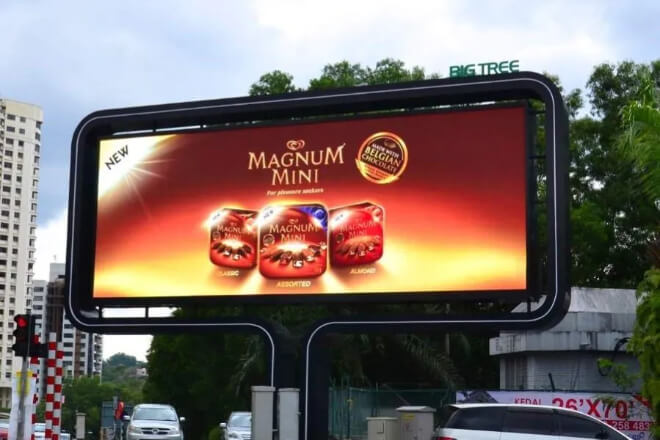
Large outdoor LED displays have another attractive advantage: they are both bright and energy-efficient, while also being environmentally friendly and sustainable.
You might think that such a large and bright screen would consume an entire power plant, right?
Actually, current LED technology is quite advanced. Through intelligent dimming, energy-saving display technology, and optimized content playback.
The screen automatically adjusts its brightness according to ambient light, ensuring clear images both day and night, while consuming significantly less electricity than traditional advertising.
In other words, it ensures visual appeal without wasting energy, making advertising more efficient and environmentally friendly.
This energy-saving mode is particularly valuable in outdoor nighttime advertising or large urban screen applications.
Even if the screen is on all night, it doesn’t consume much electricity and reduces light pollution.
Allowing the advertisement to blend more naturally into the urban environment rather than being glaring or disturbing.
More importantly, this environmentally friendly approach also enhances the brand image, making people feel that the company is not only pursuing exposure and revenue but also focusing on social responsibility and environmental protection.
In summary, LED displays not only attract attention and enhance advertising effectiveness, but also achieve energy conservation and environmental protection.
Balancing these two aspects allows for the simultaneous realization of commercial value and sustainable development, making it a smart and responsible advertising method.
 English
  Español
  简体中文
简体中文  Français
  日本語
日本語  한국어
한국어  العربية