
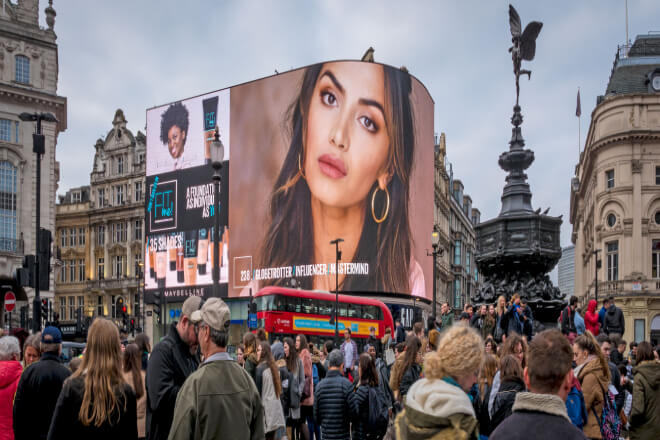
Advertising is a bit like opening a restaurant—a good location often makes all the difference. The same principle applies to LED displays.
No matter how cool the visuals or how great the creativity, if it’s placed in an unnoticed corner, it’s basically just “self-entertainment.”
So the first step is to find a location where the screen can actually be seen.
Think about where your target audience usually frequents, such as shopping mall entrances, busy pedestrian streets, subway stations, bus hubs, or main roads with heavy traffic.
These places have high foot traffic, and people’s eyes are easily drawn to large screens.
Imagine someone walking into a shopping mall and immediately seeing a bright LED screen playing an interesting advertisement.
They’ll naturally look at it for a couple of seconds, and those two seconds are often enough to leave an impression.
In addition, some small details are also crucial, such as screen height, viewing distance, and surrounding lighting.
If the screen is too high, people might be too lazy to look up; if it’s too low, it might be blocked by crowds or billboards.
If it’s outdoors in strong sunlight, the screen brightness must be high enough; otherwise, the image will be as blurry as a phone screen in bright sunlight.
Many businesses now use pedestrian flow analysis tools to see which areas have the most people passing by and who stay the longest. This makes location selection more data-driven, not based on intuition.
Simply put, choosing a good location for an LED display screen is like placing an advertisement at a “golden intersection.”
More people mean more visibility, making the advertisement more effective. The screen isn’t just hanging there; it becomes a brand window that actively attracts attention.

If an LED display screen simply loops the same advertisement, it somewhat wastes its potential.
The truly smart approach is to let the advertisement “move with time.” The content on the screen can change constantly for different time periods, holidays, or even trending events.
For a simple example: During the morning commute, large screens near subway stations or office buildings can display ads for coffee, breakfast, or productivity tools.
As people are most easily attracted to such content as they begin their journey to work.
At lunchtime, the screen content changes to restaurant offers, takeout discounts, or nearby shopping mall events.
And in the evening, after getting off work, it switches to ads related to entertainment, dining, or shopping.
This way, viewers feel the content matches their needs, naturally increasing their interest. Holidays and trending events are also excellent opportunities.
For example, Valentine’s Day could feature ads for couples’ gifts or restaurant (set meals), while during the World Cup, bar events or large-screen viewing information could be displayed.
Changing the screen content with the atmosphere makes it look fresher, rather than repeating the same images all day.
In short, one of the biggest advantages of LED displays is their flexibility. By strategically scheduling playback times and content, different audiences can be reached at different times.
This not only makes the ads more engaging but also more likely to resonate with potential customers, naturally improving marketing effectiveness.

An LED display is somewhat like the storefront of a shop. If a restaurant’s signboard is grimy and the lights flicker, even the best food will struggle to attract customers.
Similarly, if an LED screen is dirty, the image is unclear, or the advertising content remains unchanged, passersby will easily ignore it.
Therefore, regular maintenance and content updates are key to keeping advertising effective. Let’s start with screen maintenance.
LED screens, used in shopping malls, streets, or outdoor environments for extended periods, inevitably accumulate dust and stains and are even affected by weather conditions.
Regularly cleaning the screen and checking the brightness and display module’s functionality will keep the image clear and bright, giving it a more professional look.
Like cleaning a shop window, once the screen is lit, the entire advertisement becomes more attractive.
Besides equipment condition, the advertising content also needs occasional refreshes. If the same advertisement plays every day.
Many people will eventually “automatically ignore” it, just like passing by the same poster every day until it’s no longer noticeable.
However, even a slight update to the display—such as a change in design style, the addition of a holiday theme, showcasing new products.
Or limited-time events—will bring the screen back into people’s view. Even a small change can make someone look for a couple more seconds.
Simply put, keeping the LED screen clean and running stably, along with a few clever content updates, can keep the advertisement feeling fresh.
This not only extends the screen’s lifespan but also makes the advertisement more memorable, ensuring the brand message remains consistently visible.
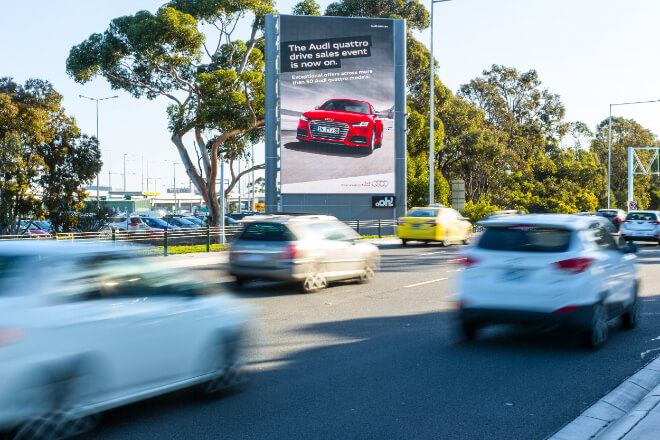
Relying solely on LED displays to play advertisements is sometimes like setting up a cool stage, but once the audience leaves, the traffic quietly slips away.
In this case, combining the screen with online channels is like giving the advertisement a “traffic-driving magic.”
Turning viewers from “passing by and looking” into “active participants,” and even directly turning them into customers.
It’s actually quite fun to do: place QR codes, social media accounts, or app interaction portals on the LED screen.
Viewers can scan them to receive coupons, participate in prize draws, or become brand members.
For example, a shopping mall‘s LED screen might display advertisements for new products along with QR codes.
Customers can scan the codes to claim discounts, view more details, or even share with friends.
The screen not only attracts attention but also subtly guides people online, extending the advertisement’s influence.
This is like building a bridge between “seeing offline – participating online – purchasing or sharing.”
Every scan and click enhances the advertising effect and increases interactive fun. Viewers are no longer passively watching ads but actively participating.
Simply put, LED displays are not only a brand’s eye-catching “face” but also an interactive starting point, smoothly bringing offline viewers online and achieving true closed-loop marketing.
Advertising is no longer a one-way message but a fun and interactive experience that keeps viewers entertained, engaged, and simultaneously spreads the brand’s message.
 English
  Español
  简体中文
简体中文  Français
  日本語
日本語  한국어
한국어  العربية