
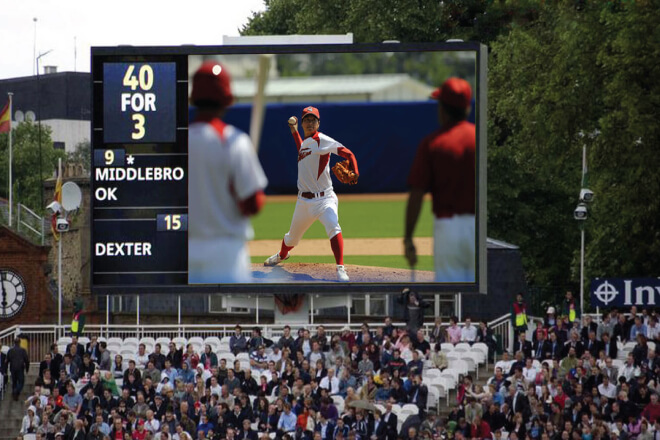
At sporting events, many spectators experience a small awkward situation: they chat with a friend, look down to take a sip of water, and then look up—the score has changed, and they’ve missed the crucial moment.
This is where LED displays in the stadium become crucial. They act as the “information center” for the entire match, constantly reminding spectators of the game’s progress.
Large LED screens are typically installed above the center of the stadium, in the side stands, or in areas with high spectator visibility to display real-time scores, match times, and key events such as goals, fouls, timeouts, and substitutions.
Even seated at a distance, spectators can quickly grasp the current match situation through the screen, ensuring an unaffected viewing experience due to viewing angle or distance.
Beyond basic score and time information, many events utilize LED screens to display richer content.
Such as player scoring statistics, assist data, match progress charts, and even replays of recent highlights.
Sometimes, a beautiful goal or crucial defensive play can be replayed on the big screen, reigniting the atmosphere.
It can be said that LED displays are not merely “display tools,” but rather “match assistants” for the spectators.
They make match information clearer and allow viewers to more easily immerse themselves in the game’s rhythm.
Whether seasoned fans or first-time attendees, these screens help viewers better understand and experience the game, making the entire viewing experience more complete and engaging.
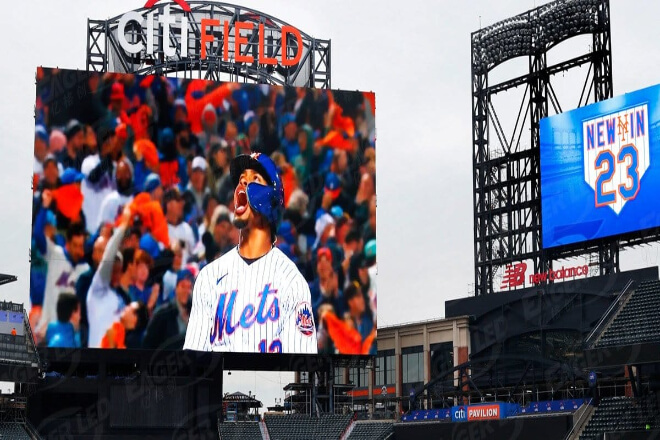
At sporting events, many exciting moments happen very quickly. For example, a sudden goal, a beautiful dunk, or a crucial interception can occur in just a few seconds.
Sometimes, the exciting action is over before the spectator even looks up. This is where the high-definition replay function of LED displays becomes crucial.
When key moments occur during a match, the large LED screens in the stadium typically replay the most exciting scenes.
Such as goals, brilliant plays, crucial defensive maneuvers, and even intense physical confrontations.
Through high-definition images and slow-motion replays, viewers can see the details of the actions more clearly.
Such as how the ball entered the goal, how a player completed a breakthrough, or whether a particular action was actually a foul.
The biggest advantage of slow-motion replays is that they can magnify and slow down details that are difficult to see with the naked eye. Many moments that would otherwise flash by become clearer and more visually appealing in slow motion.
Viewers can not only relive the exciting moments but also gain a deeper understanding of the technical actions and tactical combinations in the match, making the game more engaging.
Furthermore, LED screen replays are often combined with live commentary.
When the commentator briefly analyzes what happened, combined with the slow-motion footage on the large screen, viewers can more intuitively understand the course of the match.
Sometimes, a controversial call or crucial offensive play, when replayed in slow motion, makes the referee’s decision easier for the live audience to understand.
For many spectators, the biggest appeal of watching a game live is the atmosphere, and the high-definition replay on LED screens enhances this atmosphere.
Exciting moments aren’t missed; they can be revisited and even spark cheers and discussions from the crowd.
In short, the high-definition replay function of LED screens enriches the live viewing experience and brings it closer to the clear and detailed viewing experience of television broadcasts.
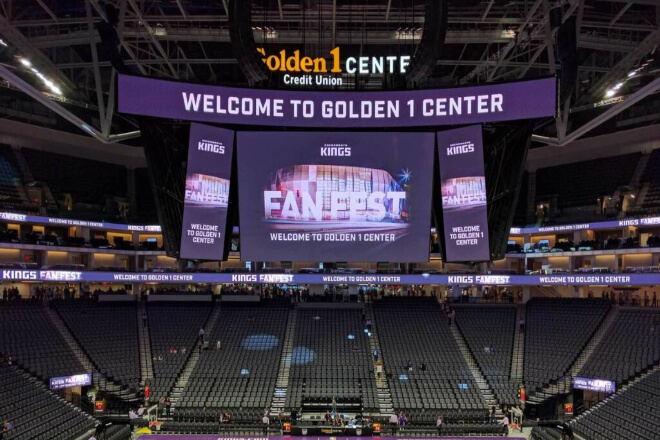
LED screens are not just tools for displaying game information; they can also truly engage the audience in the game.
Many sporting events utilize large screens to conduct lighthearted and fun interactive activities, such as “Vote for the Best Player of the Game,” “Predict the Final Score,” and “When Will the Next Goal Be Scored?”
Viewers can easily join the interaction by scanning a QR code or participating through the event’s app, making the atmosphere even more lively.
For example, in basketball games, the large screen often hosts a poll during halftime to determine “Who is the MVP of the Game?”
Spectators use their phones to select their favorite player, and the vote count changes in real-time on an LED screen.
When a player’s votes suddenly surge, cheers often erupt from the stands, with many discussing and campaigning with friends, instantly enlivening the atmosphere of the entire stadium.
Similar interactive activities frequently appear in football matches.
For example, a large screen might launch a “Predict Who Will Score the Next Goal” activity, which spectators can participate in by scanning a QR code.
If they guess correctly, some venues even give away team souvenirs or coupons.
Although it’s just a small activity, many spectators enjoy it, participating in the interaction while watching the game, significantly enhancing the experience.
Some large-scale events make the interaction even more fun, such as displaying spectator comments, emojis, or support slogans on the LED screen in real-time, allowing everyone to see their content appear on the big screen.
These “little surprises” often prompt spectators to take photos and share them on social media, inadvertently promoting the event and the brand.
Through these simple interactive designs, spectators are no longer just quietly watching the game, but truly participating.
The enhanced atmosphere and increased audience participation are key reasons for the growing popularity of LED displays in sporting events.
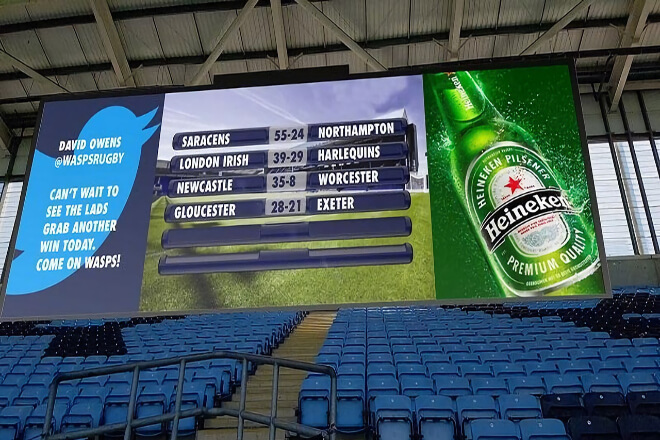
In large sports stadiums, it’s easy to get lost when there are many people. After the game, finding a restroom, buying food, or simply locating your stand can sometimes involve circling around several times.
In these situations, LED displays go beyond simply providing a large screen for watching the game; they can become highly practical “smart signposts.”
Many venues install LED screens at entrances, in corridors, or in the stands, displaying real-time information such as seating areas, restroom locations, food and beverage areas, souvenir shops, and emergency exits.
A spectator can easily find their way by simply looking up, without having to ask staff or constantly check their phone’s map.
Furthermore, LED screens can update various event information in real time, such as reminders of the upcoming game, halftime times, the schedule of the next match, and even temporary announcements.
Some venues even use dynamic arrows or simple animations to guide audience flow, such as prompts like “The east exit is crowded; we recommend leaving from the west side.” These small details are actually very thoughtful.
For example, after some large football matches, the large screen quickly switches to audience guidance mode, displaying replays of highlights while scrolling through information about the nearest exits and transportation at the bottom of the screen.
For example, directions to the subway and parking lots. Many spectators watch the replays while following the prompts to leave, making the process less crowded and chaotic.
While this information may seem like a “supporting function,” it truly makes things much easier for spectators. They don’t have to search around, allowing them to focus more on the game and the atmosphere.
For the venues, the flow of people is more orderly, and the experience is more professional, which is one reason why modern stadiums are increasingly reliant on LED displays.
 English
  Español
  简体中文
简体中文  Français
  日本語
日本語  한국어
한국어  العربية