

Are high-brightness LED screens really more prone to heat than ordinary LED screens?
When you see those giant billboards shining brightly in the blazing sun outdoors, don’t you wonder: won’t they get damaged by the sun?
Or when watching a game on a large screen in a stadium, why does the screen feel a bit hot to the touch?
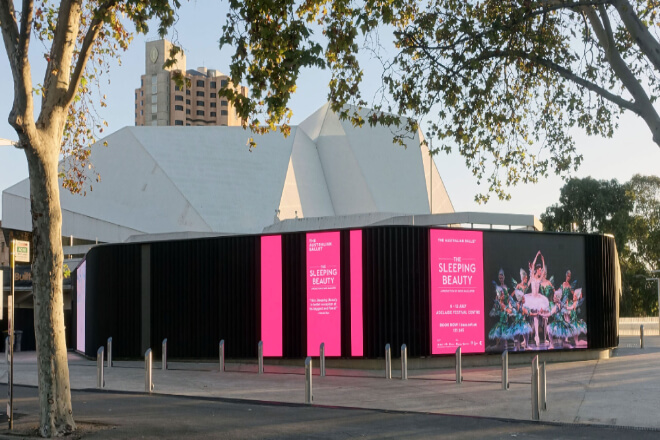
Have you noticed that some large screens are dazzlingly bright in sunlight and feel warm to the touch?
This isn’t the screen “lazy,” but rather a “side effect” of the high-brightness LED screen working hard to emit light.
In fact, there are three main reasons why high-brightness LED screens get hot—the LED chips themselves, the LED chip density, and the power supply driver—each of which deserves a detailed discussion.
1) Luminous Efficiency and Energy Efficiency
LED chips emit light by converting electrical energy into light energy. However, not 100% of electrical energy is converted into light; the excess becomes heat.
High-brightness LED screens need higher brightness to be clearly visible in bright sunlight, which means a larger current flows through the LED chips. Even with high-efficiency LED chips, they still generate considerable heat.
In other words, while these LED chips are “shining brightly,” they are also “sweating”—heat generation is unavoidable.
2) Light Source Density and Heat Accumulation
To achieve sufficient brightness, high-brightness LED screens often have a dense arrangement of LED chips.
With so many chips, heat concentrates easily in “hot spots” like summer sunlight on dark clothing.
If this heat cannot dissipate, it will lead to localized reduced brightness, uneven color, and even shortened chip lifespan.
The solution is to provide the screen with “air conditioning”—a thermally conductive backplate, aluminum frame, fan, or heat pipes—to quickly remove the heat, keeping the screen from getting too hot to touch while maintaining its brightness.
3) Heat Contribution from Power Supply and Driver Circuits
Don’t assume only the LED chips generate heat; the power supply and driver circuits of a high-brightness LED screen also contribute.
The high-power power supply itself generates heat during operation, and the driver circuit, responsible for stabilizing the LED chip current, also warms up.
Adding all this heat together is equivalent to the screen working in an “oven.”
Therefore, high-brightness LED screens are typically equipped with large heat dissipation areas, high-efficiency power supplies, and additional airflow or fans.
They may even have temperature control logic to prevent overheating, ensuring the screen can operate stably at high brightness.
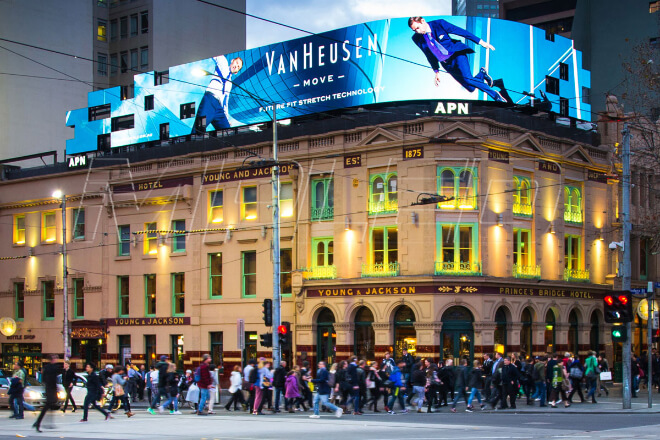
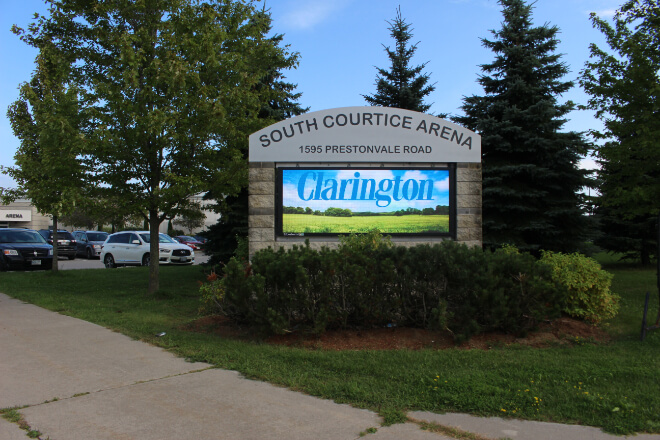
High-brightness LED screens are dazzlingly bright, but if heat is not properly controlled, they can also “act up.”
Overheating not only makes the screen hot but also leads to performance degradation, shortened lifespan, and even safety hazards.
Let’s look at the specific effects of overheating on LED screens.
1) Performance Degradation
When the LED screen temperature is too high, the LED beads become “fatigued.” Brightness may decrease, colors may deviate, and the image may appear less vibrant or uneven.
This is similar to a person running for too long in high temperatures, experiencing decreased stamina and reduced agility.
For high-brightness LED screens that require long-term display, insufficient heat dissipation easily leads to this performance degradation, significantly diminishing the image quality.
2) Shortened Lifespan
The damage heat causes to LED screens is not just temporary performance degradation, but also affects lifespan.
Prolonged high-temperature operation accelerates the aging of LED beads and circuit components, and in severe cases, can even burn out some modules.
In other words, without temperature control, an LED screen is like a body that is constantly staying up late—it will “break down” prematurely.
This is why high-brightness LED screens place special emphasis on heat dissipation design and temperature control systems—to ensure the screen lasts longer and maintains stable brightness.
3) Safety Issues
Besides affecting performance and lifespan, overheating can also pose safety hazards. High temperatures can cause short circuits, component damage, and in extreme cases, even fire risks.
Especially in outdoor large screens or large venues, improper heat dissipation can cause the internal temperature of the screen to soar, potentially posing a threat to the surrounding environment.
Therefore, proper heat dissipation and temperature control are not only necessary to ensure image quality but also crucial for safety.

High-brightness LED screens have high brightness and high power, so they inevitably generate heat over time.
Sometimes, overheating not only affects the image but can also cause the screen to “get sick,” shortening its lifespan and even posing safety hazards.
So, how can we determine if a screen is too hot? There are actually many methods, like giving the screen a “temperature check.”
1) Temperature Monitoring and Alarm Systems
Many high-brightness LED screens are now equipped with temperature sensors and monitoring systems, essentially giving the screen its own “thermometer.”
Sensors monitor the temperature of various areas of the screen in real time. If the temperature exceeds the safe range, the system will issue an alarm to alert maintenance personnel.
For example, the fan may automatically start, or the brightness may be temporarily reduced to cool the screen.
This allows you to detect overheating issues immediately and prevent the screen from “acting up.”
2) Heat Dissipation Performance Testing
In addition to real-time monitoring, sometimes specialized equipment is needed to “check the heat.”
A thermal imager is a great tool, visually displaying the temperature distribution on the screen surface, allowing you to see at a glance where it’s “too hot to touch.”
This testing method not only determines whether the heat dissipation performance is sufficient but also identifies localized hotspots.
In short, it helps identify the “hottest areas” of the screen and then allows for targeted improvements to the heat dissipation design.
3) Real-world Case Observation
Sometimes, the most direct method is to observe the screen’s performance itself.
For example, some outdoor advertising screens experience localized brightness drops and uneven color distribution in summer.
Maintenance personnel used temperature monitoring to find hotspots with excessively high temperatures and then used thermal imaging to confirm uneven heat dissipation.
Finally, they restored the screen to normal by increasing airflow, adding fans, and optimizing module heat conduction.
Through these real-world examples, we can see that judging overheating issues relies not only on instruments but also on the actual performance of the screen.

High-brightness LED screens are dazzling, but if heat is not controlled, it will affect image quality, shorten lifespan, and even pose safety hazards.
To ensure the screen is both bright and stable, its thermal management system must be optimized.
Simply put, it’s like installing an “air conditioner” for the LED screen, keeping it at a comfortable temperature at all times. Below are some “cooling secrets”:
1) Improve Heat Dissipation Efficiency
Heat dissipation is like adding heat sinks or small fans to the screen, allowing it to quickly dissipate heat.
Improving heat sink design and materials, increasing the heat dissipation area, using aluminum profiles with better thermal conductivity, or designing a reasonable airflow path can all help heat dissipate quickly.
If necessary, fans or even “water cooling/heat pipes” can be used, like adding an air conditioner to the screen, ensuring it doesn’t get “hot to the touch” even during prolonged high-brightness operation.
2) Improve Driver Circuit Design
The power supply and driver circuits themselves also generate heat, acting as the screen’s “internal heating.”
By optimizing circuit design and reducing power loss, much like turning down the heater, the screen generates less heat.
Efficient circuitry allows LED beads to emit light more efficiently, reducing internal temperature buildup and keeping the screen cool and stable.
3) Improving the Working Environment
The screen’s ambient temperature is also crucial. Outdoor exposure to direct sunlight, enclosed spaces, or hot weather causes heat to accumulate more quickly.
The solution is simple: reduce the screen’s exposure to high temperatures, increase ventilation, avoid direct sunlight, or appropriately reduce brightness.
In other words, give the screen an air conditioner or some ventilation to make its operation easier.
4) Enhancing Intelligent Adjustment
Modern high-brightness LED screens are becoming increasingly intelligent.
They can use temperature control algorithms and automatic brightness adjustment to automatically cool down or activate fans based on their own temperature, keeping the screen comfortable.
Like a smart air conditioner, it can automatically adjust fan speed and cooling capacity based on temperature, allowing the screen to operate cool and stably in different environments.
 English
  Español
  简体中文
简体中文  Français
  日本語
日本語  한국어
한국어  العربية