
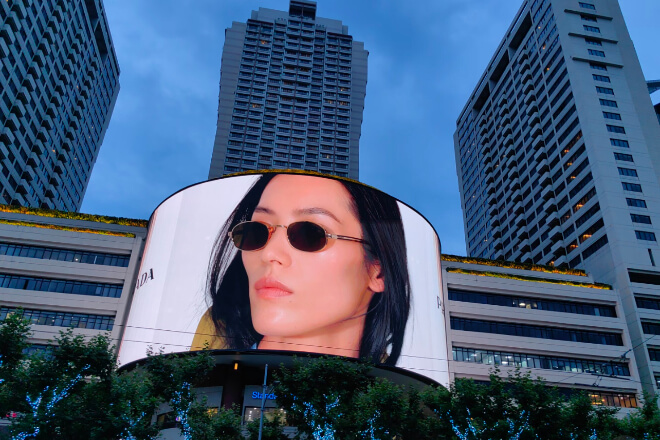
Many customers encounter this question when purchasing Afficheurs LED: “Why are the prices so different even though they’re the same size?”
While they may appear to be the same screen, the real factors influencing the price are often not the surface size, but rather the hidden materials, configurations, design, and lifespan.
Just like buying a car, even with four wheels, there’s always a reason behind the price difference. The same applies to LED displays.
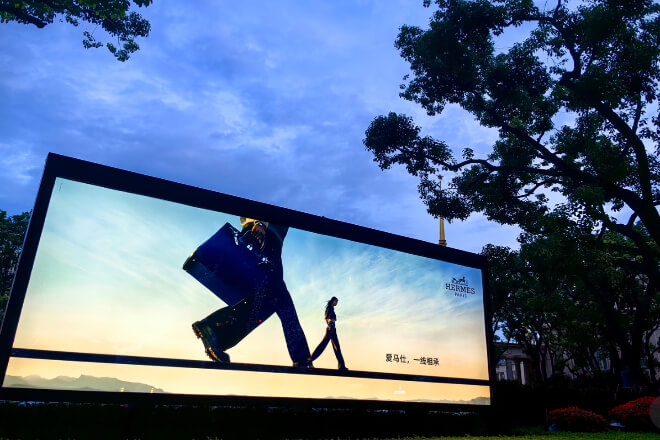
Many people have this question when first inquiring about LED displays: “Why are the prices so different for screens of the same size?”
Sometimes, what seems like a difference of just a few square meters can result in a price difference of hundreds of thousands.
En fait, Afficheurs LED are not like ordinary commodities; their value cannot be judged solely by size.
Size is only one part of the cost; more important are where the screen will be placed and what it will be used for.
For example, LED advertising screens in centres commerciaux need to focus on visual appeal and playback effects;
Screens in stadiums need to withstand high-speed moving images and long-term operation;
And outdoor advertising screens must withstand the challenges of sunlight, rain, and temperature changes.
Screens of the same size can have completely different design focuses depending on their intended use.
The real price difference often lies behind the screen itself. LED chips, driver ICs, alimentations, and control systems—these seemingly insignificant components directly impact the screen’s display quality and lifespan.
High-quality components can ensure stable display for years, while low-cost solutions may experience color differences, uneven brightness, or even malfunctions after a period of use.
Furthermore, different configurations result in significantly different viewing experiences.
Par exemple, exposition halls and conference rooms, where close-up viewing is crucial, prioritize image detail;
Live broadcasts and sporting events emphasize taux de rafraîchissement and camera performance; and outdoor projects require higher luminosité and protection.
They may all appear to be LED screens, but they address entirely different needs.
This is similar to buying a mobile phone: both have 6-inch screens, but some cost a few hundred yuan while others sell for thousands.
The difference isn’t in screen size, but in the technology and configuration inside. The same applies to LED displays.
Therefore, when choosing an LED display, don’t just ask “how much per square meter?”
More importantly, consider whether this screen is suitable for your scenario, whether the configuration matches your needs, and whether it will be worry-free to use over the next few years.
After all, the truly cheapest solution isn’t necessarily the one with the lowest price.
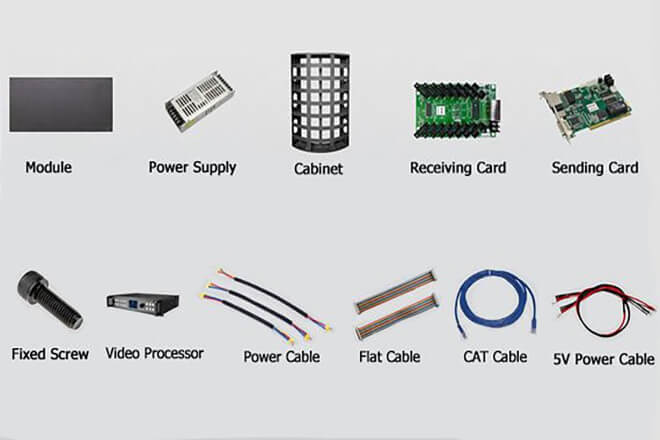
Many customers focus on size, résolution, and price when choosing an LED display, easily overlooking the fact that what truly determines screen performance are often the unseen “small components.”
LED beads, chips, and driver components are like the engine in a car; they may not be noticed initially, but they directly affect long-term performance.
First, LED beads directly affect the first impression of the image. When playing the same video, some screens have vibrant, natural colors and clear details;
Some screens appear grayish, and even show uneven luminosité after prolonged viewing. This difference largely stems from the quality of the LED beads.
Good LED beads not only deliver better color performance but also allow the entire screen to maintain a good display effect even after years of use.
LED chips determine the stability of screen operation. For ordinary display scenarios, the difference may not be noticeable after short-term playback.
However, for advertising screens, control center screens, or organiser backdrops that run for over ten hours a day, the importance of chip stability becomes increasingly apparent.
A stable chip solution reduces flickering and abnormal display issues, making the screen more suitable for long-term operation.
In addition, core materials such as power supplies and driver ICs also affect lifespan. Some lower-priced products may seem more advantageous at the time of purchase.
But after a period of use, they may experience increased dead pixels and frequent module replacements.
For large projects, the long-term maintenance costs are often more important than the initial price difference.
Par exemple, un large LED screen installed in the center of a shopping mall, if it frequently experiences inconsistent colors or areas that don’t light up, not only affects brand display but may also require the mall operator to reschedule repairs.
In contrast, products using more reliable core materials, although requiring a higher initial investment, offer greater peace of mind in the long run.
Therefore, the price difference in LED displays is not just due to screen size. Often, the real difference lies in the core materials hidden behind the modules.
When choosing an LED display, instead of just comparing prices, ask yourself: How many years are you planning to use this screen stably? The answer often determines its true value.
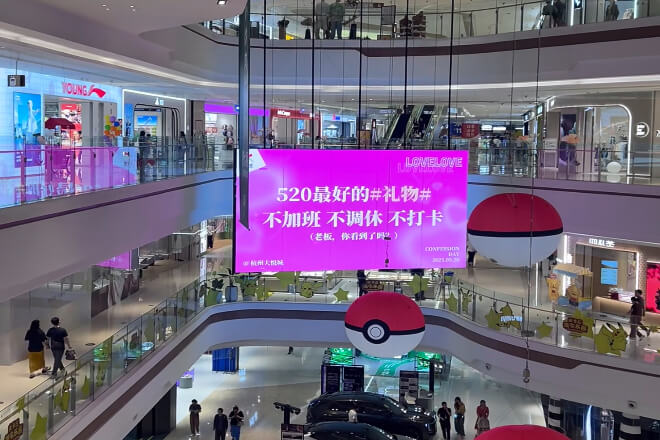
Many people habitually ask, “Which LED screen is the best?” when choosing an LED display. However, there’s no single right answer.
The screen needed for a centre commercial may not be suitable for a stadium; the configuration preferred for organiser events may not be suitable for outdoor advertising.
Different scenarios, like different job positions, require different “equipment.”
In commercial indoor spaces, such as shopping malls, brand showrooms, and conference centers, LED displays primarily serve a visual display purpose.
Here, the focus is usually on image detail, color reproduction, and overall aesthetics.
Because of the closer viewing distance, high-definition display effects can better present product details, making brand presentations more attractive.
Outdoor advertising screens face entirely different challenges. During the day, under direct sunlight, insufficient brightness can easily cause the image to be overshadowed by ambient light.
Rain, dust, and temperature changes can also affect screen operation. Therefore, outdoor LED displays typically require higher brightness and stronger protection to ensure long-term stable use.
Des sports stadiums have even stricter requirements for LED screens. During competitions, the rapid switching of images means that spectators and cameras are constantly monitoring the screen’s performance.
If the refresh rate is insufficient or the operation is unstable, problems such as ghosting and flickering may occur, affecting the live viewing experience.
Therefore, sports projects place greater emphasis on stability, display quality, and safe operation.
Organiser rental LED screens also have their own characteristics. Concerts, exhibitions, and events often require rapid setup and dismantling.
So the screen must not only have good display quality but also be easy to transport and install.
Lightweight cabinets and rapid assembly designs become crucial factors for these projects.
This is like shooting a movie; different scenes require different shots, not one shot solving all problems.
The same applies to LED displays; there is no “most expensive is best” option, only the solution “most suitable for the project’s needs.”
For the purchaser, what’s truly important is not choosing the product with the highest specifications.
But finding the optimal balance between performance and cost based on the usage environment, viewing distance, and operational requirements.
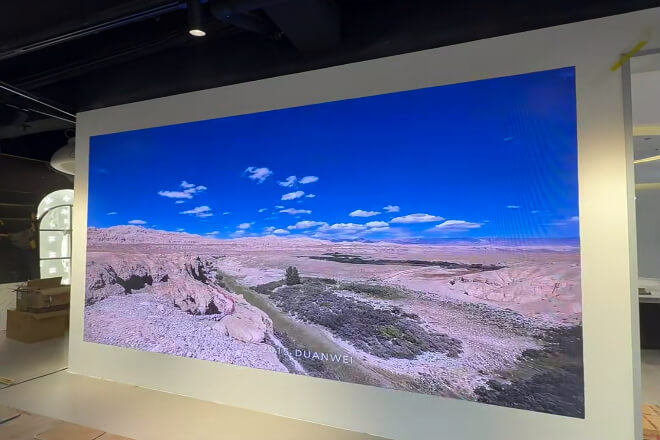
When buying LED displays, many customers first look at the price quote.
However, after a year or two of use, what often impacts project budgets isn’t the small extra cost at the time of purchase, but rather the daily electricity bills, maintenance, and downtime risks.
For example, an LED screen installed in a centre commercial atrium might need to play for over ten hours a day.
Initially, the differences between different products aren’t obvious, but over time, the differences in power consumption become apparent.
Screens with better energy-efficient designs can reduce power consumption over long-term operation. For large-scale projects, the savings over several years are substantial.
Heat dissipation is also a crucial factor affecting lifespan. An LED display is like a device that needs to operate for extended periods;
If internal heat cannot be dissipated effectively, components such as LED chips and driver ICs will be under greater stress.
A good heat dissipation design might not make the screen appear brighter on the first day, but it will affect its ability to maintain stable performance years later.
Maintenance costs are also easily overlooked. Some screens are attractively priced at the time of purchase, but after a period of use, problems such as module damage, inconsistent luminosité, and color deviations may occur.
For scenarios like airports, shopping malls, and control rooms, repairs not only mean replacing parts but can also disrupt normal operations.
For example, if a retail brand installs an LED display screen at its store entrance and it suddenly goes black during a new product launch event.
It not only affects the on-site display effect but may also cause them to miss important marketing opportunities.
In contrast, a stable LED system can reduce these “unexpected situations.”
Therefore, the price of an LED display screen should not be judged solely by the figure on the day of purchase.
What truly needs to be compared is the total investment several years later: how much electricity has been used, how many repairs have been needed, and how long it can operate stably.
A cheap screen may save money today, but a good solution saves future costs.
Many customers, when purchasing LED display screens, do one thing first: compare quotes from several suppliers.
Lowest prices seem very attractive, but after actual installation and use, it is often found that the LED display screen is not finished after purchase;
Subsequent installation, maintenance, and long-term operation are equally important.
First, check if the supplier has done similar projects before. LED display screen applications vary greatly;
A screen suitable for shopping mall advertising may not be suitable for a stadium or control center.
Experienced suppliers typically understand the project environment, viewing distance, and usage requirements before recommending the cheapest product.
Product quality is also a key factor behind price. Two LED screens might not show significant differences after a few months of use.
But after several years, differences in LED consistency, driver stability, and heat dissipation design will gradually emerge.
For projects requiring long-term operation, stability is more important than short-term low prices.
Besides the product itself, after-sales service and technical support are also crucial.
For example, if a large shopping mall’s LED screen suddenly experiences display problems, a supplier’s rapid response and timely handling can minimize the impact on business operations.
Conversely, a lack of support after installation can make later problems extremely troublesome.
Installation and debugging capabilities are equally important. The final effect of an LED display is not solely determined by the screen itself;
Splicing flatness, brightness adjustment, and system configuration all affect the viewing experience.
A professional team can identify on-site problems in advance, ensuring the screen truly achieves the designed effect.
For example, if a brand showroom is installing an LED video wall, and the supplier only focuses on the screen price without considering viewing distance and displayed content.
The final result may be an image that lacks detail and an uncoordinated spatial effect.
Therefore, when purchasing LED displays, consider a different approach: don’t just ask “which company offers the lowest price,” but rather “which solution best suits my project.”
The value of an LED screen isn’t just the price on the day of delivery, but its ability to operate stably and continuously generate value for years to come.


 English
  Español
  简体中文
简体中文  Français
  日本語
日本語  한국어
한국어  العربية