
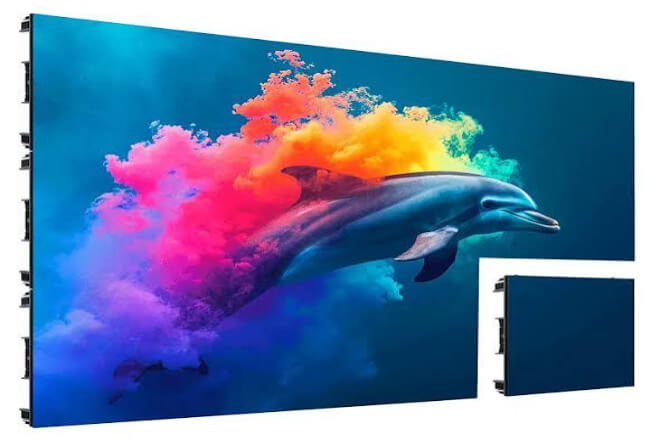
Imagine a grand écran LED screen playing a stunning city promotional video.
The image extends naturally from left to right, with buildings, people, and colors seamlessly integrated, appearing as a single giant display panel.
However, upon closer inspection, it is actually composed of many small modules spliced together.
The key technology that allows these modules to blend seamlessly is seamless splicing technology for LED displays.
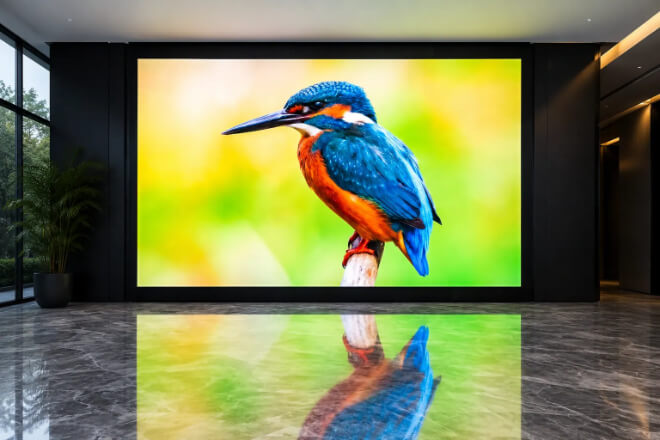
Simply put, seamless splicing technology for LED displays uses precise structural design, installation adjustment.
And display calibration to minimize the impact of splicing boundaries on the overall image when multiple LED display modules or cabinets are combined.
Why is this technology needed? Because large Afficheurs LED are usually not manufactured as a single piece, but rather composed of multiple independent modules and cabinets.
Each part needs to be connected, fixed, and adjusted. If there are deviations in dimensional accuracy, installation position.
Or display parameters, noticeable seams, luminosité differences, or color inconsistencies may appear on the screen surface.
For example, a company installs an LED display screen over ten meters wide in its showroom to display brand promotional videos.
If a clear dividing line exists in the middle of the screen, the originally complete image will be fragmented, naturally diminishing the visual experience.
The goal of seamless splicing technology is to focus the viewer’s attention on the content of the image, rather than constantly trying to figure out how many cabinets the screen is composed of.
It’s important to note that “seamless” doesn’t mean there are absolutely no physical connection boundaries.
But rather that the visible impact at the splicing points is minimized to achieve visual continuity and unity.
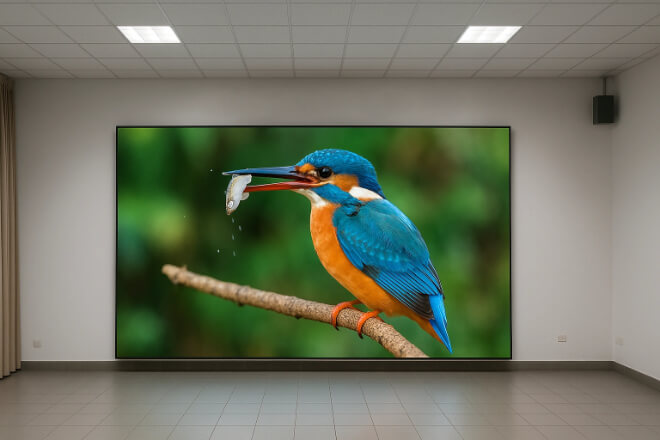
To make a large screen composed of multiple cabinets appear complete, it’s clearly not enough for installers to simply assemble the cabinets.
It requires the coordinated efforts of structural, manufacturing, and display technologies.
First, precise cabinet and module design.
Cabinet dimensions, processing precision, and edge structure directly affect the splicing effect.
If there are dimensional deviations between different cabinets, gaps or uneven surfaces may appear after installation.
Therefore, high-precision processing and a reasonable structural design are the foundation for achieving seamless splicing.
Second, precise installation and adjustment.
Even with high-precision cabinets, improper flatness and positioning during installation can lead to unevenness, misalignment, or gaps.
Precision positioning structures and installation adjustments can ensure adjacent cabinets are kept as level as possible.
Third, luminosité and color calibration.
Physically neat splicing doesn’t guarantee a harmonious image.
Differences in brightness, color temperature, or color between adjacent modules can still result in noticeable area boundaries on the screen.
Brightness and color calibration improve display consistency between different modules.
Fourth, a well-designed circuit and control system.
Display data transmission, scanning methods, and control system configuration also affect the overall display effect.
A well-designed system helps ensure synchronized display across different areas, reducing image anomalies and localized display differences.
Therefore, a truly excellent seamless Affichage LED solution doesn’t simply aim for zero gaps between cabinets, but rather for a harmonious and unified structure, image, and control system.
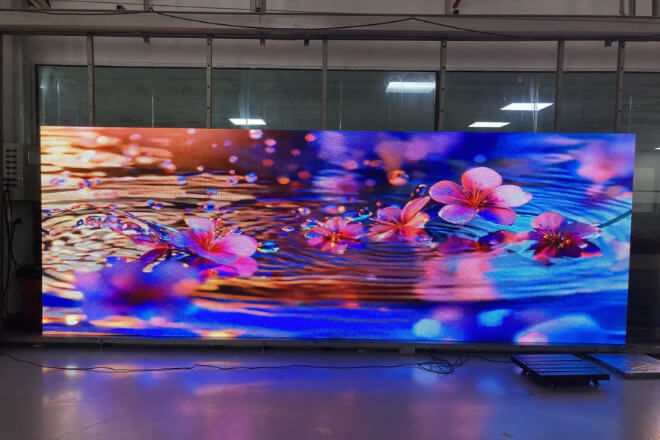
For business decision-makers, the technology itself is not the ultimate goal; what problems it solves and what value it creates are more important.
Improving visual integrity. In large-scale exhibition projects, obvious splicing boundaries can easily disrupt the content displayed.
Seamless splicing improves overall visual continuity, allowing videos, images, and dynamic content to be presented more naturally.
- Enhancing brand presentation:
Imagine a car brand showcasing a new model in a showroom, with a large LED screen playing high-definition dynamic images as the background.
If there’s a clear division between light and dark areas in the middle of the screen, the visual focus is easily interrupted.
A more unified visual presentation better complements the product and brand image.
- Improving the experience of large-scale information displays:
In command centers, conference rooms, and data centers, large screens often need to display maps, charts, and multiple pieces of information simultaneously.
If splicing boundaries affect the continuity of text or images, it can reduce information reading efficiency.
- Increasing spatial design freedom:
As commercial displays and architectural space design increasingly emphasize visual effects, LED displays are no longer just wall-mounted devices.
Through reasonable cabinet combinations and structural design, larger, more cohesive display spaces can be created.
However, seamless splicing doesn’t mean that all projects must pursue the ultimate splicing effect.
For projects with viewing distances and primarily simple advertising content, purchasers need to consider both budget and actual usage requirements.
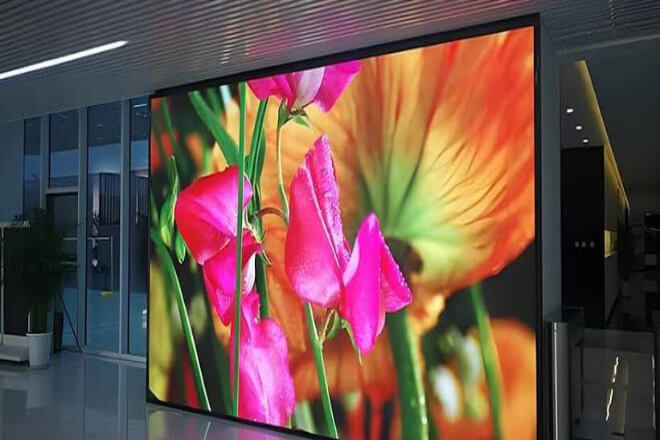
Different projects have different requirements for splicing effects.
Some scenarios only require clear visibility from a distance, while others require a high degree of continuity in image detail.
- Corporate showrooms and brand experience centers
Brand displays often require playing product promotional videos, corporate image videos, and immersive visual content.
The less obvious the splicing boundaries, the better for creating a cohesive visual atmosphere.
- Command centers and monitoring centers
These locations typically require displaying maps, monitoring screens, and data charts for extended periods.
Especially when a map or set of data spans multiple display areas, visual interference at the splicing points can affect information interpretation.
- Conference rooms and corporate auditoriums
Large conference rooms often need to display presentations, videos, and complex charts.
Good splicing effects allow content to be presented more naturally, avoiding obstruction of important text or images by obvious boundaries.
- Commercial complexes and high-end retail spaces
Centre commercial atriums, brand flagship stores, and large retail spaces frequently use LED displays to create visual focal points.
A continuous, complete image enhances spatial appeal and makes advertising content more expressive.
- Studio and organiser performances
From both the camera’s and the audience’s perspective, differences in brightness, color, and structure at the splicing points can affect the image quality.
Therefore, these projects require attention not only to seamless splicing but also to refresh rate, grayscale, and shooting compatibility.
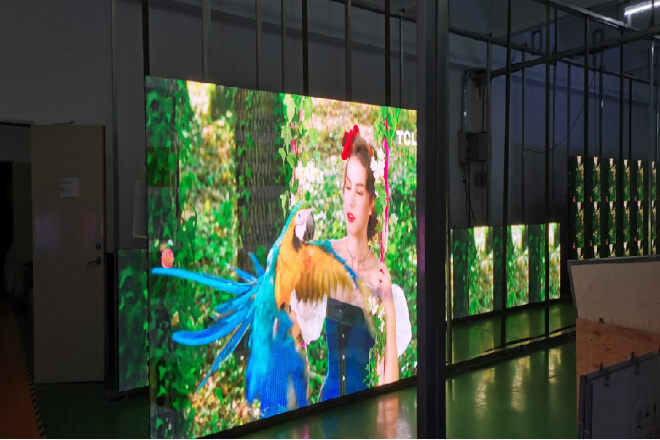
After understanding seamless splicing technology, the procurement stage is where real judgment is needed.
Suppliers may claim their products have high splicing precision, but companies shouldn’t make decisions solely based on promotional materials.
It is recommended to focus on the following aspects:
- Cabinet and module processing precision
Understand the cabinet dimensional tolerances, structural design, and splicing adjustment methods to confirm whether adjacent cabinets maintain good flatness.
- Actual splicing display effect
Request the supplier to demonstrate the entire screen in operation, focusing on observing solid colors, gradients, low grayscale, and continuous images across cabinets, checking for obvious bright-dark boundaries or color differences.
- Luminosité and color consistency
Understand whether the product has undergone standardized calibration and whether it supports recalibration after long-term use.
- Ease of installation and maintenance
For large projects, consider not only the initial installation but also the ease of subsequent module replacement, repair, and re-splicing.
- Project experience and after-sales capabilities
Prioritize whether the supplier has experience delivering similar application scenarios and can provide installation guidance, debugging support, and spare parts services.
Additionally, businesses should conduct a comprehensive evaluation considering pas de pixel, distance de visualisation, screen area, and budget.
Don’t chase after advanced-sounding technical terms and ignore the key factors that truly impact the project’s effectiveness.


 English
 Español
 简体中文
 Français
 日本語
 한국어
 العربية