

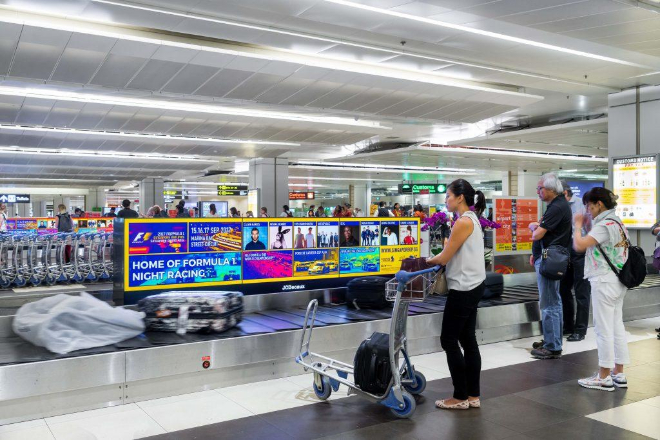
Aéroport baggage sorting is not simply sending baggage onto different conveyor belts; it’s a complex process involving automated equipment, information systems, staff, and flight schedules.
When flights are concentrated, baggage handling volume can increase rapidly.
If a conveyor belt malfunctions, a sorting area becomes congested, or some baggage fails to enter its designated process in a timely manner, it can affect subsequent operations.
For managers, what’s truly important is not just knowing that the equipment is running, but understanding the overall operational status of the sorting system.
For example, the management team might need to monitor:
Current baggage handling volume and throughput per unit time
Task completion status of each sorting area
Operating status of conveyor belts and key equipment
Baggage scanning and sorting data
Number of abnormal baggage and pending tasks
Baggage handling progress for each flight
If this information is scattered across different computer terminals, staff need to frequently switch systems to check, easily increasing information acquisition and communication costs.
However, centrally displaying key operational data on Écrans LED allows staff to quickly understand the overall situation within their work area.
It doesn’t replace the back-end management system, but it makes important information easier to see.
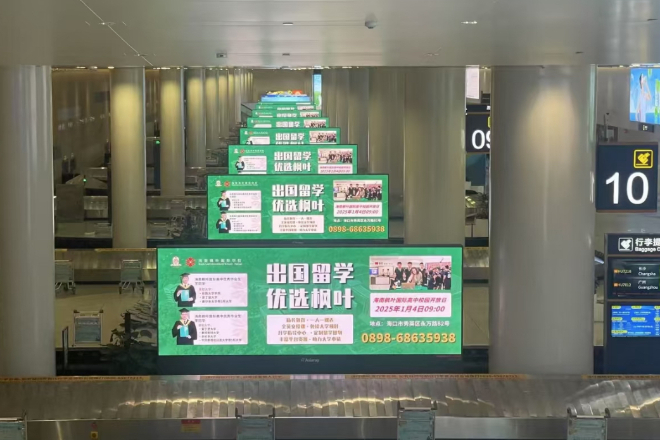
A single screen can only display a limited amount of content; therefore, aéroport baggage sorting centers need to filter information based on management objectives, rather than piling all data onto the screen.
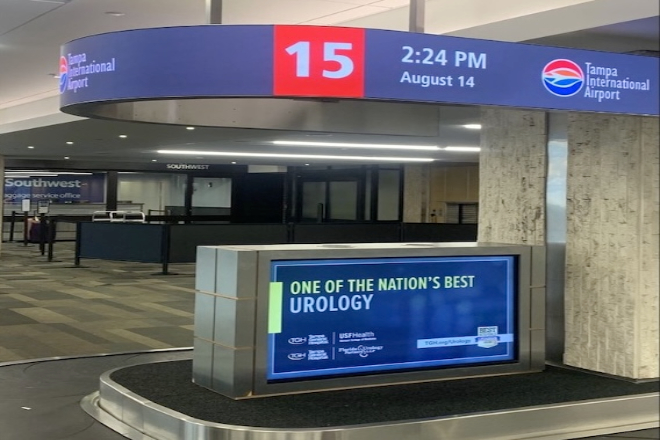
Large amounts of data do not necessarily equate to high management efficiency.
If a screen displays dozens of sets of numbers, dense tables, and constantly changing prompts simultaneously, staff may not know where to look first.
Donc, aéroport baggage sorting centers need to prioritize information layout when planning their LED data display systems.
- Use zoned displays to highlight key information
The screen can be divided into several areas: the top displays overall operational metrics, the middle displays the status of each sorting area, and the bottom presents equipment malfunctions and pending alerts.
Managers can quickly grasp the system overview without having to search through each item.
- Use charts instead of complex tables
For baggage handling volume, area load, and task completion progress, use bar charts, trend graphs, or progress bars.
Compared to simply listing numbers, charts help staff identify trends more easily.
- Use colors to differentiate different operational statuses
For example, green represents normal, yellow represents needing attention, and red represents anomalies.
Combined with text descriptions and status icons, this reduces the time staff spend understanding information.
However, color should not be the sole basis for judgment; clear text prompts should also be provided to avoid misreading due to color differences or ambient light.
- Switch display content according to job requirements
Managers focus on overall processing efficiency, equipment maintenance personnel are more concerned with fault location and equipment status, and on-site dispatchers need to monitor task progress.
Through multi-screen layouts or access control, different roles can view information relevant to their job responsibilities.
Good data visualization isn’t about displaying more content on the screen, but about making important information easier to understand.
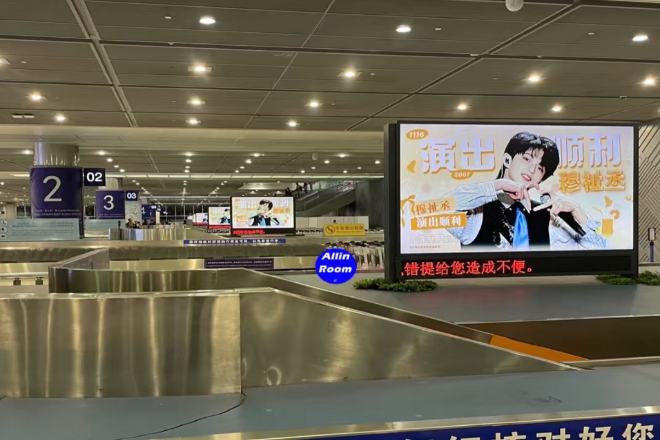
Airport baggage sorting centers operate in high-intensity environments, requiring display equipment that is not only clearly visible but also capable of long-term stable operation.
Therefore, selection shouldn’t solely focus on screen size and price.
First, consider display clarity and viewing distance.
If the screen is installed in the central control room, staff may need to view charts, text, and equipment status at close range.
Appropriate pas de pixel should be selected based on viewing distance to avoid blurry text edges or illegible details.
Second, consider brightness and ambient light.
Lighting conditions vary across different areas. Control rooms typically allow for moderate brightness.
While brightly lit industrial work areas require assessing the impact of ambient light on display quality to ensure consistently clear and readable information.
Third, prioritize equipment stability and ease of maintenance.
Airport baggage sorting systems often require long-term operation, necessitating display devices with excellent heat dissipation design, stable power supply configuration, and easy maintenance.
For critical management areas, backup display devices or redundant key components can be planned according to project requirements.
Finally, system compatibility must be assessed.
LED displays need to integrate with the aéroport‘s existing data platform, video processing equipment, and control system.
Data interfaces, signal transmission methods, content management capabilities, and system upgrade potential should be confirmed before procurement to avoid discovering incompatibility issues after installation.
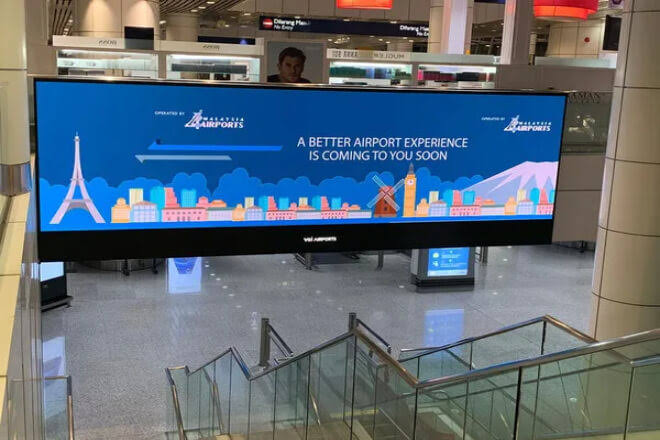
The value of LED displays should not be limited to the moment of installation and screen illumination.
Only by integrating with backend data systems and daily management processes can they become a long-term effective operational tool.
First, the data source needs to be clearly defined.
Baggage handling systems, equipment monitoring systems, and baggage tracking platforms may be provided by different vendors.
Data interfaces and update mechanisms should be reviewed before project implementation to ensure the accuracy and timeliness of the information displayed on the screen.
Second, a clear information hierarchy mechanism needs to be established.
Daily operational indicators can be continuously displayed, while equipment malfunctions and emergency tasks should receive higher visual priority.
For different positions, appropriate viewing permissions should be set to prevent irrelevant information from interfering with work.
Furthermore, system security must be considered.
Airports are critical transportation infrastructure; Affichage LED systems should acquire data through controlled interfaces and be implemented with measures such as network isolation.
Access control, and operational logs to reduce the risk of unauthorized access and misuse of information.
Finally, companies should also consider long-term operating costs, including equipment maintenance, software upgrades, content management, and spare parts replacement.
Rather than comparing initial purchase prices, it’s more effective to assess the system’s actual value over its entire lifecycle.
When LED displays can consistently present accurate information and help staff quickly identify anomalies and coordinate operations, it transcends being just a display device;
It becomes a crucial information window within the airport’s digital operations system.


 English
 Español
 简体中文
 Français
 日本語
 한국어
 العربية