

When a bus travels through city streets, it’s not just a means of transportation; it can also become a mobile advertising platform.
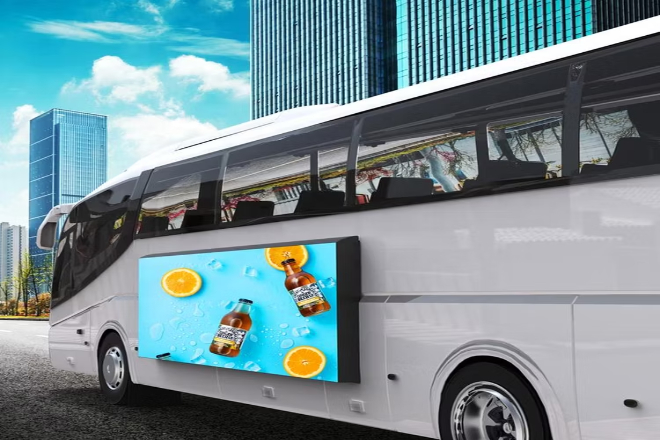
Affichages LED extérieurs installed on the exterior of the bus allow brand advertisements to travel with the vehicle to different blocks and commercial areas.
However, the road environment is complex, and the screens must withstand sun exposure, rain, and continuous vibration.
How should businesses choose displays that balance advertising effectiveness with long-term operation?
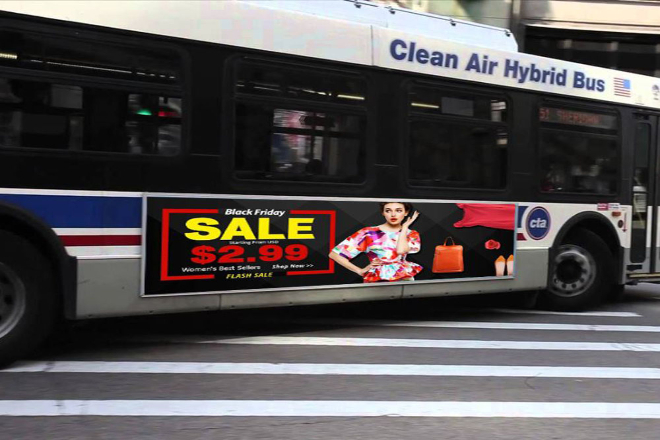
Traditional bus body advertising mainly relies on inkjet printing or body wraps.
While these can cover a large display area, once the advertising content is created, subsequent replacements usually require re-production and reinstallation.
LED displays installed on the exterior of buses offer more possibilities for mobile advertising.
First, advertising content can be presented dynamically.
Compared to static bus body advertising, Afficheurs LED can play images, text, and videos, making brand promotion more visually appealing.
For example, beverage brands can display product promotional videos, car brands can play advertisements for new car models, and centres commerciaux can launch promotional activities.
Second, advertising content can be flexibly updated.
If the display system supports remote management, operators can adjust the playback content according to the advertising schedule.
Eliminating the need for physical disassembly and reassembly each time an advertisement is changed.
Furthermore, it enhances the display value of bus body advertisements.
The same bus can play different advertisements at different times, providing advertising operators with more flexible content arrangements and business cooperation methods.
For bus operators and outdoor advertising companies, écrans LED extérieurs are not only display equipment but can also become tools for expanding the mobile advertising business.
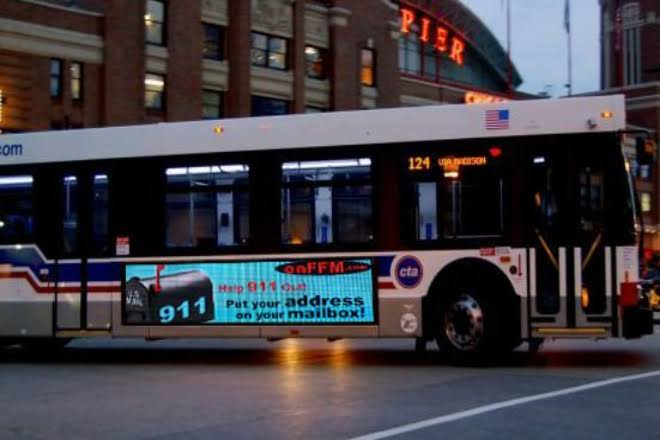
Buses travel on different roads and in different lighting environments every day.
The screen may face direct sunlight, shade from trees, nighttime lighting, and other conditions.
Therefore, the display effect cannot only perform well in indoor testing but must also adapt to real road environments.
- Haut luminosité is fundamental
If the screen brightness is insufficient, the advertisement will easily appear dim in strong sunlight during the day, making it difficult for passersby to quickly identify the content.
Companies should choose high-brightness LED displays suitable for outdoor use and determine the brightness requirements based on the installation location and actual environment.
At the same time, automatic brightness adjustment functions are also worth noting.
Maintaining sufficient visibility during the day and appropriately reducing brightness at night improves the viewing experience.
Helps control power consumption, and reduces the interference of overly bright screens on road traffic.
- Color and contrast are equally important
Advertising displays rely on visual appeal. If brand colors are off or product images are not vivid enough, even a large screen size can negatively impact the advertising effect.
Therefore, color reproduction, contrast, and grayscale performance should be considered during procurement.
- Dynamic images need to remain stable
Bus LED displays frequently play dynamic advertisements, so companies should also pay attention to refresh rate, driver performance, and actual playback effects.
Especially when advertisements are to be filmed by mobile phones or used for social media dissemination, further testing of image performance under different shooting conditions is essential.
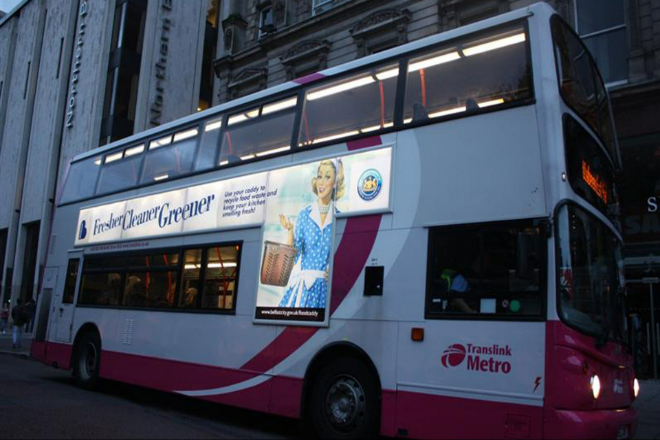
Buses are not fixed billboards. They move daily, traversing different road surfaces and potentially encountering heavy rain, high temperatures, and dust.
Donc, écrans LED extérieurs must have protective and structural designs suitable for the vehicle environment.
- Waterproof and dustproof capabilities cannot be ignored
Screens installed on the exterior of the bus will be directly exposed to rain and road dust.
When selecting products, pay attention to the protection rating and check the sealing design of the enclosure seams, connectors, power interfaces, etc.
Don’t just look at the protection rating labeled on the product; understand the overall protection capability of the entire unit under actual installation conditions.
The shock-resistant structure determines whether the equipment can withstand long-term vibration.
When vehicles drive over speed bumps and potholes, they generate continuous vibration and impact.
If the screen’s fixing structure is not secure enough, it may cause loose connections, module damage, or display abnormalities.
Therefore, it is necessary to select a structurally reliable enclosure and mounting accessories, and confirm that the entire installation plan has undergone appropriate vibration verification.
- Heat dissipation and temperature adaptability are also crucial
Direct sunlight in summer can raise the internal temperature of the screen, and long-term high-temperature operation will increase the burden on components.
Companies should pay attention to the product’s operating temperature range, heat dissipation structure.
And power supply configuration to ensure that the equipment can adapt to the environment of long-term vehicle operation.
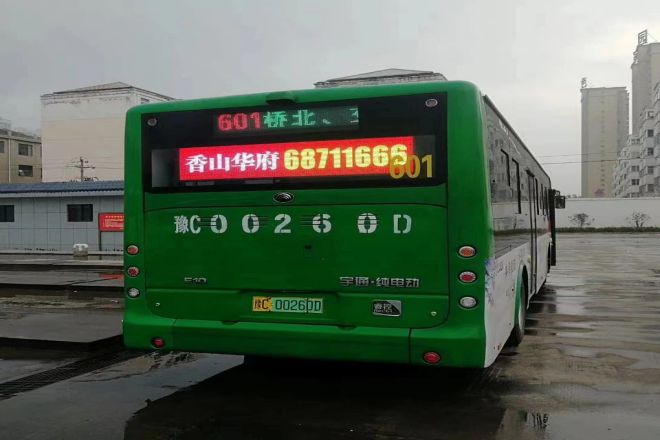
When selecting an affichage LED extérieur screen for a bus, it is not enough to only consider the screen itself; it must also be compatible with the vehicle’s structure.
- The screen size and installation location must be reasonable
Due to limited space on a bus, the screen size needs to be planned in conjunction with the bus body structure, advertising display area, and viewing angle.
A horizontally elongated screen is suitable for displaying brand slogans, product images, and dynamic promotional content, but the overall vehicle structure should not be compromised in pursuit of a larger display area.
- Weight and mounting methods require careful evaluation
The screen and its installation structure increase the vehicle’s load;
Therefore, the weight of the enclosure, bracket design, mounting points, and the vehicle’s load-bearing capacity should be comprehensively considered.
The installation plan also needs to consider maintenance space to avoid complex disassembly required for later maintenance.
- Road safety and regulatory requirements cannot be ignored
Different countries and cities may have different regulations regarding the installation location, luminosité, and dynamic content of bus body advertising and onboard electronic displays.
Before project implementation, companies should confirm local regulations and vehicle approval requirements to ensure that the screen does not obstruct windows.
Affect the driver’s view, or cause unnecessary visual interference to other road users.
A reasonable installation plan is not just about fixing the screen to the bus body, but also about ensuring a balance between vehicle safety, advertising display, and future maintenance.
For bus operators and outdoor advertising companies, purchasing Afficheurs LED is typically not a one-time equipment investment, but a long-term advertising operation project.
Therefore, in addition to hardware performance, content management and return on investment must also be considered.


 English
 Español
 简体中文
 Français
 日本語
 한국어
 العربية