
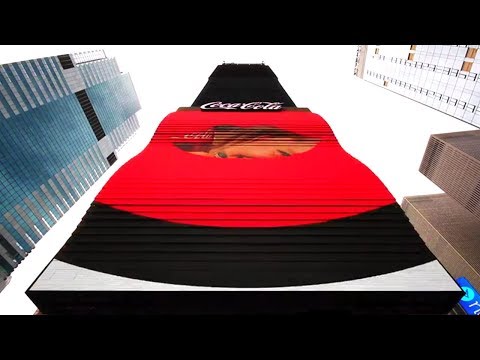
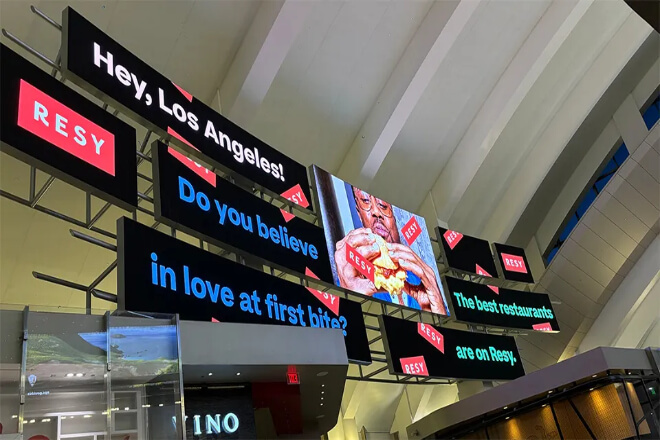
In today’s increasingly fragmented information landscape, for LED displays to be effective, the first step is not simply “explaining clearly,” but rather making people want to look.
Often, whether a user stops depends on the first few seconds.
First, the first 3 seconds often determine whether a user will continue to pay attention.
たとえ ショッピングモール, on the street, or at an event, most people simply “pass by” and won’t actively stop to study the content.
Therefore, the opening must be direct enough to let users know in a short time that “this screen is worth looking at.”
Second, use large images and strong visual elements to quickly attract attention.
High-contrast colors, dynamic images, and clear subjects are often more effective at grabbing attention than large amounts of text.
Just like in a crowd, the loudest voice isn’t necessarily remembered, but the “most eye-catching one” is usually the first to be seen.
At the same time, reducing the interference of complex information is also crucial. Many content failures are not due to insufficient information, but rather to too much information.
Focusing on a single core message that users can understand at a glance is more effective than cramming in all the content.
Finally, get users to “see” it first, then consider the dissemination effect. If it doesn’t attract attention at first glance, even the best content will be difficult to remember.
For LED displays, attracting attention is not an added value, but the starting point for communication.
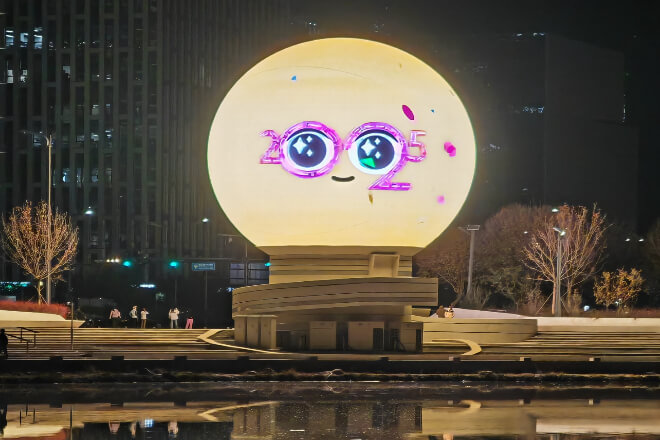
In LED display content design, sometimes it’s necessary to learn to “subtract.”
Because viewers aren’t there to read articles, but to “glance” at the content in a few seconds, the more focused the information, the more effective the communication.
First, each screen should convey only one key point. For example, if you want to promote a new product, focus on “new product launch.”
If you want to guide an event, directly tell users “event time and location.” Trying to say everything often results in saying nothing at all; it’s better to clearly convey one core message.
Second, the title and keywords must be direct enough. LED screens are not for writing essays; the more straightforward, the more effective.
For example, “limited-time offer” is usually easier to understand quickly than “we cordially invite you to participate in this promotional activity”—after all, passersby won’t stop to help you “read and understand.”
At the same time, reduce text to improve information reading efficiency. The screen is not a PowerPoint presentation, much less an instruction manual.
Shorten long sentences, turn paragraphs into keywords, allowing users to acquire information within seconds, rather than having to “search for the key points” in front of the screen.
Finally, the ideal state for LED content design is for users to “understand at a glance.”
For example, seeing “Tonight at 8 PM, the basketball final,” users immediately know the time and event; seeing “Scan the code to get a coupon.”
They also immediately know what to do next. The faster the understanding, the higher the likelihood of action.
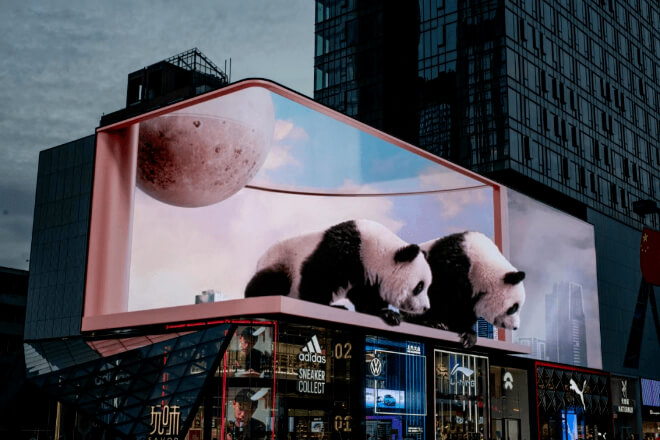
Compared to static images, dynamic content is naturally more likely to attract attention—after all, the human eye is always more sensitive to “moving things.”
Using dynamic content effectively will significantly enhance the “presence” of an LED display.
First, videos are generally more likely to make people linger than static images.
For example, a static poster might be glanced over quickly, but if it’s replaced with a dynamic product demonstration or short video of an event, the dwell time will often be longer.
Just like when shopping in a mall, people are more easily attracted to “moving shop windows.”
Secondly, the rhythm of animation can enhance visual impact. Reasonable transitions, visual changes, and dynamic effects can make content more layered, helping key information “jump out.”
For example, when a new product appears, a zoom-in animation is more memorable than a simple image.
At the same time, the speed of content switching needs to be well-controlled.
Switching too quickly means the user hasn’t even finished reading the content; switching too slowly easily leads to loss of interest.
The ideal state is for the viewer to “just understand it, yet be willing to continue watching the next item”—rhythm is crucial.
Finally, the overall viewing experience will be improved. Dynamic content not only makes the screen more attractive but also makes information delivery more natural and fluid.
Turning users from “seeing the screen” to “being willing to stop and look for a few more seconds.”
Many communication opportunities are often hidden in these extra seconds.
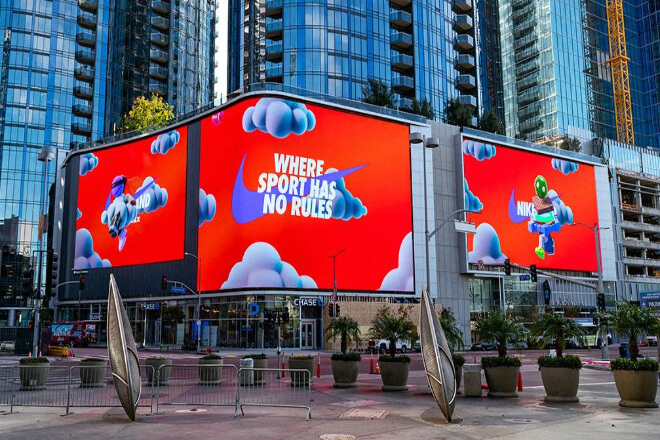
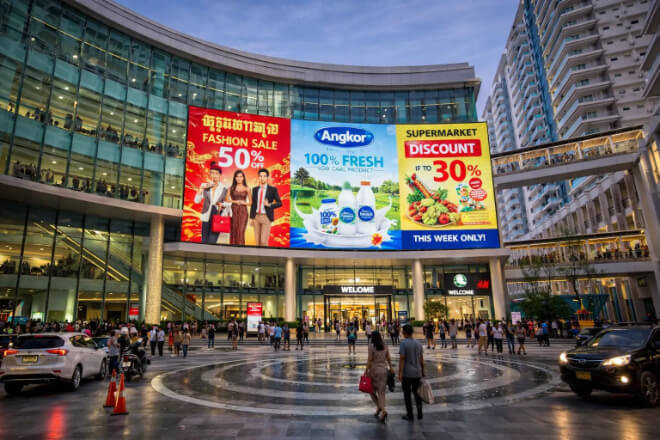
The same LED display screen, placed in different scenarios, actually requires completely different content logic.
Because user states and focuses differ, content design must naturally be “tailored to local conditions.”
初め、 ショッピングモール settings emphasize consumer guidance. Users are already browsing and intending to buy.
So the content focus is usually on new product recommendations, promotional information, or store traffic redirection.
For example, a simple “50% off for a limited time” is often more effective than a lengthy brand introduction because it directly triggers consumer interest.
Second, 屋外広告 emphasizes rapid recognition. Users’ dwell time on streets, intersections, and highways is very short, often only a few seconds.
Therefore, the content must be simple and eye-catching. Large headlines, large visuals, and minimal text are the basic logic of outdoor advertising—first get them to see it, then get them to remember it.
Meanwhile, event venues emphasize interaction and atmosphere. For example, at press conferences, 展示会、 と sporting events, LED screens are not only information carriers but also “atmosphere enhancers.”
Countdowns, audience shots, interactive comments, and dynamic visuals can make the event more engaging, transforming “watching the event” into “being immersed in it.”
Finally, different scenarios dictate different content logics. Shopping malls focus on “conversion,” outdoor advertising on “exposure,” and event venues on “experience.”
Copying the same content everywhere often diminishes its effectiveness; the truly effective approach is to adapt the content to the context, not the other way around.
In the past, many LED displays were simply “I broadcast, you watch”; but now, more and more brands are making their screens “chat.”
Transforming one-way communication into two-way interaction. Once users participate, the value of the content is amplified.
First, add features like QR code scanning, interactive elements, or real-time feedback. For example, displaying “Scan to enter a prize draw,” “Vote live,” or “Send comments to the wall” prompts users to take action beyond a glance.
This small interaction often keeps users engaged more than simply displaying information.
Second, actively guiding user participation is crucial. Many people aren’t unwilling to interact, but rather unsure how.
Therefore, a simple “Scan to get a coupon” or “Take a photo to win a gift” is often more effective than complex rules—the lower the barrier to entry, the higher the participation rate.
Simultaneously, transform users from “passive viewers” to “active participants.” For example, displaying user-uploaded photos in real-time on large screens in shopping malls.
Or having audiences vote on the next segment of an event, transforms users from “observers” into “participants,” making the content more memorable.
Finally, interaction itself creates more opportunities for dissemination. When users are willing to scan codes, take photos, share, or even actively publish content.
The influence of LED screens extends beyond the physical location to online, creating secondary dissemination.


 English
  Español
  简体中文
简体中文  Français
  日本語
日本語  한국어
한국어  العربية