
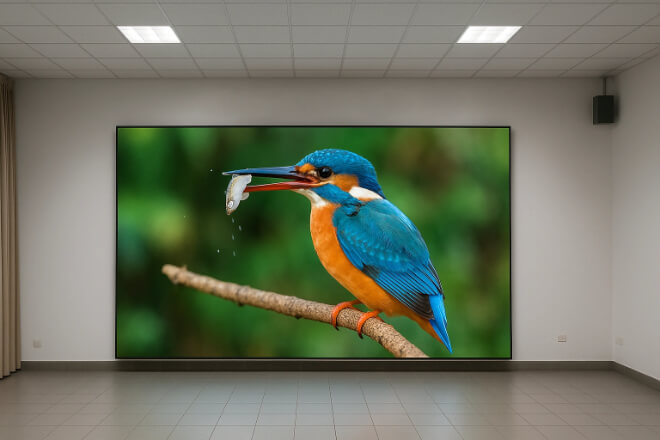
Por qué pantallas LED with smaller pixel pitches often command higher prices?
In some projects, even when the screen dimensions appear similar, the budget required for small-pitch products is significantly higher.
In reality, this is not simply due to the higher number of LED beads (pixels) on the screen; rather, it is the result of a combination of factors.
Including pixel density, manufacturing precision, packaging technology, and quality control.
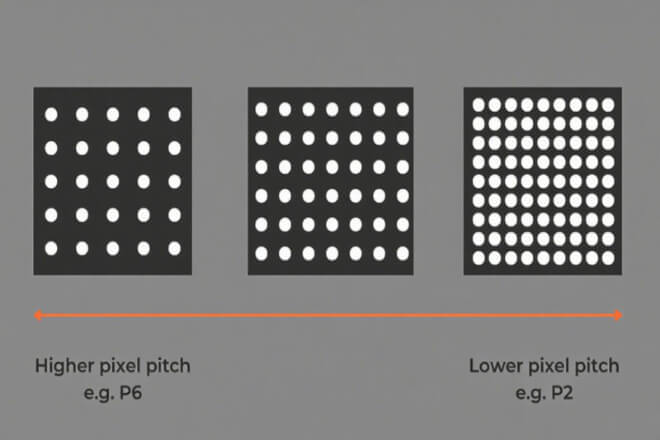
To understand the price of pantallas LED de paso pequeño, we must first talk about pixel pitch.
Tamaño de píxel refers to the distance between the centers of two adjacent pixels.
A smaller pitch allows for a greater number of pixels within a given unit area, resulting in a more detailed and refined image.
Think of an LED display as a mosaic. A standard-pitch display uses larger “mosaic tiles,” whereas a small-pitch LED display uses smaller tiles arranged much more densely.
For a display of a given size, smaller tiles naturally mean that a larger quantity is required.
For example.
Within the same surface area, a display with a 2mm pixel pitch will contain approximately four times as many pixels as one with a 4mm pixel pitch.
Because the number of pixels is inversely proportional to the square of the pixel pitch, halving the pitch leads to a substantial increase in the number of pixels per unit area.
An increase in the number of pixels necessitates more LED beads, driver channels, and associated circuitry.
Furthermore, as the LED beads are packed more densely, the manufacturing process demands greater precision in component positioning, soldering quality, and electrical connectivity.
This is analogous to laying floor tiles: when using large tiles, installers have ample room to work;
However, when using tiny, intricate mosaic tiles, the placement, spacing, and angle of each individual piece must be far more precise.
Therefore, small-pitch LED displays are usually more expensive, primarily because more components and manufacturing processes are required per unit area.
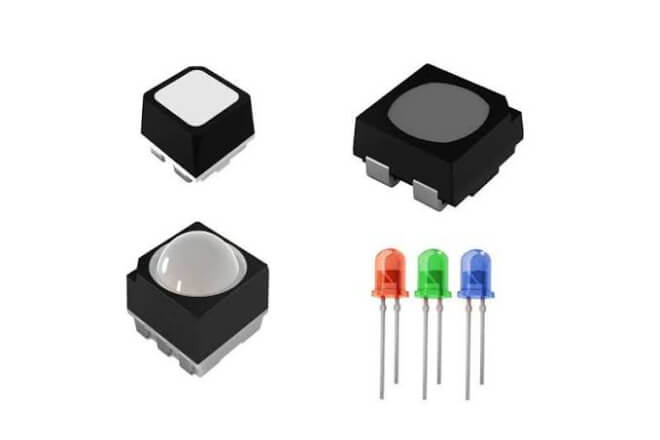
LED chips are the core component of LED displays, and small-pitch products have more stringent requirements for LED chip quality and packaging processes.
As pixel pitch decreases, the distance between individual LED components shrinks.
Any deviation in component size, positioning, or packaging quality can compromise the visual performance of the entire display.
For example, when viewing a small-pitch LED display in a conference room, the audience may be only a few meters away from the screen.
If a particular LED has low brillo, inconsistent color, or obvious color difference between modules, it will be easily noticed.
This is precisely why small-pitch LED displays require more rigorous production controls.
On the one hand, the LED components must exhibit high consistency in physical dimensions and optoelectronic performance.
On the other hand, the packaging process requires strict oversight of appearance, soldering, and overall reliability to minimize defects like “dead” (non-functional) pixels, poor solder joints, and other potential issues.
Different packaging technologies also influence product costs.
Approaches such as Surface Mount Device (SMD) technology or integrated packaging solutions each have distinct implications for equipment investment, production workflows, and quality control.
Actual costs depend on a combination of product design, packaging materials, manufacturing processes, and production scale;
Therefore, it cannot be assumed that any single packaging method is universally the most cost-effective.
For corporate procurement professionals, it is not enough to simply look at the packaging technology used;
One must also evaluate the consistency of the LED components, the rigor of reliability testing, and the stability of quality across different production batches.
After all, small-pitch LED displays aim for a delicate and uniform image. If the pixel density is increased without ensuring each pixel’s quality, the final visual result will likely fall short of expectations.
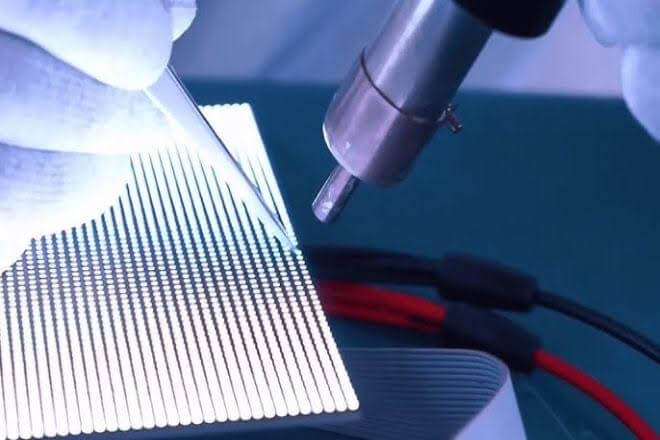
This is a factor many buyers overlook, but it has a significant impact on product pricing.
“Production yield” refers to the proportion of products in a given batch that meet quality standards and are suitable for delivery.
In the case of standard-pitch LED displays, a minor anomaly in a single pixel might go unnoticed by viewers watching from a distance.
Sin embargo, pantallas LED de paso pequeño are typically used in settings such as conference centers, command centers, television studios, and high-end showrooms.
Because viewers are often positioned relatively close to the screen, even minor imperfections become more apparent.
For instance, a large-scale display is composed of multiple individual modules. If a single module contains a few defective pixels, exhibits uneven brightness.
Or shows color deviations, the visual consistency of the entire screen can be compromised when viewed from close up.
To mitigate these issues, manufacturers must invest significantly more effort into quality inspection and screening—processes that include testing individual LED beads.
Evaluating modules, conducting burn-in (aging) tests, checking for defective pixels, and verifying the display performance of the fully assembled screen.
If a module fails to meet the required standards during production, it may need to be repaired, have its components replaced, or even be manufactured from scratch.
These additional efforts and resources are ultimately reflected in the product’s cost.
In addition, the production equipment and process control for small-pitch LED displays also require high precision.
As pixel density increases, the requirements for component placement accuracy, soldering quality, and module flatness become increasingly stringent.
Think of it like crafting a high-precision watch: the finer the components, the more complex the assembly process, and the more rigorous the inspection stages.
The final level of precision is not achieved by chance; it is the result of meticulous manufacturing and comprehensive quality control.
Therefore, small-pitch LED displays are more expensive, partly due to stricter production standards and quality costs.
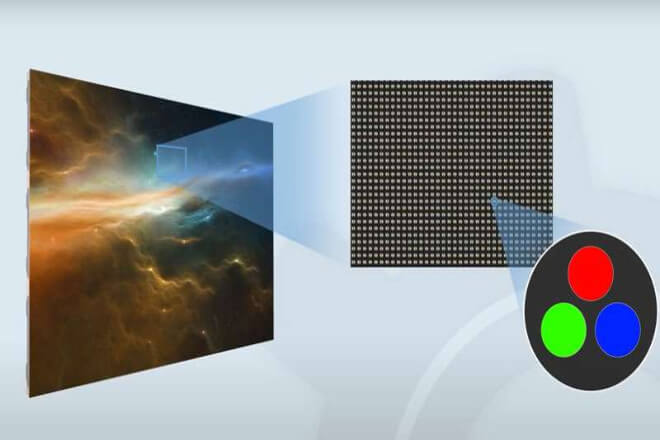
Beyond hardware costs, display control technology is another major factor influencing the price of small-pitch LED displays.
The high pixel density of these displays allows for richer detail, but it also means that the brightness and color of every single pixel must be controlled with extreme precision.
If you imagine the entire screen as an orchestra, each LED bead is a musician.
Even if every musician can produce a sound, the performance will lack harmony if their volume and rhythm are not perfectly synchronized.
The same principle applies to LED displays. Even if every LED bead functions correctly, any discrepancies in brillo or color can lead to issues such as uneven lighting across different areas of the screen or noticeable color shifts.
To address these issues, small-pitch LED displays typically require more sophisticated brightness and color calibration techniques.
Using specialized calibration equipment and software, the display performance of individual pixels or modules can be small-tuned, ensuring a more uniform visual experience across the entire screen.
Furthermore, the performance of the driver ICs (integrated circuits) significantly influences display quality.
Factors such as grayscale performance, frecuencia de actualización, low-brightness display capabilities, and image stability are all determined by the design and configuration of the driving system.
For instance, in environments like television studios or professional conference rooms, cameras may capture the LED display directly.
If the refresh rate is insufficient, issues such as screen flickering or visible scanning lines may occur.
Consequently, such projects often impose more rigorous requirements on the driving system and display control architecture.
These technological investments may not be immediately apparent from the screen’s appearance.
But they do affect the final image quality and user experience, and are a significant source of price differences in small-pitch LED displays.
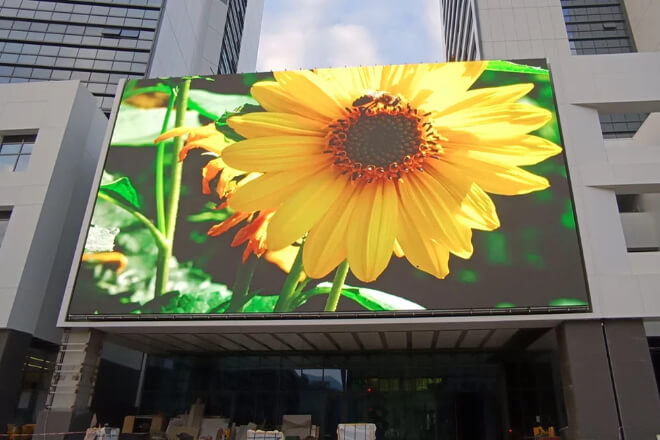
While small-pitch LED displays are expensive, this doesn’t mean they are the only option for every project.
Businesses should carefully consider whether the increased visual detail will deliver sufficient practical value for their specific needs.
If a project is intended for long-distance outdoor advertising—where the audience is positioned far from the screen—opting for a smaller pixel pitch may not yield a noticeable improvement in the viewing experience.
In such cases, products with a standard pixel pitch are likely sufficient.
However, if the project is used in high-end conference rooms, command centers, studios, medical imaging displays.
Or digital exhibición halls, where viewers may view a large amount of text, charts, and detailed images up close, the advantages of small-pitch LED displays will be more obvious.
When making a purchase, businesses should focus on the following aspects:
First, select the tamaño de píxel based on the intended distancia de visualización.
Do not simply pursue the smallest possible pitch; instead, determine the configuration based on actual viewing positions and content requirements.
Second, evaluate the display performance of the entire screen.
Beyond reviewing product specifications, conduct an on-site assessment of brillo uniformity, color consistency, low-grayscale performance, and image detail.
Third, examine the core components and calibration capabilities.
Components such as LED beads, driver chips, power supply units, and calibration systems all influence product performance;
Therefore, it is essential to verify the specific configuration and quality assurance measures during the procurement process.
Fourth, calculate the long-term cost of ownership.
Beyond the initial purchase price, consider factors such as power consumption, maintenance requirements, spare parts availability, and the equipment’s expected lifecycle.
For projects involving long-term operation, system stability and maintenance efficiency are equally critical.
Fifth, select a supplier with a proven track record.
Small-pitch LED displays have high requirements for manufacturing and installation precision.
The supplier’s production capacity, on-site debugging experience, and after-sales service will all affect the final delivery results.
The value of small-pitch LED displays lies not only in making the image look more detailed, but also in their ability to meet the project’s requirements for display accuracy, viewing distance, and long-term stability.
A higher procurement budget is only justified when these advantages genuinely align with the project’s needs.


 English
 Español
 简体中文
 Français
 日本語
 한국어
 العربية