
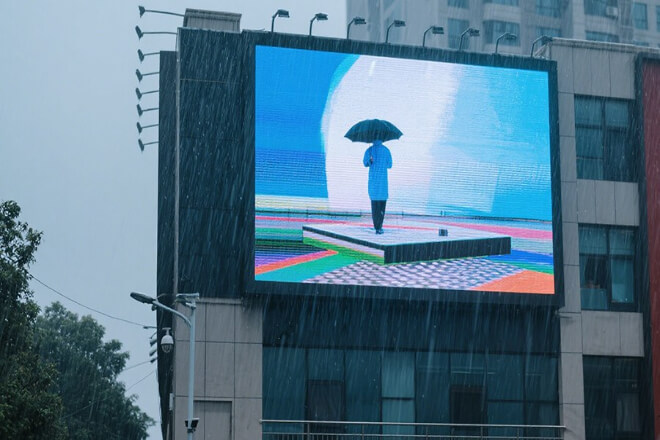
Once an LED display is purchased, the real test has only just begun. It may run for over a dozen hours a day, enduring high temperatures, dust, and voltage fluctuations across a wide range of operating environments.
Without proper maintenance, even a high-quality product can suffer from premature issues such as reduced brightness, color inconsistency, or localized component failure.
So, how can businesses extend the lifespan of their LED displays?
The key lies not just in repairing issues as they arise, but in establishing a systematic maintenance framework that covers daily operation, environmental management, and regular inspections.
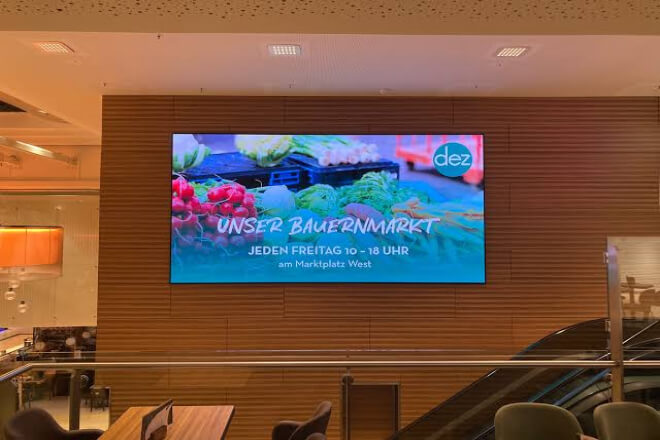
To extend an LED display’s lifespan, you must first understand the causes of aging.
After all, identifying the root cause ensures that maintenance goes beyond a simple “fix-it-when-it-breaks” approach.
An LED display consists of various components, including light-emitting chips, driver ICs, power supplies, control systems, and the cabinet structure.
If any part operates under suboptimal conditions for an extended period, the entire display’s stability can be compromised.
Temperature is a particularly critical factor. LED displays generate heat during operation;
If heat dissipation is inadequate, internal components may remain exposed to high temperatures for long periods.
This accelerates material degradation, negatively impacting both display quality and equipment reliability.
Furthermore, factors such as dust, moisture, voltage fluctuations, and improper usage can all affect the equipment to varying degrees.
For instance, outdoor LED displays must withstand direct sunlight, rain, and temperature fluctuations.
Indoor displays, while situated in relatively stable environments, may still encounter issues from proximity to air conditioning vents, poor ventilation, or long-term dust accumulation.
When purchasing an LED display, businesses should look beyond the initial price and visual performance;
They must select a product suited to the specific application environment.
The better the equipment selection aligns with the actual usage scenario, the easier subsequent maintenance tends to be.
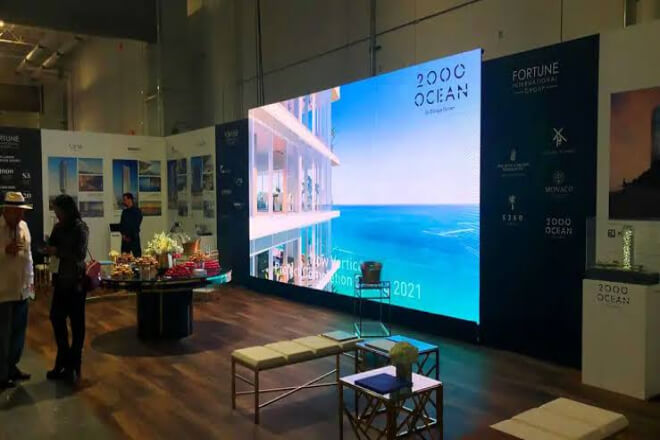
If there is one “invisible adversary” that demands special attention regarding LED displays, it is undoubtedly high temperature.
During operation, components such as LED beads, driver ICs, and power supplies all generate heat.
If this heat is not dissipated in a timely manner, the equipment’s internal temperature may continue to rise.
Over time, this can not only affect the operational status of the components but also increase the risk of malfunctions.
Enterprises can improve heat dissipation conditions by focusing on the following areas:
First, ensure proper ventilation in the installation environment.
Whether for fixed indoor installations or large outdoor displays, adequate space for heat dissipation must be reserved;
The back of the enclosure should not be completely blocked by walls, decorative panels, or other equipment.
Second, regularly inspect cooling fans and ventilation vents.
For LED displays equipped with active cooling systems, dust around the fans should be cleared promptly, and the fans should be checked to ensure they are operating correctly.
Do not wait until the equipment exhibits abnormal temperatures before checking the cooling system.
Additionally, enterprises should adjust the operating brightness appropriately based on the operating environment.
Higher brightness does not necessarily equate to better display quality. In indoor environments, in particular, excessive brightness can cause visual discomfort and increase the equipment’s operational load.
For outdoor LED displays, brightness should be adjusted in response to changes in ambient light.
This ensures image clarity while preventing unnecessary, long-term high-load operation.
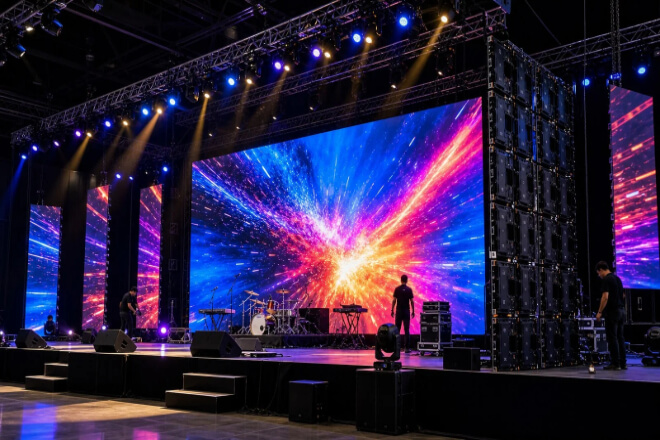
LED displays require a stable power supply. The power system acts as the equipment’s “energy supply station”; if it is unstable, even the best display modules may fail to perform as intended.
Voltage fluctuations, poor electrical contact, or insufficient power capacity can cause the display to flicker, go black, or show localized anomalies.
In severe cases, this can damage the power supply unit or other electronic components.
To mitigate these risks, enterprises should carry out several fundamental measures.
First, ensure that the power supply system meets the equipment’s requirements.
During installation, carefully plan power supply circuits based on the LED display’s power rating, operating mode, and actual load.
Avoid sharing power circuits among multiple high-power devices if the circuit isn’t designed to handle the combined load.
Second, regularly inspect power supply units and wiring connections.
Watch for loose terminals, aging cables, or abnormal heat at connection points.
For large-scale display projects, it is also advisable to establish distinct power supply zones to facilitate future inspections and troubleshooting.
Third, install appropriate power protection equipment—such as surge protection devices or voltage stabilizers—wherever necessary.
This is especially critical for installations that operate continuously, such as outdoor advertising screens or traffic information displays, where risks from lightning strikes, power surges, and unstable power supply are higher.
The inspection and maintenance of power supply systems must be performed by qualified professionals.
Do not risk significant equipment damage from improper handling just to save on maintenance costs.
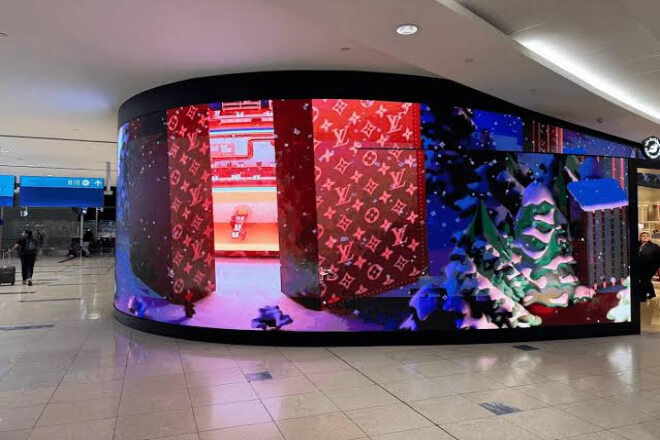
While dust may seem insignificant, it can become a major source of trouble for LED displays during long-term operation.
Dust accumulation in vents, cooling fans, or inside the cabinet can obstruct airflow and reduce heat dissipation efficiency.
In humid environments, dust can combine with moisture, increasing the risk of circuit boards becoming damp or contaminated.
Therefore, regular cleaning is essential for extending the lifespan of an LED display.
However, cleaning involves more than just wiping surfaces with a damp cloth.
For LED display modules, use cleaning tools specifically designed for the equipment’s surface;
Avoid corrosive liquids, and never use high-pressure water jets directly on electronic components.
Before cleaning, ensure the power is disconnected according to the manufacturer’s specifications.
Any components requiring disassembly should be handled by a professional.
In addition to cleaning, businesses should establish a routine inspection schedule. Key areas to check include:
Display quality: Look for dead pixels, dim or uneven brightness, flickering, color discrepancies, or localized blackouts.
Structural integrity: Ensure that cabinets, mounting brackets, and connecting hardware are secure.
Heat dissipation system: Verify that fans, vents, and cooling components are functioning correctly.
Electrical system: Check power supplies, cables, and connectors for any irregularities.
Sistema de control: Confirm that signal transmission, playback equipment, and control software are operating stably.
It is recommended that businesses maintain equipment maintenance records, documenting the date of each inspection, any issues discovered, repairs performed, and parts replaced.
This not only facilitates tracking equipment status but also helps management identify recurring issues, enabling proactive maintenance scheduling.
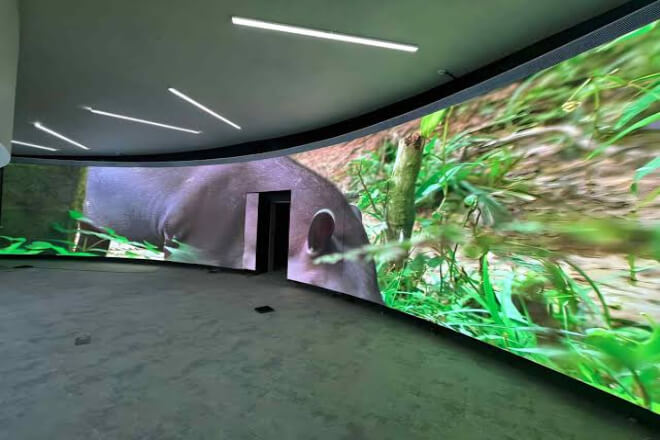
Maintenance priorities vary by LED display type. Applying the same maintenance strategy to both indoor mall displays and outdoor advertising screens is clearly impractical.
For instance, outdoor LED displays are constantly exposed to sunlight, rain, and dust;
Therefore, maintenance should focus on waterproofing and seals, cabinet structural integrity, ventilation and heat dissipation, and electrical connections.
Inspect equipment status promptly, especially after typhoons, heavy rainstorms, or periods of extreme heat.
While indoor LED displays are not directly exposed to the elements, equipment in conference rooms, exhibition halls, and retail spaces often operates for extended periods.
Consequently, attention should be paid to dust accumulation, brightness settings, ventilation conditions, and display uniformity.
Rental LED displays require different maintenance priorities. Because this equipment undergoes frequent assembly, disassembly.
And transport, checks should focus on cabinet locks, connectors, module interfaces, and structural components to prevent damage caused by improper handling or installation.
Organizations can establish a tiered maintenance plan tailored to the specific characteristics of each project:
Daily checks: Monitor the display image, operational status, and any error alerts.
Periodic inspections: Clean ventilation components and inspect wiring connections and structural integrity.
Scheduled maintenance: Have professionals examine internal components, power supply systems, and control systems to proactively address potential issues.
Organizations should also prioritize training for maintenance personnel. Standardized power-on/power-off procedures, correct cleaning methods.
And proper troubleshooting protocols help minimize equipment wear and damage caused by human error.
From a business perspective, extending the lifespan of an LED display goes beyond simply avoiding the need to replace a few modules.
It also means reducing downtime, lowering repair frequency, and ensuring the continuity of advertising broadcasts and information displays.
Rather than incurring a large repair bill after a major equipment failure, it is far better to allocate the budget toward routine, ongoing maintenance.


 English
 Español
 简体中文
 Français
 日本語
 한국어
 العربية