

When companies decide to invest in an LED 디스플레이 screen, they almost always ask the same question: Is this an expense or an investment?
Some see it as an expensive display device, while others use it to attract customers, generate advertising revenue, and even enhance brand value.
The same screen, used in different ways, often leads to completely different results.
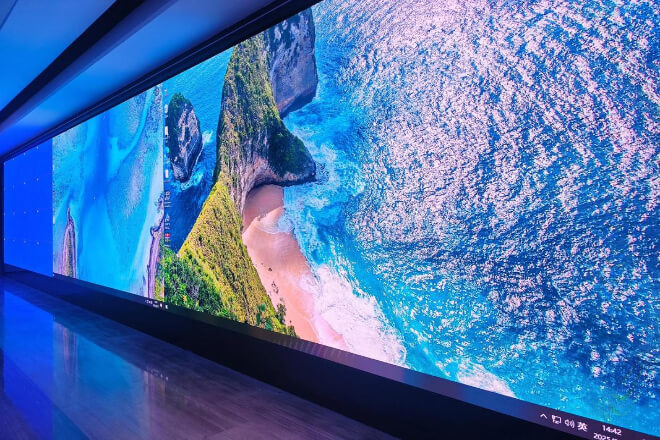
Many companies easily fall into a misconception when purchasing LED displays: treating the screen as a larger television, only responsible for playing content.
In this case, the LED 디스플레이 screen is essentially an investment, not a source of revenue.
First, it incurs one-time purchase, installation, and subsequent maintenance costs.
From screen procurement and structural construction to control system deployment and subsequent maintenance, continuous investment is required. For companies, these costs are real operating costs.
For example, if an LED screen only plays a loop of company promotional videos every day.
Then it is not fundamentally different from the background decoration in a lobby; its value mainly lies in image display.
Second, if it only serves the function of information display, its value is relatively limited.
In many scenarios, large LED screens are merely used as bulletin boards, billboards, or background walls.
The content is fixed, updated infrequently, and viewers rarely maintain their attention after a single viewing.
Simply put: the screen is working, but its value isn’t fully realized.
Furthermore, it’s difficult to directly generate revenue, and the return on investment is unclear.
Without advertising operations, interactive marketing, data applications, or business partnerships.
The role of large LED screens often remains at the “information display” stage. Businesses can sense its presence but struggle to quantify the revenue it generates.
To put it more interestingly: buying an LED screen but only using it to loop the same video is like buying a sports car but only letting it idle in the parking lot every day.
It’s running, but far from realizing its true value.
Finally, from a financial perspective, these LED screens are typically classified as fixed asset investments.
Serving brand display and basic information dissemination functions, thus resembling a traditional cost center.
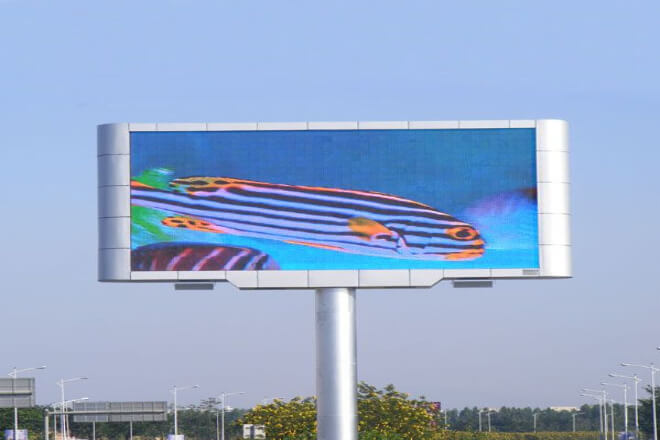
The biggest value shift for LED displays often occurs at a crucial turning point—when it no longer just plays content but begins to manage traffic.
At this point, the role of LED screens transforms from a “cost center” to a “revenue center.”
First, revenue is directly generated through the sale of advertising slots and display resources.
안 LED 스크린 located in a 쇼핑몰 atrium, 경기장, commercial building lobby, or outdoor plaza inherently possesses considerable exposure value.
Businesses can sell display resources at different times and locations to brands for new product promotions, event advertising, or brand advertising.
For example, a large screen in a shopping mall atrium incurs costs if it only plays mall promotional videos.
However, if multiple brands purchase advertising slots for rotating displays daily, it begins to generate continuous revenue.
Second, it increases the operational revenue of venues, shopping malls, or commercial buildings. For operators, LED screens are not just display devices but also “digital advertising spaces.”
For example, Shopping malls can provide advertising exposure services to tenants; stadiums can sell event advertising resources.
Commercial buildings can provide brand display spaces; 공항 and high-speed rail stations can conduct media advertising operations.
Simply put: previously, revenue came from renting out space; now, even “space on the screen” can create value.
Simultaneously, it achieves long-term operational returns and improves asset utilization.
While the procurement cost of LED screens is relatively high, advertising resources can be sold continuously over the long term.
As foot traffic increases and media value rises, the advertising space itself will continuously appreciate in value.
To put it interestingly, if you consider an LED screen as a digital shop, then every minute and every area on the screen can actually be rented out.
The screen earns money during the day and at night; it earns money during events and at other times.
Finally, for operators, advertising operations can also bring more business cooperation opportunities.
Brand collaborations, event sponsorships, content marketing, etc., can all revolve around LED screens, further expanding commercial value.
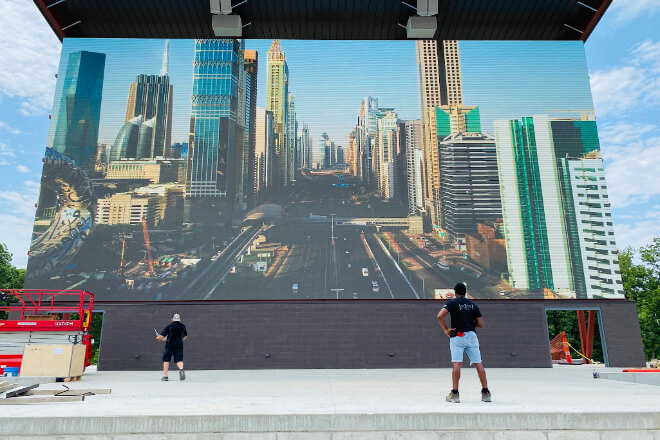
을 위한 쇼핑몰, stores, showrooms, or commercial complexes, the value of LED displays lies not only in displaying content.
But also in converting attention into foot traffic and foot traffic into consumption opportunities.
When a screen can continuously attract people to stop and look, its role is no longer a simple display device but a highly efficient marketing tool.
First, dynamic content can attract more attention, becoming a natural “traffic portal.” Compared to static posters, videos, animations, and naked-eye 3D content, interactive visuals are more likely to capture customers’ attention.
Especially in shopping mall entrances, atriums, or brand store window areas, a high-quality LED screen can often become the most eye-catching element in the entire space.
For example, a customer who was initially just passing by might be drawn in by a new product launch animation on a large screen and stop to watch. This pause often marks the beginning of a potential purchase.
Secondly, it increases store traffic, converting attention into actual foot traffic.
LED screens not only display products but also broadcast real-time promotions, new product information, and limited-time offers.
Once customers are interested, they are more likely to enter the store to learn more.
Simply put, the task of an LED screen is not to directly sell goods, but to first “invite” customers in.
At the same time, it extends dwell time, creating more sales opportunities. Interactive activities, creative visual content, and brand story displays can all increase the length of time customers stay in the space.
And there’s a classic saying in business operations: the longer the dwell time, the more sales opportunities.
To put it more interestingly: a customer who initially intended to just walk through the mall to buy a coffee stopped to take photos after being drawn in by the large screen.
Then participated in interactive activities, and eventually browsed several stores before leaving.
What started as a 5-minute stop turned into a 1-hour shopping experience.
Ultimately, this indirectly boosts sales and improves overall business performance.
While the LED screen itself doesn’t directly complete a transaction, it continuously influences the customer’s decision-making process.
From attracting attention and sparking interest to guiding customers into stores and encouraging them to linger, each step creates conditions for a final sale.
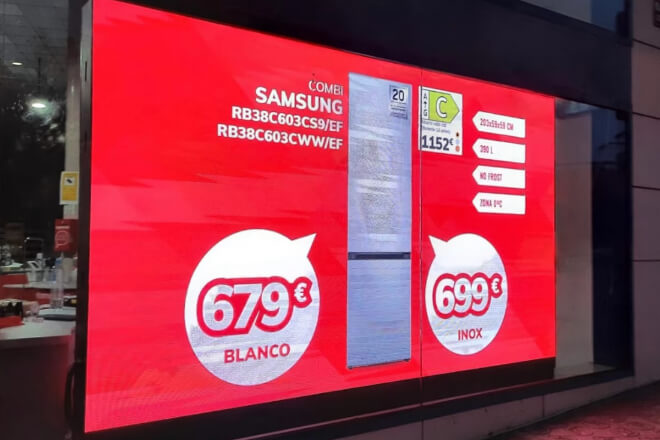
Many companies, when evaluating the value of LED displays, tend to first calculate procurement costs and advertising revenue.
However, there is another value that is often more enduring and easily overlooked—brand value.
When an LED 디스플레이 continuously serves a company’s image, spatial experience, and brand awareness, it is no longer just equipment, but a long-term brand asset.
First, it strengthens the company’s image and the perceived quality of the space, enhancing the first impression.
Whether it’s a corporate headquarters lobby, showroom, 쇼핑몰 atrium, or commercial building entrance, a high-quality LED display can significantly enhance the spatial quality.
When customers, partners, or visitors enter a venue, they often form a first impression within seconds.
For example, consider two corporate lobbies: one with a plain background wall, and the other with a dynamic LED screen showcasing the company’s achievements, brand story, and innovative strengths.
The latter is more likely to convey the company’s professionalism and capabilities to visitors.
Secondly, it enhances customer trust and brand awareness. Brand building is essentially a long-term, cumulative process.
LED screens can continuously project corporate culture, success stories, product advantages, and brand philosophy, allowing customers to gradually build awareness through repeated exposure.
Simply put, a customer might not make a purchase immediately after seeing the screen content once, but they will be more willing to choose you due to the long-term brand impression.
Simultaneously, it creates value that is difficult to quantify but continuously exists.
Advertising revenue can be directly calculated, and foot traffic growth can be statistically analyzed.
But brand influence, professional image, and market recognition are often difficult to measure precisely with numbers.
However, these intangible values often manifest themselves in future collaborations, sales, and market competition.
To put it more interestingly, brand building is a bit like planting a tree. Planting a tree today won’t make it a towering giant tomorrow, but with continued nurturing, it will generate value for many years to come.
The same applies to LED displays. They convey brand information, shape spatial image, and influence customer perception daily. While the effects may not be immediately apparent, the impact accumulates steadily.
Finally, for many high-end commercial spaces, LED displays have become an integral part of the brand image.
They represent not just technology and equipment, but also a company’s expression of innovation, quality, and professionalism.

Many people view LED 디스플레이 as an equipment investment, but truly excellent operators discover that the value of an LED screen is never determined by the screen itself, but by the operational approach.
When LED displays are deeply integrated into the business operation system, they are no longer just display equipment.
Advertising space, or marketing tools, but a continuously value-creating “money-making machine.”
Firstly, advertising, events, and interactive marketing can be carried out simultaneously, achieving multiple uses for a single screen.
A single LED screen can simultaneously fulfill multiple roles:
Brand advertising display platform
Shopping mall event promotion window
Interactive marketing participation entry point
New product launch and display stage
Media platform for events or performances
For example: playing brand advertisements in the morning; promoting shopping mall sales activities in the afternoon.
and hosting interactive lucky draws and live broadcasts in the evening. The same screen creates different values at different times.
Secondly, it continuously generates exposure and business opportunities, constantly monetizing traffic.
The biggest advantage of LED screens lies in their stable opportunities for customer contact.
As long as someone passes by, there is exposure; as long as there is exposure, there is a marketing opportunity.
as long as there is a marketing opportunity, there is the potential for commercial conversion.
Simply put: LED screens display content, but what they are actually managing is attention.
At the same time, it creates a synergistic effect between advertising value, customer traffic value, and brand value.
Advertisers gain exposure; merchants gain customer traffic; customers gain interactive experiences.
and operators gain revenue growth. Previously independent business links are connected through the LED platform.
To put it more interestingly: if you think of a commercial complex as a large business ecosystem.
then LED displays are like its most diligent employees—promoting brands during the day, attracting customers for merchants in the afternoon, creating atmosphere for events in the evening, and even serving as popular photo spots on holidays.
They work almost year-round.
Ultimately, maximizing return on investment (ROI) transforms the equipment from a cost into an asset.
When advertising operations, brand promotion, event marketing, and interactive experiences are all functioning simultaneously, the value generated by an LED screen often far exceeds its purchase cost.
At this point, businesses are no longer focused on: “How much does this screen cost?” but rather: “How much commercial value can this screen generate in a year?”

 English
  Español
  简体中文
简体中文  Français
  日本語
日本語  한국어
한국어  العربية