

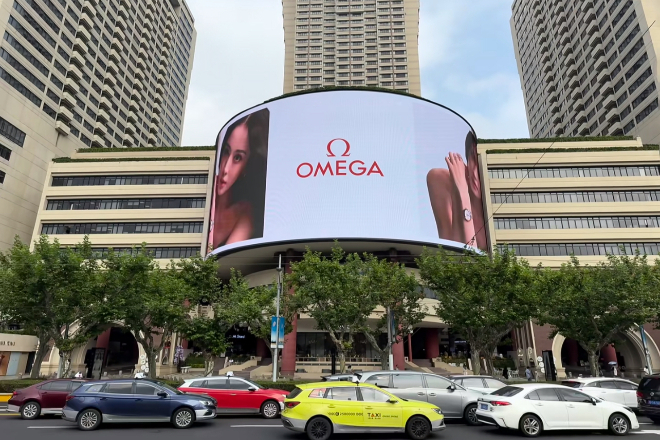
In commercial streets, 쇼핑몰, or stores, customers’ attention spans are actually quite short.
Often, a passerby might decide within seconds whether to continue walking or stop to look around.
In this situation, the effect of a regular sign and a dynamic LED display screen can be completely different.
Compared to fixed posters and light boxes, LED displays can create stronger visual appeal through videos, animations, and dynamic visuals, making the space more impactful.
For example, large screens at shopping mall entrances can quickly change content based on holidays and events.
Christmas displays holiday-themed images, promotional information during sales periods, and real-time displays of event content during brand events, allowing consumers to feel the atmosphere as soon as they enter the space.
For retail stores, LED 디스플레이 can also become the “first thing” to attract passersby.
Clothing stores can play videos showcasing new product styling, allowing customers to preview the season’s trends;
Restaurants can demonstrate the preparation process of signature dishes, generating interest even before customers enter the store;
Brand showrooms can use dynamic images to display product features, enhancing their professionalism.
Beyond attracting attention, LED displays can also help commercial spaces create their own unique character.
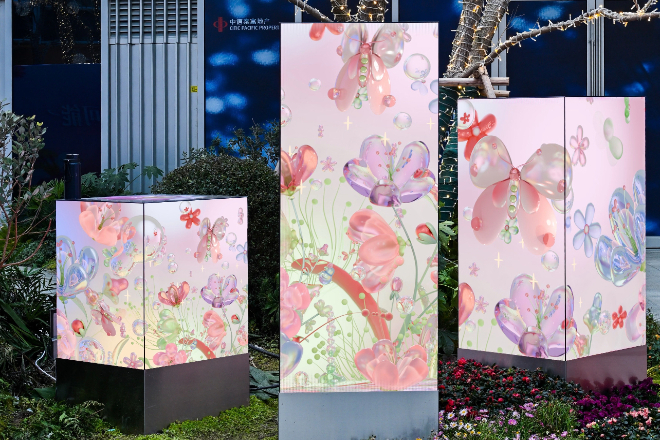
For example, some shopping malls use large LED screens in their atriums to create digital art scenes, encouraging consumers to stop, take photos, and share them.
What was once just a place to pass by becomes a space that can generate interaction and memory.
For business operators, the value of LED displays is not just “making the screen bigger,” but making the space easier to see and remember.
When consumers are willing to stop, more foot traffic and business opportunities are possible.
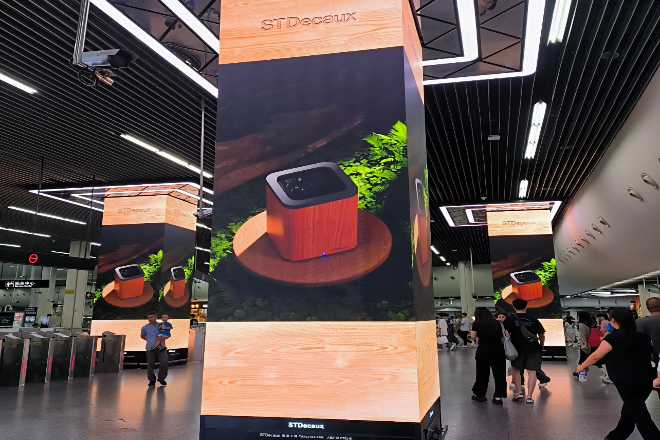
Many brands advertise, but what truly makes consumers remember is often not a slogan, but a moment that resonates with them.
Previously, brand displays relied more on posters, light boxes, and text descriptions. These can convey information, but they are difficult to evoke emotion.
The addition of LED displays allows brands to establish a more direct connection with consumers through visuals, sound, and storytelling.
For example, a car brand in its showroom can do more than just display a car; it can use a 대형 LED 스크린 to play images of the vehicle driving in city streets, mountain roads, or futuristic scenarios, allowing consumers to experience the lifestyle the car represents.
A clothing brand can also showcase its new collection through dynamic videos, showing customers not just clothes, but the entire brand style.
In new product promotions and marketing campaigns, LED displays also allow for more flexible content dissemination.
During new product launches, product highlights and usage scenarios can be displayed; during holiday promotions, event information can be quickly switched;
And during offline events, interactive content can be displayed in sync with the event’s pace, allowing consumers to participate in the brand’s atmosphere rather than just “seeing an advertisement.”
Compared to traditional static advertising, the biggest advantage of LED displays is that they don’t rely on a single image for everything.
Today it can tell a brand story, tomorrow it can showcase new products, and next week it can switch event themes.
The same screen can be continuously adjusted according to different marketing objectives, enriching the brand’s expression.
Many high-end brand stores and experience centers utilize LED screens to create unique visual styles, allowing consumers to experience the brand’s intended message from the very first second they enter the space.
For brands, LED displays are not just about amplifying promotional content, but about moving from simply being “seen” to being “felt.”
When the visuals tell a story, marketing transcends mere exposure, becoming a lasting memory.
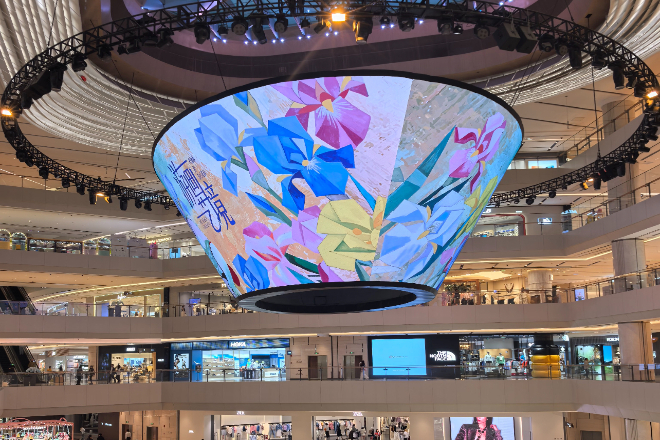
Now, when 쇼핑몰, consumers want more than just “buy and go.”
More and more people desire additional experiences during their shopping, such as a memorable scene to linger in, a space to take photos and share, or a memorable brand interaction.
This is why more and more commercial spaces are utilizing LED displays to make the entire shopping environment more vibrant.
The biggest feature of LED displays is their ability to instantly “change the feel” of a space.
For example, during the Spring Festival, the large screen in the mall atrium can transform into a digital scene filled with festive atmosphere;
During the Christmas season, it can display snow scenes and light effects; and when hosting new product launches or brand events.
It can quickly switch themes, ensuring a fresh experience for consumers every time they visit the mall.
Beyond creating ambiance, LED displays can also make ordinary areas more attractive.
For example, a shopping mall atrium, previously just a place for customers to pass through, can be transformed with the addition of large LED screens.
These screens can play artistic animations, interactive content, or brand showcases, attracting consumers to stop, take photos, watch, and even share on social media.
For retail stores, LED screens can also enhance the shopping experience.
For instance, beauty stores can demonstrate product effects, sports brands can play sports scenes.
And electronics stores can use dynamic videos to showcase product features, allowing customers to understand the products more intuitively before purchasing.
Often, consumers remember a store not because of what they bought, but because of their experience there.
For commercial spaces, LED displays are not just about decorating the environment, but about creating experiences.
A dynamic, interactive, and atmospheric space is more likely to encourage customers to linger and leave a lasting brand impression.
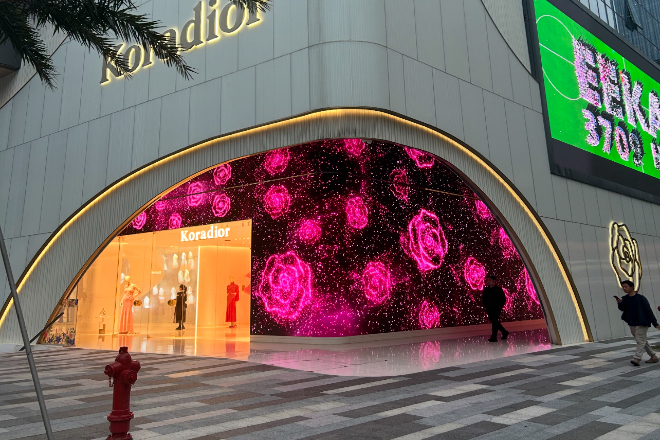
을 위한 쇼핑몰 and stores, the value of an LED display has long surpassed simply “making the space look better.”
In an increasingly competitive business environment, operators are more concerned with: Can this space create even more value?
A key advantage of LED displays is their ability to transform ordinary walls, entrances, or atrium areas into continuously operating digital display resources.
For example, large LED screens at shopping mall entrances can showcase mall events and provide advertising opportunities for resident brands.
New product launches, holiday promotions, and brand pop-up events can all gain greater exposure through large screens, making the screen itself an integral part of commercial promotion.
For mall operators, LED 스크린 also support joint marketing among merchants.
For instance, restaurant brands can display promotional information in public areas when launching anniversary events;
Clothing brands can attract customers in advance by using the mall’s large screens when holding new product launches.
Different brands expanding their influence through the same digital display platform can also enhance the overall activity of the commercial space.
Compared to traditional advertising spaces, LED displays offer greater flexibility.
The same location can display mall announcements in the morning, promote brand events in the afternoon, and play themed content in the evening.
Content can be continuously adjusted based on customer traffic, time, and marketing plans, making full use of space resources.
Some large commercial projects even use LED screens as a new source of revenue, increasing additional income through advertising partnerships and brand displays.
For shopping malls and stores, LED displays are more than just display tools; they’re valuable “digital assets.”
They attract consumers and help brands and operators create more business opportunities.
Many commercial projects consider this question when installing LED displays: They’re attractive at first, but will they maintain their effectiveness after a few years?
In fact, the true value of an LED screen lies not only in the visual impact on the day of installation, but also in its long-term integration into the space’s operation.
Unlike traditional posters and light boxes, the biggest feature of LED 디스플레이 is that “the content can constantly change.”
Today it can showcase new product promotions, tomorrow it can coordinate with holiday activities, and on weekends it can switch to information about on-site events.
As the commercial environment changes, the screen content can also change accordingly, maintaining the space’s freshness without frequent material replacements.
For example, shopping malls can plan their content rhythm throughout the year in advance: creating festive visuals for the Spring Festival, launching cool scenes in summer.
Displaying brand promotions during shopping festivals, and creating an atmosphere for large-scale events at the end of the year.
One screen can accompany a commercial project through different marketing stages.
The same applies to brand stores.
When a new store opens, LED screens can help attract passersby; when new products are launched, they can play product videos;
And in daily operations, they can showcase brand stories and member activities, ensuring the screens continue to function rather than becoming “bustling during opening and then idle.”
When combined with an intelligent management system, operators can adjust content based on changes in customer traffic.
For example, when there are more customers in the mall in the afternoon, brand promotion content can be strengthened;
When there are more young consumers in the evening, visual content more in line with the interests of the younger generation can be played, making marketing more precise.
For offline businesses, LED displays are not a one-time decorative investment, but a long-term operational tool.
Its greatest appeal is that it doesn’t remain static but can be continuously updated as brands, consumers, and the market change.


 English
  Español
  简体中文
简体中文  Français
  日本語
日本語  한국어
한국어  العربية