
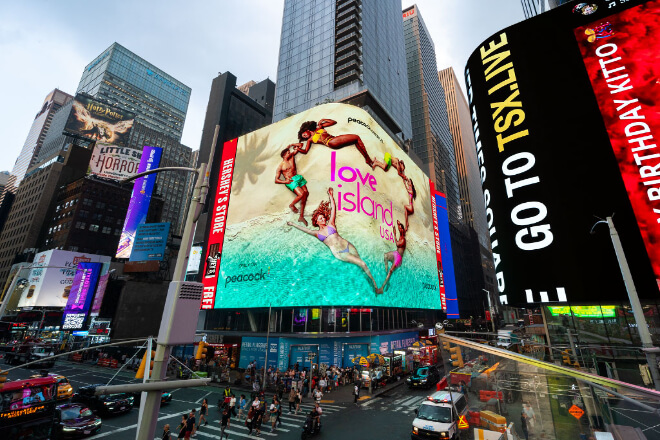
Have you noticed that after the renovation of many old neighborhoods, what first attracts people is often not the buildings, but the transformation of the entire space?
It’s more vibrant during the day, has a better atmosphere at night, and passersby are more willing to stop and take a look.
In this process, LED 디스플레이 have gradually become a standard feature in many urban renewal projects, adding content and vitality to what were once static spaces.
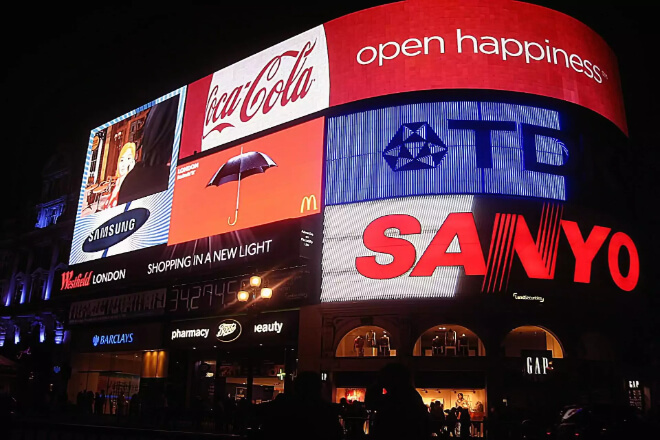
The vitality of a city is often not measured by the height of its buildings, but by whether people are willing to stop and linger in its public spaces.
The role of LED displays is to make ordinary squares, streets, and commercial spaces more attractive and distinctive.
First, they can transform ordinary spaces into visual landmarks in the city. A well-designed, creative LED screen is often more memorable than a regular billboard.
For example, many city squares incorporate dynamic visuals with local characteristics, naturally prompting tourists to stop, take photos, and gradually become familiar with urban photo spots.
Simply put: it’s not just about adding an LED screen, but about adding a place where people are willing to linger.
Secondly, it enhances the atmosphere of squares, streets, and commercial spaces.
LED displays not only display content but also change images based on holidays, events, or different times of day, giving the same place a little variation every day.
For example, walking through a commercial street at night, you can see holiday-themed animations, city promotional videos, and short art films playing in rotation, making the entire street more vibrant, rather than just a row of shop signs.
Finally, it enhances the modernity of the city and the attractiveness of public spaces. A public space with content, interactivity, and change is more likely to make citizens want to linger and attract tourists.
For example, when events are held in the square on weekends, the large screen can simultaneously display live footage, event information, and interactive content, making the atmosphere more lively and attracting more people.
To put it figuratively: before, people would just pass by this place; now, they are more willing to stop and take a look.
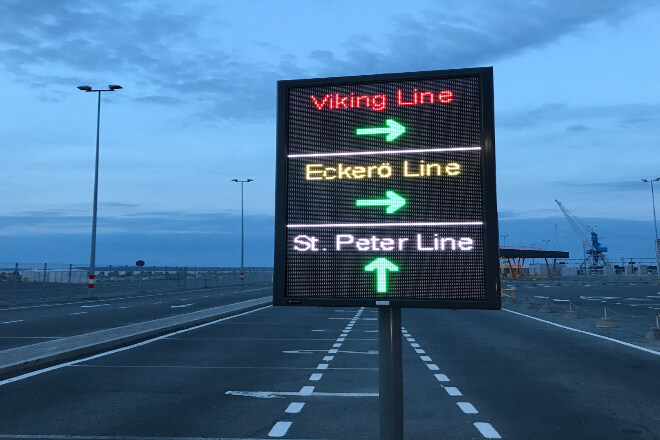
Many people think that LED 스크린 are just for displaying advertisements, but in the city, their more important role is as a public information window.
Fast and clear information dissemination is more practical for citizens than anything else.
First, government announcements and convenient information can be conveyed to citizens immediately.
Information such as holiday notices, public service announcements, and community events can be promptly disseminated through LED screens.
Eliminating the need for dedicated searches and allowing users to easily access information along their route.
For example, when passing through a public square, looking up reveals recent community events, vaccination schedules, or cultural performances, making information access more convenient.
Secondly, real-time weather and traffic information make travel easier. LED screens can update weather forecasts, road congestion conditions.
And public transportation information in real time, helping people adjust their travel plans accordingly.
For instance, if you see traffic congestion on your way home from work, the large screen can suggest alternative routes, saving many people time.
Simply put: information doesn’t wait for you to search for it; it comes to you proactively.
Finally, LED screens are one of the fastest information dissemination channels in case of emergencies.
Whether it’s severe weather, traffic control, or emergency notices, they can be simultaneously pushed to multiple locations, ensuring more people see them immediately.
For example, during heavy rain, the large screens can promptly alert users to flooded areas and provide safety warnings, providing more direct coverage than broadcasts or online notifications alone.
To put it simply, normally it’s the city’s “information bulletin board,” and in crucial moments, it becomes the “fastest reminder.”
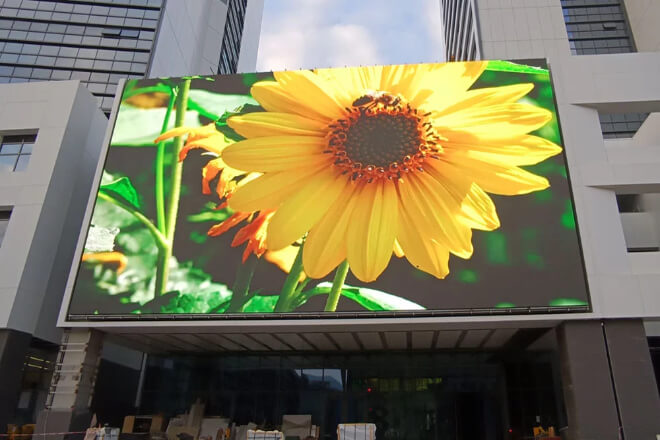
The vibrancy of a commercial street often isn’t determined by the number of shops, but by its ability to keep passersby engaged. The biggest advantage of LED displays is turning “passing by” into “taking a stroll.”
First, they attract more people into the commercial district. Dynamic visuals are more eye-catching than static signs, especially at night; a creatively designed large screen can easily become a focal point.
For example, while strolling, many people might stop to look at a large screen playing 육안 3D or holiday-themed animations, and then venture into the area.
Second, brand activities and promotional information can be delivered to consumers instantly.
New product launches, limited-time discounts, and mall events can all be dynamically displayed on LED screens, making them more eye-catching and attracting more attention than traditional posters.
For example, if a mall is hosting a food festival, the large screen can display the event details in real time, and many people will follow the directions to check it out.
Simply put: it’s not about waiting for customers to find activities, but about activities proactively attracting customers.
Finally, the atmosphere at night also stimulates consumer desire. The combination of lighting, visuals, and the street environment makes the entire street more vibrant, encouraging people to linger, and naturally making the commercial district more lively.
For example, on weekend evenings, LED screens, combined with music, festive themes, and interactive content, create a more atmospheric street than usual, boosting the popularity of restaurants, cafes, and retail stores.
To put it more colloquially: Previously, people would “pass by a commercial street,” but now they’re more likely to “see something exciting and want to go in and browse.”
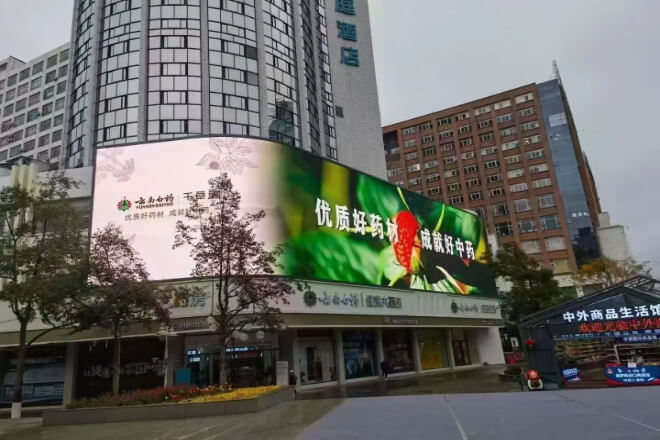
Whether a city has a cultural flavor isn’t just reflected in 박물관 and ancient buildings, but also in everyday public spaces. LED displays can present cultural content that was originally rather static in a more relaxed and accessible way.
First, it can tell the story of urban culture more vividly. Compared to an information board, dynamic images are more likely to attract people to stop and look.
For example, displaying content about the city’s history, distinctive architecture, and intangible cultural heritage can give tourists a better understanding of the city and make them more willing to visit related attractions.
Secondly, during festivals and celebrations, the large screen can coordinate with the atmosphere.
Whether it’s the Spring Festival, the Lantern Festival, a music festival, or a city celebration, LED 디스플레이 can work in conjunction with lighting and 단계 effects to make the event more engaging.
For example, countdowns, festival-themed animations, and live performance footage can be played simultaneously, instantly enlivening the atmosphere of the entire square.
Simply put: it’s not about showing a single program, but about connecting the entire event together.
Finally, immersive nighttime experiences also rely heavily on LED display content.
At night, a creatively designed large screen, combined with lighting, water features, or building facades, can transform ordinary streets into places with a sense of history.
For example, after watching a light show, tourists can take photos, explore night markets, and enjoy local cuisine, making their experience richer and more memorable.
To put it more simply: before, it was “coming to see the city,” now it’s “spending an evening here is quite interesting.”
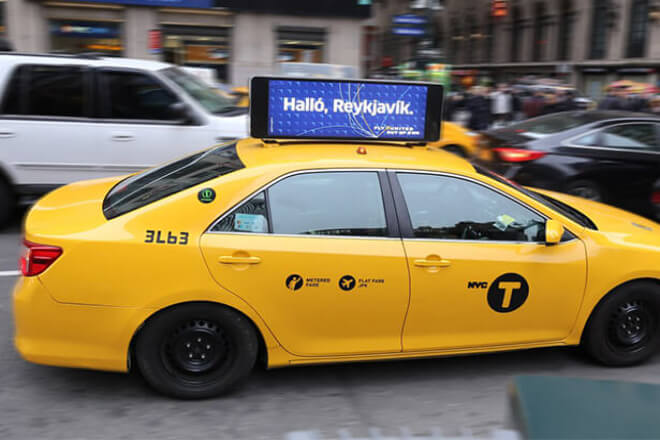
~ 안에 스마트 시티, LED displays are no longer just “screens that play content.” They function as a window between the city and its citizens, transmitting information in a timely manner.
First, integration with a smart management platform significantly improves management efficiency. Previously, each screen required individual operation.
Now, unified management and remote publishing allow for synchronized content updates across commercial districts, plazas, and transportation hubs.
For example, during large-scale events, a single click in the backend can publish a notification.
Which can then be displayed simultaneously on LED screens in multiple areas, eliminating the need for staff to manually modify each screen individually.
Second, digital information linkage makes city services more timely. LED 스크린 can connect with systems for traffic, weather.
And emergency response, updating relevant information in real time so citizens can access the information they need immediately.
For instance, during morning rush hour, large screens can display real-time road congestion and public transportation information, allowing people to adjust their travel routes in advance.
Simply put: previously, information was “scattered”; now, it’s “unified and interconnected across a single platform.”
Finally, urban operational efficiency will continuously improve with digitalization.
Whether it’s daily information dissemination, large-scale event support, or emergency notifications, unified management reduces manual operations and increases response speed.
For example, when hosting marathons or concerts, traffic alerts, route guidance, and event announcements can be updated in real time based on the situation on-site, making the entire city run more smoothly.
To put it more simply: Previously, LED screens were just display devices in the city; now they’re more like the city’s “digital bulletin boards,” allowing information to travel faster than people.


 English
  Español
  简体中文
简体中文  Français
  日本語
日本語  한국어
한국어  العربية