

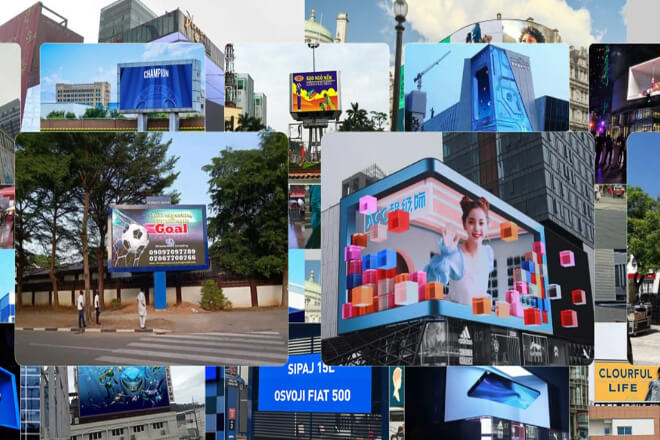
Today, consumer attention is arguably harder to capture than Wi-Fi—it scrolls and disappears quickly.
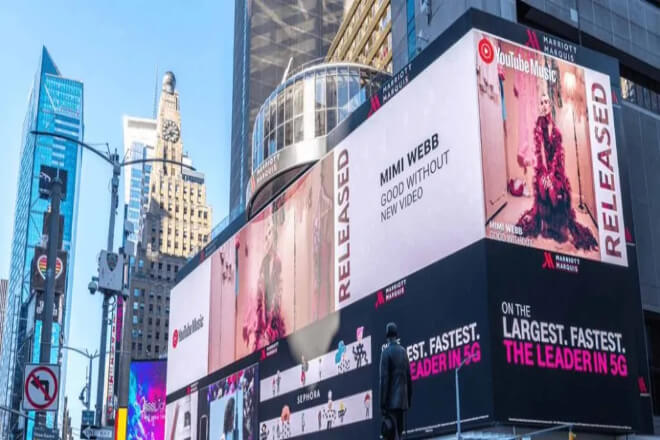
To get people to stop and look, brands must first learn to “steal the spotlight.” And LED 디스플레이 do have a natural talent for this.
Firstly, dynamic images are more eye-catching than static advertisements.
People are naturally more likely to look at moving things for a couple more seconds—this isn’t marketing theory, it’s a “factory setting” for humans.
For example, a static poster in a shopping mall saying “New Product Launch” might be easily passed by many.
But a hamburger on a nearby LED screen, slowly sizzling and steaming, would draw attention, even from those who have just finished eating: “Hmm? Suddenly I’m feeling a bit hungry again.”
Secondly, high 명도 enhances long-distance visibility. Especially in crowded, information-rich areas, LED screens act like a built-in “presence filter,” easily becoming a visual focal point even from a distance.
For instance, in a nighttime shopping street, a row of shop signs might be lit up.
But a dynamic LED screen is like someone in a fluorescent jacket in a crowd—you might not recognize them, but you’ll definitely see them first.
More importantly, it stands out more easily in complex environments. A plethora of advertisements isn’t the problem; the problem is when they all look similar.
LED screens, through brightness, dynamism, and color, can quickly distinguish themselves from a sea of information.
In short: While other people’s ads are still quietly waiting for you to notice, LED ads are already waving at you—”Hey, look over here!”
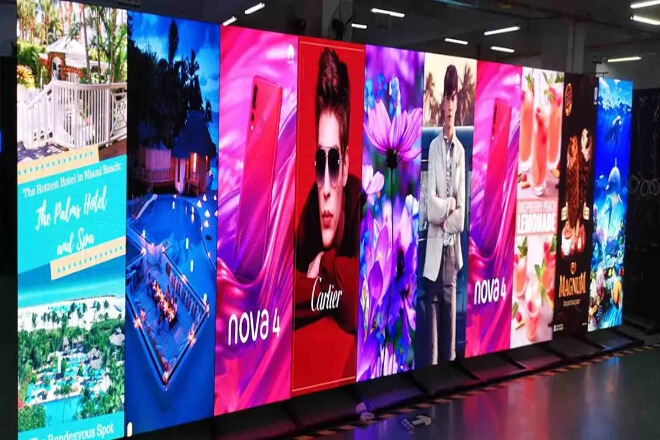
Traditional advertising has a “minor annoyance”: once the content is printed, it’s like a post on social media—want to change it? It’s too late.
하지만 LED 디스플레이 are different. Their biggest feature is “fast response”—if the brand wants to change, it can change immediately.
First, it supports real-time switching of multiple contents. One screen doesn’t have to display only one ad; it can rotate different products, different activities, and even have “two personalities” in the morning and afternoon.
For example, a car dealership might display SUV models on the large screen in the morning, emphasizing “family travel.”
In the afternoon, it might switch to a sports car promotional video, emphasizing “speed and passion”—the same screen, “family-oriented” in the morning, instantly transforms into “cool” in the afternoon.
Second, it can quickly adjust content according to time and events.
For holidays, promotions, and new product launches, a simple content change in the backend can be implemented online in minutes, without reprinting materials or setting up new ad spaces.
For example, a movie theater might primarily promote family-friendly films during the day, then switch to advertising new romantic comedies for couples at night.
The audience changes, and the advertising content “switches channels” accordingly.
More importantly, it can meet the needs of different marketing scenarios. It can be used for brand exposure during normal times, limited-time promotions during events.
And creating atmosphere for holidays; a single screen can flexibly switch roles, without needing a dedicated screen for every occasion.
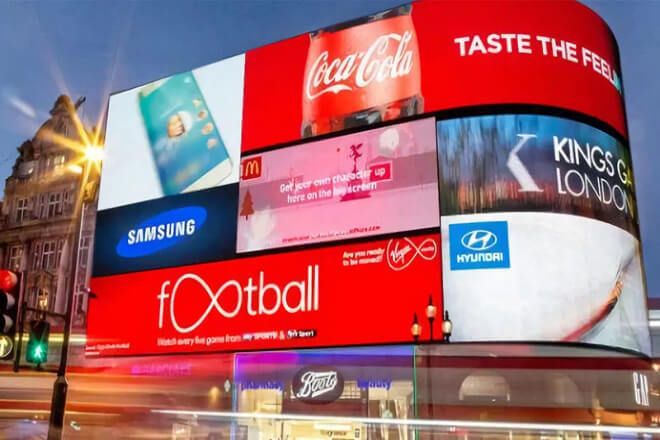
Nowadays, brand advertising often isn’t about “who shouts the loudest,” but rather “who evokes the most feeling.”
Products might be similar, but the brand’s image can be completely different, leading to entirely different consumer impressions. LED 디스플레이 definitely have an advantage in this regard.
Firstly, dynamic visuals make brands appear more technologically advanced.
The same brand logo printed on a poster and displayed on a large LED screen evokes completely different feelings. One conveys “I saw it,” while the other conveys “this brand seems quite capable.”
For example, a newly opened new energy vehicle store uses an LED screen at the entrance to display dynamic images of vehicles.
The moment the headlights illuminate, or the car turns, passersby might not even enter the store yet, but they’ve already silently added a point of interest: “This brand is quite high-end.”
Secondly, it’s easier to convey the brand’s image. Many brands sell not just products, but a feeling. Static advertising tells you “what we sell,” but dynamic content tells you “who we are.”
For example, an outdoor brand doesn’t just display outdoor clothing; it shows images of mountaineering, camping, and snow trekking on a large screen.
You don’t see just a piece of clothing, but rather, “It feels like wearing this, I can go on an adventure too.”
More importantly, it’s easier for people to remember you. Often, people don’t remember the advertising slogan, but they remember the visuals.
For example, you might pass by a store and not remember the name, but you’ll remember: “Oh, that’s the brand with the really cool screen at the entrance that keeps showing images of ocean waves”—that’s enough.
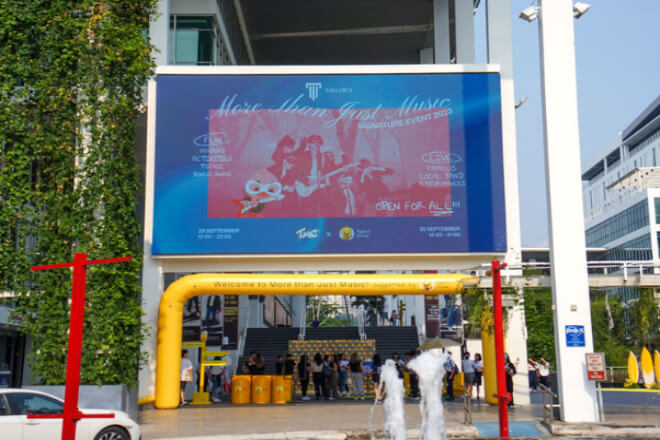
Some advertising methods are very “location-sensitive”—they work in one place, but may not be suitable in another.
But LED displays are different; they’re the kind that can “work anywhere,” with strong adaptability.
First, they can be used in 쇼핑몰, stores, 경기장, and transportation hubs. In malls, they attract passersby; in front of stores, they can run promotions.
In stadiums, they provide brand exposure; and in places like 공항 and high-speed rail stations.
They can achieve wide-ranging reach—basically, wherever there are people, there’s room for them to shine.
For example, the same brand can advertise new products on a large screen in a shopping mall during the day and continue its presence on a stadium’s exterior screen at night.
The venue changes, but the brand’s message remains constant.
Second, they can cover both indoor and outdoor scenarios.
Indoors, they can provide detailed displays suitable for close-up viewing; outdoors, they can provide high-명도 exposure suitable for attracting people from a distance.
A brand no longer needs to worry about “whether this scenario is suitable,” because in most cases, yes.
For example, a coffee brand can display new product videos on a small-pitch screen inside the store and show promotional activities on a large screen outside.
This coordinated approach ensures a smooth customer journey from seeing the product from afar to learning more and making a purchase.
More importantly, they support both long-term and short-term campaigns. It can be used for brand exposure during normal times, promotional activities during holidays.
And temporary content switching for new product launches. It’s versatile, offering both long-term and short-term flexibility.
Simply put, it’s a “traffic driver” in a shopping mall today, and a “showcase” at an exhibition tomorrow.
Many people’s first reaction to advertising investment is, “How much will this cost?”
But more and more brands are starting to change their thinking: it’s not about how much money is spent.
But what is left behind. LED 디스플레이 are often the kind of investment that “gets more valuable with use.”
First, they are reusable, reducing long-term investment costs. Traditional advertising is often “one-off”—posters are put up, and then it’s over.
Materials are used up and then discarded; but LED screens are different. The screen remains the same, but the content can be constantly changed.
For example: use it for promotions during Singles’ Day, change it for a holiday theme during the Spring Festival, and then broadcast new product ads in the summer.
The screen hasn’t changed, but it’s constantly creating new value, somewhat like a “year-round, non-stop employee.”
Second, it continuously improves brand exposure efficiency. Brand exposure isn’t something that happens “once”; it requires repeated exposure.
LED screens provide a consistent and long-term way for brands to “show their face,” and the longer the exposure, the deeper the impression.
It’s like passing by a store every day; the large screen at the entrance is constantly updating its content.
Even if you don’t go inside, over time you’ll think, “Oh, I know this store well.” Brand familiarity is built up gradually this way.
More importantly, it enhances the return on marketing investment. A single screen can be used for brand promotion, event marketing, creating a festive atmosphere.
And sending member notifications—essentially “one investment, multiple uses.” The more it’s used, the lower the average cost per use.
Therefore, many companies later realize that they’re not just “buying a screen,” but rather buying a long-term platform for their brand to make its voice heard.


 English
  Español
  简体中文
简体中文  Français
  日本語
日本語  한국어
한국어  العربية