
What are 옥외 LED 광고판 most afraid of? It’s not the lack of sunshine, but a sudden downpour.
Long-term exposure to rain and humidity directly impacts the screen’s stable operation.
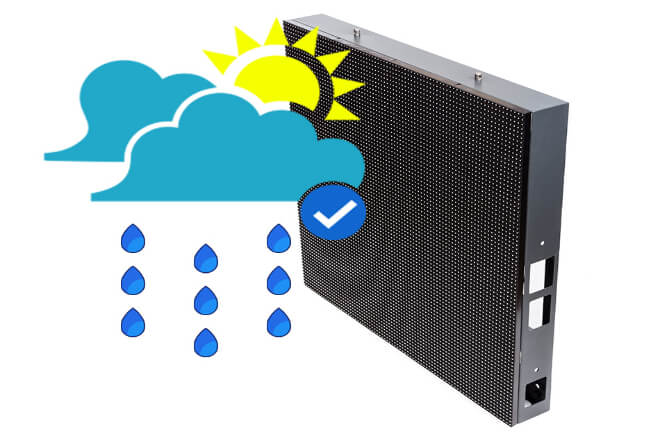
For outdoor LED billboards, the biggest “opponent” may not be competing brands, but the daily onslaught of wind and rain.
Especially in rainy areas, an 옥외 LED 스크린 must withstand not just occasional rain, but prolonged exposure to humidity, heavy rain, and temperature fluctuations.
Insufficient waterproofing may not cause immediate problems, but moisture acts as a hidden “trouble,” slowly affecting the internal circuitry and electronic components.
Leading to abnormal 명도, display malfunctions, and even shortening the screen’s lifespan.
For example, an LED billboard installed on the exterior wall of a 쇼핑몰 or along a city road, normally displaying brand advertisements and event information, might experience problems after prolonged periods of rain.
If internal protection is inadequate, issues such as some LED displays failing to light up or an unstable display may occur, affecting not only the display effect but also the advertising value.
Therefore, when choosing LED billboards in rainy areas, waterproofing is not just a “bonus,” but a fundamental requirement for long-term stable operation.
Besides focusing on the waterproof rating, the enclosure’s sealing, drainage design, and overall weather resistance also need to be considered.
After all, a good outdoor LED billboard cannot only perform well in sunny weather but must also withstand the rainy season.
A truly reliable screen should be able to “attract attention on sunny days and remain online on rainy days.”
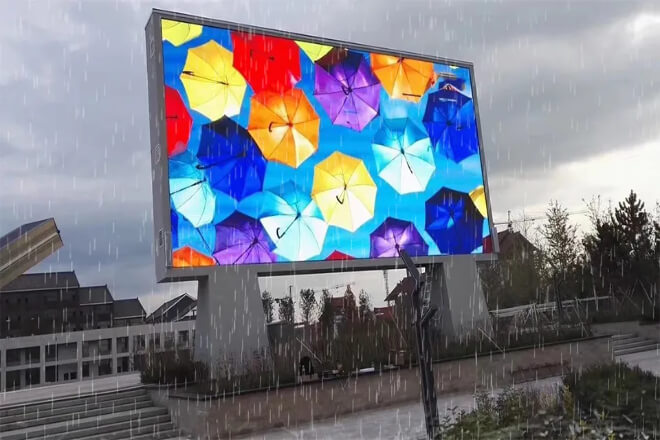
을 위한 옥외 LED 광고판 to operate long-term, they must first be able to withstand weather changes.
After all, billboards don’t stop operating just because it rains; rain, direct sunlight, and humid environments are daily challenges they face.
The waterproof rating is a crucial indicator of whether an LED screen can withstand these challenges.
Generally speaking, IP65 is the basic protection requirement for common outdoor LED displays.
Helping the screen resist dust and daily rain, meeting the needs of most urban outdoor environments.
However, if the installation location is special, the protection requirements need to be upgraded.
For example, in coastal cities, areas with long rainy seasons, or regions frequently experiencing heavy rain, LED billboards may be exposed to a humid environment for extended periods.
Requiring higher protection capabilities to prevent moisture from slowly affecting internal components.
Furthermore, waterproofing isn’t just about the front of the screen.
Many people easily overlook the back protection, but in reality, the wiring, power supply, and control systems behind the screen also need protection.
If the back sealing design is inadequate, rainwater and moisture can enter from the back, causing potential problems.
For example, an LED billboard installed on the exterior wall of a 쇼핑몰 displays promotional information and brand advertisements daily.
If it experiences a week of continuous rain, whether the screen can still operate stably will severely test its waterproof design.
Therefore, when choosing an outdoor LED billboard, don’t just ask “Is it waterproof?”, but also “What kind of weather is it suitable for?”
A good protection solution isn’t about making the screen immune to rain, but about ensuring it can continue to display content stably even in heavy rain.
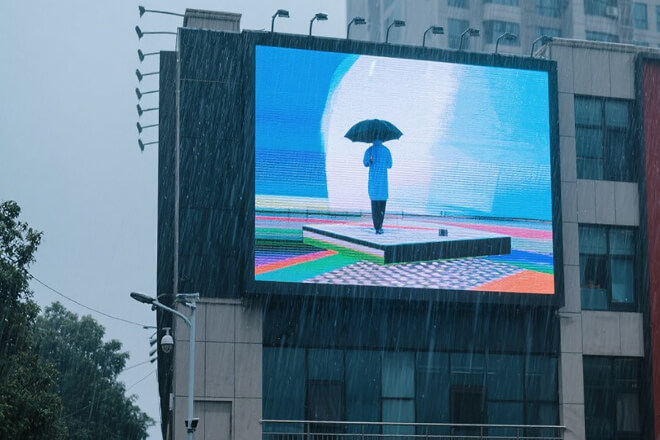
Outdoor LED billboards face different environments every day.
Some LED screens operate in a semi-indoor environment, while others are true “weather guardians,” standing guard outdoors 365 days a year.
In commercial street storefront areas, although LED billboards are close to buildings, they are still affected by rain, dust, and humid air.
This is especially true for screens at shop entrances, which need to continuously display brand advertisements and promotional activities.
Frequent blackouts or display malfunctions during the rainy season not only negatively impact customers’ first impressions but may also lead to missed sales opportunities.
For example, a trendy clothing store might install an LED screen at its entrance to display new product showcases and discounts.
While it attracts attention on sunny days, if the screen stops working due to insufficient protection after several days of rain, the store’s “digital window” temporarily loses its function.
The challenges are even greater for LED billboards on building facades. Due to their high location and lack of obstruction, the screens must directly withstand the impact of wind and rain.
Especially in coastal cities or areas with frequent heavy rainfall, in addition to waterproofing, windproofing, moisture resistance, and long-term weather resistance must also be considered.
And highway-side and large outdoor billboards are essentially advertising windows operating around the clock.
Exposed to sunlight, rain, and dust for extended periods, LED billboards require not only reliable waterproofing but also stable playback over long durations.
After all, advertising opportunities on highways last only a few seconds; a screen malfunction could mean missing a crucial exposure.
Therefore, the location where an LED billboard is installed determines the types of weather conditions it must withstand.
Choosing the right waterproofing solution ensures the screen attracts attention not only in good weather but also in harsh environments.
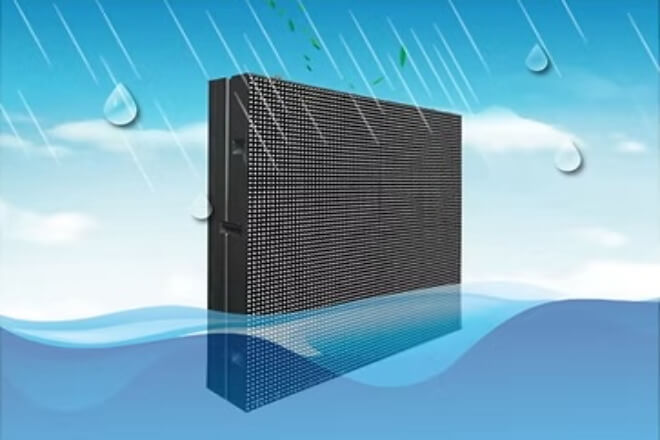
Many people’s first question when choosing outdoor LED billboards is, “What is the waterproof rating?”
However, waterproofing is only the first line of defense. For an LED screen to work stably outdoors, it’s essential to consider other details.
First, the enclosure’s sealing and drainage structure are crucial. Rainwater itself isn’t the problem; the real issue is the inability to drain water quickly after it enters.
A good LED enclosure design minimizes the risk of water ingress and, through a well-designed drainage system.
Allows accidentally infiltrated water to escape quickly, preventing long-term accumulation that could damage internal components.
For example, LED advertising screens installed on storefronts in commercial streets are vulnerable to rain from multiple directions during heavy downpours.
If the enclosure’s sealing and drainage design are inadequate, small problems can gradually escalate into display malfunctions.
Secondly, moisture-proof and corrosion-resistant designs cannot be ignored.
Especially in coastal cities, the salt and moisture in the air can have a long-term impact on metal structures and electronic components.
Without proper anti-corrosion treatment, the screen casing and wiring connections may age more quickly.
뿐만 아니라, 전원 and wiring protection measures are crucial for outdoor operation.
Stable power supply design, lightning protection, and wiring protection can reduce operational risks under extreme weather conditions.
After all, outdoor LED billboards don’t just need to “shield them from a rain shower,” but rather withstand years or even longer of wind and sun exposure.
Truly reliable protective designs are often hidden in these unseen details, allowing the screen to maintain stable content display even during the rainy season.
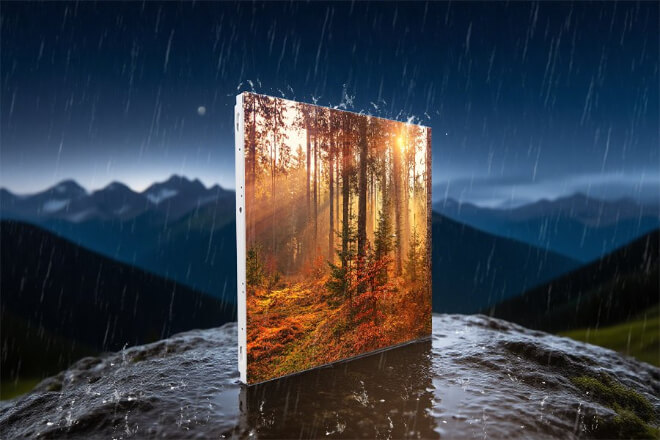
선택할 때 옥외 LED 광고판 in a rainy area, you can’t just look at the “order price” and “screen size.”
After all, an outdoor LED screen isn’t something you buy and store in a warehouse; it has to withstand wind, rain, humidity, and various weather changes over the long term.
First, you need to choose a suitable protection solution based on the local climate. Rainfall conditions vary greatly from region to region.
The requirements for LED screens differ depending on the typical rainy season, prolonged heavy rain, or humid coastal areas.
For example, outdoor billboards in rainy southern cities need to prioritize waterproofing, moisture resistance, and heat dissipation to prevent frequent screen problems in high-humidity environments.
Second, product quality and long-term stability are crucial.
Outdoor LED billboards may operate for over ten hours a day; what appears normal in the short term may not be reliable years later.
The screen structure, component quality, and heat dissipation design all affect the user experience.
Simultaneously, the supplier’s project experience and after-sales capabilities are also very important.
A supplier with outdoor project experience typically understands the installation details in different environments.
Such as how to handle drainage, windproofing, and how to reduce the difficulty of later maintenance.
For example, when choosing an LED billboard installed on the exterior wall of a commercial street, an experienced team will consider the direction of rain, installation angle.
And maintenance space in advance, rather than waiting for a malfunction to occur before taking action.
After all, choosing an LED billboard in a rainy area means buying more than just “a screen”—it’s buying a long-term, operational solution.
Good equipment combined with professional service ensures that advertising content attracts attention on sunny days and remains online on time even in the rain.


 English
  Español
  简体中文
简体中文  Français
  日本語
日本語  한국어
한국어  العربية