
소개
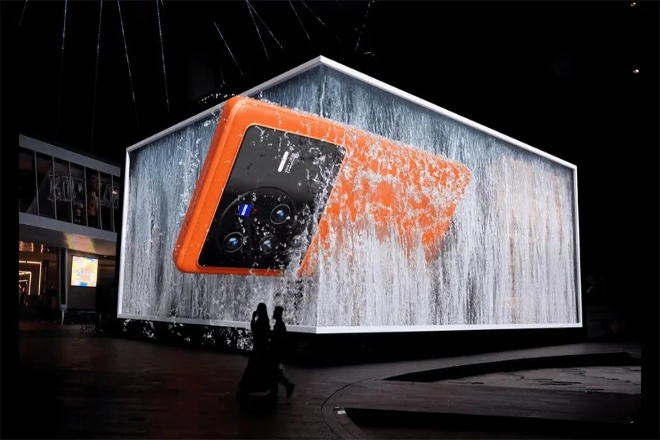
Some screens are responsible for “displaying,” while others are responsible for “making people stop.”
Naked-eye 3D LED displays clearly belong to the latter. When the content seems to “jump out of the screen,” the viewer’s first reaction is usually not to look, but rather, “Wow!”
목차
1. How can naked-eye 3D LED displays be applied to commercial districts and urban landmarks?

What is the greatest charm of naked-eye 3D screens? In short, it doesn’t “make you watch ads,” but rather “makes you want to stop and take pictures.”
This is why it is particularly suitable for commercial districts and urban landmarks—high foot traffic, high attention value, naturally suitable for “creating a crowd.”
First, create high-traffic photo spots, making the screen itself an “attraction.” For example, a giant whale suddenly “swims out of the screen” on a large corner screen.
Or a car seems to “jump out,” and the first reaction of passersby is usually not to continue walking, but “Wait, let me take a video first.”
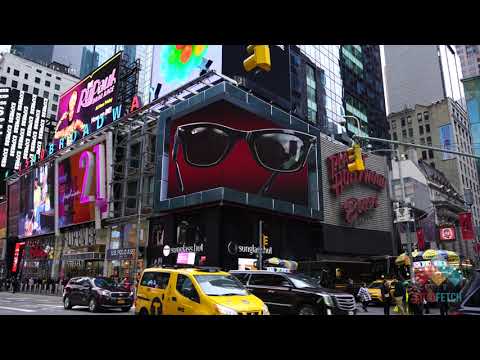
A classic example: Times Square has many large screen advertisements, but what truly makes people stop is often the naked-eye 3D content that “jumps out of the screen.”
Secondly, it enhances the attractiveness of urban spaces, transforming streets from places to places people “want to linger.”
Traditional streetscapes consist of buildings and signs, while naked-eye 3D adds a sense of “storytelling” to the space.
Simply put, someone might just be strolling around, but because of a screen, they might stay an extra 10 minutes and take 3 more photos.
Simultaneously, it enhances brand exposure, turning advertising from “being seen” to “being actively spread.”
Previously, advertising relied on purchased traffic; now, much naked-eye 3D content spreads organically.
People shoot videos and post them on social media, naturally expanding the brand’s reach. For example, a user might film “the dragon that seems to fly out,” but the brand logo gets caught up in the process.
Finally, it’s particularly suitable for large outdoor corner screen scenarios, turning building corners into “3D stages.”
Because naked-eye 3D thrives on “spatial dislocation,” corner screens perfectly create this visual impact.
What was originally just a building corner instantly becomes a “visual magic box in the city” after the screen is installed.
2. How can naked-eye 3D LED displays be applied to shopping malls and retail spaces?

The biggest challenge in 쇼핑몰 isn’t simply “making people see the store,” but rather getting them to stop and look for a couple more seconds.
The greatest value of naked-eye 3D LED technology lies in turning “passing by” into “stopping.”
First, it attracts consumers to linger, creating a built-in “speed bump” at the store entrance. For example, if you’re just walking past a store, but suddenly a pair of sneakers “fly out.”
Or a bottle of perfume “levitates and rotates” on the screen above the entrance, you’ll subconsciously slow down.
For another example, you might be just passing by, but then stop to take a video and then casually walk into the store.
Second, it enhances the display of new products and brands, making the products “speak for themselves.” Traditional posters can only show the product’s appearance, but naked-eye 3D can create three-dimensional, dynamic content.
For example, a phone “disassembles,” a watch “levitates and rotates,” and cosmetics “open from the screen.” Simply put, it’s not just about “seeing the product,” but “experiencing the product.”
Simultaneously, it enhances the technological feel of the store, making the brand look “newer and cooler.”
Especially for industries like technology, fashion, automobiles, and beauty, naked-eye 3D directly elevates the store’s image.
For example, consider two shoe stores: one uses a static lightbox, while the other displays shoes “jumping out” on a screen. Consumers will naturally find the latter “more interesting.”
Finally, it enhances the offline shopping experience, turning shopping into “experiencing content.” Many consumers now go to malls not just to buy things, but also to “experience.”
Naked-eye 3D screens add an entertainment layer to stores—regardless of whether they buy anything, they at least draw people in.
3. How can naked-eye 3D LED displays be applied to showrooms and brand launches?
What’s the biggest fear in showrooms and launches? A lot of content is presented, but the audience doesn’t remember it.
The advantage of naked-eye 3D LED display is that it allows products to “not just be introduced,” but to “directly enter the audience’s minds.”
First, it creates immersive product displays, letting the product “appear on its own.”
For example, when launching a new mobile phone, instead of flipping through PowerPoint slides, the phone “slowly emerges” from the screen, even disassembling to show its internal structure.
When launching a car, the entire vehicle appears to drive out of the screen. For example, the audience might be “stunned” by the visual effects even before the presentation is finished.
Secondly, it enhances the visual impact of events, making launch events feel more like shows.
Traditional launch events consist of “a speaker + a screen display,” while naked-eye 3D brings the stage to life.
For example, during a product launch countdown, the numbers appear to float in the air; when a new product is unveiled, the entire screen seems to “open,” easily igniting the atmosphere.
Simultaneously, it strengthens brand memorability, ensuring the audience remembers the image even after leaving.
Often, what people remember isn’t what was said, but “the moment the product flew out of the screen.” This visual memory is more memorable than text and images.
Finally, it’s particularly suitable for new product launches and exhibitions, transforming “display” into “experience.” In exhibition halls, naked-eye 3D can turn static exhibits into dynamic content.
At launch events, it can turn new product unveilings into “highlight moments.” Simply put, the audience isn’t “watching an introduction,” but “watching a brand show.”
4. How can naked-eye 3D LED displays be applied to cultural tourism and entertainment projects?

What do cultural tourism and entertainment projects compete on? It’s not about “content,” but whether they can make people want to take photos, share them, and return.
Naked-eye 3D LED technology is precisely this kind of “experience amplifier.”
First, it creates an immersive scenic area experience, transforming visitors from “viewing the scenery” to “entering the scene.”
For example, a naked-eye 3D screen at the entrance makes a waterfall seem to flow from within the screen.
Or a dragon “flies out” to welcome visitors, already engaging their emotions before they even officially enter the park.
For instance, someone who was just queuing to enter might end up taking photos for ages.
Second, it enhances the effects of performances and themed spaces, bringing stages and spaces to life.
For example, in theme parks, immersive theaters, and concert entrances, naked-eye 3D can make the background more than just “background.”
It allows them to directly participate in the storyline. Simply put, the screen isn’t just playing content; it’s “acting.”
Simultaneously, it enhances visitor interaction, turning everyone from spectators into “players.”
For example, when visitors stand in a designated spot, virtual characters on the screen will “interact with them.”
Alternatively, the check-in points could be designed so that “reaching out feels like touching a whale on the screen.”
This kind of content is naturally suited for social media sharing because people will actively “play” with it.
Finally, it enhances the value for sharing and check-ins, giving the project an inherent “go-to-the-go” quality.
Many scenic spots and entertainment projects become popular not through advertising, but through short videos from tourists.
The advantage of glasses-free 3D is that if you film it, it automatically helps you spread the word.
For example, the glasses-free 3D screen at Chengdu Taikoo Li. For many people, the first thing they do upon arriving at such a screen is raise their phone.
Simply put, the role of glasses-free 3D LED in cultural tourism and entertainment is to transform “watching the project” into “playing the project, filming the project, and helping to spread the word about the project.”
5. How can glasses-free 3D LED displays be applied to corporate image presentation?

Corporate image presentation often isn’t about the amount of information, but rather the first impression a customer gets upon entering.
”This company seems different.” The value of glasses-free 3D LED display is to maximize this feeling.
First, it strengthens the brand’s technological and innovative image, making the company appear “futuristic.”
For example, in a headquarters lobby, a naked-eye 3D screen can display the brand’s development history, core products, or technological animations.
Upon entering, customers will immediately think, “Wow, this company is serious about this.”
For instance, a tech company uses 3D to showcase chip structures, while a car company makes an entire vehicle “drive out of the screen”—the impression is instantly different.
Secondly, it creates a high-end visual entrance, turning the reception area into a “brand showcase.”
A traditional corporate entrance might be a logo wall and a reception desk, but 육안 3D can transform the entrance into a “moving brand facade.”
Simply put, before the customer even begins discussing business, the brand has already completed its self-introduction.
At the same time, it enhances the customer’s first impression, making it easier to “remember you.”
After many business visits, customers may not remember the details of the meeting, but they will remember: “That moving screen in your lobby was quite impressive.” This is essentially a brand memorability point.
Finally, it’s particularly suitable for headquarters buildings and showroom spaces, turning the space itself into brand assets.
For example, corporate headquarters lobbies, innovation centers, and brand showrooms are all ideal for long-term naked-eye 3D displays.
It’s not a one-off event installation, but a digital facade that tells a story for businesses every day.
6. 결론
The value of naked-eye 3D LED technology is never just about cutting-edge technology.
Its true power lies in turning “passing by” into “stopping,” and “seeing” into “remembering.”
After all, a screen that compels people to take out their phones and snap a picture usually has strong communicative power.
Finally, if you would like to learn more about LED displays, 우리에게 연락해주세요.


 English
  Español
  简体中文
简体中文  Français
  日本語
日本語  한국어
한국어  العربية