

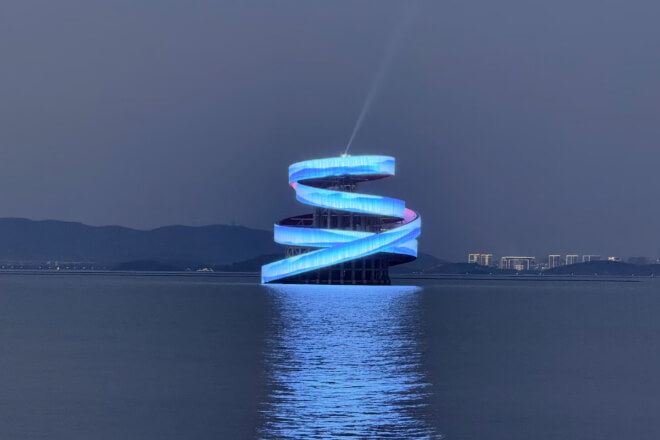
At night, cities can easily become “similar”—all lights, all bright, but it’s hard to remember any particular spot.
This is where LED displays become crucial. They don’t just illuminate the night; they give a specific area a “sudden focal point.”
Compared to static lighting, the biggest advantage of LED screens is their dynamism and ability to display visuals, making them particularly effective at standing out as a visual centre at night.
While the surrounding lights may emit uniform illumination, a large screen playing dynamic content can create a sense of “story unfolding” against a quiet background.
For a relatable example: Imagine you’re strolling through a shopping district at night, surrounded by illuminated signs and billboards, looking quite lively.
But as you walk along, suddenly a huge LED screen appears ahead, playing rhythmic visuals with flashing colours.
Even if you’re not consciously looking, you’ll subconsciously pause: “This seems more interesting.” Over time, these screens add depth and dimension to a neighbourhood at night.
Not everything is equally bright; there are “highlighted areas,” creating visual rhythm and a sense of hierarchy.
For example, some areas might only have basic lighting, while areas with LED screens become more like “mini-stages”—the images change.
The content moves, and pedestrians are more easily drawn to stop, take photos, or make purchases.
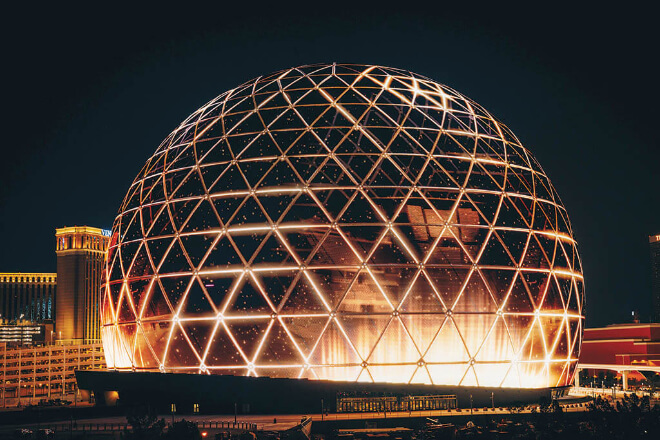
A city that is merely “full of tall buildings and bright lights” is unlikely to leave a lasting impression.
But with the addition of LED displays, the situation changes—certain areas begin to become “the image that immediately comes to mind when you think of a city.”
One of the values of LED displays is transforming ordinary buildings into more memorable urban symbols.
They don’t just hang on buildings and emit light; they integrate with the architecture itself, making the overall image more distinctive.
Often, what people remember isn’t a building, but the screen on it that constantly changes its visuals.
For a very concrete example: when you travel to a city, you might not remember the names of every street, but you’re very likely to remember “that shopping district with its huge.
Ever-changing screen,” and you might even take a picture, check it off your list, and post it on social media.
In that instant, the LED screen has already created a “city landmark.”
In some core commercial districts or city centres, these screens even form an integrated visual symbol with the architecture.
During the day, it might just be part of a modern building, but at night, when the dynamic images light up.
The entire building immediately gains “personality,” becoming more than just an ordinary building—it becomes an expressive urban stage.
Gradually, these visual combinations become part of the city’s image. For example, when people think of a certain city, they don’t just picture the name.
But also a scene from a particular night: the lights, the architecture, and that ever-changing LED screen.
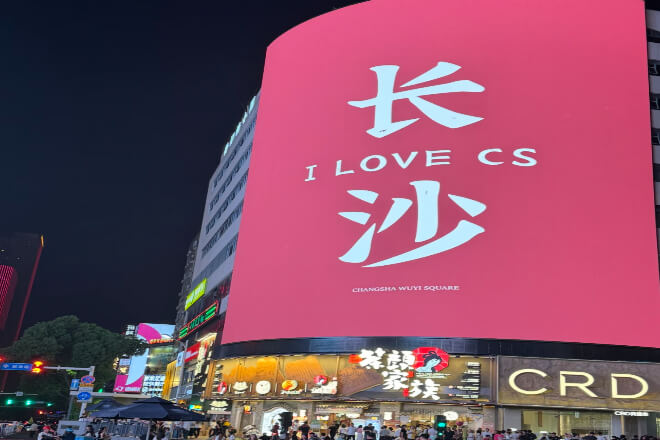
At night, the competition in shopping districts isn’t just about “having people around,” but about “being able to make people want to linger a little longer.”
LED displays act like an “atmosphere accelerator” for the entire street.
They’re not just about lighting; they use dynamic visuals to set the pace of the area. Compared to static light boxes, LED screens constantly change their content—sometimes brand advertisements.
Sometimes holiday themes, sometimes just rhythmic visuals—but what they all have in common is that they unconsciously slow people down as they walk.
For a very real scenario: you were just passing through the shopping district on your way home, but then you look up and see a large screen playing holiday-themed content.
With lights and images changing in sync, and surrounding shops simultaneously displaying promotional messages.
At this point, the probability of “going in to take a look” increases significantly. What started as just passing by might turn into buying a cup of milk tea or browsing the shops.
The impact of LED screens on the consumption atmosphere is often not about directly “promoting” anything, but rather creating a feeling that “this place seems more lively.”
When an area appears more vibrant, people are naturally more willing to linger, and the longer they stay, the more likely they are to make purchases.
This effect is even more pronounced in some nighttime commercial districts.
The combined effect of lighting, music, and screen content transforms the entire street from a “place to walk through” into a “place to stay for a while,” making it easier to retain nighttime foot traffic.
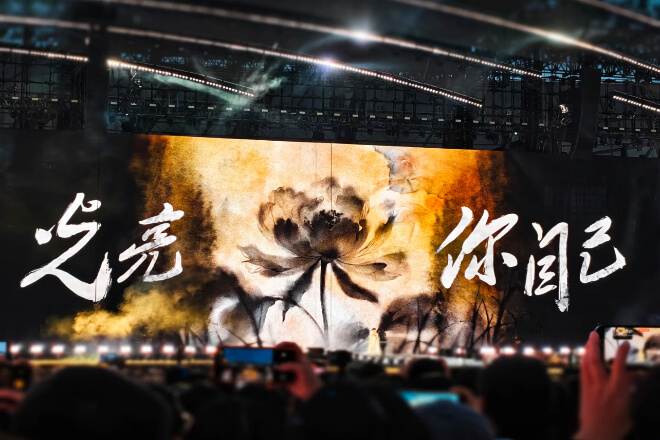
In urban public spaces, LED displays are no longer just “screens for advertising,” but rather like constantly online “city information broadcasters.”
Delivering important information, cultural content, and festive atmosphere to the most densely populated areas.
Firstly, they are used for city promotion and public service information display.
For example, reminders for civilised travel, garbage sorting promotions, emergency notices, and city image promotional videos can all be quickly disseminated through LED screens.
Compared to paper posters, they are updated faster, have wider coverage, and are more likely to be “slipped up” by commuters.
Secondly, they are used for the dissemination of festival activities and cultural content. During holidays like Spring Festival, National Day, and Lantern Festival, LED screens can display festive themes, city light shows.
And cultural short films, creating a more unified and warm atmosphere throughout the city.
For example, large screens in commercial districts can simultaneously play Spring Festival greeting videos, allowing passersby to naturally feel the festive atmosphere being “lit up.”
Furthermore, their ability to disseminate information instantly significantly improves the efficiency of urban information delivery.
Whether it’s temporary event announcements or public service reminders, they can be quickly deployed and reach high-traffic areas.
Eliminating the need for traditional processes like printing, posting, and distribution.
For a very practical example: large screens at subway entrances can simultaneously play city promotional videos and scroll through weather warnings or traffic information.
Pedestrians can easily receive important information while walking, without needing to look it up separately.
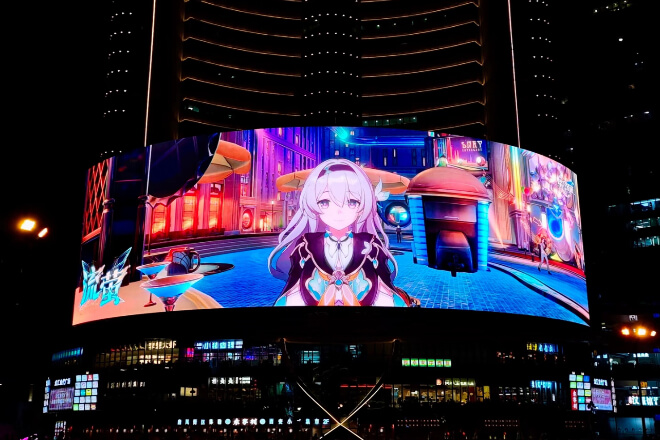
At night, the role of LED displays is no longer just about “lighting up,” but about transforming the city’s nightscape into an interactive experience.
It acts as a “nighttime atmosphere partner,” connecting lights, content, and pedestrian flow.
Firstly, it can be integrated with light shows and city events. When city squares or landmark buildings activate their light shows, LED screens can simultaneously switch between different displays.
Such as holiday-themed animations, city greeting videos, or interactive visual content.
The lights flow across the buildings, and the screens echo this with their content, transforming the overall atmosphere from a single point of illumination to a “whole space shining together.”
Secondly, it creates an immersive nighttime experience. In nighttime commercial streets, cultural and tourist attractions, or urban nighttime tour routes.
LED screens can work in conjunction with music, lighting, and spatial design to create a continuous visual narrative.
For example, along a pedestrian street, from the entrance to the central square, the content on the large screens gradually changes.
From city stories to holiday themes to interactive visuals, making visitors feel as if they are “stepping into a story.”
The addition of interactive content further enhances the experience. Some cities set up real-time interactions on LED screens, such as displaying messages.
Sending holiday greetings, and showcasing visitor check-ins, turning passersby not just viewers but also participants.
To illustrate, consider this scenario: In a city square at night, a light show begins, building facades change colours.
And LED screens simultaneously play city-themed animations while scrolling through citizens’ blessings.
People look up, take photos, and interact, transforming the entire space into a “nighttime stage where everyone participates.”


 English
  Español
  简体中文
简体中文  Français
  日本語
日本語  한국어
한국어  العربية