

The price difference in LED 디스플레이 can sometimes be quite significant.
They all look like the same screen, similar in size and displaying the same content, so why is one so much more expensive? Many customers’ first reaction is, “Is there really such a big difference?”
In fact, the difference isn’t always immediately apparent upon powering on; it gradually becomes apparent through image quality, stability, and long-term use.
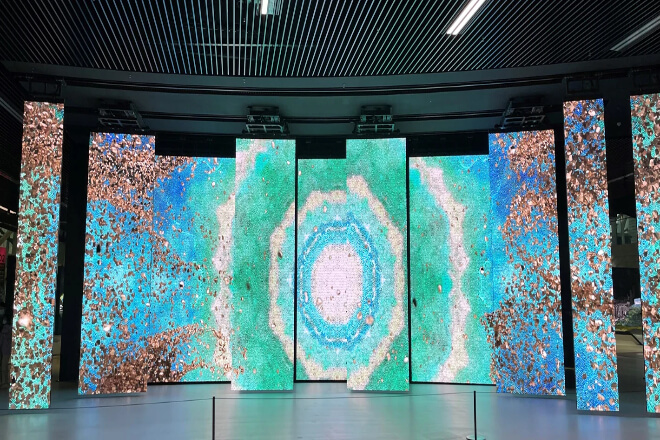
Many people focus on size and price when choosing an LED display, but after installation and use, the most noticeable difference is actually in image quality.
Especially when viewed up close, even on the same LED screen, there will be a clear difference in image detail, colour reproduction, and overall texture.
The most obvious difference comes from 픽셀 피치. Every LED on the screen affects the final image effect; the smaller the pixel pitch, the finer the image.
For example, in scenarios like shop windows or corporate showrooms, viewers often walk up to the screen.
If the screen’s 해결 is insufficient, text edges may not be smooth, and details of people and products may appear rough.
하이엔드 작은 피치 LED 스크린 maintain superior clarity even when viewed up close.
Besides clarity, colour performance is another crucial factor affecting the user experience.
The difference may not be noticeable when displaying ordinary information, but colour reproduction becomes critical when the screen plays brand promotional videos, product videos, or concert footage.
For example, when displaying a car, a good LED screen not only displays the car’s colour but also shows metallic reflections and variations in brightness, making the entire image more realistic.
Of course, the difference in image quality isn’t magnified in all scenarios. In large stadiums, viewers are far from the screen, focusing on clearly seeing the game and real-time information;
However, in 전시회 halls, conference rooms, and commercial spaces, customers often stay close to the screen, where the screen’s detail directly impacts their perception of the space and the brand.
Simply put, ordinary LED screens focus on “whether the content can be displayed,” while high-quality LED screens focus on “how well the content is presented.”
Often, from a distance, the difference may only be subtle, but up close, the difference in image quality becomes very apparent.
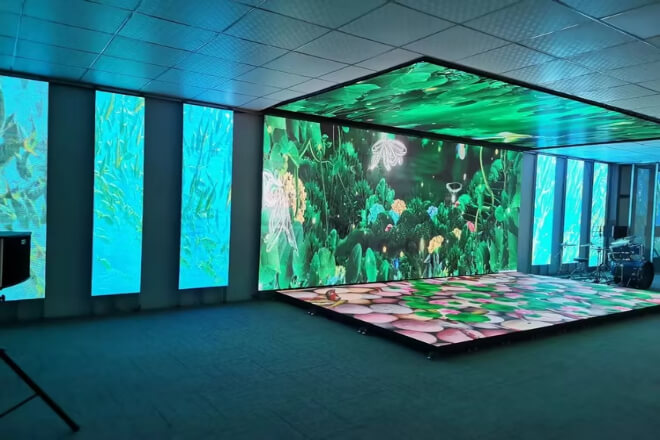
When LED displays are first installed, many products may look very similar, but differences in stability only become apparent after a period of use.
For scenarios that operate for extended periods daily, the screen not only needs excellent display quality but, more importantly, it must be reliable.
High-end LED displays typically invest more in core components such as LED chips, driver ICs, and power systems.
Good components not only affect image quality but also determine the screen’s performance after prolonged use.
For example, issues like inconsistent brightness, colour deviations, frequent flickering, or dead pixels often become more apparent with extended use.
Take, for instance, LED background screens in television studios, which may be used daily for news broadcasts, variety show recordings, and large-scale program productions.
If the screen flickers or exhibits abnormal 명도 in a particular area, it will be magnified under camera lenses, potentially affecting program presentation.
Therefore, in these scenarios, the focus is not solely on purchase price but also on the equipment’s stable operation.
Sports events are another prime example. International events like the World Cup and the Olympics require on-site LED screens to operate continuously for hours, simultaneously displaying match footage, advertisements, and score information.
During a competition, if a screen suddenly goes black, not only will the audience notice, but it could also affect the exposure of sponsors’ advertisements.
Furthermore, in places like 공항 and traffic control centres, LED displays often need to operate year-round.
There’s no room for “post-show troubleshooting” here; any malfunction can disrupt information dissemination and daily management.
Therefore, the stability of an LED display isn’t apparent from the first use, but rather becomes evident over long-term use.
Ordinary products may meet short-term display needs, while high-quality products are better suited for scenarios requiring continuous operation and higher reliability.
Simply put, image quality determines whether users are willing to watch for a few more seconds, while stability determines whether the screen can last for many years.
For long-term projects, the latter is often more important.
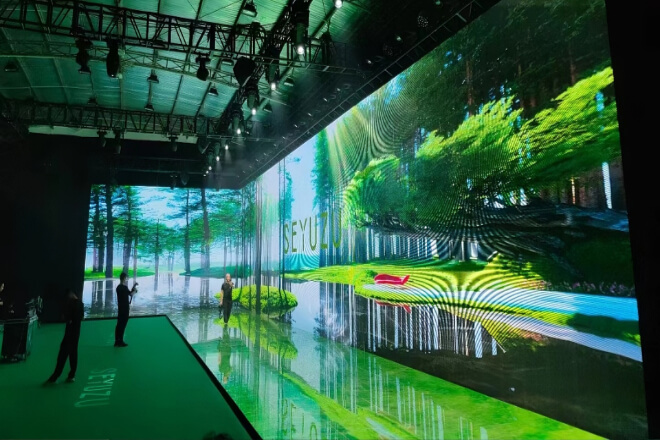
Many people focus on more intuitive indicators like 해결, 명도, and size when buying LED displays, but “재생률” is often overlooked.
Because it’s not as immediately noticeable as screen size, its impact on image quality becomes very significant in high-speed motion scenarios.
In ordinary information display scenarios, refresh rate differences may not have a significant impact.
However, in fast-paced scenarios such as 스포츠 competitions, esports events, and concerts, the screen needs to constantly update the image.
If the refresh rate cannot keep up, fast-moving objects may appear blurry, and the overall viewing experience will become less smooth.
For example, in a football match, when players run, shoot, or pass, the audience focuses on the instantaneous actions.
If the LED display can stably display high-speed images, replays and slow-motion details will be clearer; conversely, if the image response is insufficient, exciting moments may lose their impact.
The requirements for refresh rate are even more pronounced in esports events.
In competitions like “League of Legends” and “Counter-Strike”, player actions and screen transitions are extremely fast.
The large screen at the venue must not only allow the audience to clearly see the game but also ensure that prolonged viewing does not cause noticeable discomfort.
Furthermore, many live events are now recorded by mobile phones. For example, at concerts, fans upload videos to social media platforms.
If the LED display’s refresh rate is insufficient, issues such as scan lines and flickering may appear in the mobile phone footage.
While the audience at the venue may not notice it, the image quality will be affected once the video is distributed.
Therefore, a high refresh rate isn’t simply about “the higher the number, the better.” It truly reflects the LED display’s ability to handle dynamic images in complex scenarios.
For live streaming, esports, and large-scale events, it determines more than just image parameters; it also impacts the on-site experience and the overall broadcast effect.
Simply put, a standard refresh rate solves the problem of “being able to see,” while a high refresh rate solves the problem of “smooth viewing and clear imaging.”
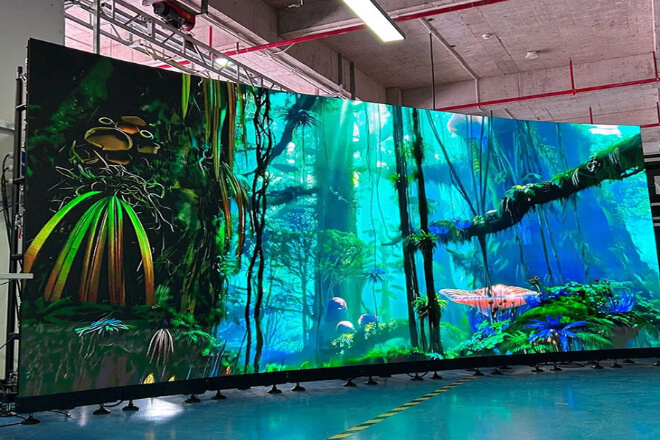
Many people focus on the purchase price when choosing an LED display, but after it’s put into use, the ease of installation and maintenance often affects the subsequent operating costs.
The screen isn’t finished after installation; the maintenance experience over several years also determines whether the investment is worthwhile.
First, the cabinet precision affects the overall installation effect. LED displays are usually composed of multiple cabinets spliced together.
If the errors between the cabinets are large, unevenness and noticeable seams may appear after installation.
These issues may not be immediately apparent, but when viewed at close range, the integrity and overall quality of the image will be affected.
For example, in high-end 쇼핑몰 and brand showrooms, LED screens are frequently viewed up close by visitors.
If the screen splicing isn’t perfectly flat, even excellent content can detract from the space’s sophisticated feel.
Conversely, higher-precision cabinets allow the entire screen to appear as a single, cohesive image, rather than many smaller screens pieced together.
Maintenance efficiency is another easily overlooked difference. Good LED displays typically consider future maintenance needs, employing modular designs for easier disassembly and assembly.
When a single LED, module, 또는 전원 malfunctions, maintenance personnel can quickly replace the corresponding part without spending significant time disassembling the entire screen.
For instance, LED screens in 공항, control centres, or stadiums often require continuous operation. The faster the repair speed, the less impact on normal operations.
Therefore, the price of an LED display shouldn’t be the sole consideration. Some products have low initial investment but may incur additional costs later due to frequent repairs and maintenance difficulties;
Stable, easy-to-maintain products, although potentially more expensive initially, have more manageable overall costs over the long term.
In short, buying an LED screen isn’t just about buying “a screen,” but about choosing a user experience for the next few years.
Ease of installation and simple maintenance are the truly crucial factors affecting return on investment.
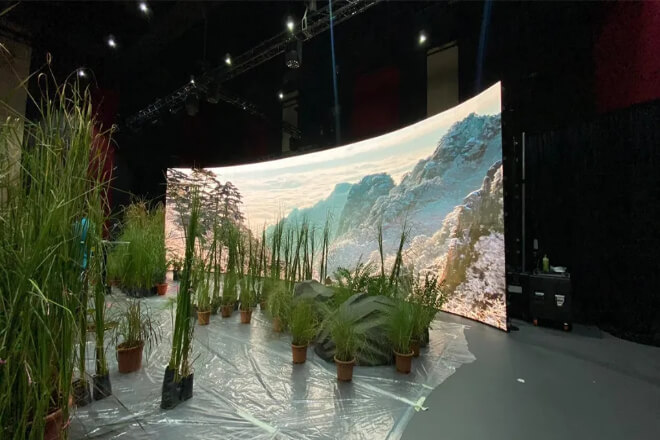
LED displays may all look like “big screens,” but the requirements for them are completely different for different application scenarios.
Many projects, if they only compare prices during the procurement process, often find later that cheaper products aren’t necessarily cheaper.
For example, advertising screens in 쇼핑몰 primarily need to “attract attention.”
These screens are usually installed in high-traffic areas and require sufficient 명도 and vivid image quality to immediately catch the attention of passersby.
Insufficient image quality will make it difficult to attract customers, even when displaying advertisements.
On the other hand, scenarios like command centres and monitoring halls have completely different focuses.
LED screens here may need to operate for extended periods, requiring clear and stable display of data, maps, and monitoring information.
The long-term reliability of the equipment is more important than short-term visual impact.
단계 performances and large-scale sporting events place greater emphasis on dynamic performance.
For example, at a concert, LED screens need to work in conjunction with lighting, music, and rapidly changing stage effects.
만약 재생률 is insufficient, mobile phone photography may result in flickering, and the live video may not be smooth.
Therefore, higher configurations for LED displays are not necessarily better; the key is to consider the actual usage requirements.
Shopping malls need attraction, control centres need stability, and performance projects need visual impact.
Just like buying a car, commuting in the city and participating in a race are fundamentally different needs. The same applies to LED displays.
Choosing a configuration suitable for the project is often more important than simply pursuing the lowest price or the highest configuration.


 English
  Español
  简体中文
简体中文  Français
  日本語
日本語  한국어
한국어  العربية