

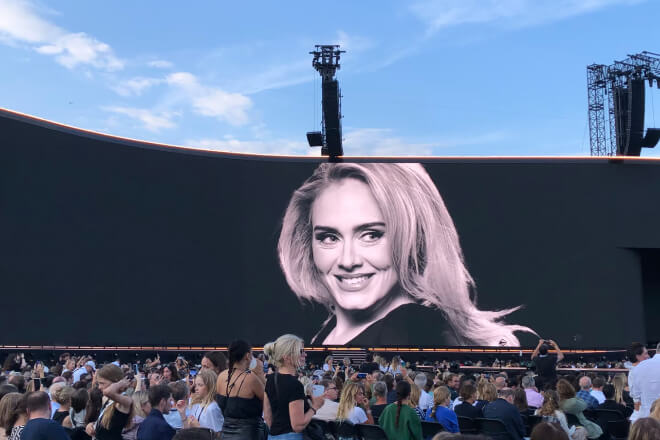
Traditional flat LED screens are more like a “large television,” responsible for displaying images;
While curved LED screens are more like opening a “digital space entrance” on the stage, allowing the audience not only to see the content but also to feel the space being extended.
Because the curved structure can conform to the 단계 shape, it reduces the sense of visual discontinuity, making the visual effect more coherent.
Whether it’s a wraparound stage, a curved backdrop, or a specially designed shape, curved LED screens can help the stage create a stronger sense of layering and immersion.
For example, at concerts, the curved LED screen behind the singer can switch between different visual effects in sync with the music: one moment it feels like entering a futuristic city.
The next like being under a starry sky, making the audience feel like they’re not just looking at a screen, but “walking into” the performance scene.
In brand launches or large-scale galas, curved LED screens can also quickly change the stage atmosphere.
One second it’s a high-tech launch event, the next it can switch to a themed space full of storytelling, without the need for frequent changes to traditional set design.
For the audience, the stage’s appeal is often at first glance. Curved LED screens, through a stronger sense of visual immersion.
Upgrade the experience from “watching a show” to “experiencing a show,” making the stage a focal point for photos and sharing.
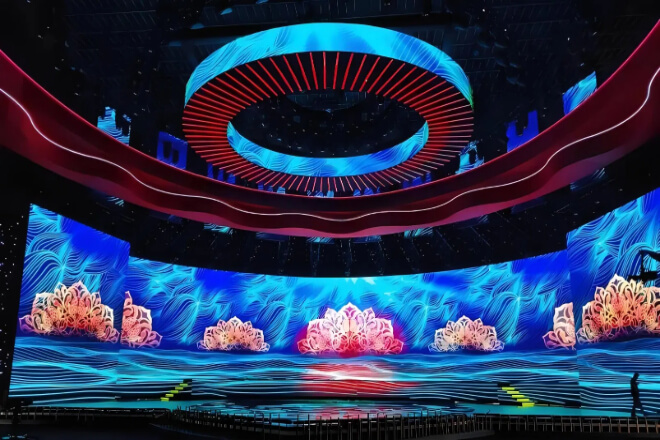
Previously, 무대 LED 스크린 were more like a “large backdrop,” responsible for placing the image behind the performers;
While curved LED screens are like putting a “digital coat” on the stage, allowing the image to extend with the space.
Curved designs allow dynamic backgrounds to appear more natural, avoiding the noticeable boundaries of flat screens.
Combined with lighting, music, and performers, the visual content on the screen can truly blend into the atmosphere, making the stage appear more three-dimensional.
For example, at a concert, as a song reaches its climax, the curved LED screen can change in sync:
Rapidly flashing lights, flowing lines, and massive visual scenes unfold in rhythm with the music, making the audience feel as if they are not watching a screen but being transported into the performance.
In brand launches or large-scale galas, curved screens can also help the stage quickly “change scenes.”
One second it can be a futuristic sci-fi space, the next it can switch to a natural landscape or a brand-themed visual, without the need to move complex sets, yet the stage effect remains dynamic.
The value of curved LED screens is not just about making the screen larger, but about truly connecting visuals, music, and performance.
The ultimate goal of good stage design is not for the audience to remember a screen, but for them to remember the feeling of being there.
Different events demand different stage setups, much like choosing clothes for different occasions.
Concerts need to be eye-catching, galas require constant variation, and celebrations need to create a special sense of ceremony.
The advantage of curved LED screens lies in their flexibility to adapt to different stage needs.
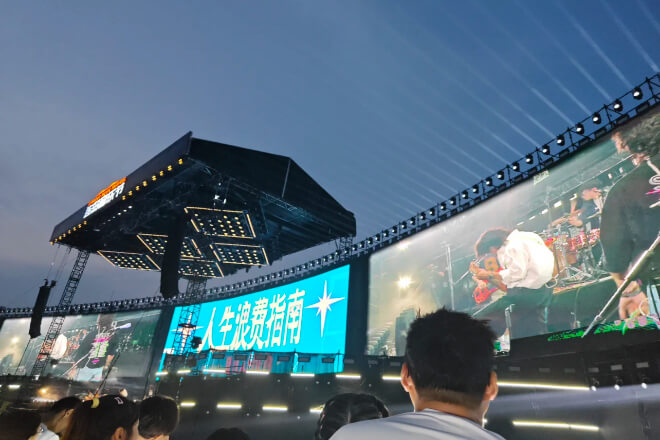
At large-scale events, curved LED screens can cover a larger stage area.
Their curved design reduces the visual edge effect, allowing audiences, even those seated further away, to see a more complete and continuous visual experience.
Compared to traditional flat screens that can only be viewed from the front, curved screens cater to more viewing angles.
For example, in a large concert, audience members in the back rows might be tens of meters away from the stage.
If they are only seeing a small, flat background, the impact of the performance would be significantly reduced.
However, with a large curved LED screen, dynamic images can extend to both sides of the stage, allowing distant audiences to experience the immersive effects of lighting, music, and visuals.
At galas, celebrations, or brand events, curved LED screens can also quickly switch between different themes.
They can create a stunning opening, switch brand content when guests appear, and display real-time information during interactive segments, keeping the stage constantly fresh.
Therefore, curved LED screens are not just about making the stage “bigger,” but more importantly, about providing a near-center experience for audiences in different locations.
Whether it’s a concert with tens of thousands of attendees or a corporate celebration, it helps create a vibrant atmosphere.
After an event, audiences may not remember all the events, but they often remember those “wow” moments.
The value of curved LED screens lies in helping the stage create such visually memorable moments.
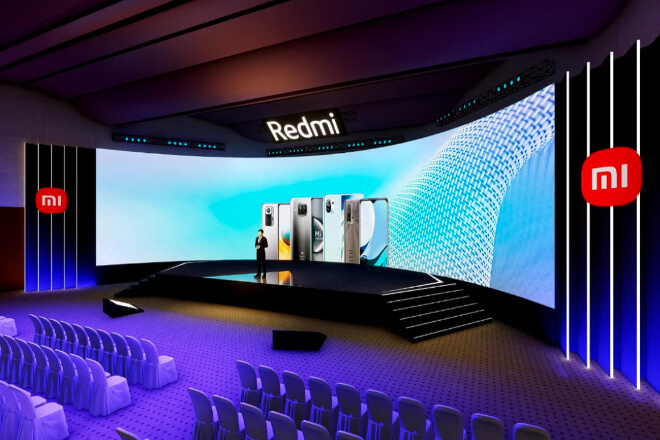
Compared to ordinary backdrop screens, curved LED screens can be customized to create more unique shapes based on the 단계 design, such as circular, arc-shaped, or special structures.
Transforming the screen from a mere tool for displaying content into a visual symbol of the entire event.
For example, at a brand launch event, a unique curved LED stage backdrop can combine the brand logo, product displays.
And dynamic visuals to form a personalized “digital business card” for the brand;
In a concert, a huge curved LED screen, combined with lighting changes and musical climaxes, can create iconic moments that audiences will want to capture on their phones.
Today, live experiences and social media sharing are becoming increasingly intertwined.
A uniquely designed curved LED stage is likely to become a popular topic on audiences’ social media feeds and short videos, extending the event’s impact from the venue to online platforms.
Therefore, curved LED screens not only enhance the stage effect but also help create “memorable moments.”
Good design will make audiences want to share even after they leave: “That stage effect was truly stunning!”
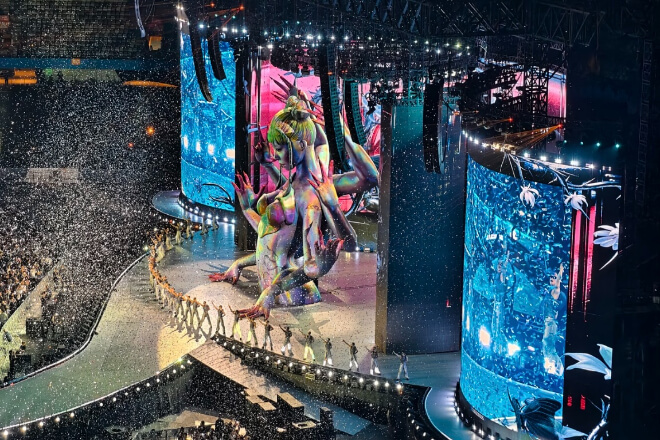
Curved LED screens look cool, but you can’t just focus on whether they can bend.
A truly suitable curved screen for an event needs to be integrated with the stage design, viewing experience, and post-event operation;
Otherwise, it may result in a situation where “it looks amazing on installation but is inconvenient to use.”
First, consider whether the screen’s curvature matches the stage structure. Different events have different stage designs;
Some require a large, enveloping curved effect, while others only require a partial curved effect.
If the curvature design is unreasonable, it will not only affect the overall aesthetics but may also make the image look unnatural.
Second, you need to choose an appropriate display effect based on the 시거리. For example, large concerts with tens of thousands of audience members require viewers at a distance to clearly see the stage screen;
Smaller events like press conferences or brand activities, however, focus more on detail when viewed up close.
Appropriate pixel pitch is crucial to avoid the problem of “blurry up close and wasted image from a distance.”
Furthermore, installation stability and safety are paramount. Event venues typically have numerous lights, sound systems, and other equipment;
The LED screen needs a robust structure to ensure stable operation during the performance and maintain the overall effect.
For long-term use or frequent rentals, cost planning in advance is essential.
Besides the screen price, expenses for transportation, installation, maintenance, and content updates must be considered.
In short, choosing a curved LED screen shouldn’t just be about “looking cool,” but also about its suitability for the stage, the audience, and long-term operation.
A good solution ensures the curved screen truly becomes a highlight on stage, rather than a one-off “visual decoration.”


 English
  Español
  简体中文
简体中文  Français
  日本語
日本語  한국어
한국어  العربية