

When purchasing LED 디스플레이, a limited budget is often the starting point.
This leads to a seemingly reasonable question: since the functions are similar, will choosing a cheaper solution save money?
However, in practical applications, price is only one part of the decision; the real cost often lies behind the scenes.
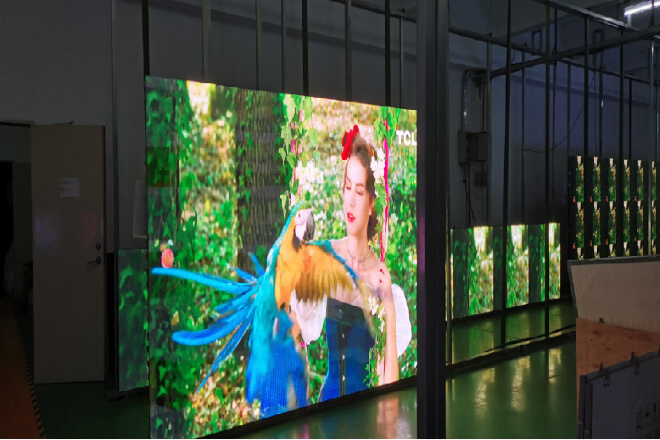
On the surface, the “initial cost advantage” of low-priced LED 디스플레이 does exist, but it’s more like a choice with obvious initial advantages that requires careful evaluation later.
First, the purchase price is indeed lower. This is the most direct advantage; with a limited budget, it’s easier to quickly complete equipment procurement and project implementation, reducing the pressure of a one-time investment.
Second, it’s easier to quickly launch projects. For temporary events, short-term exhibitions, phased competitions.
Or trial operation scenarios, low-cost solutions can build visual systems faster, without excessive upfront decision-making costs.
At the same time, lower initial budget pressure is also a key reason. Many commercial projects have limited funds in the startup phase.
Low-priced equipment can help the project “get running first,” allowing resources to be prioritized for content or operations.
More interestingly, these solutions are often particularly suitable for short-term or temporary use cases.
For example, pop-up events, temporary 단계, short-term competitions, and phased brand promotions don’t require high long-term stability; the focus is more on “whether it can be used immediately.”
However, it’s important to note that the “cheapness” only applies initially.
Low-priced solutions usually mean differences in 명도 stability, color consistency, maintenance costs, or lifespan, which often become apparent over time.
Simply put, the advantages of low-priced LEDs are real, but they are more of a “startup advantage,” not a “full-lifecycle advantage.”
Low-priced LED 디스플레이 are indeed very “friendly” during the initial purchase, but once long-term use begins, their costs often appear slowly and in a less friendly way—not a one-time charge, but rather a “constant reminder that it’s cheap.”
Firstly, the failure rate is higher, and stability is more prone to “dropping the ball.”
For example, during a crucial team battle in a match, a flickering area suddenly appears at the edge of the screen.
Or a module briefly goes black—viewers might think it’s a special effects upgrade, but the technical team is already working on emergency repairs in the background.
둘째, 명도 and image quality degrade more quickly. While colors may appear normal immediately after installation, after a period of use, uneven brightness can occur.
Or even the same screen may appear divided into areas with different exposures. This difference is more noticeable during daytime outdoor activities.
Simultaneously, repair and downtime costs quietly increase.
For example, a minor malfunction that should only require replacing a module can escalate into a “technical maintenance session” due to the need for downtime inspection, recalibration, and repeated adjustments.
Viewers’ attention is forced to shift from the content to “Is the screen working today?”
More interestingly, these problems don’t usually occur all at once, but rather in batches. A small section might break today, uneven brightness tomorrow.
And signal delay the day after—it’s like a constant reminder to the operator: the money saved is being slowly spent in another way.
To give a very real example: the most tense part of an esports event should be the competition itself, but the most discussed topic becomes—”Did the screen in the upper left corner flicker again?”
In short, the cost advantage of low-priced screens is like an initial discount coupon, but the hidden costs are more like a continuous reminder of deducted fees.
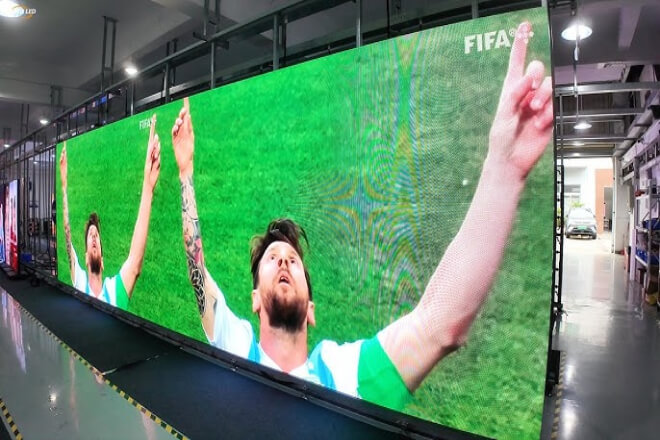
The real test of the budget for low-priced LED displays often doesn’t come at the time of purchase, but rather after a period of use—the continuous maintenance needs will gradually recoup the initial cost savings.
First, there’s the issue of more frequent repairs and module replacements. Issues such as aging LED 디스플레이, localized dead pixels, and driver malfunctions are more likely to occur under high-frequency use.
The result is that the screen requires constant “partial repairs,” like a puzzle piece always needing replacement.
Second, labor costs for maintenance will continuously increase.
What may seem like minor issues can actually involve repeated debugging, fault location, module disassembly and reassembly, and even temporary overtime.
For sports or commercial event venues, these hidden labor costs accumulate with increased usage frequency.
Simultaneously, component compatibility issues are also significant.
Different batches of products may have slight differences, and replacement parts may not be perfectly compatible, easily leading to inconsistent brightness, color deviations.
And other problems, resulting in the awkward situation where “the repairs actually make the issues more noticeable.”
More interestingly, the maintenance process for low-priced screens is often not a one-time fix, but rather a “patching-and-fixing operation.”
Replacing a module today, adjusting a signal line a few days later—it feels like a protracted tug-of-war with the equipment.
Finally, there’s the issue of a shortened overall lifespan. Originally planned for several years, frequent maintenance and performance degradation often shorten the actual stable lifespan, prematurely entering the “requires replacement” stage.
To illustrate with a real-world scenario: initially, it’s about “saving on equipment budget,” then it becomes “monthly maintenance bills,” and later, “should we replace the entire system early for peace of mind?”
Simply put, the long-term cost of low-priced LEDs isn’t a one-time expense, but rather a continuous maintenance bill.
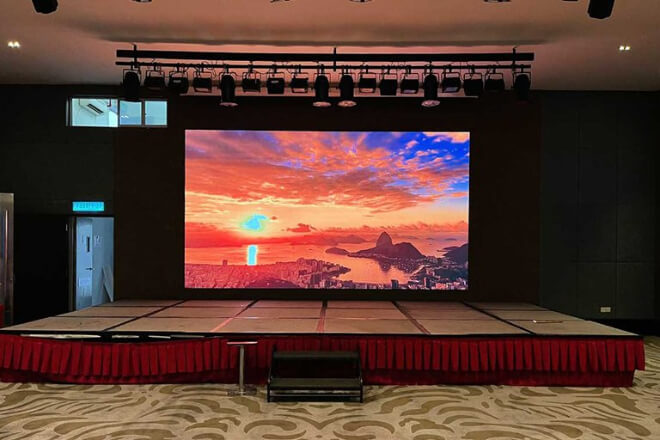
LED 디스플레이 all appear to be “emitting light,” but the real difference lies in image stability and visual quality. In commercial settings, this difference directly impacts whether money is “seen.”
First, unstable image quality affects brand image. For example, if the same advertisement shows color shifts, uneven brightness.
Or slight flickering on the screen, viewers are likely to subconsciously perceive the brand as “not high-end.”
For high-end brands, this visual degradation is even more fatal than insufficient exposure.
Secondly, the effectiveness of advertising and events will be diminished. A meticulously designed dynamic ad will have its overall creative impact weakened if it experiences ghosting, stuttering.
Or color inconsistencies during playback—like a carefully edited blockbuster compressed into a low-resolution version.
Simultaneously, a degraded user viewing experience will also affect dwell time. When the image is unclear or uncomfortable, viewers will look away more quickly.
Changing from “willing to watch for a while” to “glancing at it and leaving,” directly reducing the screen’s appeal.
More interestingly, this impact often occurs “silently.” Viewers won’t say “the screen is bad,” but they will unconsciously reduce their attention.
Or even ignore the screen content—the ad is still playing, but their attention has already left.
The ultimate result is an indirect decrease in commercial conversion. Whether it’s brand exposure, event traffic generation, or on-site interaction.
If visual appeal declines, subsequent clicks, engagement, and purchase intentions will weaken accordingly.
To illustrate, consider this: the same new product advertisement displayed on a high-quality LED screen might inspire users to take photos and share.
However, on a screen with unstable display quality, it might only elicit a comment like, “Isn’t this screen a bit blurry?”
Simply put, the display effect isn’t just “looking a little worse,” but rather “lacking in commercial value.”
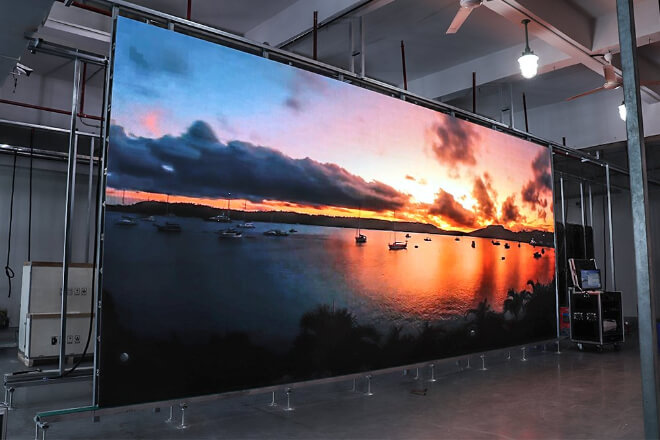
The easiest pitfall when buying LED 디스플레이 is focusing solely on the unit price while ignoring the total cost.
The truly cost-effective choice is to invest in a longer-term lifecycle, rather than relying on a single upfront purchase.
First, focus on the overall lifecycle cost, not just the purchase price. The true cost of a screen includes purchase, maintenance, energy consumption, repairs, and replacements.
Sometimes, seemingly cheap equipment can become more expensive over several years.
Second, prioritize stability and after-sales support. High stability means fewer malfunctions and less downtime, directly reducing hidden losses.
Reliable after-sales service ensures quick recovery in case of problems, preventing events or competitions from being “interrupted.”
Finally, select the configuration based on the intended use case. For example, temporary 전시회 and permanent venues have completely different requirements for 명도, refresh rate, and structural stability.
Using a “temporary-grade configuration” for “long-term, high-frequency use” will inevitably lead to increased costs later on.
More interestingly, many projects ultimately find that the most expensive part isn’t the equipment itself, but the process of “repeated repairs, repeated shutdowns, and repeated impacts on the user experience.”
Simply put, the truly cost-effective LEDs aren’t the cheapest ones you buy, but the most stable and least troublesome ones.
In other words, look at the price in the short term, but consider the overall cost in the long term.


 English
  Español
  简体中文
简体中文  Français
  日本語
日本語  한국어
한국어  العربية